
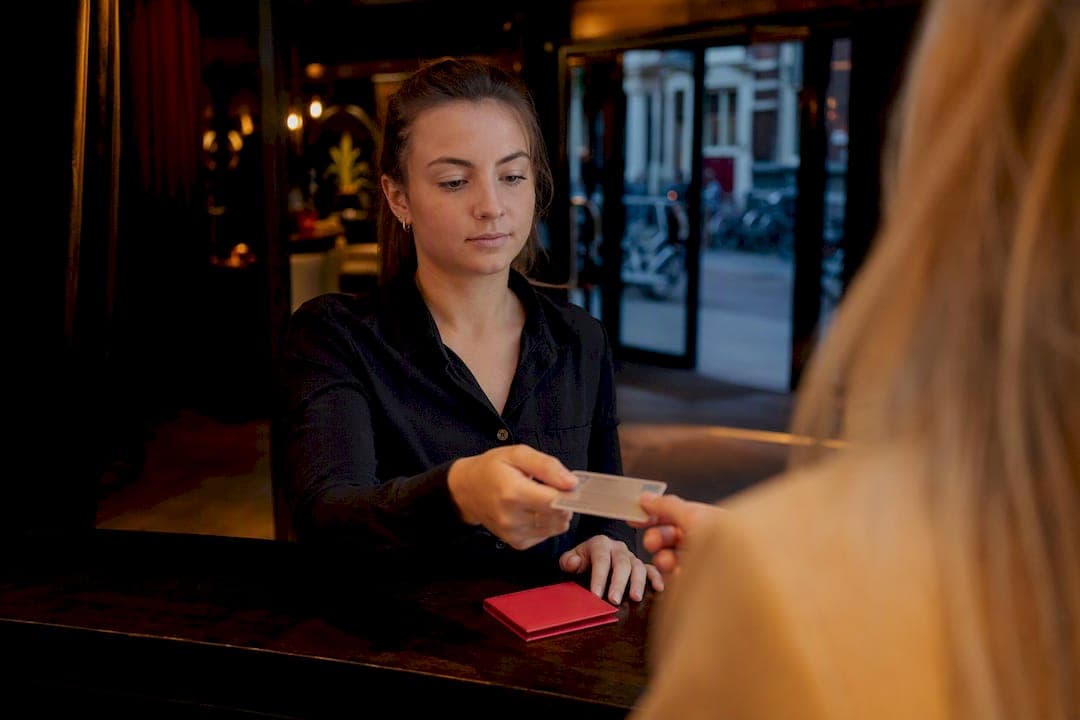
The legal minimum age to buy alcohol in the Netherlands is 18, full stop. Under that age, carrying alcohol in public is punishable by a fine, and adults who hand drinks to minors in public spaces can be fined too. Drinking at home is a different matter entirely: no national law bans it, so it depends on what parents decide.
TL;DR:
- Possessing sealed alcohol in public places under 18 can result in fines of up to 100 euros, regardless of intent to drink.
- Underage drinking is allowed at home, but purchase, possession, and public consumption outside the home remain illegal for minors.
- Adults who supply alcohol to minors in public settings face a 100-euro fine, and licensed venues must strictly verify ages for every sale.
- Retailers and venues are required to check ID using the NIX18 approach and keep records of age verifications for online or delivery sales.
- The Dutch alcohol law emphasizes possession and public drinking restrictions for minors, reflecting concerns over adolescent brain development rather than liberal attitudes.
Table of Contents
- What Is the Alcohol Age in the Netherlands, and Where Does the Law Come From?
- Can You Get Fined for Carrying Alcohol in Public Under 18?
- Is It Legal to Drink Alcohol at Home Under 18?
- What Happens If an Adult Gives Alcohol to a Minor?
- What Are Sellers and Bars Required to Do to Check Age?
- Quick Compliance Checklists for Youths, Parents, and Businesses
- How Big Shots Amsterdam Approaches Age Checks
- Where to Verify These Rules Yourself
- Why the Rules Feel Stricter Than People Expect
- Sources
What Is the Alcohol Age in the Netherlands, and Where Does the Law Come From?
Eighteen is the number, and it applies to buying, being sold, and being served alcohol anywhere in the country, whether that's a supermarket, a bar, or an online shop. The rule sits in the Alcoholwet (formerly the Drank- en Horecawet), the statute that governs how alcohol gets sold, served, and regulated in the Netherlands.
It wasn't always 18. Until 2014, the purchase age was split: 16 for beer and wine, 18 for spirits. Lawmakers merged everything into a single 18-year threshold, and the reasoning wasn't about tightening rules for their own sake. Public-health officials pushed the change specifically to protect developing brains during adolescence and cut down on how much alcohol was reaching teenagers in the first place.
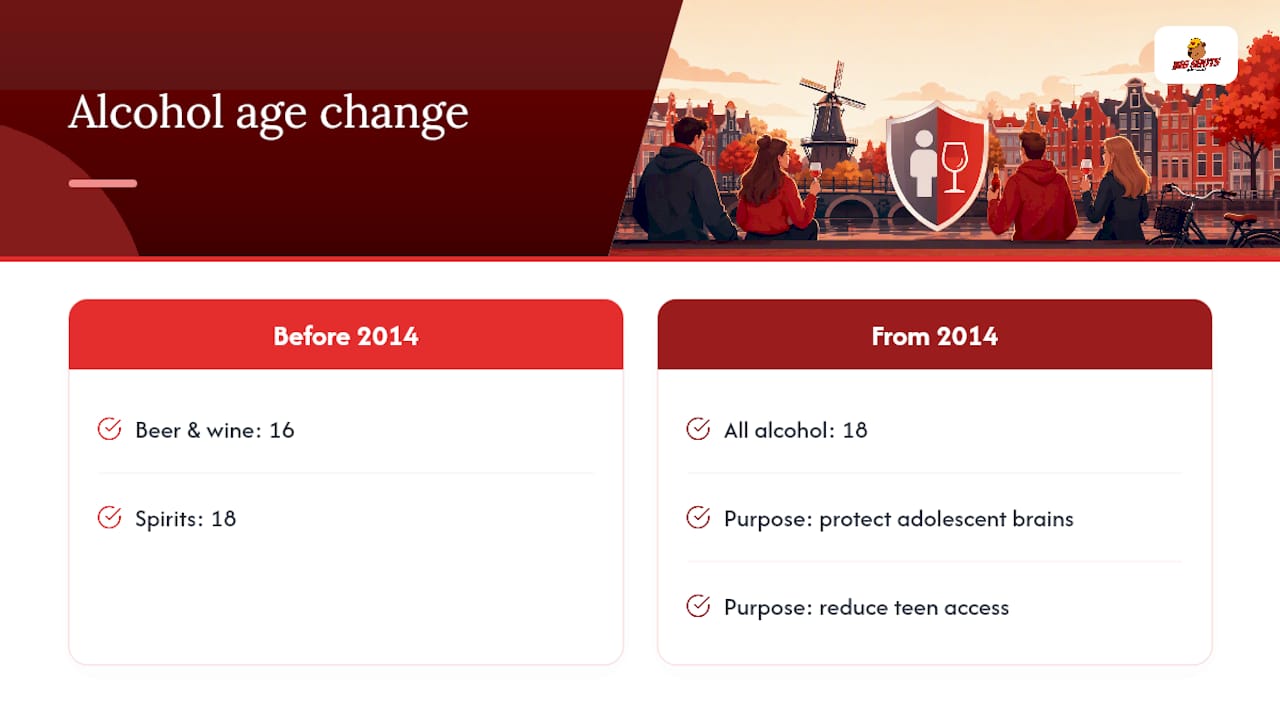
That 2014 shift matters if you're trying to understand why the Netherlands, a country often associated with liberal drug and alcohol policy, actually has a stricter alcohol age than plenty of people assume. The purchase age went up specifically because 16 wasn't cutting it as a health threshold.
Can You Get Fined for Carrying Alcohol in Public Under 18?
Yes, and this is the part that surprises a lot of people. It's not just about buying alcohol. Simply possessing it in a public place while under 18 is against the law, even if the bottle is sealed and you never intended to drink it there.
The Rijksoverheid sets the fines by age band:
- Under 16 years old: €50 fine for possessing alcohol in public.
- 16 or 17 years old: €100 fine for the same offense.
Enforcement tends to concentrate wherever groups of young people gather with drinks in hand: shopping center plazas, sports club canteens after a match, festival grounds, and train stations on a Friday night. Police don't need to prove you were about to drink it. Having it on you in a public space is enough to trigger the fine.
Is It Legal to Drink Alcohol at Home Under 18?
Here's where the law backs off. Nothing in Dutch legislation stops a minor from drinking at home, and police guidance confirms that this is left to parents rather than the state. Buying alcohol and carrying it in public under 18 stay illegal regardless.
Trimbos-instituut, the country's leading addiction and mental health institute, still advises against any underage drinking, pointing to how alcohol affects a still-developing brain. Practical advice for parents: set clear house rules, never hand a minor alcohol to take outside, and talk openly about why the guidance exists rather than treating it as an arbitrary rule.
What Happens If an Adult Gives Alcohol to a Minor?
This is called wederverstrekking, the Dutch term for an adult supplying alcohol to someone under 18 in a public setting, and it's illegal. The adult doing the supplying faces a €100 fine, separate from whatever penalty the minor might face for possession.
Businesses that sell to minors face their own, heavier consequences, including temporary sales bans or losing their license entirely.
Two everyday scenarios trip people up constantly:
- Buying a round at a festival and passing drinks to a younger friend who couldn't get served themselves.
- A bartender or older patron sliding a drink across to someone who looks underage, assuming nobody's watching.
Pro Tip: If you're 18 or older and out with a mixed-age group, don't hold or pass drinks for anyone who looks under 18, even as a favor. The fine lands on you, not them.
What Are Sellers and Bars Required to Do to Check Age?
Anyone selling alcohol in the Netherlands, from supermarket cashiers to shisha lounge staff, carries legal responsibility for who they serve. Get it wrong and the consequences aren't limited to a warning.
- Check ID whenever age is in doubt. Many venues follow the NIX18 approach and ask for identification from anyone who looks under 25, since guessing age by appearance is unreliable enough to create real legal exposure.
- Train staff to refuse sales, not just check IDs. A cashier who checks an ID but still sells anyway hasn't solved anything; refusal has to follow when the customer is underage.
- Face real sanctions for mistakes. Under the Alcoholwet's licensing rules, a venue selling to someone underage risks a temporary sales ban or outright license revocation.
- Verify age twice for online and delivery sales. Distance sellers must confirm age at the moment of purchase and again when the product is handed over at the door, and the NVWA inspects these procedures directly.
- Keep records of the check. The seller stays responsible for age verification even when a third-party courier handles the physical delivery, so documentation matters if a sale is ever questioned.
Quick Compliance Checklists for Youths, Parents, and Businesses
Different people need different reminders, so here's the short version for each:
- If you're under 18: don't carry alcohol in public, even sealed and unopened; alcohol-free beer and mocktails are always fair game, and there's no age limit on ordering them.
- If you're 18 or older: carry ID, especially at venues that check anyone who looks under 25.
- If you're a parent: set your own household rules on drinking, but never supply alcohol for your teen to take outside, and stay alert to how much and how often.
- If you run a business: adopt a documented NIX18 policy, train every staff member on refusal (not just ID checks), and log age verification for every online or delivery order.
How Big Shots Amsterdam Approaches Age Checks
Running a venue that combines a sports bar, shisha lounge, and restaurant means age verification comes up constantly, not occasionally. Staff are trained to check ID whenever there's any doubt and to refuse service without hesitation when someone can't confirm they're 18 or older. That's not a formality bolted onto the experience of watching sports and sharing shisha with friends; it's part of running a venue guests can actually trust with their evening.
Responsible service extends past the alcohol itself. Guests who want guidance on pacing their night or understanding house policy can also check resources on responsible consumption practices, which cover similar ground on setting personal limits. Treating age rules as a baseline for guest safety, not a bureaucratic hurdle, is what keeps a lively venue lively for the right reasons.
Where to Verify These Rules Yourself
For anyone who wants the primary sources rather than a summary, these are the official pages worth bookmarking:
- Rijksoverheid: alcohol possession rules for young people
- Ondernemersplein: selling and serving alcohol
- NVWA: age checks for distance selling
- Politie
- Government
Why the Rules Feel Stricter Than People Expect
Most visitors assume Dutch alcohol policy mirrors the country's relaxed reputation around cannabis. It doesn't. The 18-year purchase age, the public possession fines, and the wederverstrekking penalty for adults all point to a system built around one specific worry: how easily alcohol used to reach teenagers before 2014, and what that was doing to still-developing brains.
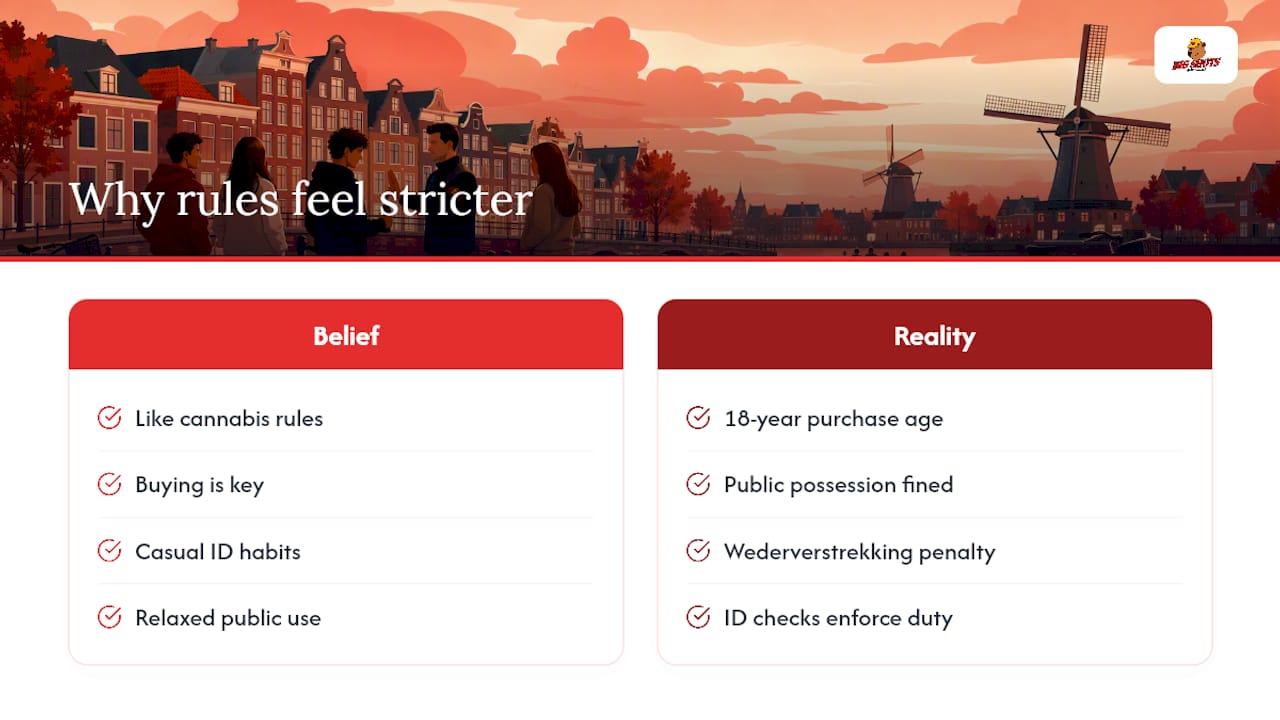
What gets underestimated is how much of the enforcement burden sits on the moment of possession rather than the moment of purchase. A 16-year-old doesn't need to buy anything to get fined; carrying a sealed can through a shopping center plaza is enough. That's a stricter standard than most European countries apply, and it's rarely mentioned in casual conversations about Dutch drinking culture.
For venues, the honest takeaway is that ID checks aren't a defensive habit against fines. They're the difference between a bar that treats its license as a formality and one that treats it as a real obligation to the community it serves.
— Leo
Sources
- Vanaf welke leeftijd mag ik alcohol bij me hebben op openbare plekken? | Rijksoverheid
- Alcohol verkopen en schenken (alcoholvergunning) | Ondernemersplein
- Politie
- Leeftijdscontrole bij verkoop op afstand | NVWA
- Government