

Yes, cocktails commonly contain ingredients from the EU's list of 14 major allergens, and hiding in plain sight is the norm rather than the exception. The safest first move is simple: tell the bartender about your allergy before you order, and ask them to check the bottle, the label, or the tech sheet for the drink you want. Cross-contact from shared shakers, spoons, and garnish trays is a real risk too, so if staff can't confirm a drink is safe, ask for clean equipment or choose something else.
TL;DR:
- Many cocktails contain allergens from the EU's list, such as milk, nuts, eggs, fish sauce, shellfish, gluten, and soy, often hidden in ingredients or garnishes.
- Always disclose your allergy upfront and ask staff to verify ingredients, equipment, and labels before ordering to minimize cross-contact risks.
- Reactions can escalate quickly from mild symptoms to severe anaphylaxis, requiring immediate use of epinephrine and emergency services if symptoms occur.
- Responsible bars maintain allergen information, dedicated tools, and trained staff who follow safety checks, but customer hesitations remain a significant risk factor.
- Clear spirits like vodka and gin are generally safer, but flavored or compounded options may still introduce allergens, making verification essential.
Table of Contents
- Common Allergens in Cocktails and Where They Hide
- How to Order Safely: A Step-by-Step Checklist
- What to Do If a Reaction Starts
- What Responsible Bars Actually Do Behind the Counter
- The Advice Nobody Follows Enough
- How Bigshotsamsterdam Handles Allergen Questions
- Sources
- FAQ
Common Allergens in Cocktails and Where They Hide
Most drinks that look "just alcohol" are actually built from several components, and any one of them can carry an allergen. Milk shows up more than people expect, in Baileys, cream liqueurs, and anything built around a Piña Colada base. Egg white is the backbone of a classic sour or a flip, whipped in for texture rather than flavor. Nuts appear constantly through orgeat (the almond syrup behind a Mai Tai), amaretto, and other nut-based liqueurs.
Fish allergy risk comes almost entirely from Worcestershire sauce, a staple in a Bloody Mary that most drinkers never think to question. Shellfish turns up occasionally in infused spirits or garnishes at bars leaning into briny, savory cocktails. Gluten rides in on beer-based drinks and some liqueurs, while sulphites are baked into wine and vermouth by nature of how those products are made. Soy shows up less often but can appear in flavored syrups or as an emulsifier.
Spirits that are simply distilled (vodka, gin, plain rum) carry lower allergen risk because distillation tends to leave proteins behind. The American Academy of Allergy, Asthma & Immunology notes that alcoholic drinks should be treated as complex foods, since flavored or compounded spirits can reintroduce allergens after distillation. A handful of ingredient names are worth memorizing:
- Orgeat — almond syrup, common in tiki drinks
- Aquafaba — chickpea liquid used as an egg substitute, still a legume allergen risk
- Milk-washed or clarified — descriptors on a menu that signal dairy was used somewhere in the process
How to Order Safely: A Step-by-Step Checklist
Walking up to a bar with a known allergy doesn't have to feel like a gamble. A short, direct routine covers most of the risk.
- Say it out loud, early. Tell the bartender or server your specific allergy before you order anything, not after they've started making it.
- Ask for the check. Request that staff verify the ingredients against the bottle label, a tech sheet, or the written recipe for any house-made component.
- Ask about equipment. Request a fresh shaker, a clean spoon, and a garnish plate that hasn't touched other drinks. CocktailSafe recommends dedicated equipment or a full soap wash over a quick rinse, since rinsing alone often isn't enough to clear allergenic residue.
- Have a backup plan. If the bar can't confirm safety, order a spirit you already trust straight, or switch to a mocktail built with ingredients you can verify. Declining a drink costs you nothing; a reaction costs a lot more.
Pro Tip: Keep a short list on your phone of your allergens and a few brands you already know are safe. Handing it to a bartender takes ten seconds and removes almost all the guesswork on their end too.
If the first person you ask seems unsure, it's fine to request a manager. Busy bars move fast, and a second set of eyes on the tech sheet is a reasonable ask, not an inconvenience.
What to Do If a Reaction Starts
Know the difference between a mild reaction and anaphylaxis before you're the one dealing with it. Mild symptoms include hives, itching, or a bit of stomach upset. Anaphylaxis is different and moves fast:
- Throat or chest tightness, or trouble breathing
- Swelling of the lips, tongue, or face
- Sudden dizziness or a drop in blood pressure
- Vomiting alongside any of the above
Foodallergy is unambiguous: if you're prescribed epinephrine, use it immediately when symptoms appear rather than waiting to see if they pass. Call emergency services right away, keep the person sitting or lying down, and stay with them until help arrives. Alcohol speeds up how fast allergens hit the bloodstream and dulls the judgment needed to act quickly, which is exactly why the first move (disclosing the allergy) matters so much more at a bar than at a dinner table.
What Responsible Bars Actually Do Behind the Counter
The bars that take this seriously build it into service, not just the menu. Industry reporting on cocktail bar allergen practices describes a "safety check" habit among better-trained staff: before making a flagged drink, the bartender traces every component back to its bottle or tech sheet rather than relying on memory.
Signals worth checking for when you're picking a venue:
- A documented allergen reference staff can pull up on request
- Dedicated tools kept separate for allergy orders
- Clear labeling of house syrups and infusions on the printed menu
- Staff who've actually been trained on how bartenders shape the guest experience, including the allergy conversation, not just the pour
These habits connect to broader shifts in how mixology is evolving in modern bars, where training and ingredient transparency are becoming part of the craft, not an afterthought.
The Advice Nobody Follows Enough
Most allergen guidance for bars gets the mechanics right and the psychology wrong. People know they're supposed to ask about ingredients, and they still don't, because it feels awkward to hold up a round of drinks while a bartender digs through a bottle. That hesitation is the actual risk factor, more than any specific ingredient.
The EU's labeling rules under Regulation 1169/2011 set a legal floor for the 14 major allergens, but a law doesn't reach into a shaker mid-service. It can't tell you whether the orgeat in your Mai Tai was made fresh today or bought pre-mixed with an undisclosed nut base. That gap between what's legally required and what's actually communicated at the bar is where most reactions happen, not in venues ignoring the rules outright.
My honest take: stop treating the allergy conversation as an interruption and start treating it as part of ordering, the same way you'd specify a dietary preference at dinner. Bars that bristle at the question are telling you something. The good ones expect it.
— Leo
How Bigshotsamsterdam Handles Allergen Questions
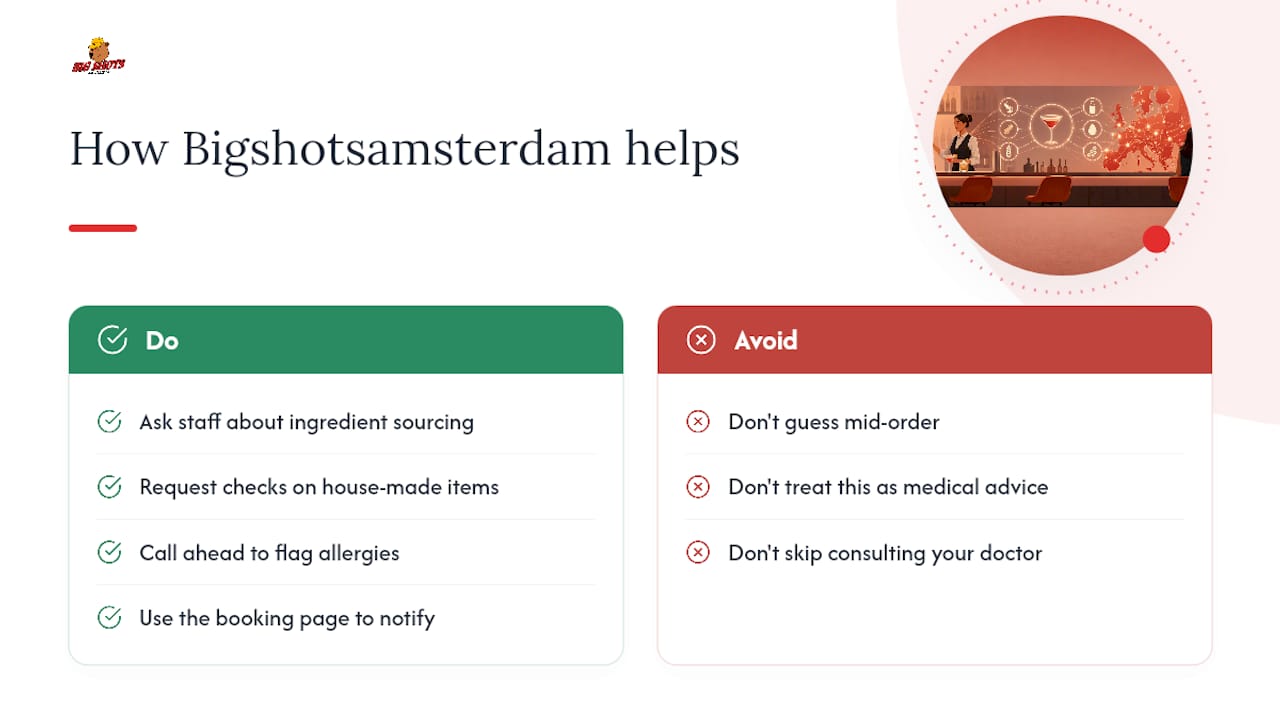
If a night out feels riskier than it should because you're not sure what's actually in your drink, some venues aim to remove that guesswork rather than leave you to figure it out mid-order. Staff can walk you through ingredient sourcing on request and run a check on any house-made syrup, infusion, or garnish before it reaches your glass.
Whether you're planning a night out or a relaxed dinner with friends, calling ahead to flag an allergy gives the kitchen and bar time to prepare properly rather than scrambling during a busy service. This article is general safety information, not medical advice. If you have a severe allergy, check in with your doctor about your personal risk before a night out. To note your allergies ahead of a visit or ask about ingredient details, reach out through the Bigshotsamsterdam booking page before you arrive.
This article is general information, not a substitute for advice from a qualified doctor. Consult a qualified healthcare professional about your own circumstances before acting on anything here.
Sources
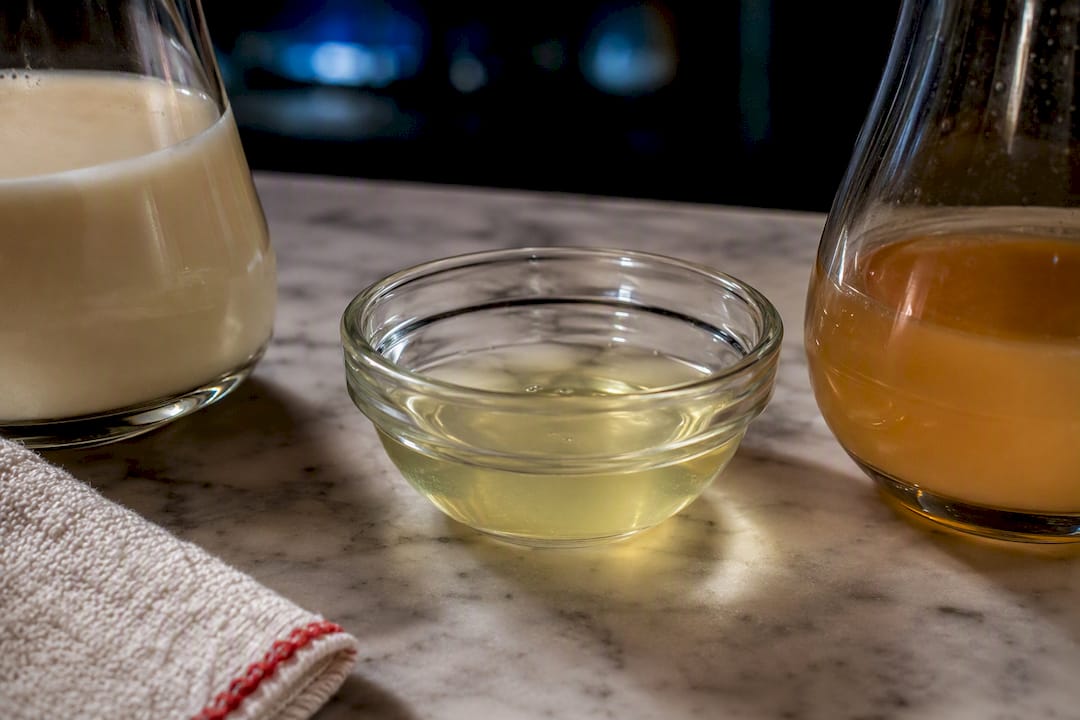
A cocktail can look completely clear and still not be allergen-free. Milk-washing and clarification are techniques bartenders use to strip color and cloudiness from a punch while keeping the flavor, and the process doesn't always remove every trace of dairy protein. CocktailSafe's guidance on allergies and diets makes this point directly: "clear" is not a safety guarantee.
Beyond milk-washing, a few other sources catch people off guard:
- European Commission — Food information for consumers (legislation)
- CocktailSafe — Allergies and diets
- American Academy of Allergy, Asthma & Immunology — Food allergy and drinks
- The Spirits Business — Do cocktail bars take allergens seriously enough?
Difford's Guide catalogs these hidden sources in detail, and its consistent advice to operators is to name these ingredients explicitly on the menu rather than bury them under a drink's clever name.
FAQ
Where can I find allergen lists at bars and restaurants?
Ask staff directly. Many venues keep a written allergen reference or tech sheets behind the bar, and EU Regulation 1169/2011 requires that this information be available on request even when it isn't printed on the menu.
Is an allergen notice or sign legally required at a bar?
Under EU law, venues must be able to provide allergen information for the 14 major allergens when asked, though the exact format (a printed card, a menu note, or a verbal answer from staff) varies by venue. If nothing is posted, ask a staff member directly rather than assuming a drink is safe.
Can a clear cocktail still contain milk or nut allergens?
Yes. Techniques like milk-washing and clarification can leave allergenic proteins in a drink even after it looks completely clear, according to CocktailSafe.
What should I do if a bar can't confirm a drink is allergen-free?
Choose a different drink, ask for a plain spirit you already trust, or order a mocktail made from ingredients you can verify. Never gamble on an unconfirmed drink if your allergy is severe.
Are distilled spirits generally safer for people with allergies?
Plain distilled spirits like vodka and gin carry lower risk since distillation tends to leave proteins behind. However, flavored or compounded spirits can reintroduce allergens, so it's worth asking about anything beyond a straightforward pour.