
Most visitors to Amsterdam picture café culture as a quiet corner with espresso and a croissant. That image couldn't be further from the truth. In Amsterdam, a café is a living, breathing social institution where locals gather for hours, strangers become friends, and the night stretches on comfortably. Whether you're a tourist trying to understand the city or a resident looking to dig deeper into what makes Amsterdam tick, this guide breaks down the history, the atmosphere, the drinks, and the practical tips you need to experience café culture the way it was meant to be lived.
Table of Contents
- Understanding café culture: Origins and European influence
- Amsterdam's café scene: The soul of 'gezelligheid'
- Comparing café cultures: Amsterdam versus global traditions
- How to immerse yourself in Amsterdam's café culture
- Next step: Explore real Amsterdam café venues
- Frequently asked questions
Key Takeaways
| Point | Details |
|---|---|
| Historical roots | Café culture began as European coffee houses for artists and thinkers, shaping social traditions. |
| Amsterdam’s 'gezelligheid' | Amsterdam’s cafes center around coziness, communal vibes, and iconic brown cafés. |
| Global comparison | Unlike other cities, Amsterdam’s culture is casual and nightlife-oriented, not just intellectual. |
| Practical immersion | Enjoy authentic Dutch drinks and snacks in brown cafés for a true local experience. |
| Find real venues | Start your café exploration at recommended local spots for best atmosphere and social life. |
Understanding café culture: Origins and European influence
Café culture didn't start with Instagram-worthy latte art. It started with revolution, philosophy, and a lot of heated debate. The earliest European coffee houses, in cities like Vienna and Paris, were gathering places for artists, writers, and political thinkers who couldn't afford private salons but needed somewhere to exchange ideas. These weren't places to grab a quick drink. They were places to stay.
The Viennese coffee house culture became so embedded in daily life that it was eventually recognized as an intangible cultural heritage. Paris had its literary cafés where existentialists argued over manuscripts. Arabic regions had their qahveh khaneh, social spaces built entirely around conversation and community. The common thread across all of them was time. Nobody rushed.
As this tradition spread across Europe, each city adapted it to local tastes and social norms. Café culture refers to the tradition of gathering in cafés for conversation, relaxation, and intellectual exchange, originating from these historical European coffee houses. Amsterdam took that foundation and built something distinctly its own, shaped by its merchant history, its liberal values, and its love of communal warmth.
Here's what defined early café culture across Europe:
- Accessibility: Open to anyone who could afford a drink, regardless of class
- Duration: Visits lasted hours, not minutes
- Conversation: The main activity, not the background noise
- Community: Regulars formed tight social networks over time
- Creative output: Many artistic and political movements were born in cafés
"The café was never just about the drink. It was about the permission to sit, think, and talk without being rushed out the door."
If you want to visit local cafes in Amsterdam with this historical context in mind, you'll notice how much of that original spirit still survives. And if you're starting your day with a slower pace, the breakfast cafes in Amsterdam scene carries that same unhurried energy into the morning hours.
With an understanding of café culture's roots and its spread across Europe, it's important to see how Amsterdam shaped its own distinct style.
Amsterdam's café scene: The soul of 'gezelligheid'
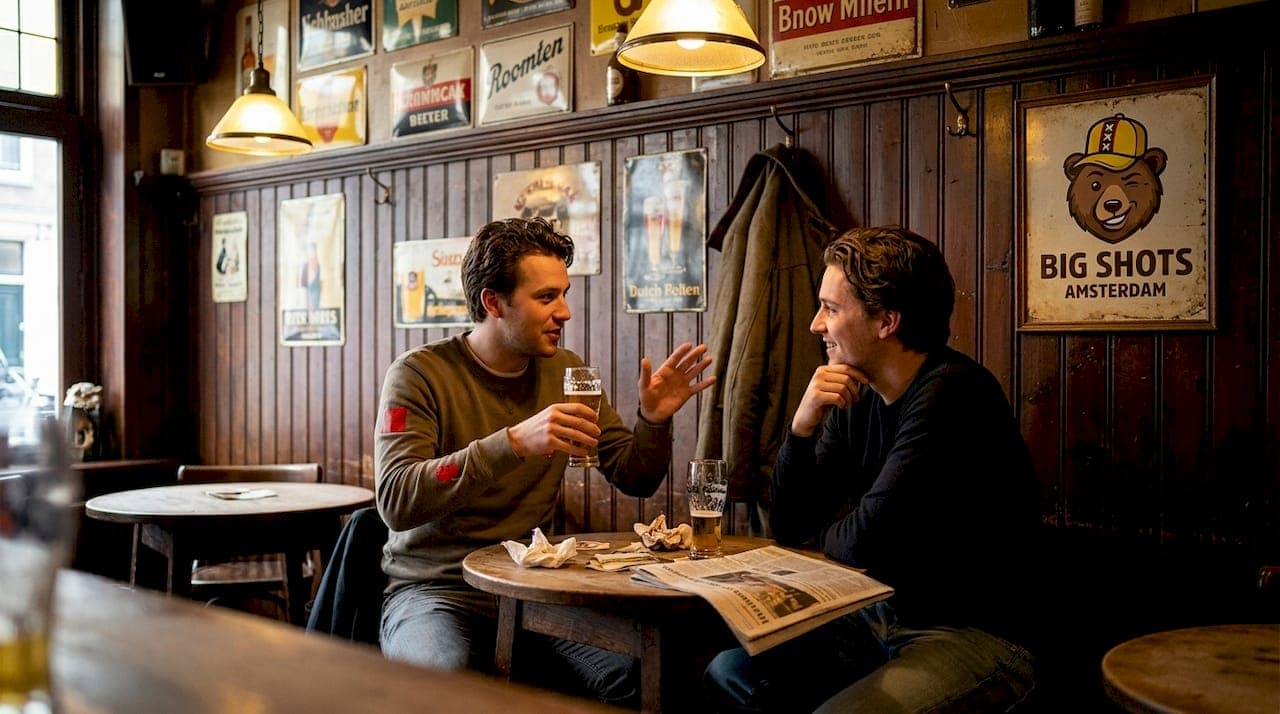
Walk into a traditional Amsterdam café and you'll immediately notice something different. The lighting is low. The wood is dark and worn. The walls carry decades of stories. This is the bruine kroeg, or brown café, and it is the heartbeat of Amsterdam's social life.
Brown cafés in Amsterdam are traditional pubs with dark wood interiors, embodying gezelligheid (coziness), and serving beer, jenever, and snacks. The word gezelligheid doesn't translate cleanly into English. It's a feeling more than a concept. Warm. Inclusive. Comfortable. The kind of atmosphere where you don't feel like a stranger for long.
These venues aren't designed to impress. They're designed to welcome. The tobacco-stained ceilings, the mismatched furniture, the bartender who knows every regular by name. It all adds up to something that modern minimalist bars simply can't replicate.
| Feature | Brown café (bruine kroeg) | Modern cocktail bar |
|---|---|---|
| Interior | Dark wood, worn surfaces | Sleek, minimal design |
| Atmosphere | Cozy, communal, unhurried | Trendy, curated, fast-paced |
| Typical drinks | Beer, jenever, Dutch gin | Craft cocktails, spirits |
| Snacks | Bitterballen, cheese, bread | Charcuterie, small plates |
| Clientele | Locals and regulars | Mixed, tourist-heavy |
| Vibe | Neighborhood pub | Destination bar |
The best drinks in Amsterdam at a brown café are refreshingly simple. A cold Dutch pilsner. A small glass of jenever, which is a juniper-based Dutch spirit that predates gin. A plate of bitterballen, those crispy fried snack balls filled with a savory beef ragout. Simple, satisfying, and deeply local.
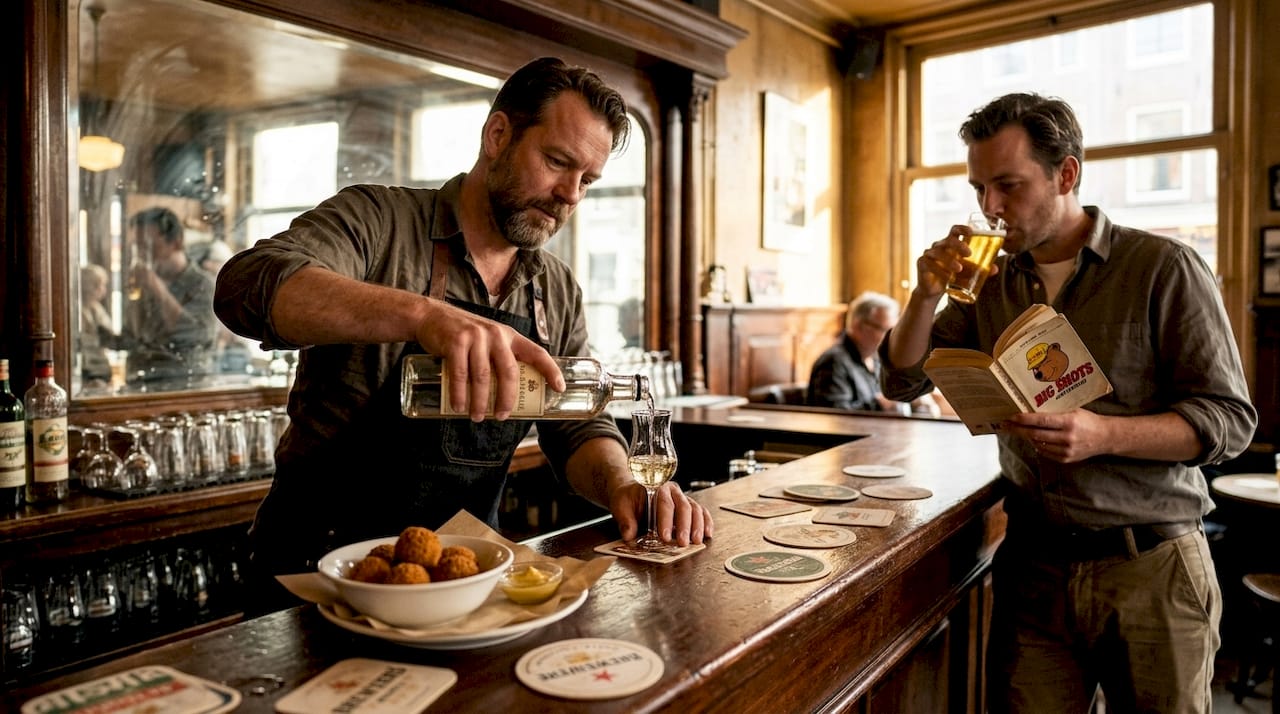
Pro Tip: If you want to blend in at a brown café, don't order a complicated cocktail. Ask for a pils (draft beer) or a borrel (a small glass of jenever). Locals will respect the choice immediately.
For a broader look at Amsterdam hospitality venues that capture this same communal spirit in different formats, there are plenty of options that blend tradition with modern energy.
Having explored the atmosphere and traditions behind Amsterdam's cafés, let's compare these institutions with other café types and clarify misconceptions about what to expect.
Comparing café cultures: Amsterdam versus global traditions
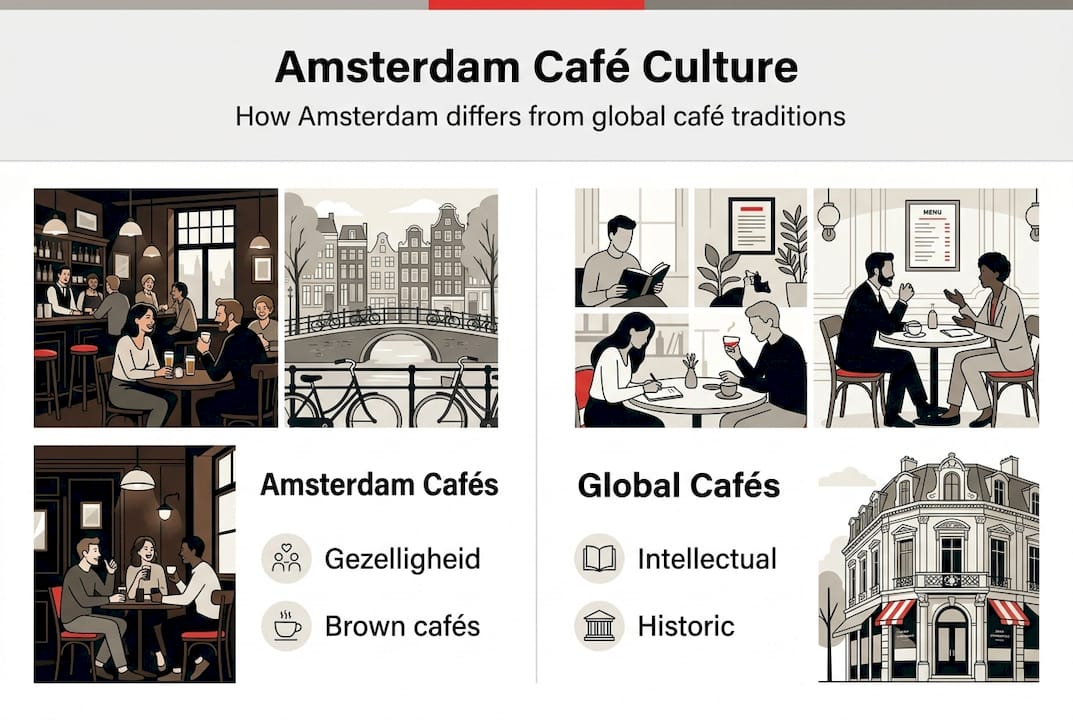
Amsterdam's café culture sits in a fascinating position globally. Most European café traditions lean heavily intellectual. Vienna's coffee houses were where Freud and Trotsky sat with their newspapers. Paris cafés were where Sartre wrote entire books. The emphasis was on solitary thought in a social setting.
Amsterdam flips that. The global café culture tends toward intellectual and historical gatherings, while Amsterdam's version leans into casual, pub-like gezelligheid, with coffeeshops adding a vibrant, liberal nightlife layer unique to the city. The focus here is on togetherness, not individual contemplation.
It's also worth clarifying a major point of confusion for tourists. In Amsterdam, a coffeeshop and a café are completely different things. A coffeeshop is a licensed venue where cannabis can be legally purchased and consumed. A café is a bar or pub. Mixing these up can lead to some very unexpected evenings.
Here's how Amsterdam stacks up against other global café traditions:
| Dimension | Amsterdam cafés | Viennese coffee houses | Parisian cafés |
|---|---|---|---|
| Primary focus | Socializing, drinking | Intellectual exchange | Art, philosophy, people-watching |
| Typical drink | Beer, jenever | Coffee, wine | Coffee, wine |
| Atmosphere | Cozy, communal | Formal, refined | Relaxed but stylish |
| Historical role | Neighborhood gathering | Cultural institution | Artistic incubator |
| Nightlife integration | High | Low | Moderate |
To make the most of Amsterdam's café scene, keep these steps in mind:
- Start in the Jordaan neighborhood, where brown cafés are densely packed and deeply authentic
- Go on a weekday evening when locals outnumber tourists and the atmosphere is more genuine
- Stay for at least two hours to let the gezelligheid actually settle in around you
- Talk to the bartender who is often the social anchor of the whole space
- Try Amsterdam bar hopping across multiple neighborhoods to compare the different vibes each area offers
This unique combination makes Amsterdam's café culture appealing to both locals and visitors, setting the stage for practical tips on enjoying the experience.
How to immerse yourself in Amsterdam's café culture
Knowing the history is one thing. Actually stepping into it is another. Here's how to do it right.
First, learn to spot a genuine brown café. Many brown cafés date back to the 1600s and 1800s, making them historic landmarks infused with modern tradition. Look for the dark wood paneling, the low ceilings, the handwritten beer menus, and the absence of loud music. If it feels like a set from a period film, you're probably in the right place.
Here's what to order for an authentic experience:
- Pils: A standard Dutch draft beer, served cold and small
- Jenever: Dutch gin, served neat in a small tulip glass, often sipped rather than shot
- Bitterballen: Deep-fried snack balls with a creamy beef filling, always served with mustard
- Kaas: Dutch aged cheese, often served in cubes alongside drinks
- Uitsmijter: A classic Dutch open-faced sandwich with eggs, popular at daytime cafés
The best times to visit are late afternoon on weekdays, when the after-work crowd fills the space with genuine energy, or Sunday afternoons, when Amsterdam slows down and locals linger for hours. Avoid peak tourist hours on weekend evenings if you want a more authentic feel.
Pro Tip: Don't sit at a table immediately. Stand at the bar first. It signals to the bartender and regulars that you're there to engage, not just consume. That small move opens more conversations than you'd expect.
If mornings are more your speed, the breakfast cafés in Amsterdam scene offers a gentler entry point into café culture, with the same unhurried atmosphere but a menu built around eggs, bread, and strong coffee.
With practical guidance in hand, the experience can be enhanced even further by leveraging local venues and hospitality resources.
Next step: Explore real Amsterdam café venues
After your deep dive into Amsterdam's café culture, here's how to experience it firsthand. Reading about gezelligheid is one thing. Feeling it in a room full of people who are genuinely happy to be there is something else entirely.
Big Shots Amsterdam brings together the best of Amsterdam's social scene under one roof. It's a sports bar, shisha lounge, restaurant, and café combined, offering craft cocktails, gourmet dishes, and a lively atmosphere that works for a casual Tuesday night or a big group celebration. Whether you're watching a match, sharing a meal, or just settling in for a long evening with good drinks, Big Shots Amsterdam delivers the kind of warm, energetic experience that makes Amsterdam's hospitality scene so memorable. It's a great starting point for anyone who wants to feel the city's social pulse without having to wander through a dozen venues first.
Frequently asked questions
What makes Amsterdam café culture unique?
Amsterdam cafés are social hubs built around gezelligheid and communal drinking, which sets them apart from most European cities where café culture leans toward intellectual gatherings. The city's liberal attitude and integrated nightlife add another layer that you won't find elsewhere.
What should you try when visiting an authentic Amsterdam café?
Order Dutch beer, jenever, and snacks like bitterballen or cheese in a cozy brown café for the most authentic experience. Keep it simple and local.
How do Amsterdam coffeeshops differ from traditional cafés?
Coffeeshops are licensed venues where cannabis can be legally purchased and consumed, while traditional cafés focus on drinks and sociability. They serve completely different purposes and attract different crowds.
Where can you find the oldest and most authentic brown cafés in Amsterdam?
Many brown cafés are located in the historic canal ring and the Jordaan neighborhood, with some dating back to the 1600s and 1800s. These are the places where Amsterdam's social history is still very much alive.