
TL;DR:
- Amsterdam's mocktail scene focuses on sophisticated, alcohol-free drinks crafted with botanicals, fresh ingredients, and expert techniques. The city sees a cultural shift toward mindful socializing, with creative options available in many bars and cruise experiences. Bartenders prioritize flavor balance and local ingredients, making Amsterdam a true hub for quality mocktails.
Amsterdam mocktails are defined as crafted, alcohol-free drinks built with botanical distillates, fresh juices, house-made syrups, and professional mixology techniques to deliver complex flavor without any alcohol. The city's non-alcoholic drink scene has moved well past sugary sodas. Non-alcoholic beer now holds an 8–9% share of the Dutch beer market, and 72.4% of Dutch youth aged 12 to 16 have never consumed alcohol. Those numbers signal a real cultural shift, not a passing trend. Whether you are a tourist stepping off a canal boat or a local looking for a Friday night out without the hangover, explaining Amsterdam mocktail options starts with understanding what separates a great one from a glass of juice with a garnish.
What distinguishes a mocktail from non-alcoholic spirits and traditional cocktails?
A mocktail is the finished drink in your glass. A non-alcoholic spirit is one possible ingredient inside it. Mixing up those two terms leads to confusion at the bar and disappointment in the glass.
Modern non-alcoholic cocktails use botanical distillates and focus on adult flavor profiles and presentation, replacing the alcohol-forward heat of a traditional cocktail with layered complexity from other sources. The technique matters more than the bottle on the shelf. A skilled bartender can build a drink that feels just as satisfying as a gin and tonic using nothing but fresh citrus, a bitter shrub, tonic water, and a sprig of rosemary.
Mixologists emphasize that non-alcoholic spirits are convenient but not essential. Well-constructed mocktails rely on balancing acid, sweetness, bitterness, and carbonation using fresh ingredients and syrups. That balance is the same principle behind every great cocktail, alcoholic or not.
Here is how the two main approaches compare:
- With non-alcoholic spirits: Brands like Fluère or Damrak 0.0 give you a recognizable gin or rum flavor base. They cost more per bottle but shorten prep time and deliver consistent results.
- Without non-alcoholic spirits: Fresh lime juice, ginger syrup, muddled herbs, and sparkling water can build a drink with equal depth. The cost per serve drops significantly, and the flavor can feel more seasonal and personal.
- Bitters and shrubs: A few drops of aromatic bitters or a house-made shrub (a vinegar-based syrup) add the bitter backbone that alcohol usually provides.
- Carbonation: Tonic water, soda water, and kombucha each bring different levels of bitterness and effervescence, changing the drink's character entirely.
Pro Tip: If you love gin-forward drinks like a Negroni or a G&T, invest in a quality non-alcoholic gin alternative. For fruit-forward or citrus drinks, skip the NA spirit and build from fresh juice instead. You will save money and often get a brighter flavor.
What are the popular Amsterdam mocktail varieties and local ingredient trends?
Amsterdam's bar culture draws on the city's history as a trading hub, and that shows up in the ingredients bartenders reach for. Local producers, sustainable sourcing, and functional ingredients define the best mocktails in Amsterdam right now.
Locally produced spirits and botanical bases
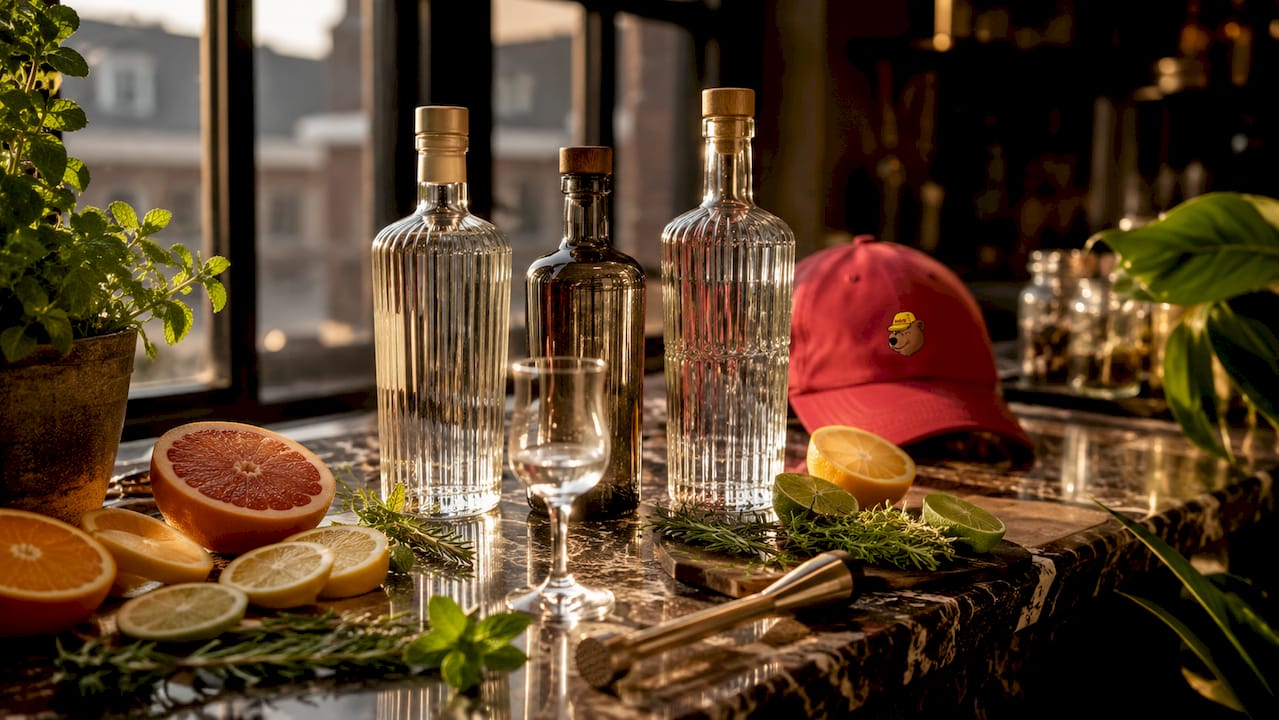
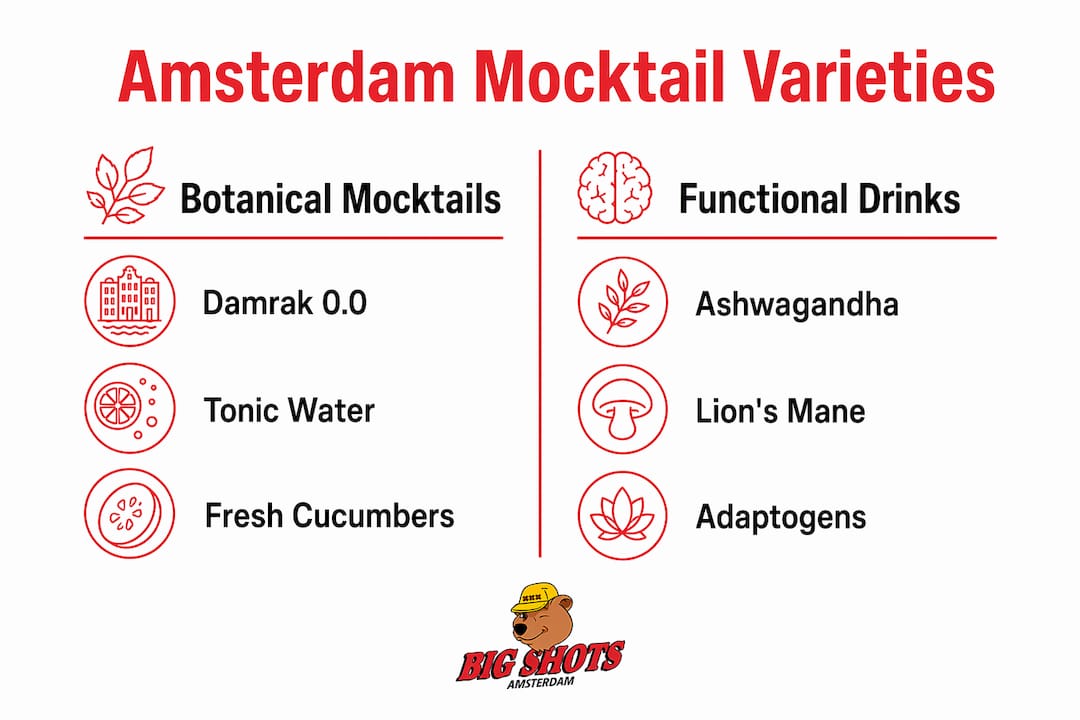
Damrak and Fluère are two names worth knowing. Damrak produces a 0.0% botanical distillate that carries juniper, citrus peel, and coriander, making it a direct substitute in any gin-based mocktail recipe. Fluère offers a range that includes a spiced cane and a raspberry blend, giving bartenders a wider palette for creative serves. Both brands appear on menus across the city's cocktail bars and specialty bottle shops.
Functional and adaptogen-infused drinks
Functional drink bars in Amsterdam use adaptogens like ashwagandha and lion's mane to mimic the social calming effects of alcohol, with drinks typically priced around €6.75. That price point sits well below a standard cocktail, making functional lattes an accessible entry point for anyone curious about intention-driven drinking. These are not just flavored waters. They are purpose-built beverages targeting mood and focus, and they represent one of the fastest-growing categories in Amsterdam's non-alcoholic scene.
Sustainable lemonades and botanical presses
Locally produced lemonades and botanical presses with sustainable sourcing provide flavorful, story-rich non-alcoholic options popular across Amsterdam's hospitality venues. These drinks carry a conversation with them. Ordering one often leads to a bartender explaining the farm, the harvest season, or the pressing method behind the bottle.
| Mocktail style | Key ingredients | Flavor profile |
|---|---|---|
| Botanical G&T style | Damrak 0.0, tonic, cucumber | Herbal, dry, refreshing |
| Spiced citrus sour | Fluère spiced cane, lemon, aquafaba | Tart, warm, frothy |
| Adaptogen latte | Ashwagandha, oat milk, honey | Earthy, creamy, calming |
| Seasonal shrub spritz | House shrub, soda, fresh herb | Tangy, effervescent, bright |
| Sustainable lemonade | Local pressed citrus, botanical syrup | Sweet, floral, clean |
For a broader look at what Amsterdam's drink culture is producing right now, the best drinks in Amsterdam guide covers mixology-forward options across the city's neighborhoods.
Where to find and enjoy quality mocktails in Amsterdam?
Finding a great non-alcoholic drink in Amsterdam requires knowing where to look and what language to use when you get there.
-
Cocktail-forward bars in the Jordaan and De Pijp. These neighborhoods lead the city in creative, menu-driven drinking. Many bars in both areas have moved away from a separate "mocktail section" and instead integrate non-alcoholic options directly into their main cocktail menus, using terms like "0.0% ABV," "botanical serve," or "temperance." Scanning the full menu rather than asking for the mocktail list often reveals the most interesting options.
-
Canal cocktail cruises. Amsterdam offers cocktail cruises featuring unlimited non-alcoholic mocktails alongside traditional options for about 75 minutes. Snacks like nachos and salsa come included. The format makes it easy to socialize without any pressure around alcohol, and the canal setting adds a layer of experience that no bar interior can replicate.
-
Functional drink cafés. A growing number of cafés in Amsterdam West and the Oud-Zuid area specialize in adaptogen-infused drinks and botanical lattes. These venues attract a crowd that wants the ritual of going out without the alcohol, and they tend to attract curious visitors looking for something genuinely different. For a broader look at where Amsterdam's nightlife is heading, Amsterdam's nightlife trends in 2026 maps the venues leading this shift.
-
Mindful drinking events and pop-ups. Amsterdam hosts regular sober-curious events, often tied to wellness weekends or cultural festivals. These pop-ups bring together local producers, bartenders, and curious drinkers in a format that feels social rather than clinical. Checking local event listings in february, march, and september tends to surface the most active programming.
-
Multi-concept venues. Places that combine dining, sports viewing, and bar service, like Bigshotsamsterdam, increasingly carry curated non-alcoholic menus alongside their full cocktail lists. The advantage here is flexibility. You can order a botanical mocktail while your group orders cocktails, and nobody feels like they are at a different party. For venues pairing mocktails with happy hour deals in Amsterdam, the savings on non-alcoholic options can be significant.
How to order and customize mocktails for the best experience
Ordering a mocktail well is a skill. Most bartenders in Amsterdam's better venues genuinely enjoy the challenge of building a custom non-alcoholic drink, but they need direction from you.
Start by naming a flavor profile rather than a specific drink. Saying "I want something bitter and herbal, not sweet" gives a bartender far more to work with than "do you have mocktails?" From there, the conversation can move toward base ingredients, carbonation level, and garnish preferences.
Bartenders can craft bespoke non-alcoholic drinks using low-proof vermouths, sherries, or 0.0% botanical distillates on request. That means even if the menu looks limited, the bar's back shelf likely holds ingredients for something genuinely interesting. Custom orders allow for tailored flavor profiles that match exactly what you want.
Here are the flavor profiles worth knowing before you walk in:
- Sweet and fruity: Built on fresh juice, fruit syrups, and light carbonation. Think tropical or berry-forward drinks with a clean finish.
- Bitter and herbal: Uses bitters, tonic water, and botanical distillates. Closest in character to a gin-based cocktail.
- Citrus and sour: Relies on lemon or lime juice, often with aquafaba or egg white for a frothy texture.
- Earthy and functional: Adaptogen-based drinks with mushroom extracts or ashwagandha. Unusual but worth trying at least once.
Experienced bartenders build premium mocktails using techniques like clarification, house-made shrubs, and fresh botanical blends to create complex flavor experiences. Clarification removes cloudiness from juices to produce a cleaner, more elegant drink. Shrubs add a vinegar-based tartness that mimics the bite of spirits. Knowing these terms lets you ask for them by name.
Pro Tip: If the standard menu feels uninspired, ask the bartender directly: "Can you build me something non-alcoholic using whatever you think is interesting tonight?" That open brief almost always produces the best drink of the evening.
For venues pairing this kind of creative approach with a full social program, Amsterdam after dark in 2026 covers the experiences worth planning around. You can also find venues exploring adaptogen-driven drink programs as part of a broader shift toward purpose-driven hospitality.
Key Takeaways
Amsterdam's non-alcoholic drink scene is defined by professional mixology techniques, local botanical ingredients, and a permanent cultural shift toward mindful social drinking.
| Point | Details |
|---|---|
| Mocktail vs. NA spirit | A mocktail is the finished drink; a non-alcoholic spirit is just one possible ingredient inside it. |
| Technique over bottle | Balancing acid, sweetness, bitterness, and carbonation produces great mocktails without any NA spirit. |
| Local ingredients matter | Damrak 0.0, Fluère, and sustainable botanical lemonades define Amsterdam's non-alcoholic flavor identity. |
| Menu language to know | Look for "0.0% ABV," "botanical serve," and "temperance" on cocktail menus to find the best options. |
| Custom orders work | Asking bartenders for a bespoke non-alcoholic creation almost always produces a better result than ordering off a limited mocktail list. |
Why Amsterdam's mocktail culture is worth taking seriously
I have spent enough time in Amsterdam's bar scene to say this with confidence: the city's non-alcoholic drink movement is not a wellness fad dressed up in a coupe glass. It is a genuine craft evolution, and it is being driven by bartenders who take the challenge seriously.
What strikes me most is how the best venues have stopped treating mocktails as an afterthought. When a bar puts a 0.0% botanical serve next to its signature cocktails on the same menu, at a comparable price, that is a statement about quality. It tells you the bartender built that drink with the same intention as everything else on the list.
The shift toward mindful drinking is a permanent lifestyle change, with consumers expecting sophisticated botanical profiles and full social engagement without alcohol. I believe that. The demand is not coming from people who cannot drink. It is coming from people who choose not to, and who expect the same quality and creativity in return.
The sustainability angle matters too. Amsterdam's best non-alcoholic drinks reflect the city's commitment to local sourcing and environmental consciousness. Ordering a locally pressed botanical lemonade or a house-made shrub spritz is not just a flavor choice. It connects you to the city's food culture in a way that a generic soda never will.
My honest recommendation: go in curious, talk to the bartender, and resist the urge to default to a Coke. Amsterdam's non-alcoholic options are genuinely worth the conversation.
— Leo
Bigshotsamsterdam: mocktails, atmosphere, and a night worth remembering
Amsterdam's non-alcoholic drink scene deserves a venue that takes it as seriously as the food and the atmosphere around it.
Bigshotsamsterdam combines a sports bar, shisha lounge, restaurant, and café into one space that works equally well for a casual Tuesday evening or a lively Saturday night out. The bar and café menu includes curated non-alcoholic options built with the same care as the cocktail list, so you never feel like you are settling for less. The atmosphere is relaxed and social, welcoming to tourists and locals alike. Whether you are watching a match, sharing a meal, or simply unwinding with a botanical mocktail, Bigshotsamsterdam delivers the full Amsterdam nightlife experience without requiring a drop of alcohol.
FAQ
What is a mocktail in Amsterdam's bar scene?
A mocktail is a crafted, alcohol-free drink built with botanical distillates, fresh juices, syrups, and professional mixology techniques. Amsterdam bars increasingly serve these as full menu items rather than afterthoughts.
Where can I find the best mocktails in Amsterdam?
Look in cocktail-forward bars in the Jordaan and De Pijp neighborhoods, on canal cocktail cruises, and at multi-concept venues like Bigshotsamsterdam. Scan the full cocktail menu for terms like "0.0% ABV" or "botanical serve."
Are Amsterdam mocktails expensive compared to regular cocktails?
Functional adaptogen drinks typically cost around €6.75, while botanical mocktails at premium bars are priced similarly to standard cocktails. Locally produced lemonades and house-made shrub drinks often offer the best value.
Can I request a custom non-alcoholic drink at Amsterdam bars?
Yes. Bartenders at quality Amsterdam venues can build bespoke non-alcoholic drinks using 0.0% botanical distillates, low-proof vermouths, or fresh ingredients on request. Describing your preferred flavor profile gets the best results.
What makes Amsterdam's mocktail scene different from other cities?
Amsterdam combines local botanical producers like Damrak and Fluère, a strong sustainability ethic, and a professional mixology culture that treats non-alcoholic drinks as a serious craft rather than a substitute.