
TL;DR:
- Amsterdam's districts offer distinct experiences, from historic canals to creative neighborhoods, shaping visitor options. Choosing the right area, such as De Pijp or Oud-Zuid, enhances access to attractions and local atmosphere, especially for first-time travelers. Exploring the Canal Belt and Noord provides culturally rich and budget-friendly ways to discover the city’s charm.
Amsterdam is defined by its districts. Each one delivers a different version of the city, from the UNESCO-listed Canal Belt to the post-industrial creative scene of Amsterdam-Noord. Explaining tourist areas in Amsterdam means understanding that the city's 7 stadsdelen and roughly 100 buurten create a patchwork of experiences, not a single destination. The city is compact enough to cross by bike in 30 minutes, which means you can base yourself in one neighborhood and still reach most major attractions on foot or by tram.
Explaining tourist areas in Amsterdam: the key districts at a glance
Amsterdam's primary tourist zones break down into six distinct areas: Centrum, the Canal Belt (known locally as Grachtengordel), Jordaan, Oud-Zuid, De Pijp, and Amsterdam-Noord. Each area has its own character, price range, and visitor density. Centrum covers Dam Square, the Red Light District, and the main shopping streets. The Canal Belt wraps around it in a horseshoe of 17th-century waterways. Jordaan sits just west of the canals. Oud-Zuid and De Pijp anchor the south. Amsterdam-Noord lies across the IJ river, a short ferry ride from Centraal Station.
Knowing which district fits your travel style saves time and money. Travelers who want maximum sightseeing density should focus on Centrum and the Canal Belt. Those who want local atmosphere with good transport links do better in De Pijp or Jordaan. Budget-conscious visitors willing to cross the river find Amsterdam-Noord genuinely affordable and increasingly interesting.
What makes Amsterdam's historic Canal Belt a must-see for tourists?
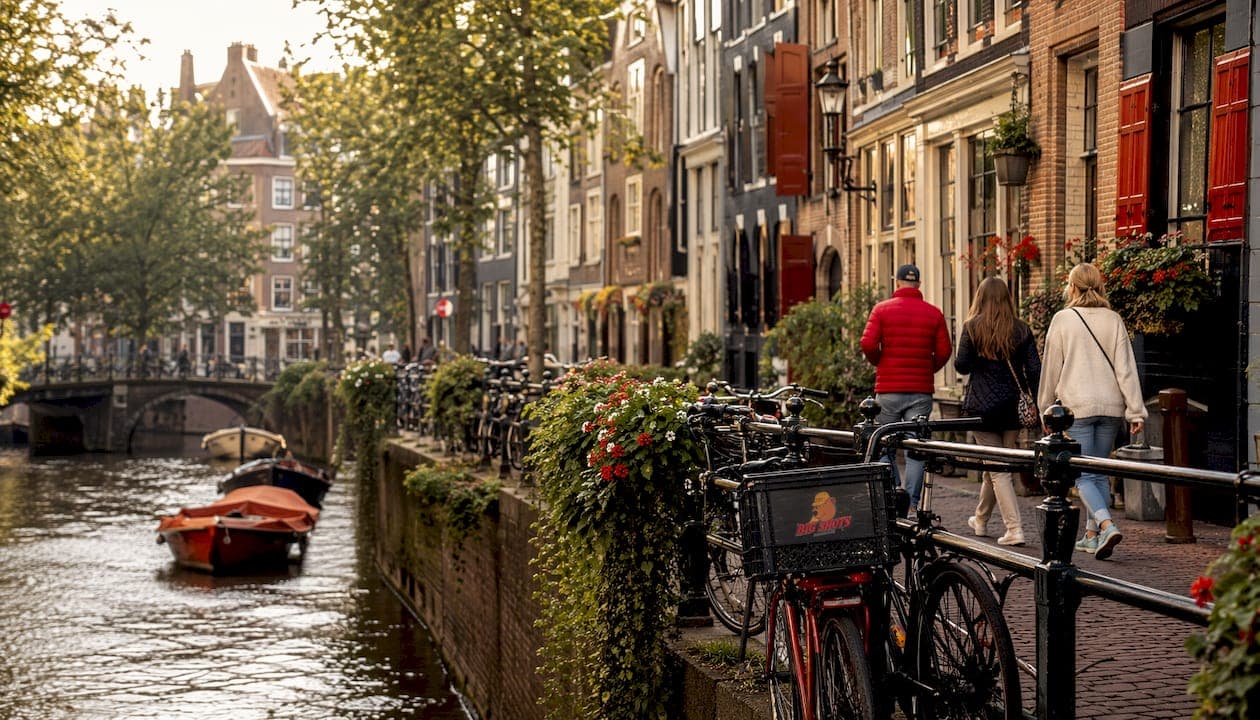
The Canal Belt is the geographic and cultural core of Amsterdam's visitor experience. Four concentric canals, Singel, Herengracht, Keizersgracht, and Prinsengracht, were dug in the 17th century as part of a planned urban expansion. UNESCO added the Canal Ring to its World Heritage List in 2010, recognizing it as one of the best-preserved examples of planned urban development from that era.
The Anne Frank House on Prinsengracht is the area's most visited site. Book tickets weeks in advance, especially between april and august. The Nine Streets (De Negen Straatjes) cross the canals at the western end and offer independent boutiques, vintage shops, and coffee spots. The Golden Bend on Herengracht showcases the grandest merchant houses in the city. For night photography, the Reguliersgracht and Herengracht intersection is the standout spot, where seven bridges light up simultaneously. The Magere Brug (Skinny Bridge) over the Amstel river is another iconic image, best photographed after dark.
Walking vs. canal cruise: which works better?
| Experience | Walking | Canal Cruise |
|---|---|---|
| Cost | Free | €18–€170 depending on boat type |
| Duration | Self-paced | 60 min to 3 hrs |
| Best for | Architecture detail, street-level discovery | City overview, photography from water |
| Flexibility | High | Low to medium |
| Accessibility | Requires mobility | Easier for all fitness levels |
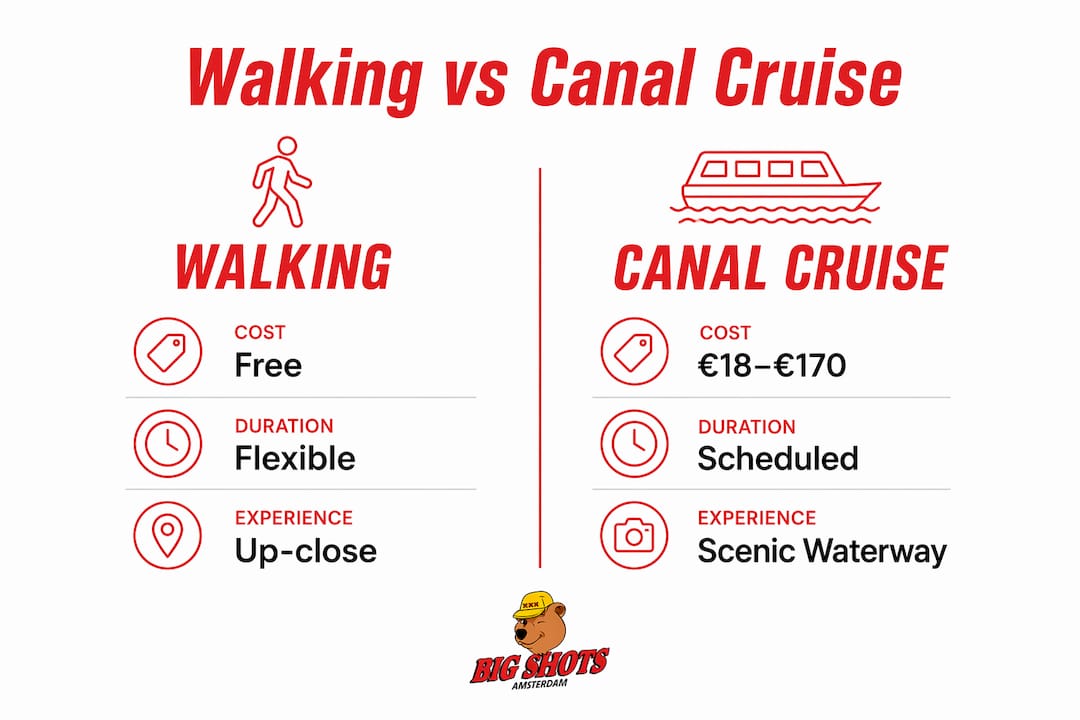
Canal cruise pricing ranges from €18–€25 for large covered boats to €100–€170 for private rentals. That price gap reflects a real difference in experience. Large boats move fast and cover more ground. Private rentals let you linger at the spots that matter to you. For a boutique canal experience, smaller operators offer routes that avoid the busiest waterways entirely.
Pro Tip: Sunset cruises between may and august run from 8:00–9:00 PM and offer the best light for canal photography. Book at least two days ahead during peak season.
How does the Jordaan neighborhood offer an authentic Amsterdam atmosphere?
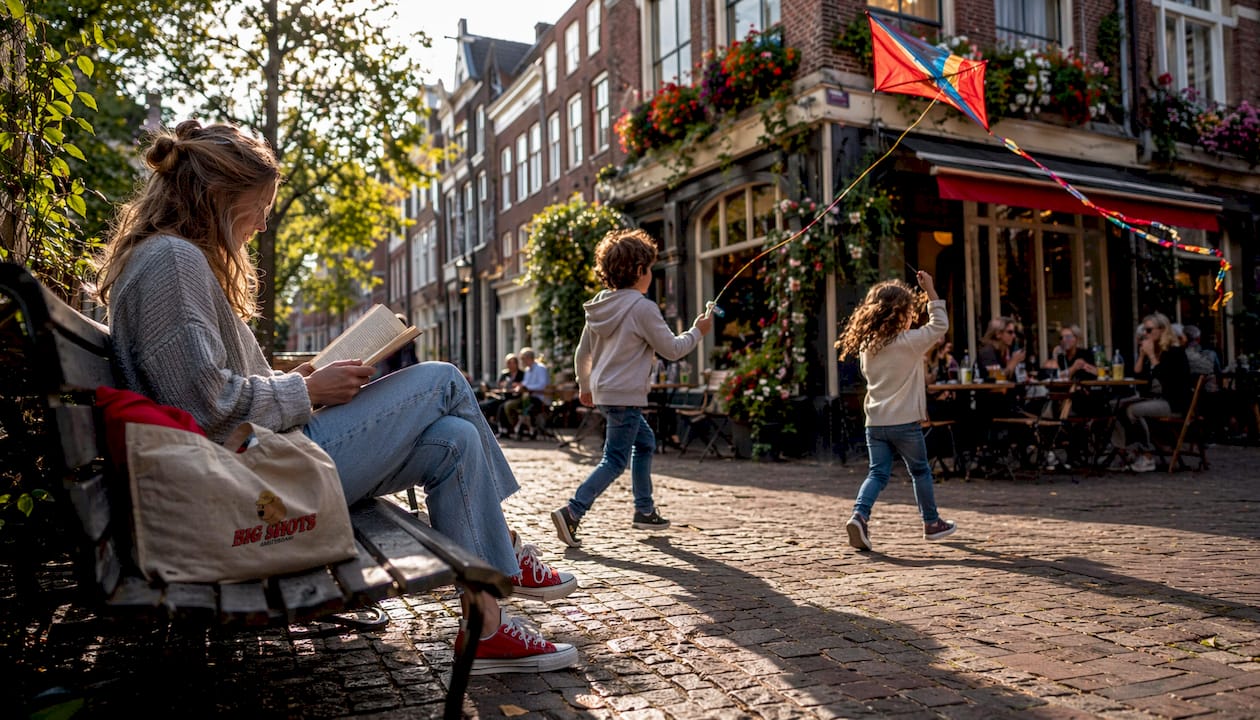
Jordaan started as a working-class district in the 17th century, home to craftsmen, immigrants, and laborers. Today it is one of the most desirable residential areas in the city, with narrow streets, flowering window boxes, and a pace of life that feels genuinely unhurried. That transformation is exactly what makes it worth visiting.
Slow wandering through Jordaan rewards more than rushing between sights. The district's appeal is experiential rather than monument-based. Key stops include:
- Noordermarkt on saturday mornings for organic produce and antiques
- Café Papeneiland, one of the oldest brown cafés in the city, dating to 1642
- Westerkerk, the church tower that appears in Anne Frank's diary
- Bloemgracht, a quieter canal lined with 17th-century warehouses
- Elandsgracht, a street that mixes local shops with small galleries
Jordaan sits directly adjacent to the Canal Belt, which means you get canal views without Canal Belt prices. The trade-off is that boutique hotels here often occupy converted canal houses. Those buildings lack elevators and have steep, narrow staircases, which matters if you are traveling with heavy luggage or have mobility concerns.
Pro Tip: Visit Noordermarkt on a saturday before 10:00 AM to beat the crowds and get first pick of the antique stalls.
Why is De Pijp the food and culture hotspot for visitors?
De Pijp is the neighborhood that experienced travelers consistently recommend over the Canal Belt for day-to-day living and eating. It combines local character, diverse food options, and metro access to Centraal Station in under 10 minutes. That combination is hard to beat for visitors who want to eat well, sleep affordably, and still reach the main sights quickly.
Albert Cuyp Market runs the length of Albert Cuypstraat and is the largest outdoor market in the Netherlands. It operates monday through saturday and sells everything from fresh stroopwafels to Indonesian spices. The neighborhood's culinary identity reflects Amsterdam's colonial history, with Indonesian and Surinamese restaurants sitting alongside Dutch brown cafés and modern wine bars. For visitors tracking Amsterdam's current restaurant and nightlife trends, De Pijp is where most of the action is happening in 2026.
Key reasons to base yourself in De Pijp:
- Albert Cuyp Market for street food and local produce every weekday and saturday
- De Pijp metro station connects directly to Centraal Station and Amsterdam Zuid
- Accommodation costs run lower than Centrum without sacrificing central access
- Sarphatipark, a small green square ideal for a mid-afternoon break
- Nightlife density rivals Leidseplein without the tourist-bar saturation
What cultural treasures define Oud-Zuid and the Museum Quarter?
Oud-Zuid (Old South) holds the highest concentration of world-class museums in Amsterdam. The Rijksmuseum, Van Gogh Museum, and Stedelijk Museum all sit within a five-minute walk of each other on Museumplein. That density makes Oud-Zuid the logical base for culture-first travelers who want to spend multiple days in museum collections.
- Rijksmuseum houses Rembrandt's Night Watch and Vermeer's The Milkmaid, two of the most recognized Dutch Golden Age paintings in the world.
- Van Gogh Museum holds the largest collection of Van Gogh's work globally, including over 200 paintings and 500 drawings.
- Stedelijk Museum focuses on modern and contemporary art, with a permanent collection that includes Mondrian, Malevich, and Appel.
- Concertgebouw is one of the most acoustically respected concert halls in the world and offers free lunchtime concerts on Wednesdays.
- P.C. Hooftstraat is Amsterdam's luxury shopping street, running directly from Museumplein toward Vondelpark.
Vondelpark anchors the western edge of Oud-Zuid and functions as the city's main outdoor living room. Locals cycle through it, picnic on its lawns, and use the open-air theater in summer. Visiting Vondelpark between museum sessions resets the sensory overload that comes with back-to-back exhibitions. Oud-Zuid is quieter and more residential than Centrum, and tram lines 2, 5, and 12 connect it directly to the city center.
What unique experiences does Amsterdam-Noord offer compared to central neighborhoods?
Amsterdam-Noord sits across the IJ river and operates on a completely different register from the historic center. It is post-industrial, creative, and significantly less crowded. The free ferry from Centraal Station takes 3–6 minutes and runs around the clock, making Noord far more accessible than most visitors expect.
The neighborhood's cultural anchors include:
- NDSM Wharf, a former shipyard turned arts complex with studios, street art, and a flea market on weekends
- EYE Filmmuseum, a striking white building on the IJ waterfront with a free permanent exhibition and a strong program of classic and independent cinema
- A'DAM Lookout, a rooftop observation deck with a swing that extends over the edge of the building, offering panoramic views of the city
- Buiksloterweg ferry terminal area, lined with waterfront cafés and a growing food scene
Noord's shift from industrial to cultural happened gradually over the past 15 years and accelerated after the metro line opened in 2018. Accommodation in Noord costs noticeably less than in Centrum or Jordaan. The practical caution for visitors staying in Noord is late-night logistics. The free ferry runs all night, but frequency drops after midnight, which adds waiting time after an evening out in the center.
Pro Tip: For a biking and urban adventure that covers Noord properly, rent a bike at Centraal Station and take it on the ferry. The flat terrain and wide paths make Noord one of the easiest areas in Amsterdam to explore by bicycle.
Key Takeaways
Amsterdam's tourist areas each serve a distinct traveler type, and choosing the right district determines the quality of your entire visit.
| Point | Details |
|---|---|
| Canal Belt is the historic core | UNESCO-listed canals, Anne Frank House, and iconic bridges reward early booking and evening visits. |
| Jordaan suits slow travelers | Narrow streets, brown cafés, and Noordermarkt deliver authentic local life without monument crowds. |
| De Pijp balances cost and access | Metro links, Albert Cuyp Market, and lower accommodation prices make it the best all-around base. |
| Oud-Zuid concentrates culture | Rijksmuseum, Van Gogh Museum, and Vondelpark cluster within walking distance for culture-focused visitors. |
| Amsterdam-Noord rewards the curious | Free ferry access, NDSM Wharf, and EYE Filmmuseum offer a creative, budget-friendly alternative to the center. |
What I've learned from watching visitors choose the wrong neighborhood
Most first-time visitors to Amsterdam book accommodation near Dam Square because it feels safe and central. I understand the logic. The problem is that staying in Centrum means paying a premium for a location surrounded by tourist infrastructure rather than actual Amsterdam life. Moving one tram stop away or walking 20 minutes can cut accommodation costs by roughly 30%. That is not a small saving over a week-long trip.
My honest recommendation for first-time visitors is to stay south of the IJ river, in De Pijp or Oud-Zuid. You get metro and tram access to every major sight, you sleep in a quieter neighborhood, and you eat at restaurants where the menu is not printed in six languages. Amsterdam-Noord is genuinely exciting, but the late-night ferry logistics add friction that first-timers do not need.
The travelers who enjoy Amsterdam most are the ones who book Canal Belt and Jordaan accommodation early, especially for april through august and around King's Day in late april. Rooms in those neighborhoods sell out weeks in advance. If you miss that window, De Pijp is not a consolation prize. For many visitors, it turns out to be the better choice anyway.
— Leo
A local venue worth adding to your Amsterdam itinerary
Amsterdam's neighborhoods are best experienced at street level, and that includes its hospitality scene. Bigshotsamsterdam is a bar, café, restaurant, and shisha lounge that brings together sports, dining, and nightlife in one lively venue.
Whether you are winding down after a day at the Rijksmuseum or looking for somewhere to watch a match with good food and craft cocktails, Bigshotsamsterdam delivers the kind of atmosphere that makes Amsterdam worth staying in longer. The menu covers everything from breakfast to steaks, and the vibe works equally well for a casual solo visit or a group night out. Check the late-night dining and bars guide to plan your evening around the best Amsterdam has to offer.
FAQ
What are the main tourist areas in Amsterdam?
Amsterdam's main tourist areas are Centrum, the Canal Belt, Jordaan, Oud-Zuid, De Pijp, and Amsterdam-Noord. Each district offers a distinct atmosphere, price range, and set of attractions suited to different traveler preferences.
Which Amsterdam neighborhood is best for first-time visitors?
De Pijp and Oud-Zuid offer the best combination of transport access, local character, and value for first-time visitors. Both connect to Centraal Station in under 10 minutes and sit within easy reach of the city's top museums and canals.
How do I get to Amsterdam-Noord from the city center?
A free ferry runs from Centraal Station to Amsterdam-Noord in 3–6 minutes and operates around the clock. The metro line opened in 2018 also connects Noord to the broader city network.
When should I book accommodation in the Canal Belt or Jordaan?
Book as early as possible for visits between april and august or around King's Day in late april. Rooms in these central historic neighborhoods sell out weeks in advance and carry the highest prices in the city.
Is a canal cruise worth the cost in Amsterdam?
A canal cruise is worth it for first-time visitors who want a city overview and strong photography opportunities. Large covered boats cost €18–€25 for 60–80 minutes, while private rentals run €100–€170 for a more flexible, personal experience.