
TL;DR:
- Amsterdam bar design blends traditional brown bars and contemporary concept venues to create unique spaces. Successful bars treat décor, food, drinks, and music as an integrated system that reflects authenticity and local heritage. Collaboration early in the process and respecting historic elements result in coherent, welcoming environments that balance old and new.
Amsterdam bar design is defined by a productive tension between canal house heritage and bold contemporary interiors, producing spaces that are simultaneously historic and fresh. Explaining bar design in Amsterdam means understanding two forces: the centuries-old brown bar tradition and the rise of concept-driven venues that treat every surface as part of a story. Studios like Studio Elèn Letort have turned 1920s cinemas into restaurants, while cocktail bars like Sins of Sal and CUE Amsterdam have redefined what a night out looks like architecturally. The city's bar interior design vocabulary is unlike anywhere else in Europe, and that distinctiveness is worth unpacking in detail.
What are the dominant design archetypes shaping bars in Amsterdam?
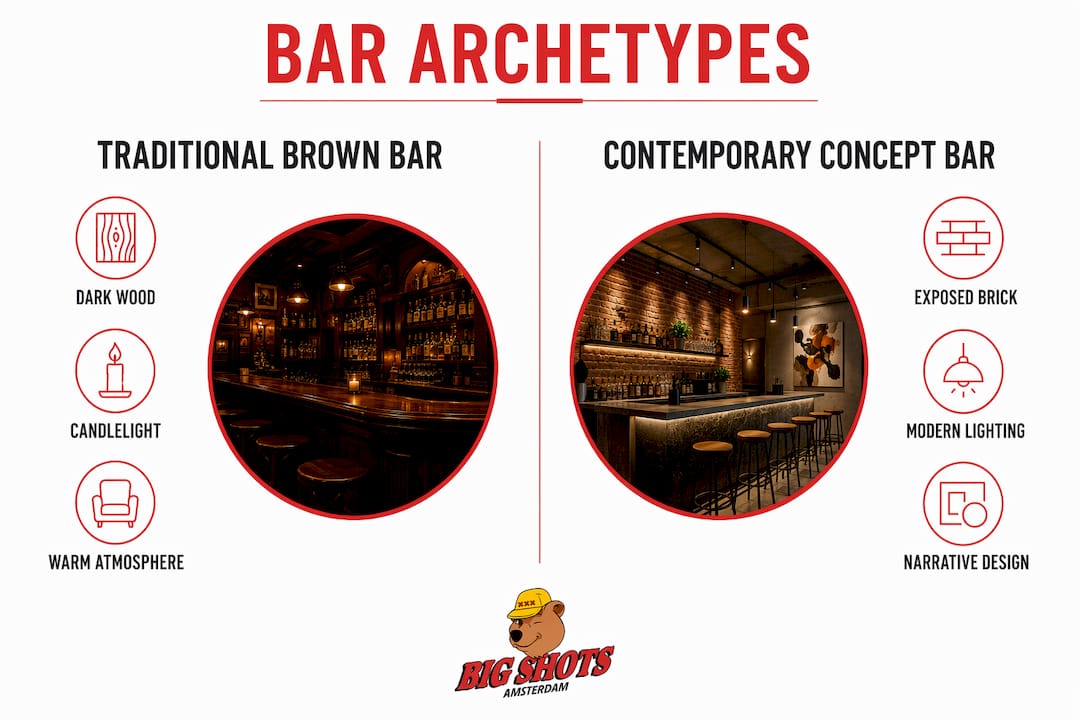
Amsterdam bar design follows two dominant archetypes: the traditional brown bar and the contemporary concept bar. Each archetype produces a completely different spatial experience, and understanding both is the starting point for any serious study of Amsterdam bar interior design.
The traditional brown bar
The brown bar, or bruine kroeg, is the oldest and most recognizable format. These spaces rely on dark wood paneling, low ceilings, and soft candlelight to create an atmosphere of warmth and familiarity. Rich materials like dark wood and vintage furnishings build the historic charm that separates Amsterdam's neighborhood bars from anything you would find in a modern hotel lobby. The spatial layout is deliberately compact, encouraging conversation across small tables and at the bar counter itself.
The contemporary concept bar
Concept bars operate on a completely different logic. Designers treat the interior as a narrative device, where wall color, furniture shape, and lighting all serve a single thematic idea. At Sins of Sal in the Jordaan district, red neon, vintage relics, and film references embody a sin-and-ritual theme that runs from the cocktail menu to the door handles. The result is a space where every detail reinforces the story the bar is trying to tell.
The table below shows how these two archetypes differ across the key design variables.
| Design variable | Traditional brown bar | Contemporary concept bar |
|---|---|---|
| Primary material | Dark wood, aged brass | Exposed brick, marble, bold textiles |
| Lighting | Candlelight, warm incandescent | Neon accents, directional spotlights |
| Spatial layout | Compact, communal | Zoned, narrative-driven |
| Atmosphere goal | Lived-in familiarity | Immersive storytelling |
| Signage approach | Minimal, word-of-mouth | Concealed or theatrical |
Pro Tip: When studying Amsterdam bar architecture, visit both archetypes on the same evening. The contrast in how each space makes you feel physically is the fastest design education available.
Many of the most interesting bars in Amsterdam today blend both archetypes. Designers use exposed brickwork and acoustic curtains inherited from industrial heritage buildings, then layer in circular furniture shapes and striped walls to signal a contemporary identity. This hybrid approach is now the defining characteristic of the city's best bar architecture.
How do contemporary Amsterdam bars integrate design with hospitality function?
The most effective Amsterdam bars treat design and hospitality as a single system, not two separate departments. Separating design from function is the most common pitfall in bar development, and Amsterdam's leading venues have built their reputations by refusing to make that mistake.
CUE Amsterdam is the clearest example of this integration. The bar's cocktail menu directly reflects the kitchen's ingredient sourcing, and the music listening space adapts traditional listening bar practices to Amsterdam's social culture. Food, cocktails, and music function as one coherent experience rather than three parallel offerings. The interior design supports that integration by creating acoustic zones that allow conversation without sacrificing sound quality.
The four-pillar model used by concept bars in Amsterdam works as follows:
- Décor sets the visual and emotional tone before a guest orders anything.
- Cocktails extend the narrative through flavor, naming, and presentation.
- Food reinforces the theme through ingredient sourcing and plating style.
- Music controls the energy level and pacing of the guest experience.
"The bar's cocktail menu reflects the kitchen's ingredients, and the music space adapts traditional listening bar practices to Amsterdam's social settings." — CUE Amsterdam
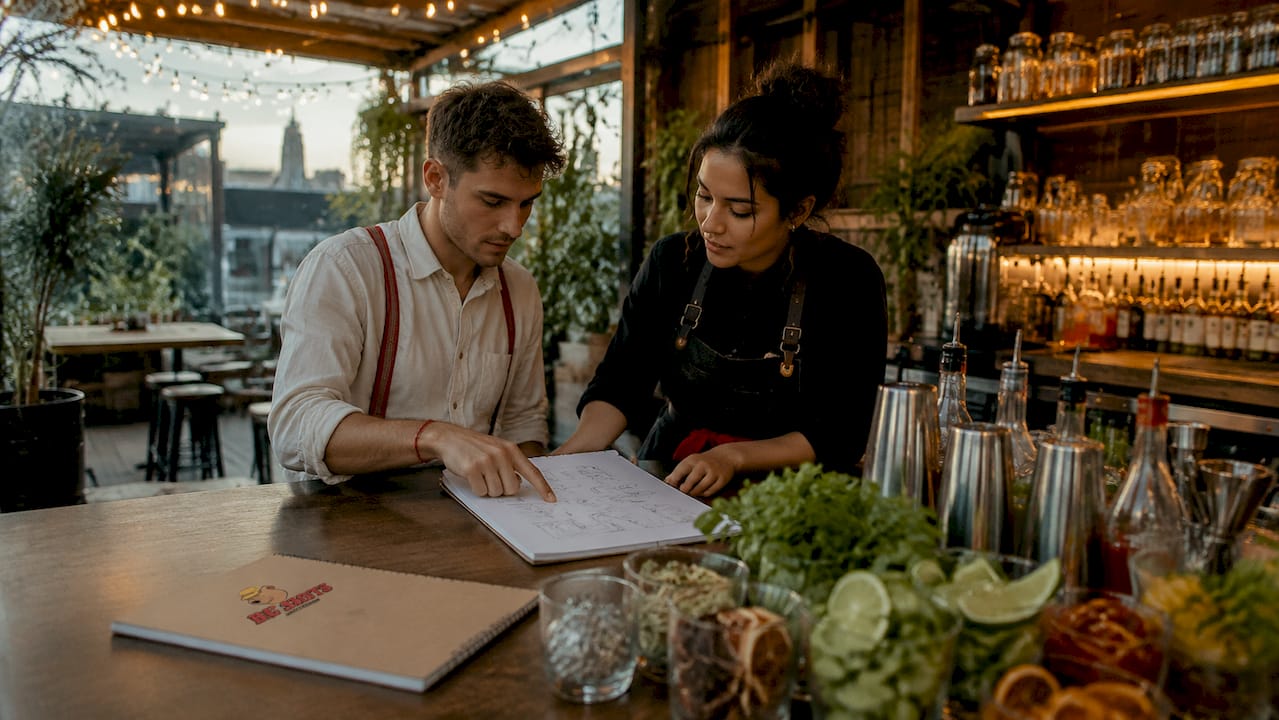
Sins of Sal applies the same logic through a film-based theme developed collaboratively by a mixologist, a bartender, and an interior designer. That three-way collaboration is unusual in the industry and explains why the space feels so coherent. Most bars commission an interior designer after the concept is already fixed, which creates visible gaps between what the space looks like and what it serves.
Pro Tip: If you are designing a bar in Amsterdam, bring your interior designer into the concept meeting before the menu is written. The spatial decisions and the drink decisions should inform each other from day one.
Acoustic treatment is another area where function and design intersect in ways that are easy to underestimate. Bars that invest in acoustic curtains, upholstered surfaces, and ceiling baffles create spaces where guests stay longer because conversation is easier. That directly affects revenue per seat, which is the metric that matters most to operators.
What are the challenges of blending tradition with modern bar design in Amsterdam?
The central tension in Amsterdam bar design is authenticity. Traditional brown bars achieve their worn ambiance through decades of genuine use, including tobacco smoke and candlelight staining, not through artificial aging techniques. Replicating that patina in a new build is nearly impossible, and experienced locals recognize the difference immediately.
The risks of getting this balance wrong include:
- Faux-aging backfire. Artificially distressed wood and fake patina read as inauthentic to Amsterdam regulars, who have grown up in genuinely old spaces.
- Instagram trap. Over-designed spaces alienate local crowds who prefer an unhurried, lived-in atmosphere over polished aesthetics. Bar Bukowski in Amsterdam is consistently preferred by locals for its accessibility and atmosphere, not its visual ambition.
- Preservation constraints. Many Amsterdam buildings carry heritage protection status, which limits what designers can alter structurally. Exposed brick walls may be mandatory, not a stylistic choice.
- Amsterdamse School conflicts. The early 20th-century Amsterdamse School architectural style, characterized by expressive brickwork and decorative facades, creates a strong visual context that modern interventions must respect or consciously respond to.
The dialogue approach to heritage buildings is the most successful strategy designers have found. Rather than trying to hide or overwrite historic features, designers expose structural elements like brick walls and original ceiling beams, then introduce bold contemporary geometries alongside them. Studio Elèn Letort's Ceintuur Theatre project demonstrates this clearly: the 1920s cinema shell remains visible while circular shapes and striped walls signal a new identity.
The lived-in quality that makes Amsterdam bars feel genuinely welcoming cannot be manufactured on a project timeline. Designers who understand this work with existing wear rather than against it, selecting materials that will age gracefully rather than materials that look perfect on opening night and tired six months later.
What practical design ideas work in Amsterdam's best bar interiors?
The most effective bar design ideas in Amsterdam share a commitment to specificity. Generic choices produce forgettable spaces. The bars that attract both locals and architecture-conscious visitors make decisions that could only work in that particular building, for that particular concept.
| Design feature | Where it works | What it achieves |
|---|---|---|
| Stained glass arches | Heritage buildings with original windows | Connects new interior to building's history |
| Marble bar tops | Concept bars with premium positioning | Signals quality without requiring large footprint |
| Striped walls | High-ceiling spaces like former cinemas | Breaks vertical scale, adds playful rhythm |
| Hidden entrance | Narrow canal house floor plans | Creates discovery moment, builds exclusivity |
| Vintage bespoke furniture | Brown bar renovations | Adds character that flat-pack furniture cannot replicate |
Zum Barbarossa in Amsterdam uses concealed entrances and basement spaces to create a speakeasy atmosphere that references 17th-century canal house architecture. The narrow floor plan, which would be a liability in most retail contexts, becomes the bar's primary design asset. Guests feel they have found something rather than stumbled into it.
Ceintuur Theatre takes a different approach to the same challenge of working within a large, historically significant shell. Studio Elèn Letort blends Amsterdamse School references with modern circular shapes, creating a visual conversation between the 1920s building and a 2020s sensibility. The stained glass arches and marble surfaces are not decorative afterthoughts. They are structural arguments about how old and new can coexist.
Pro Tip: Before selecting any material for an Amsterdam bar renovation, spend time in the space at different times of day. Natural light from canal-facing windows changes dramatically between morning and evening, and materials that look warm at noon can feel cold by 9 p.m.
Bespoke furnishings consistently outperform off-the-shelf alternatives in bar atmospheres across Amsterdam. A custom banquette built to fit an awkward alcove does more for a space than a perfectly designed chair placed in the wrong spot. The best Amsterdam bar interiors are built around the building's quirks, not despite them. For a broader look at how thematic concepts shape the city's nightlife, the unique bar themes in Amsterdam guide covers the full range of approaches currently in use.
Key takeaways
Amsterdam bar design succeeds when heritage and contemporary elements are developed together as one coherent system, not layered on top of each other after the fact.
| Point | Details |
|---|---|
| Two core archetypes | Brown bars and concept bars define the spectrum; the best venues borrow from both. |
| Four-pillar integration | Décor, cocktails, food, and music must be designed as one system, not separately. |
| Authenticity over aesthetics | Genuine aging and lived-in materials outperform artificial patina with Amsterdam locals. |
| Architecture as asset | Narrow plans, hidden doors, and heritage brickwork are design opportunities, not constraints. |
| Collaboration from day one | Bringing designers into concept meetings before menus are written produces more coherent spaces. |
What Amsterdam bar design taught me about restraint
Amsterdam's bar scene has a quality that most design-forward cities lack: it knows when to stop. The brown bars that have survived for a century did not survive because they were designed well. They survived because they were not over-designed. That is a harder lesson than it sounds.
When I look at the concept bars that are genuinely working in Amsterdam right now, like Sins of Sal and CUE Amsterdam, the common thread is not visual complexity. It is clarity of intention. Every element in those spaces earns its place by serving the concept. The designers behind Ceintuur Theatre understood that the 1920s cinema did not need to be transformed. It needed to be respected and then gently extended.
The 2026 nightlife trends confirm what experienced designers already know: guests are moving away from spaces that feel like they were built for photographs and toward spaces that feel like they were built for people. That shift is not a trend. It is a correction.
For hospitality professionals and design students, Amsterdam offers a rare curriculum. You can walk from a 17th-century brown bar to a 2020s concept bar in ten minutes and feel the full range of what interior design can do to human behavior. The city does not just illustrate design principles. It lives them. The most useful thing you can take from studying Amsterdam bar design is not a list of materials or a color palette. It is a standard for what a space should make a guest feel before they have ordered a single drink.
— Leo
Bigshotsamsterdam: where Amsterdam's design principles come to life
Bigshotsamsterdam brings together the design thinking discussed throughout this article into a single venue that locals and visitors return to consistently.
The space combines a sports bar, shisha lounge, restaurant, and café under one roof, with an atmosphere that prioritizes comfort and character over visual performance. The bar and café experience at Bigshotsamsterdam reflects the same four-pillar logic that defines Amsterdam's best concept venues: food, drinks, atmosphere, and entertainment developed as one coherent offer. Whether you are visiting for a casual evening, a sports night, or a long dinner, the space adapts without losing its identity. Bigshotsamsterdam is the kind of venue that Amsterdam's design culture produces at its best.
FAQ
What defines bar design in Amsterdam?
Amsterdam bar design is defined by the interplay between traditional brown bar heritage and contemporary concept-driven interiors. The best spaces treat décor, food, drinks, and music as one integrated system rather than separate elements.
What is a brown bar and how does it influence modern design?
A brown bar is a traditional Dutch neighborhood pub characterized by dark wood, candlelight, and a genuinely aged atmosphere built over decades. Modern Amsterdam bars frequently borrow its material warmth and communal spatial logic while adding contemporary elements.
How do Amsterdam designers work with historic buildings?
Designers use a dialogue approach, exposing structural features like brick walls and original windows while introducing bold contemporary geometries alongside them. Studio Elèn Letort's Ceintuur Theatre project is the clearest current example of this method.
Why do over-designed bars struggle in Amsterdam?
Amsterdam locals consistently favor lived-in, approachable atmospheres over polished, visually ambitious spaces. Bar Bukowski is a well-known example of a venue that succeeds precisely because it prioritizes authenticity over aesthetic ambition.
What is the most important practical tip for designing a bar in Amsterdam?
Bring your interior designer into the concept development process before the menu is finalized. Spaces like Sins of Sal and CUE Amsterdam achieved their coherence because design and hospitality decisions were made together, not sequentially.