
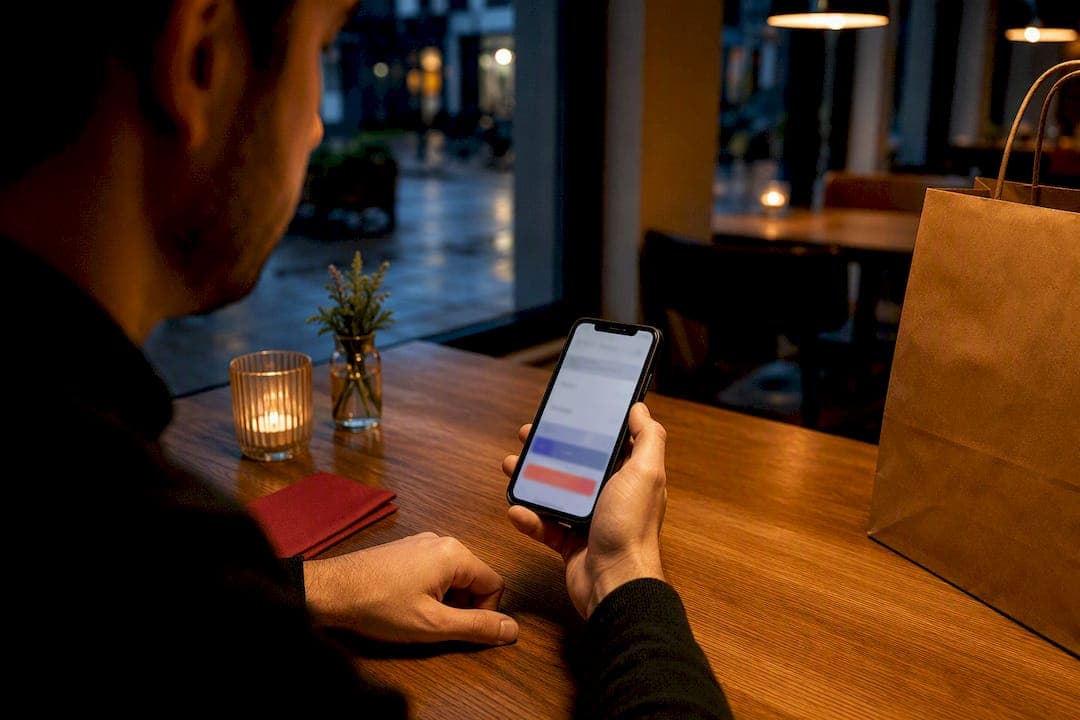
A typical food delivery order in the Netherlands adds about €3.50 to €8.50 in combined delivery and service fees on top of your meal price, and that's separate from any tip you leave your courier. Delivery fees cover the courier and logistics; service or platform fees cover the app itself. Menu prices inside delivery apps also tend to run higher than what you'd pay ordering directly, so the sticker price you see is rarely your final total.
TL;DR:
- Delivery fees fluctuate based on distance, demand, weather, and local courier availability, often adding €3.50 to €8.50 per order in the Netherlands.
- Service or platform fees are separate from courier pay and fund app maintenance, payment processing, and customer support, typically ranging from €2.50 to €5.00.
- Menu prices on delivery apps are usually inflated by 10 to 15 percent to offset platform commissions, making delivery more expensive than direct ordering.
- Ordering directly from restaurant websites or during off-peak hours can significantly reduce overall costs by avoiding platform charges and dynamic pricing surges.
- Dutch regulations require delivery platforms to clearly disclose all extra charges upfront, and consumers should watch for hidden fees or vague labels before finalizing orders.
Table of Contents
- Bezorgkosten Nederland: What Every Fee on Your Screen Actually Means
- What Makes Bezorgkosten Nederland Go Up or Down?
- What Do Real Delivery Orders Actually Cost in the Netherlands?
- How to Pay Less for Delivery in the Netherlands
- Are Dutch Delivery Fees Required to Be Shown Upfront?
- How Amsterdam Venues Handle Delivery and Merchandise Fees
- Skip the Platform Markup: Order Direct From Big Shots Amsterdam
- Primary Sources and Further Reading
- Sources
- FAQ
Bezorgkosten Nederland: What Every Fee on Your Screen Actually Means
Open any delivery app checkout and you'll see a stack of line items that all sound similar but pay for different things. Sorting them out is the first step toward not overpaying.
- Delivery fee: This pays the courier and covers last-mile logistics. It moves with distance, weather, and how busy the platform is at that moment.
- Service or platform fee: This is separate from courier pay entirely. It funds the marketplace itself, meaning payment processing, app maintenance, and customer support. Platforms like Uber Eats break this out as its own line, distinct from what the courier earns, and note that both vary by location, demand, and courier availability.
- Merchant add-ons: Restaurants sometimes tack on packaging costs, a small-order surcharge, or a charge for disposable bags. These come from the kitchen, not the app.
The confusion between these categories is exactly what trips people up. Knowing which is which helps you spot where you actually have room to save.
What Makes Bezorgkosten Nederland Go Up or Down?
Delivery pricing in the Netherlands isn't fixed. It shifts based on a handful of predictable triggers, and once you know them, you can often dodge the worst of it.
- Distance and postcode: Orders from farther away, or in areas with fewer active couriers, often carry a long-range fee.
- Timing and demand: Friday and Saturday evenings, plus bad weather, push dynamic pricing upward because fewer couriers are available relative to order volume.
- Small-order minimums: Fall short of a restaurant's minimum and you'll often eat a small-order fee just for ordering less.
- Platform-specific extras: Uber Eats, for instance, lists distinct charges including a long-range fee, local operating fee, and delivery adjustment that stack on top of the base delivery fee.
Commissions matter here too. Market analysis of the Dutch delivery sector shows platform commissions commonly run in the low to high twenties as a percentage of order value, and delivery or service fees typically add another €2.50 to €5.00 per order. Restaurants rarely absorb that commission quietly. Most build it into the menu price you see on the app, which is why the same burger can cost noticeably more through a delivery platform than at the counter.
What Do Real Delivery Orders Actually Cost in the Netherlands?
Numbers are easier to judge against real scenarios than abstract ranges. Here's how the math tends to play out for three common situations.
- Solo quick meal: A €12 rice bowl becomes roughly €16 to €18 once you add a €2 to €4 delivery fee and a €1.50 to €4.50 service fee, per the typical per-order add-on range seen across Dutch platforms.
- Two-person dinner: Two mains at €18 each, plus app menu inflation of roughly 10 to 15 percent over in-venue pricing, plus the same €3.50 to €8.50 in combined fees, often lands the total near €48 to €55.
- Family of four: Four meals averaging €15 to €20 each, plus fees that don't scale down per person, can push the total well past €90, meaning fees eat a smaller percentage of the bill but still add a fixed €4 to €8 regardless of order size.
A rough formula: take your menu subtotal, add 10 to 15 percent for app markup, then add €3.50 to €8.50 flat for fees. That gets you within a euro or two of your real total most nights.
How to Pay Less for Delivery in the Netherlands
Cutting your delivery bill down doesn't require giving up convenience. It requires being a little more deliberate about when and how you order.
- Do the subscription math: A delivery subscription only pays off if your fee savings across a month exceed the subscription cost itself. If you order twice a month, it rarely clears that bar.
- Hit the minimum on purpose: Add a low-cost side or drink to clear a restaurant's order minimum rather than paying a small-order fee for falling short.
- Order direct when you can: Calling or ordering through a restaurant's own site or ordering page often skips the platform's service fee and the inflated app menu price entirely.
- Stack loyalty and promo codes carefully: Restaurant-direct discounts and loyalty points tend to be worth more long term than one-time platform promo codes.
Pro Tip: Order during off-peak windows, like mid-afternoon or early evening on weekdays, when dynamic pricing hasn't kicked in and couriers aren't stretched thin.
Are Dutch Delivery Fees Required to Be Shown Upfront?
Yes, and this is a live issue. The Dutch Consumers' Association (Consumentenbond) has flagged that some platforms don't clearly show mandatory extra charges early enough in the checkout flow, which means shoppers sometimes only see the full fee stack right before paying.
Watch for these red flags:
- A total that jumps noticeably between the menu screen and the final checkout page.
- Fees labeled vaguely as "extra charge" with no breakdown of what they cover.
- Discounts that appear applied but don't actually change your final total.
If you spot this, contact the platform's support directly, and consider filing a report with Consumentenbond if the charge wasn't disclosed before you committed to the order. Asking the restaurant itself whether it offers direct ordering is often the simplest fix going forward.
How Amsterdam Venues Handle Delivery and Merchandise Fees
Running delivery through a third-party platform means giving up a meaningful commission on every order, which is why many Amsterdam restaurants weigh outsourcing delivery against handling it themselves. Some Amsterdam restaurants offer online food ordering and branded merchandise directly through their own sites, which sidesteps some of that platform markup. Staff generally steer delivery customers toward dishes that travel well and stay warm, rather than anything meant to be eaten the moment it leaves the kitchen. For more on the etiquette side of ordering and dining out, check Leo's guides on tipping norms and paying restaurant bills.
— Leo
Skip the Platform Markup: Order Direct From Big Shots Amsterdam
Every markup and service fee you've read about above comes from routing your order through a third-party app. Ordering directly from a venue's own site cuts that layer out, which means the price you see is closer to the price you actually pay. Ordering directly from a venue's own site is an alternative to aggregator platforms for anyone craving steaks, gourmet plates, or breakfast in Amsterdam. You skip the marketplace service fee, and pickup is always an option if you want to avoid delivery charges altogether.
Check the current menu, pick pickup or delivery, and browse the branded merchandise shop while you're at it. If you're weighing platforms against going direct more broadly, this piece on how online ordering affects restaurants and customers is worth a read. Ready to order? Head to the Big Shots Amsterdam ordering page and see today's menu.
Primary Sources and Further Reading
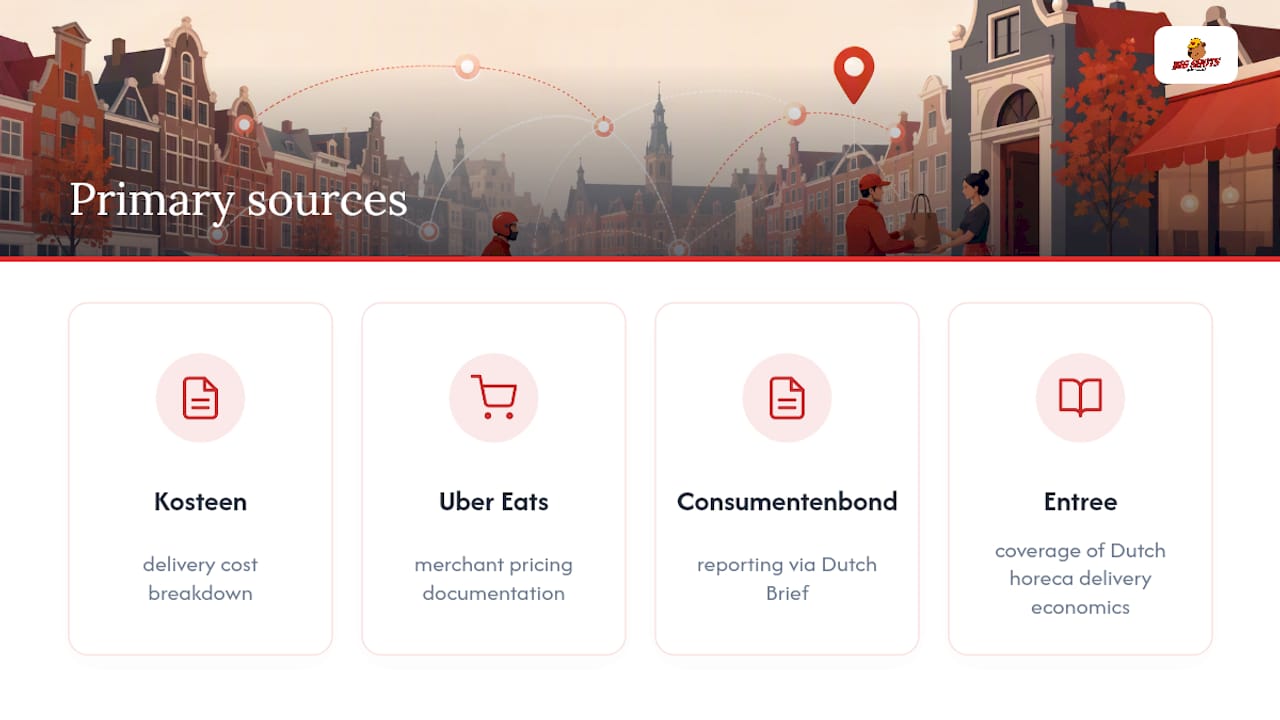
Facts and figures in this guide draw from Kosteen's delivery cost breakdown, Uber Eats merchant pricing documentation, Consumentenbond reporting via Dutch Brief, and Entree Magazine's coverage of Dutch horeca delivery economics.
Sources
- Kosteen
- Uber Eats merchant pricing (Netherlands)
- Thuisbezorgd Adds Hidden Costs and Fake Discounts, Consumers' Association Says
- Tarieven bezorgdiensten dilemma voor horecazaken: uitbesteden of zelf organiseren?
FAQ
What's a normal delivery fee in the Netherlands?
Expect combined delivery and service fees on a typical order that generally range within a modest bracket on top of a meal price that's often already higher than in-venue pricing.
Is the delivery fee the same as the service fee?
No. The delivery fee pays the courier for the trip, while the service or platform fee funds the app's operations, payment processing, and support.
Why do menu prices look higher on delivery apps?
Restaurants often build part of the platform's commission into app menu prices, which is why the same dish can cost more through delivery than ordering direct or picking up. Ordering directly from a venue like Big Shots Amsterdam avoids that markup.
Do I have to tip my delivery courier in the Netherlands?
No, tipping is optional and less standardized here than at sit-down restaurants, though many customers round up for convenience.
How can I avoid small-order fees?
Add a low-cost item to reach the restaurant's stated order minimum, or combine your order with someone else's to spread the fixed fee across more food.