
TL;DR:
- Historic U.S. bars like McSorley's and Lafitte's capture the authentic, conversation-focused atmosphere of Dutch brown cafes.
- Choosing the right venue involves verifying its founding date, staff longevity, original fixtures, and a quiet, unhosted environment.
If you're searching for cafekarpershoek.com alternatives that capture the same worn-wood, low-music, conversation-first atmosphere as Amsterdam's Café Karpershoek, the best U.S. cities to look are New York, Philadelphia, Boston, New Orleans, and San Francisco. Each has at least one bar with a preserved historic interior, decades of continuous operation, and the kind of regulars who know the bartender's name. Café Karpershoek itself traces its origins to around 1606, making it one of the oldest pubs in Amsterdam, a city whose café culture grew directly from VOC-era maritime trade.
TL;DR — Top U.S. Venues by City:
- McSorley's Old Ale House, NYC (East Village): Opened 1854; sawdust floors, no cocktails, two beers on tap.
- The Ear Inn, NYC (SoHo/Hudson Square): Circa 1817; one of Manhattan's oldest bars, quiet corner tables.
- McGillin's Olde Ale House, Philadelphia (Midtown Village): Opened 1860; longest continuously operating bar in Philly.
- Bell in Hand Tavern, Boston (Downtown): Founded 1795; claims to be one of the oldest taverns in the U.S.
- Lafitte's Blacksmith Shop, New Orleans (French Quarter): Built circa 1722; candlelit, no TVs, almost no music.
- The Saloon, San Francisco (North Beach): Opened 1861; oldest bar in San Francisco.
Table of Contents
- What makes a Dutch brown café different from a regular old bar?
- The best U.S. bars that actually feel like Café Karpershoek
- How do you pick the right venue for your visit?
- What to expect when you visit, and how to act
- Key Takeaways
- Why these picks hold up, and what most lists miss
- Visiting Amsterdam? Bigshotsamsterdam is a different kind of night out
What makes a Dutch brown café different from a regular old bar?
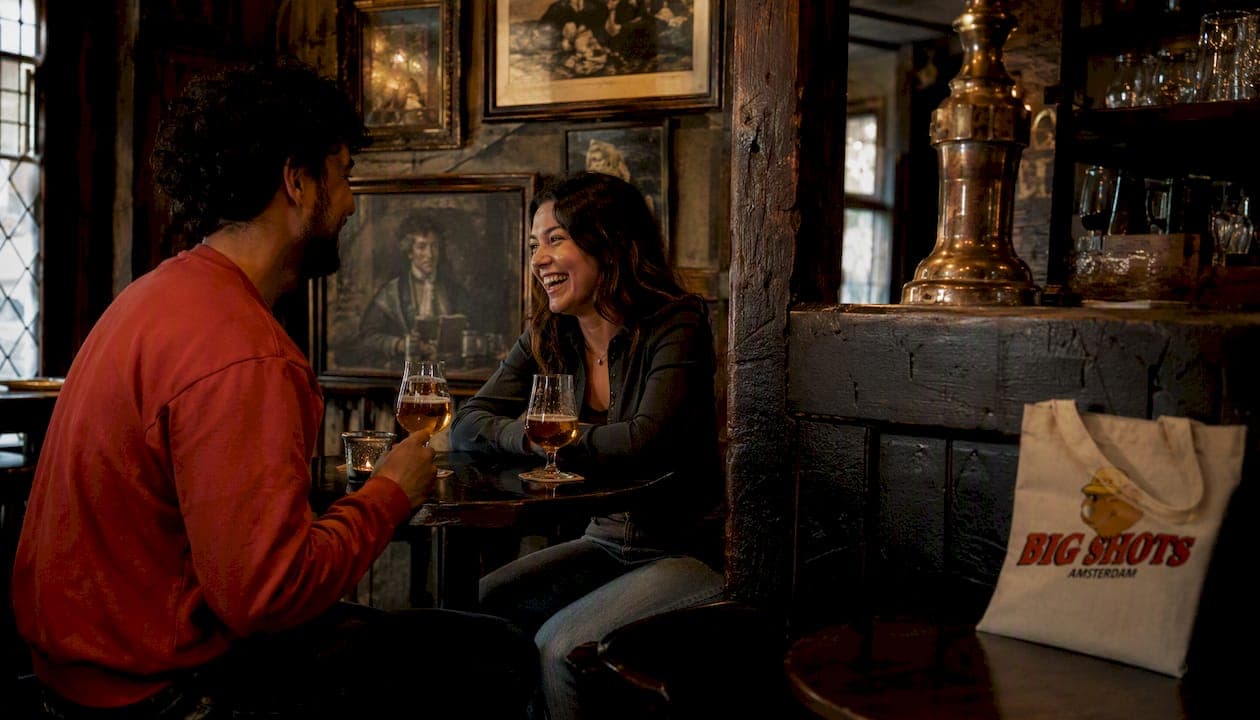
A Dutch brown café, or bruine kroeg, is defined first by its interior: dark wood, nicotine-stained ceilings, and original fixtures that have never been replaced for aesthetic reasons. Café Karpershoek, with its sand-covered floors and antique Delft blue tiles, is the textbook example. Those sand floors weren't decorative. They absorbed spills and tobacco ash over centuries of continuous use.
The social function matters just as much as the look. A specific subcategory, the praatcafé, deliberately avoids background music to keep conversation at the center. No screens, no DJ, no playlist. Many of these venues trace back to Amsterdam's VOC era, when sailors and merchants needed a place to talk business and drink jenever after long voyages.
Core features to look for when judging a U.S. venue:
- Original interior elements: exposed brick, vintage barrels, stained glass, gas-style chandeliers, or sand/sawdust floors
- Low or absent background music, with tables arranged for face-to-face conversation
- Long-tenured staff, often with decades at the same bar, and a visible regular clientele
- Traditional drinks: jenever or gin-adjacent spirits, local ales, simple snacks like cheese or nuts
- No table service expectation; you order at the bar
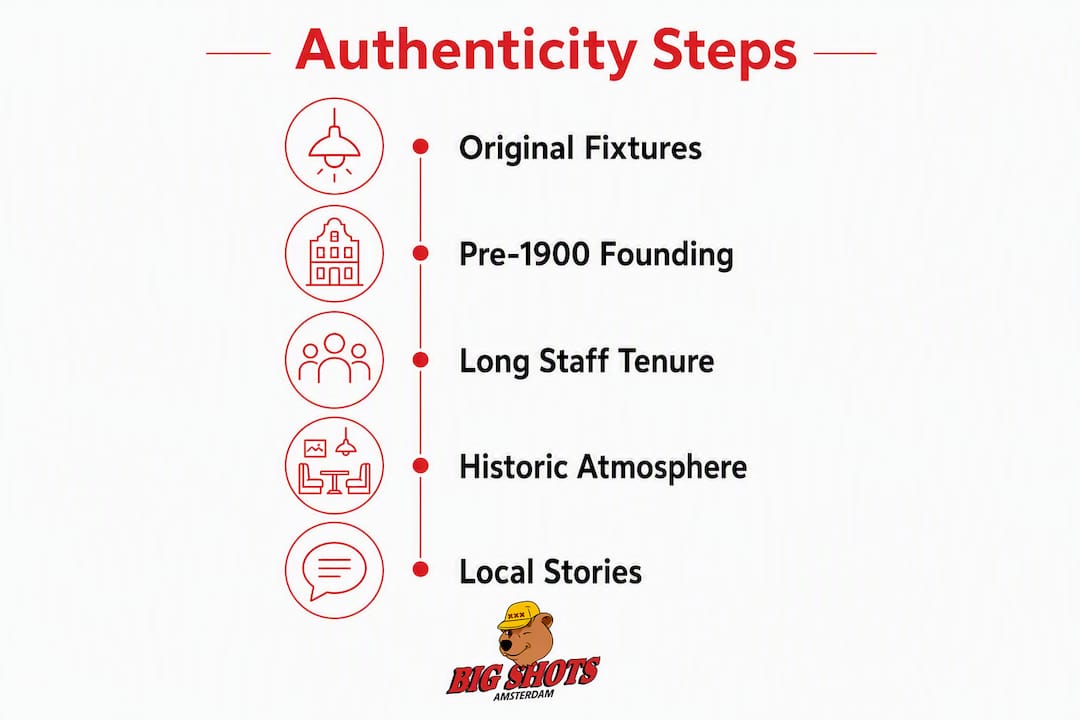
Authentic vs. recreated: Original fixtures tell a different story than themed decor. A bar that opened in 1860 and still has its original back bar is living history. A bar that opened in 2018 with "vintage" Edison bulbs and reclaimed wood is a set. The difference shows up in the details: uneven floors, mismatched stools, a bartender who can tell you which regular sat in that corner for thirty years.
Pro Tip: Ask the bartender how long they've worked there. Staff longevity is the single most reliable signal of an authentic atmosphere, more than any interior feature.
The best U.S. bars that actually feel like Café Karpershoek
Selection came down to four criteria: a preserved historic interior, evidence of long continuous operation, a conversational or low-key atmosphere, and a menu anchored in traditional drinks rather than trend-driven cocktails.
McSorley's Old Ale House — East Village, New York City McSorley's has sawdust on the floor and a very limited menu with a couple of beer options. That's it. The walls are covered in decades of memorabilia, and the bar has been open almost every day since Lincoln was president. Order the dark ale with a side of crackers and cheese, the closest thing to Dutch kaasblokjes you'll find in Manhattan.
The Ear Inn — Hudson Square, New York City The Ear Inn occupies a historic Federal-style building dating back over a century in Manhattan. It's narrow, dimly lit, and the kind of place where the person next to you at the bar will start talking without much prompting. The menu is simple American pub food. Go on a weekday afternoon for the quietest, most praatcafé-like experience.
McGillin's Olde Ale House — Midtown Village, Philadelphia McGillin's is known as one of Philadelphia's longest continuously operating taverns. The original bar fixtures are intact, and the staff includes people who have worked there for decades. Draft beers and straightforward food. It's louder on weekends, so a Tuesday evening gets you closer to the Karpershoek vibe.
Bell in Hand Tavern — Downtown, Boston Bell in Hand is a historic tavern located in Boston's downtown historic district. The building has been renovated over the years, so the interior is less raw than McSorley's, but the history is real and the location in the heart of Boston's historic district adds to the atmosphere. Classic New England pub food and a solid draft selection.
Lafitte's Blacksmith Shop — French Quarter, New Orleans Lafitte's is a historic bar in New Orleans' French Quarter known for its candlelit atmosphere and minimal noise. No TVs. Candles only after dark. The music, when it appears, is a single pianist in the corner, not a sound system. Order a Hurricane or a simple bourbon. The atmosphere at night, lit entirely by candlelight, is as close to an 18th-century tavern as you'll find anywhere in the country.
The Saloon — North Beach, San Francisco The Saloon is a historic bar in San Francisco with a storied past including surviving major city events. It survived the 1906 earthquake and fire, which says something about the building's bones. Live blues on weekends make it louder than a praatcafé, but weekday afternoons are quiet. Order a local draft and take a stool at the bar.
How U.S. bars differ from Dutch originals: The menu emphasis shifts toward American pub food rather than simple Dutch snacks. Jenever is rarely available by name, though a good gin served neat comes close. U.S. liquor laws also mean most of these bars close earlier than Amsterdam's brown cafés, and smoking indoors is prohibited in all five cities. The conversational norm exists but isn't enforced the way a true praatcafé enforces it.
How do you pick the right venue for your visit?
Prioritize atmosphere signals over marketing language. A bar's website calling itself "historic" means nothing. The reviews do.
Decision checklist:
- Confirm the founding year from a primary source, not just the bar's own website.
- Search recent reviews specifically for mentions of staff tenure, regulars, and quiet atmosphere.
- Note peak vs. off-peak times. Most of these venues are louder on Friday and Saturday nights.
- Check reservation policies. McSorley's and Lafitte's are walk-in only. McGillin's takes reservations for groups.
- Verify accessibility and transit options before you go, especially in New York and Boston where parking is difficult.
Red flags that suggest a themed reconstruction rather than genuine history:
- "Vintage" decor with no documented founding date
- Heavy background music or TVs on every wall
- High staff turnover visible in reviews over multiple years
- Prices significantly above neighborhood norms, signaling a tourist-trap model rather than a local regular's bar
Large aggregator lists of venue alternatives can be noisy and require careful vetting. Cross-reference any recommendation with Google reviews filtered to "most recent" and look for consistent mentions of the same staff names.
What to expect when you visit, and how to act
Arrive off-peak. Every bar on this list has a different personality at 3 PM on a Tuesday versus 10 PM on a Saturday. The brown-café experience is a Tuesday afternoon experience.
Do:
- Order at the bar, not from your seat.
- Try the house draft or a gin-based spirit neat, the closest equivalent to jenever.
- Ask the bartender about the building or a piece of memorabilia on the wall. Long-tenured staff at these venues know the stories.
- Let conversations develop naturally. These bars attract people who want to talk.
Avoid:
- Loud phone calls or speakerphone at the bar.
- Expecting table service or a full restaurant menu.
- Requesting music changes or asking why there's no playlist. That silence is the point.
Most of these venues are walk-in. Bell in Hand and McGillin's accept reservations for larger groups, but solo travelers and pairs are better served by just showing up. For authentic drink pairings, a simple draft beer with a small snack is the right order at any of these bars.
Pro Tip: Start a conversation by asking about a specific item on the wall, a photo, a trophy, a newspaper clipping. It's a natural opener that signals you're there for the history, not just a drink, and long-tenured bartenders respond to that.
Key Takeaways
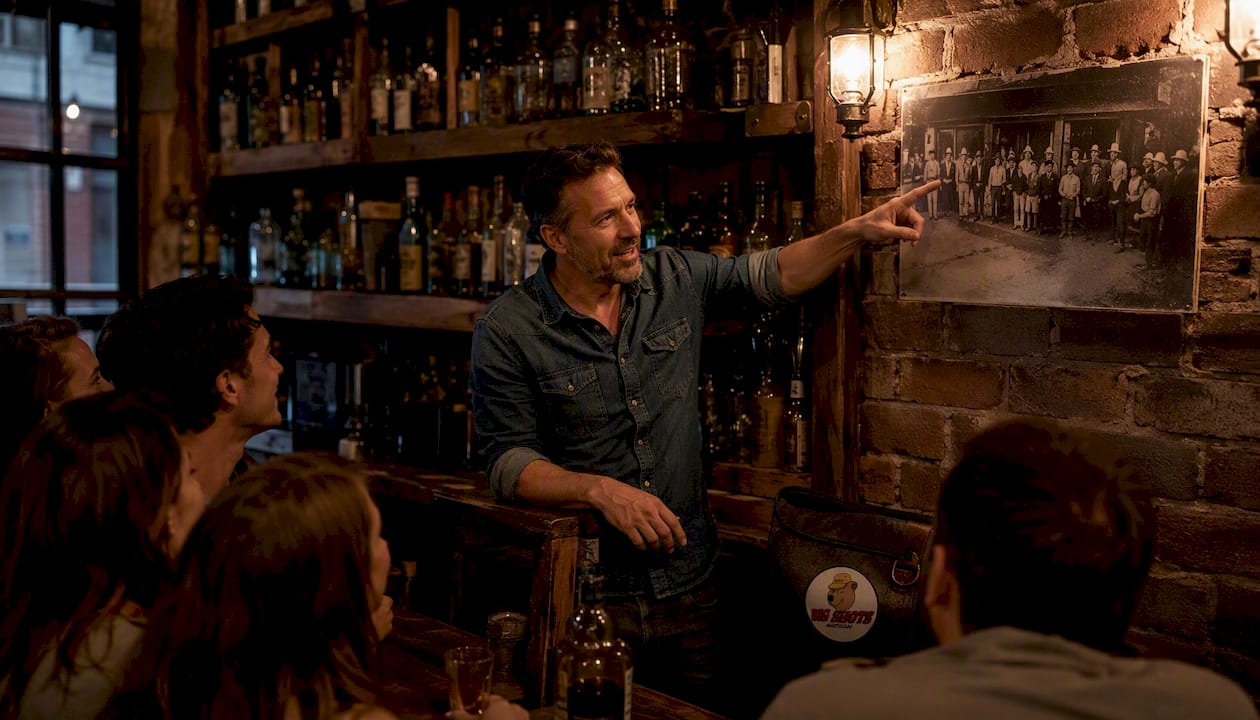
The strongest cafekarpershoek.com alternatives in the U.S. share three things: a documented founding date before 1900, original interior elements that haven't been replaced, and staff who have been there long enough to know the regulars by name.
| Point | Details |
|---|---|
| Core authenticity signals | Look for original fixtures, pre-1900 founding dates, and long-tenured staff, not themed decor. |
| Best U.S. cities | New York, Philadelphia, Boston, New Orleans, and San Francisco each have at least one qualifying venue. |
| Top pick for praatcafé feel | Lafitte's Blacksmith Shop (New Orleans) and The Ear Inn (NYC) come closest to a no-music, candlelit atmosphere. |
| Best time to visit | Weekday afternoons at any of these venues deliver the quietest, most conversational experience. |
| Amsterdam reference point | Bigshotsamsterdam publishes guides on Amsterdam's hospitality scene, offering context for travelers comparing U.S. and Dutch venues. |
Why these picks hold up, and what most lists miss
Most "historic bar" lists stop at the founding year and move on. The venues that genuinely recreate a brown-café atmosphere do something harder: they maintain a social contract with their regulars. Lafitte's has no TVs by choice. McSorley's has two beers by choice. Those aren't oversights. They're the whole point.
The coffeehouses and taverns that shaped social life across centuries weren't popular because of their decor. They were popular because they gave people a reason to stay and talk. The U.S. venues on this list have survived long enough to accumulate that function. The ones that haven't, regardless of how old the building is, feel like museums rather than bars.
Bigshotsamsterdam covers Amsterdam's hospitality scene from a practitioner's perspective, which means the curation here reflects what actually makes a venue worth returning to, not just worth photographing. The Amsterdam hospitality guide on the blog goes deeper on Dutch venue types for anyone planning a trip to the original.
Visiting Amsterdam? Bigshotsamsterdam is a different kind of night out
If the brown-café experience is one end of the Amsterdam spectrum, Bigshotsamsterdam is the other. It's a sports bar, shisha lounge, restaurant, and café rolled into one venue, built for people who want live sports, a full gourmet menu, craft cocktails, and an indoor shisha experience in the same place. Where a brown café offers quiet and history, Bigshotsamsterdam offers energy and variety.
That contrast is the point. A trip to Amsterdam can include both: a Tuesday afternoon at a centuries-old brown café for the history, and an evening at Bigshotsamsterdam for the food, the game, and the atmosphere. The two experiences don't compete. Check availability, browse the menu, or plan your visit at Bigshotsamsterdam.