
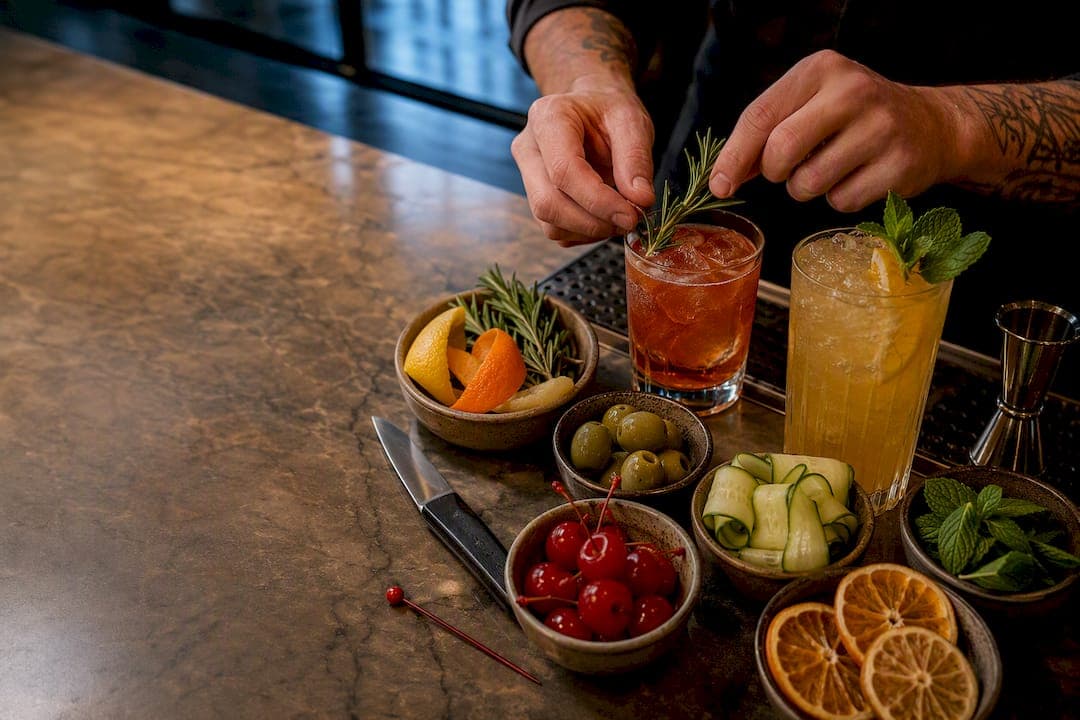
A citrus twist, a fresh herb sprig, and a dehydrated citrus wheel cover most of what any home bar needs. The rule behind all three: a garnish should echo something already in the glass and hit the drinker's nose before it hits their lips. Everything below builds on that one idea, from quick citrus tricks to when to skip the theatrics entirely.
TL;DR:
- Citrus garnishes should be used for aroma and color, with twists releasing oils and wheels or wedges mingling flavor directly with the drink.
- Fresh herbs are best bruised with a slap before placing, to maximize fragrance without damage, especially in gin or tequila cocktails.
- Skewered garnishes like cherries or olives are ideal for quick, separate snacking without cluttering the drink, while dehydrated fruit offers lasting visual appeal.
- Prepare garnishes ahead of time using tools like peelers, knives, and containers, and store them properly to save time during busy service.
- Avoid overly elaborate garnishes in casual or crowded settings, as simple, well-chosen options outperform theatrical displays in supporting flavor and ease of drinking.
Table of Contents
- Cocktail Garnish Ideas That Actually Earn Their Spot
- How to Choose the Right Garnish for Any Drink
- The Tools and Prep-Ahead Tricks That Save You Time
- Advanced Garnish Moves and When to Skip Them
- What Big Shots Amsterdam Has Learned From Garnishing Hundreds of Drinks a Night
- Where to Learn More About Garnishing Technique
- Sources
Cocktail Garnish Ideas That Actually Earn Their Spot
Not every garnish deserves a place on the rim. The best ones do one of four jobs: they add aroma, add color, add texture, or add a little showmanship without getting in the way of the first sip. Here's how to pull off each category without a bar-school certificate.
1. Citrus twists, wheels, and wedges
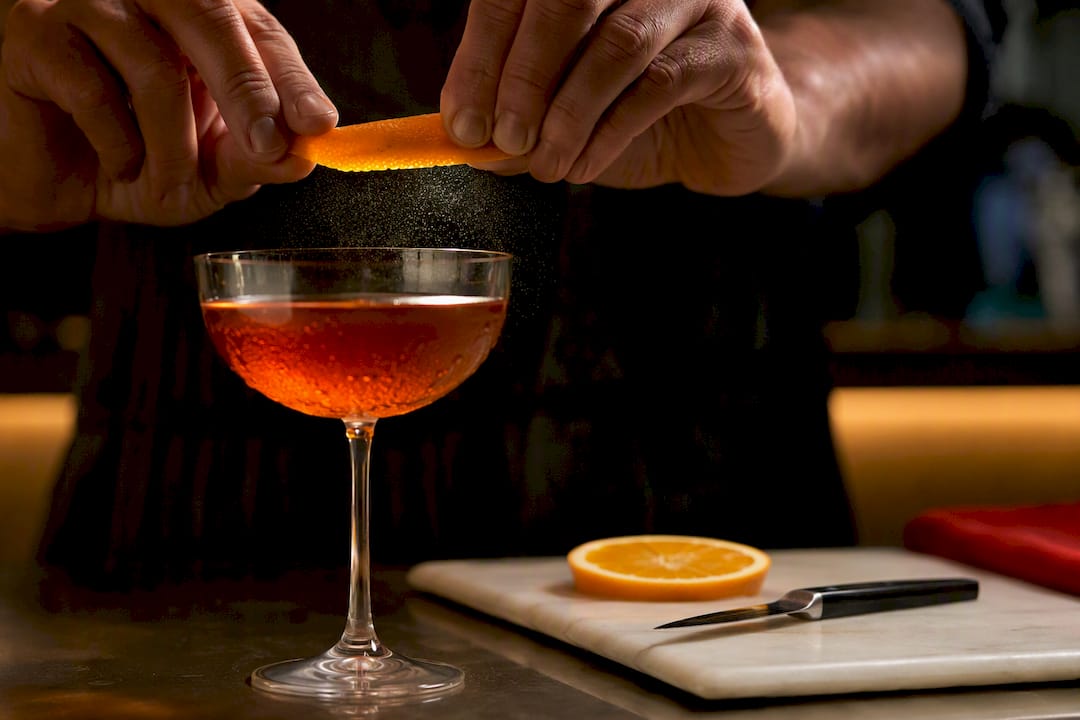
Citrus is the workhorse of cocktail garnish ideas because it does double duty: aroma and color. To make a twist, cut a two-inch strip of peel with a paring knife or channel knife, avoiding the bitter white pith. Hold it skin-side down over the glass and give it a firm pinch to release the citrus oils, then either drop it in or rub the rim before discarding it. A wheel or wedge works better for highballs and sours, where you want fruit flavor to actually mingle with the drink, not just perfume it.
2. Herb sprigs and herb bouquets
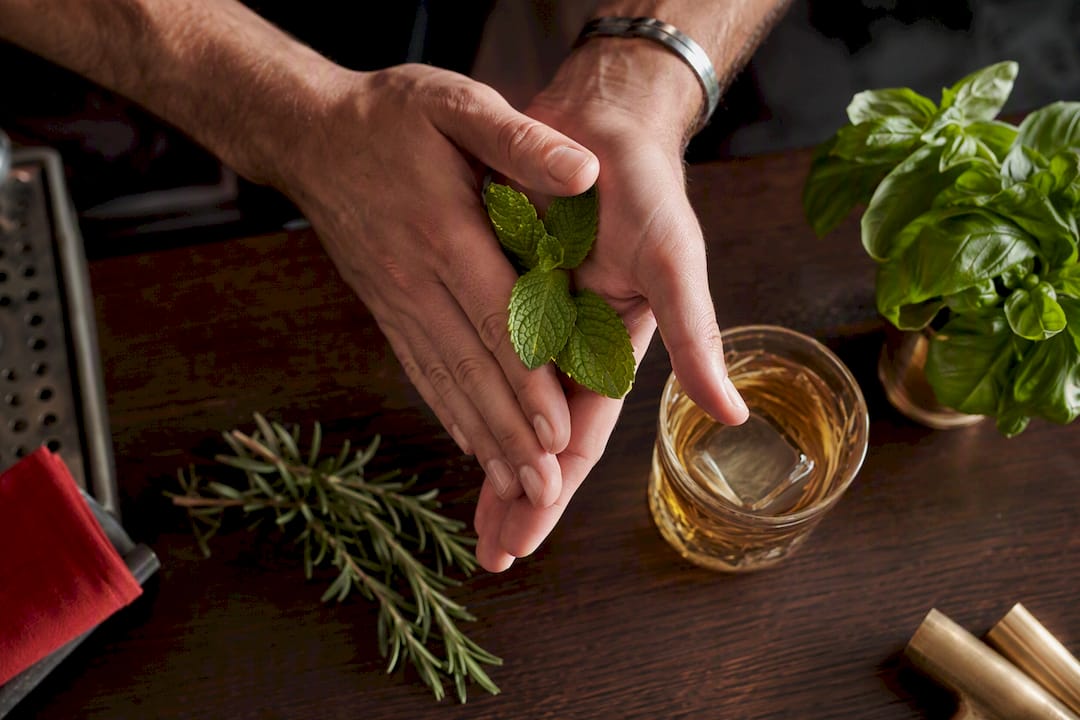
A single mint sprig, a rosemary stem, or a small basil bouquet gives a drink instant fragrance. The trick professionals use is the "slap": clap the herb once between your palms right before placing it. That bruises the leaves just enough to release oils without turning the sprig into mush. Group two or three herbs into a small bouquet for a fuller aroma hit on a gin or tequila cocktail.
3. Jarred and skewered garnishes
Cherries, olives, and pickled vegetables solve the "I need something right now" problem. Skewer two or three on a pick and rest it across the rim rather than dropping it in, so guests can eat it separately from sipping. Olives pair naturally with savory, spirit-forward drinks; brandied cherries suit anything built on whiskey or amaro.
4. Dehydrated fruit and fruit fans
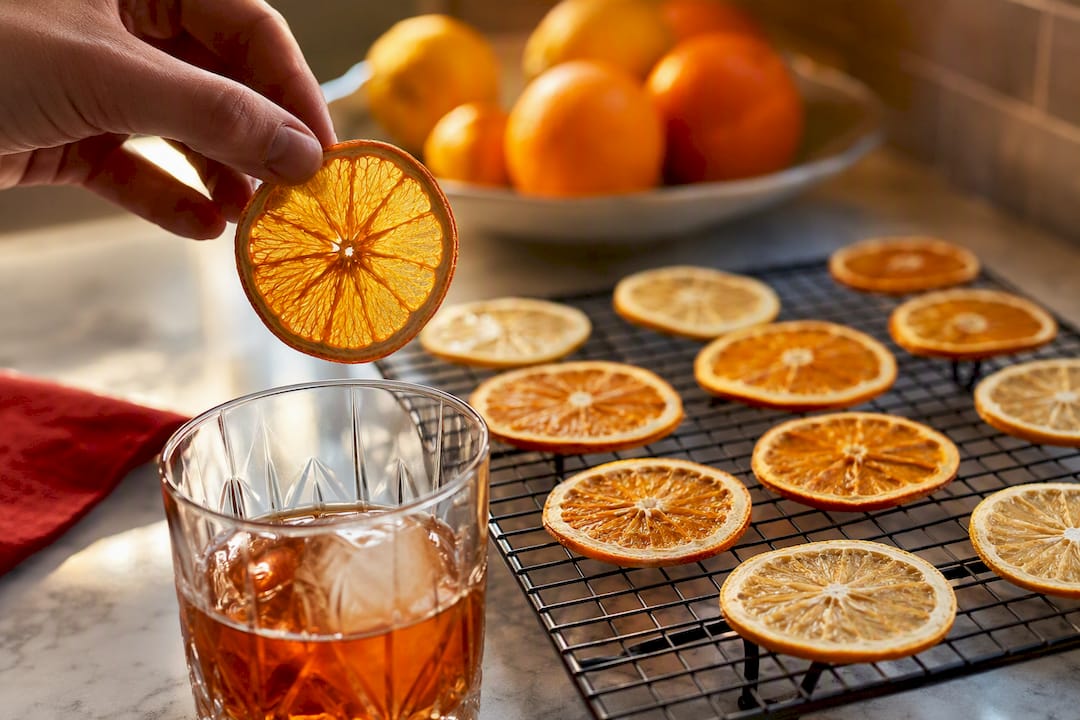
Dehydrated citrus wheels hold their color for weeks and add a dramatic, almost stained-glass look to a glass. Slice fruit thin, lay it on a rack, and dry it in a low oven (around 170°F) for two to three hours, flipping once. Strawberry or apple fans, sliced thin and fanned out on the rim, work well for anything with a sweeter, fruitier profile.
5. Ribbons and vegetable curls
Cucumber and carrot ribbons look complicated but take thirty seconds with a vegetable peeler. Run the peeler along the length of the vegetable, then either drape the ribbon over the rim or curl it and drop it into ice water for a few minutes so it holds its shape. This works especially well in gin and tonics or anything botanical.
6. Spice sticks and smoked elements
A cinnamon stick standing upright in a mug of hot cider or a spiced whiskey drink adds warmth without any real effort. Smoked citrus or a smoked garnish takes more setup, usually a kitchen torch and a heatproof surface, and it's worth a short safety note here: never torch anything near open bottles of high-proof alcohol, and keep flame use to a well-ventilated space, away from paper napkins or fabric.
7. Rims and bitters art
A flavored rim, salt, sugar, or a savory spice blend, changes the first impression of a drink before the liquid even reaches the tongue. For a subtler touch, a few drops of bitters swirled across the surface with a dropper adds aroma and a bit of visual art without adding bulk, a technique that works particularly well on coupe glasses and spirit-forward cocktails.
How to Choose the Right Garnish for Any Drink
Matching garnish to drink style isn't guesswork; this organizes garnish recommendations by cocktail style and includes options for alcohol-free drinks. Napa Valley Wine Academy's garnish guide lays out a simple pattern that holds up in most home bars:
- Spirit-forward drinks (Manhattans, Negronis) want one simple aromatic touch, a twist or a cherry, not a fruit salad.
- Sours (Whiskey Sour, Daiquiri) pair best with citrus, since the garnish should mirror the citrus already in the shake.
- Highballs and tall drinks suit fresh wedges, wheels, or cucumber strips, since there's more surface area and more room for the garnish to actually interact with the drink.
- Creamy or dessert cocktails call for grated nutmeg, cinnamon dust, or chocolate shavings instead of anything wet or juicy.
Size matters as much as flavor. A garnish that hangs over the rim and blocks the straw or the sipping edge has failed its one job, no matter how good it looks in a photo.
Pro Tip: Before adding a garnish, ask whether it makes the drink easier or harder to actually drink. If it gets in the way, trim it down or move it to a pick resting across the rim instead of inside the glass.
The Tools and Prep-Ahead Tricks That Save You Time
You don't need a full bar cart to garnish well. A short list handles almost everything:
- A vegetable peeler for citrus twists and vegetable ribbons.
- A paring knife and channel knife for clean peels and precise cuts.
- A microplane or fine grater for nutmeg, chocolate, and citrus zest.
- Cocktail picks and small tongs for skewered garnishes and delicate herbs.
- Airtight containers for anything cut ahead of time.
Prep as much as you reasonably can before guests arrive. Dehydrated citrus wheels keep for weeks in a sealed container away from light. Jarred cherries, olives, and pickled vegetables are shelf-stable until opened, then good in the fridge for weeks. Fresh-cut wheels and wedges hold up in an airtight container for about a day before they start losing color and firmness. Edible flowers are the exception: only use ones explicitly sold as food-grade, and keep them refrigerated and used within a day or two of purchase.
Advanced Garnish Moves and When to Skip Them
A few techniques separate a decent home bar from a genuinely impressive one. Expressing and flaming a citrus peel, holding it near a lit match so the oils flare briefly, adds a caramelized aroma to whiskey drinks. Bitters swirls made with a dropper or small atomizer frame a drink's aroma without adding volume. Smoking a cinnamon stick with a torch and capturing the smoke under an inverted glass works for a dramatic reveal, but it slows service and isn't worth it for a casual round of drinks.
Skip theatrical garnishes when you're pouring for a crowd, when kids or pets are nearby, or whenever open flame sits close to spilled alcohol. Experts generally agree that simpler garnishes outperform elaborate ones on spirit-heavy drinks anyway, since a garnish is meant to support the flavor, not compete with it.
Pro Tip: Never use dry ice directly in a drink. It's a common party trick that can cause burns and is genuinely unsafe for a home setup without specialized handling.
Bartenders often repeat one golden rule: guests drink with their eyes first, and a well-chosen garnish signals quality before the first sip even happens.
What Big Shots Amsterdam Has Learned From Garnishing Hundreds of Drinks a Night
Running a busy bar teaches you fast that novelty garnishes don't scale. Most venues, including ours, settle on six to eight versatile options, a citrus twist, a couple of herb sprigs, jarred cherries and olives, maybe a dehydrated wheel, and rotate them by season rather than inventing something new for every cocktail. That keeps waste down and prep manageable during a rush.
Batch prepping is the real secret. Cutting citrus wheels or building herb bouquets an hour before service, then labeling and storing them properly, means a bartender never has to stop mid-order to slice a lime. If you want to see how that discipline looks in an actual glass, stop by Big Shots Amsterdam and watch a round go out during a busy match night.
— Leo
Where to Learn More About Garnishing Technique
For deeper technique breakdowns, Epicurious covers pro methods step by step. Bigshotsamsterdam's own guide on cocktail tips for beginners rounds out the basics.
Sources
- The art and planning behind the perfect cocktail garnish — Food & Wine
- How to garnish your cocktails like a pro — Epicurious
- Cocktail garnish guide — Napa Valley Wine Academy