
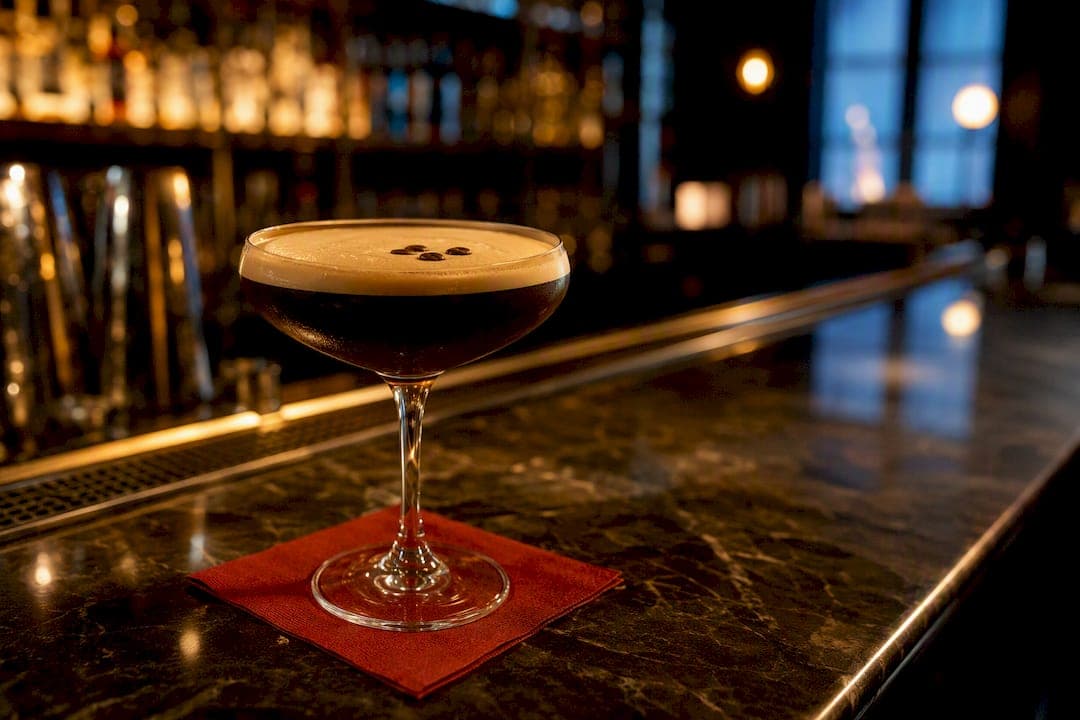
A coffee cocktail combines brewed coffee or espresso with a spirit, usually balanced by a sweetener or coffee liqueur. The espresso martini is the standard bearer: 45 to 50 ml vodka, 30 ml coffee liqueur, and 30 ml fresh espresso, shaken hard with ice for 15 to 20 seconds and double-strained into a chilled coupe. Other regulars worth knowing are Irish Coffee, White Russian, Carajillo, and Spanish Coffee, each built on the same idea of pairing caffeine with alcohol in a specific ratio.
TL;DR:
- Using fresh, slightly cooled espresso is essential for creating the foam and maintaining flavor balance in coffee cocktails.
- The standard ratio for an espresso martini is 45-50 ml vodka, 30 ml coffee liqueur, and 30 ml espresso, with precise shaking and double straining.
- Cold brew can replace espresso in stirred drinks but lacks the acidity and crema that hot espresso provides for shaking-based cocktails.
- Stale coffee, overly hot espresso, or soft shaking undermine foam quality, so proper technique and ingredient freshness are critical.
- Light adjustments to liqueur sweetness or shake time can fine-tune texture and flavor without ruining the drink’s core balance.
Table of Contents
- Six Coffee Cocktail Recipes You Can Make Tonight
- Getting the Espresso Martini Recipe Right Every Time
- Which Coffee, Liqueurs, and Tools Actually Matter
- How to Adjust Ratios Without Ruining the Drink
- Fast Swaps for Different Occasions
- What Coffee Cocktails Look Like From Behind the Bar
- Where to Learn More About Coffee Cocktails
- Sources
Six Coffee Cocktail Recipes You Can Make Tonight
Each of these follows a fixed ratio, which is exactly why they work every time once you get the proportions right.
- Espresso Martini — 45–50 ml vodka, 30 ml coffee liqueur, 30 ml fresh espresso. Shake with ice for 15 to 20 seconds, double-strain into a chilled coupe, and drop in three coffee beans.
- Irish Coffee — Hot fresh coffee topped with an appropriate amount of Irish whiskey and a spoon of brown sugar, stirred until dissolved, then a lightly whipped cream layer poured gently over a spoon so it floats instead of sinking.
- White Russian — Vodka and coffee liqueur built over ice in a rocks glass, roughly 2 parts vodka to 1 part liqueur, then finished with a cream float poured slowly on top.
- Carajillo — Equal parts espresso and Licor 43, shaken over fresh ice for about 15 seconds and served in a rocks glass. No dilution tricks needed; the ratio does the work.
- Spanish Coffee — Rum or brandy with coffee liqueur and hot coffee, often served in a glass with a caramelized sugar rim. Some versions ignite overproof rum briefly to caramelize the sugar before adding coffee, which changes the flavor, not just the show.
- Cold Brew Negroni or Affogato Martini — Modern riffs that swap espresso for concentrated [cold brew] or pair vanilla ice cream with espresso and liqueur](https://www.foodandwine.com/best-coffee-cocktails-6891701) for a dessert-style pour.
Getting the Espresso Martini Recipe Right Every Time
The 45:30:30 ratio isn't arbitrary. Vodka carries the alcohol without competing with the coffee's flavor, the liqueur adds sweetness and body, and the espresso brings both bitterness and the crema that becomes the drink's signature foam. Get any one of those three out of balance and the drink either tastes like flavored vodka or like dessert syrup.
Temperature matters as much as ratio. Espresso poured straight off the machine and onto ice melts too fast, watering down the drink before it ever hits the shaker. Letting it cool for a minute or two off heat before combining ingredients preserves the foam and keeps dilution in check.
- Pull a fresh espresso shot and let it cool slightly, about 1 to 2 minutes.
- Add vodka, coffee liqueur, and the cooled espresso to a shaker filled with ice.
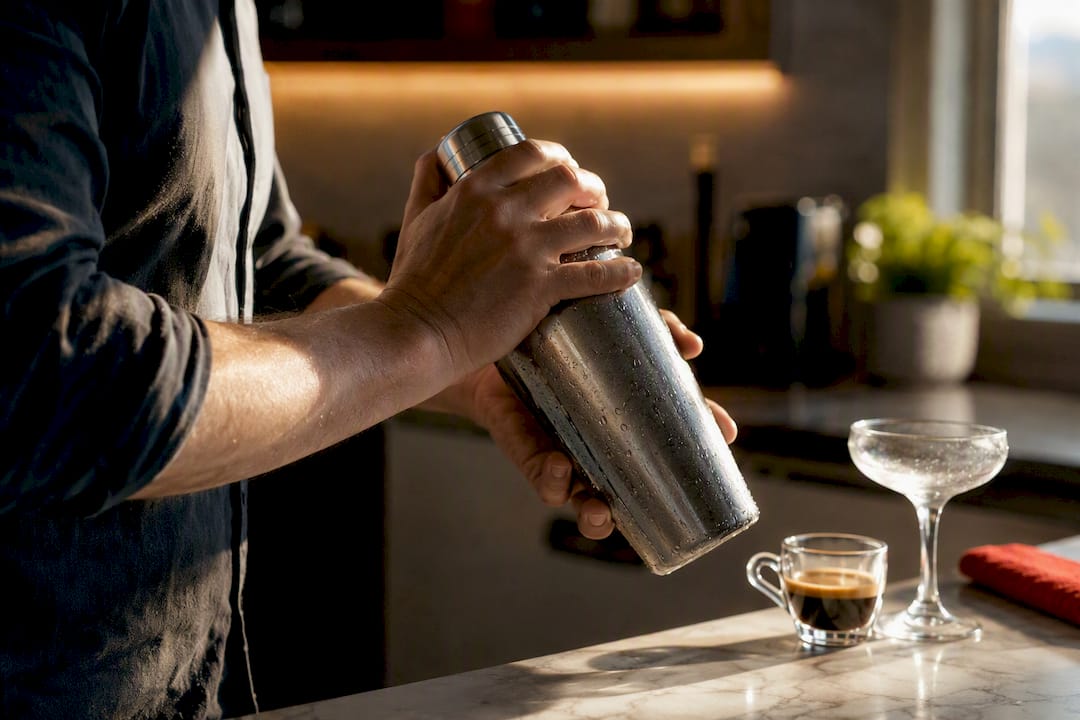
- Shake hard for 15 to 20 seconds. This aerates the mix and builds the foam layer that sits on top.
- Double-strain into a chilled coupe to catch ice shards and coffee grounds.
- Garnish with three whole coffee beans.
Pro Tip: If your foam looks thin, check your espresso first. A weak or old shot with poor crema will never whip up into a proper head, no matter how hard you shake.
The most common mistakes are espresso that's too hot (reduces foam quality), stale or weak coffee (no crema to work with), and a soft, half-hearted shake (not enough aeration). Fix all three and the drink transforms. For variations, swap in spiced rum and a dash of vanilla syrup for a warmer profile, or use decaf espresso for an alcohol-timing-friendly version that still delivers the same texture and flavor.
Which Coffee, Liqueurs, and Tools Actually Matter
Fresh espresso is the gold standard because its crema is what gives the shaken drink its foam. Cold brew works as a substitute in stirred, spirit-forward drinks where foam isn't the point. A moka pot sits in between, strong enough for flavor but lacking the pressure to build real crema.
- Kahlúa brings bold coffee flavor with a noticeable caramel sweetness, good for drinks that want more dessert character.
- Licor 43 adds vanilla, citrus, and herbal notes rather than straight coffee flavor, which is why it's the backbone of a Carajillo.
- Baileys contributes cream and a soft, velvety texture, better suited to sipping drinks than shaken ones.
- Minimal gear that actually improves results: a shaker, a fine-mesh strainer, a jigger for accurate pours, a pre-chilled coupe, and a working espresso or moka setup.
How to Adjust Ratios Without Ruining the Drink
Three ratio templates cover almost every coffee cocktail: shaken martini-style drinks run about 45:30:30, warm coffee-and-spirit drinks lean closer to 3 parts coffee to 1 part spirit, and equal-parts drinks like the Carajillo use a straight 1:1 split.
Sweetness should come from adjusting liqueur amount first, then syrup if you need more, rather than dumping in extra sugar to cover for weak coffee. Bartenders lean on syrups and citrus oils specifically because they balance bitterness without masking it.
- Taste before garnishing. Too bitter? Add 5 ml more liqueur or a small syrup adjustment.
- Too sweet? Cut liqueur slightly and let the espresso's bitterness carry more weight.
- Too thin? Shake longer, not harder; the extra seconds build body through aeration.
Cold brew runs noticeably lower in acidity than hot-brewed espresso, which is part of why it reads sweeter and more chocolatey in stirred drinks, according to The Coffee Chef. That acidity difference is the real reason cold brew and espresso aren't interchangeable one-for-one.
Fast Swaps for Different Occasions
Coffee cocktails adapt easily once you understand what each ingredient is doing.
- Nonalcoholic: skip the spirit entirely and lean on a quality alcohol alternative plus a splash of coffee syrup for body.
- Warm to cold: halve the coffee volume and add ice rather than simply chilling a hot recipe, or the ratio goes off.
- Flavor add-ins: a drop of vanilla, a pinch of cinnamon, or a twist of orange oil changes the whole character without touching the base ratio.
- Spirit swaps: rum instead of vodka softens the drink and adds warmth, especially good in a Spanish Coffee style build.
- Cold brew instead of espresso works fine in stirred or spirit-forward drinks, less so in anything that needs a shaken foam layer.
Pro Tip: Keep one variable fixed when experimenting. Change the spirit or the sweetener, not both at once, or you'll lose track of what actually fixed the drink.
What Coffee Cocktails Look Like From Behind the Bar
Coffee cocktails do specific work in a venue setting. They show up most around dinner's end, when guests want something with a caffeine lift but aren't ready to leave the social pace of drinking behind. That timing is consistent, and it's why an Espresso Martini or Irish Coffee shows up on so many after-dinner orders rather than earlier in the night.
Guests almost always ask the same two questions: how strong is it, and does it taste like coffee or like alcohol. Presentation carries weight here. Three beans on an Espresso Martini and a properly floated cream layer on an Irish Coffee aren't just garnish habits. They signal the drink was made with attention, which matters in a room built around dining, drinks, and slowing down for the night. See our drinks menu guide for how these fit alongside the rest of a night-out lineup, and our notes on bartender presentation for why that final pour matters as much as the recipe.
— Leo
Where to Learn More About Coffee Cocktails
For deeper technique, the Barista Shop espresso martini guide and Coffee Proper's home guide cover ratios and balance in more depth. For liqueur background and warm-drink builds, see Koffiekeus.
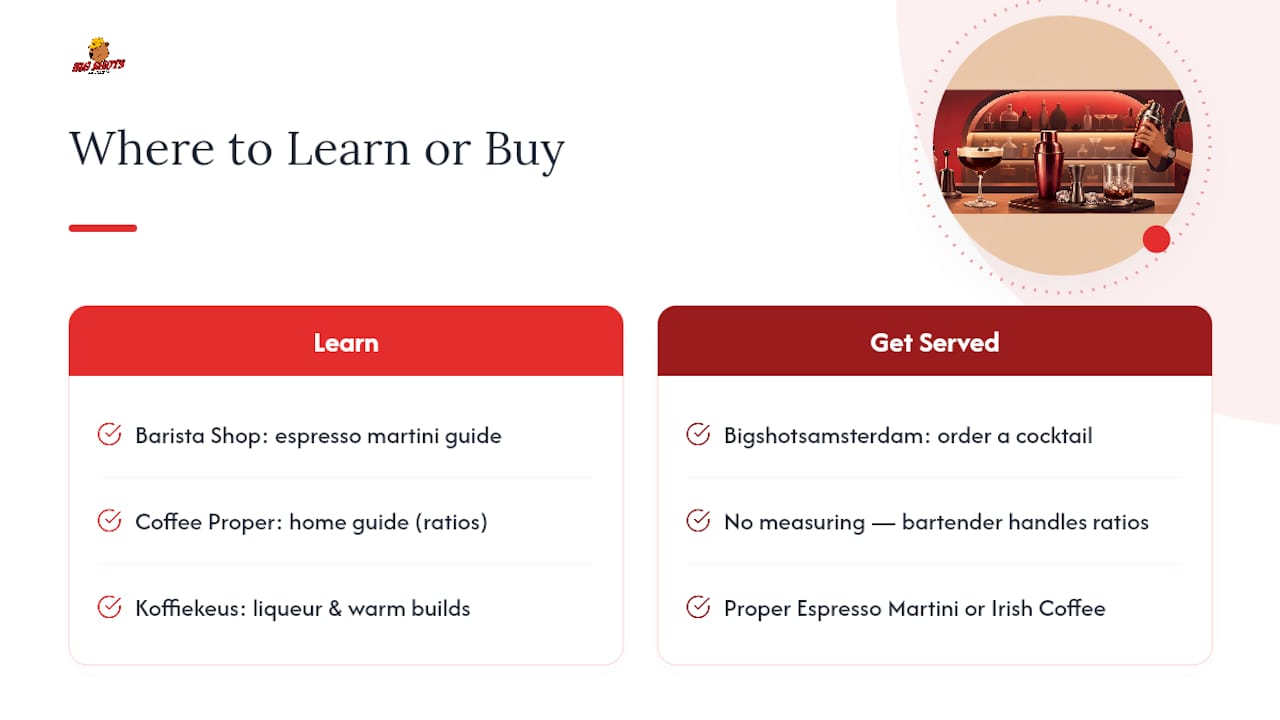
Ready to skip the shaker and let someone else handle the ratios? Stop by Bigshotsamsterdam for a proper Espresso Martini or Irish Coffee made the way it's meant to be, no measuring required.
Sources
- How to make an Espresso Martini — Barista Shop
- How to create coffee cocktails at home — Coffee Proper
- How to make a Carajillo — Bon Appétit
- Spanish Coffee recipe and technique — Food & Wine
- Koffie met drank: soorten en recepten — Koffiekeus