
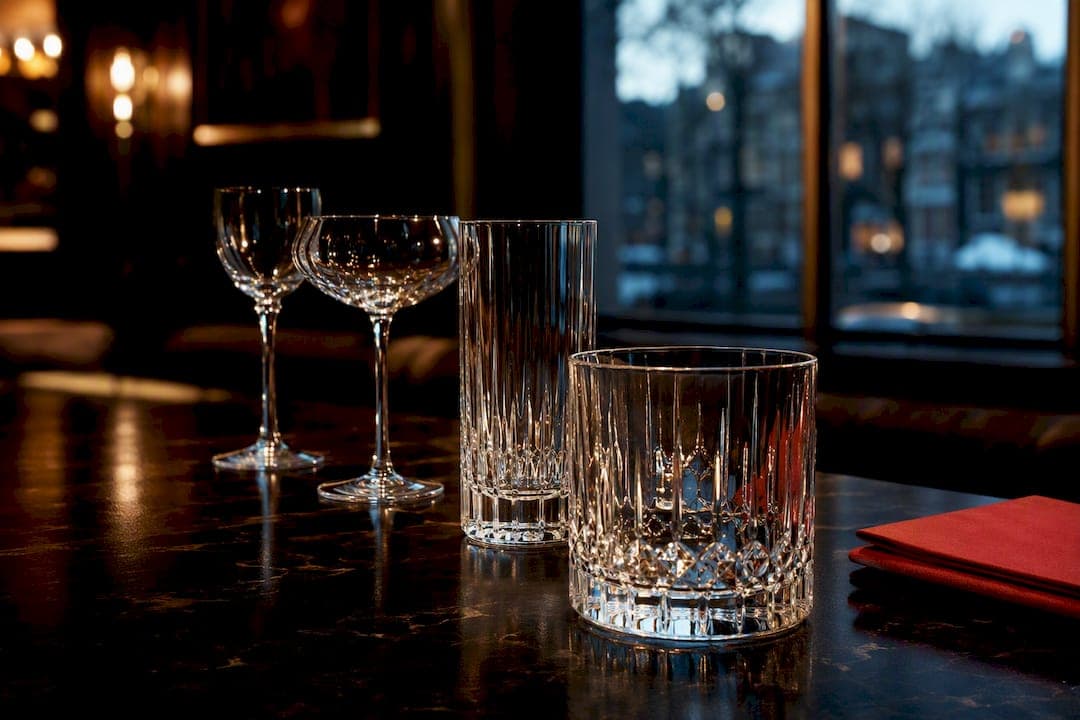
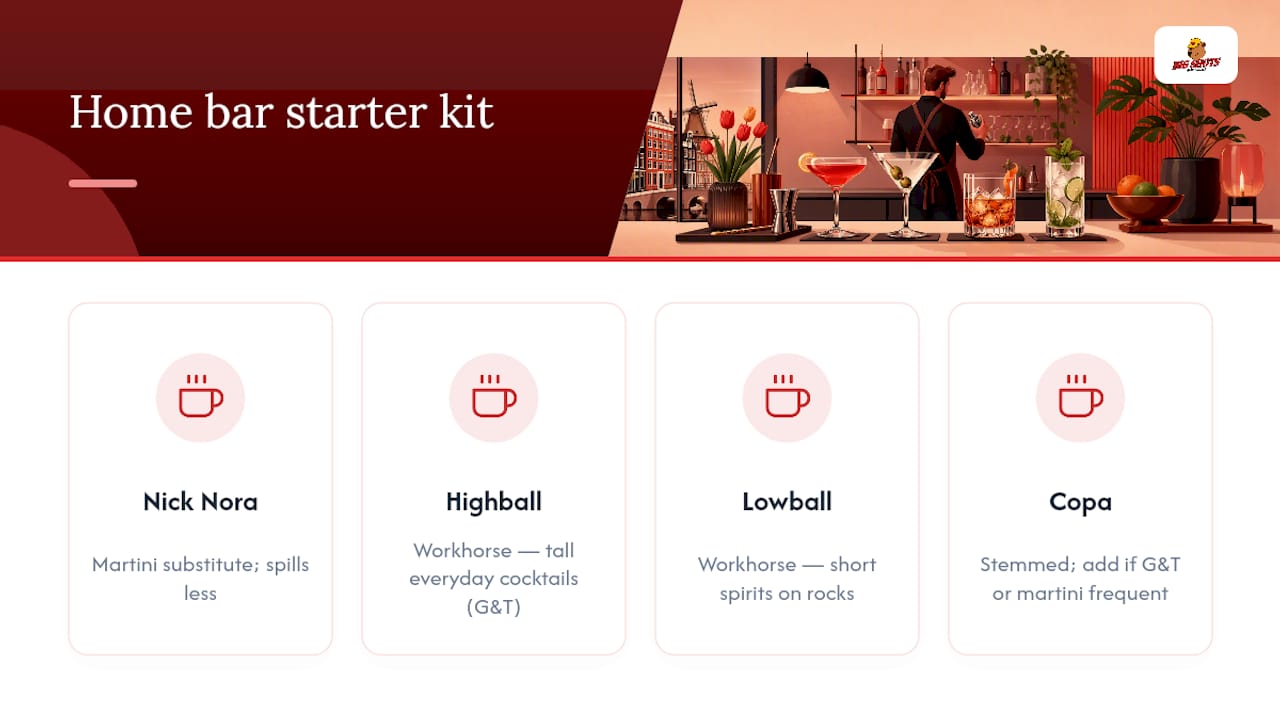
Most home bars only need four glasses: a Nick & Nora or coupe for anything shaken and served up, a highball for drinks with a mixer and fizz, a lowball for spirit-forward pours like an Old Fashioned, and a copa for gin and tonic. Each shape solves a specific problem, whether that's keeping a drink cold, protecting bubbles, or making room for ice and aroma. You don't need a cabinet full of specialty glassware to serve a proper cocktail menu at home.
TL;DR:
- The four essential glasses for a home bar are lowball, highball, Nick & Nora, and copa, which collectively cover most common cocktail types and serve practical purposes.
- Tempered glassware is recommended for durability and affordability, with set sizes of four or six to handle regular hosting without excessive re-washing.
- The shape of the glass affects not only aesthetics but also the drink’s aroma, temperature retention, and dilution rate, which influence flavor.
- Most busy bars prefer Nick & Nora glasses over martini shapes due to spill reduction and practicality, making them a better choice for home use.
- Properly holding stemmed glasses by the stem, using large ice cubes, and serving garnishes correctly enhances the drink's temperature, aroma, and overall experience.
Table of Contents
- Cocktailglas Soorten: What Each Shape Actually Does
- How to Build Your Starter Kit Without Overspending
- Which Glass for Which Cocktail
- Keeping Your Glassware Clean, Scratch Free, and Ready to Pour
- Bartender-Tested Notes From Bigshotsamsterdam
- Where These Glass Shapes Actually Came From
- Holding and Serving Each Glass the Right Way
- What's Changing in Cocktail Glass Design Right Now
- Why the Right Glass Changes How a Cocktail Actually Tastes
- Our Take on Building a Home Bar That Actually Gets Used
- Sources
- FAQ
Cocktailglas Soorten: What Each Shape Actually Does
Every cocktail glass shape exists to solve a temperature, dilution, or aroma problem, not to look good on a shelf. Once you understand the physics, picking the right glass stops being guesswork.
Martini and coupe glasses are stemmed, which matters more than it looks. The stem keeps your palm off the bowl so a chilled, up drink doesn't warm from body heat before you finish it. Neither holds ice. A martini glass runs about 6 to 10 ounces with its signature V shape; a coupe is shallower and rounder, originally built for sparkling wine.
Nick & Nora glasses solve the martini glass's biggest flaw: the wide, straight sides that fling drinks onto your shirt with any sudden movement. The curved, tulip-shaped bowl narrows toward the rim, so the drink stays contained while still showcasing color and garnish. Many working bars now default to Nick & Nora over the classic martini shape for exactly that reason.
Highballs and Collins glasses are tall and narrow, typically 10 to 14 ounces, built to protect carbonation on drinks like a gin and tonic, a Cuba Libre, or a Tom Collins. The tall shape reduces the surface area exposed to air, so tumblers and long glasses manage temperature and dilution far better than a short glass would for the same drink.
Lowballs, rocks glasses, and Old Fashioned glasses run shorter and squatter, usually 6 to 10 ounces, with a heavy base built to survive muddling fruit or herbs. Because the highball preserves fizz while the lowball favors spirit-forward pours, you'll reach for this glass anytime a drink is mostly liquor with minimal mixer.
Copa or balloon glasses dominate gin and tonic service across the Netherlands and beyond. The wide bowl traps botanical aromas from garnishes like juniper, citrus peel, or rosemary, and the generous capacity leaves room for a large volume of ice, which matters more than most home drinkers assume.
A handful of other shapes round out the picture:
- Snifters — short stem, wide bowl that narrows at the top, made for sipping brandy or aged spirits where aroma matters as much as flavor
- Tiki glasses — often ceramic or novelty shaped, built for tropical drinks loaded with ice, fruit, and elaborate garnish
- Moscow Mule copper mugs — the metal keeps the drink colder longer and gives ginger beer cocktails their signature frosted look
- Shot glasses — small, thick-walled, sized for a single 1.5 to 2 ounce pour with no ice involved
How to Build Your Starter Kit Without Overspending
A functional home bar covers almost everything with four glasses: a Nick & Nora (or coupe/martini glass), a highball, a lowball, and a copa for gin and tonic. That combination handles shaken-and-strained cocktails, tall mixed drinks, spirit-forward sippers, and the gin and tonic that half your guests will order anyway.
Here's how to prioritize the purchase:
- Buy the lowball first. It's the most versatile shape for whiskey, muddled drinks, and simple spirit-and-ice pours.
- Add the highball second. Anything with soda water, tonic, or cola needs it.
- Get a Nick & Nora or coupe third. This covers Martinis, Daiquiris, and other shaken-up cocktails.
- Round out with a copa once gin and tonic becomes a regular order at your table.
On materials: tempered soda-lime glass is durable, affordable, and dishwasher-safe, which makes it the practical choice for everyday use. Crystal and lead-free crystal glassware have thinner rims and a lighter feel in hand, but most require hand-washing and cost significantly more per piece. Unless you're hosting formal tastings, tempered glass wins on value.
For quantities, buy in sets of four or six per shape if you host regularly. That covers a small dinner party without you rewashing glasses mid-evening. Retailers selling cocktail glassware by category often bundle starter sets, which is usually cheaper than buying each shape separately.
Pro Tip: Spend more on the glass you'll use daily (usually the lowball or highball) and save on specialty shapes like snifters or tiki mugs that see occasional use. Check stackability and dishwasher-safe labeling before buying online. A glass that chips in the rack after two washes isn't a bargain.
Which Glass for Which Cocktail
Matching a drink to its glass isn't about tradition for tradition's sake. Temperature, dilution rate, and aroma all shift depending on the vessel, and getting it wrong changes how the drink actually tastes.
- Martini or Espresso Martini → Nick & Nora or coupe. Both are shaken, served up, no ice, and need a stem to stay cold.
- Daiquiri → coupe or Nick & Nora. Shaken and strained, so the drink should arrive already at the right temperature.
- Negroni → lowball. Stirred, spirit-forward, served over a large cube to slow dilution.
- Old Fashioned → lowball. Same logic: minimal dilution, maximum spirit character, muddled sugar and bitters need a sturdy base.
- Whiskey Sour → coupe (up) or lowball (on the rocks), depending on how it's ordered.
- Gin & Tonic → copa. The wide bowl showcases garnish and holds enough ice to keep botanicals aromatic without watering down the tonic too fast.
- Mojito → highball or Collins glass. Needs room for mint, ice, and soda water without overflowing.
- Tom Collins → Collins glass, obviously, but a highball works as a near-identical substitute.
- Moscow Mule → copper mug traditionally, though a highball is a fine substitute if you don't own copper mugs.
- Margarita on the rocks → lowball or a wide rocks glass with a salted rim.
- Bloody Mary → highball, since it's served over ice with a moderate liquid volume.
- Long drinks generally (rum and coke, vodka soda) → highball, always.
If you're missing the "correct" glass, the substitution rule is simple: match capacity and ice needs, not the label. A Nick & Nora stands in for a martini glass. A rocks glass covers anything an Old Fashioned glass would.
Keeping Your Glassware Clean, Scratch Free, and Ready to Pour
Hand-wash crystal and thin-rimmed glasses in warm (not hot) water with a mild, unscented detergent; sudden temperature swings can crack fine glassware. Tempered everyday glasses can go in the dishwasher, but skip the heated dry cycle, which causes the cloudy film you've probably noticed on older glassware.
- Air-dry stemware upside down on a rack rather than toweling it, which reduces smudges and lint.
- Store glasses right-side up with space between each one; stacking coupes or Nick & Noras invites chips and stress cracks at the rim.
- For lowballs, use one large ice cube instead of several small ones. It melts slower and keeps a Negroni or Old Fashioned from turning watery.
- Fill highballs to about an inch below the rim to leave room for the mixer's fizz to settle without overflowing.
Pro Tip: Garnish placement changes how a drink smells before the first sip. Rest a citrus twist on the rim of an up glass so the oils hit your nose immediately, not buried at the bottom.
Bartender-Tested Notes From Bigshotsamsterdam
In a busy setting, durability decides which glasses actually stay in rotation. Lowballs and highballs get the heaviest daily use in bars because they're sturdy, stack cleanly, and handle the volume of a packed sports night better than delicate stemware. Nick & Nora glasses have largely replaced the classic martini shape behind the bar, since the curved sides reduce spills without sacrificing presentation, a practical fix busy staff appreciate as much as guests do.
If you're curious how garnish choices pair with specific glass shapes, our guide to cocktail garnishes covers that in more depth, along with a note on common allergens worth checking before you order.
Where These Glass Shapes Actually Came From
The martini glass traces back to the cocktail era of the early 1900s, when the V-shaped bowl became shorthand for sophistication as much as function. Its wide brim, though visually striking, is also why it spills so easily, which is exactly the flaw the Nick & Nora glass was designed to fix. The Nick & Nora shape takes its name from the fictional detective couple in the 1934 film The Thin Man, and its narrower profile has made a comeback in the last decade as bartenders prioritized practicality over pure vintage aesthetics.
The highball glass emerged alongside the rise of carbonated mixers and pre-mixed sodas in the late 19th and early 20th centuries, when tall glasses became the standard for whiskey and soda or gin and tonic. The lowball, sometimes called an Old Fashioned glass, gets its name directly from the cocktail it was built to serve, a drink that dates to the 1880s and demanded a sturdy vessel that could handle muddled sugar, bitters, and citrus without cracking.
The copa glass has a different lineage entirely. It borrows its shape from traditional Spanish wine glasses and only became associated with gin and tonic once Spain's gin culture exploded in popularity, prioritizing the wide bowl and garnish space that botanical-heavy gins benefit from. Tiki glassware, by contrast, owes its exaggerated ceramic shapes to the mid-20th-century tiki bar boom in the United States, when exotic presentation mattered as much as the rum inside.
Holding and Serving Each Glass the Right Way
How you hold a glass isn't just etiquette. It directly affects the drink's temperature and how it presents to the person you're serving.
Stemmed glasses like the Nick & Nora, coupe, and martini glass should always be held by the stem, never the bowl. Wrapping your hand around the bowl transfers body heat directly into a drink that's meant to stay cold, undoing the bartender's careful chilling. This is the same reason stemmed glasses are reserved for drinks served without ice: there's no ice to buffer against warming, so the stem has to do that job instead.
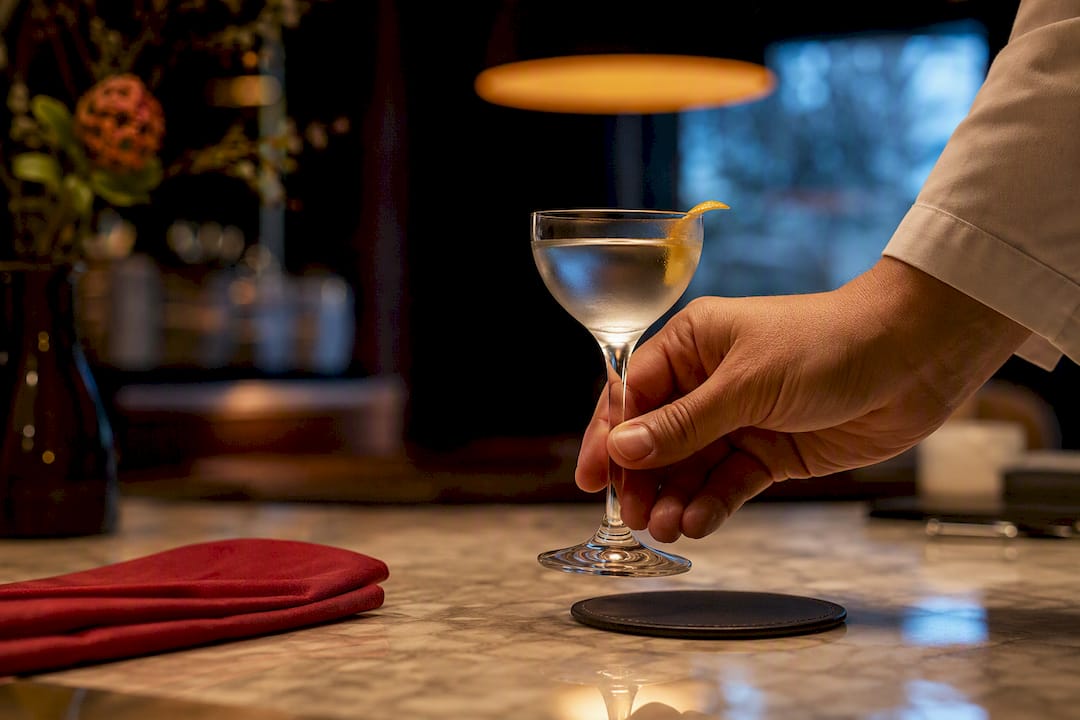
Tumblers, highballs, and lowballs don't have this problem since ice is already managing the temperature, so holding them by the body is fine and expected. When serving, always place a glass down on a flat, stable surface rather than handing it directly to a seated guest across a table; this avoids spills and looks more polished at a dinner party or home bar setup.
For copa glasses, serve with the garnish already positioned before adding the final splash of tonic, so the aromatics release as the drink is set down in front of the guest. Snifters are typically presented already in hand, warmed slightly by the drinker's palm on purpose, since aged spirits benefit from a bit of gentle warming to open up their aroma.
Copper mugs deserve one specific note: always hold by the handle. The metal conducts cold efficiently, which is exactly why it works so well for a Moscow Mule, but that same conductivity makes the body of the mug uncomfortably cold to hold directly for long periods.
What's Changing in Cocktail Glass Design Right Now
Nick & Nora's rise from obscure vintage shape to bar-menu default is probably the biggest shift of the last decade, and it's not slowing down. Bars increasingly stock it instead of the traditional martini glass specifically because it spills less during a busy service, a practical reason that's overtaken pure aesthetics as the deciding factor for many venues.
Copa glasses have also expanded well beyond gin and tonic. Some bars now use them for wine-based cocktails and even certain tiki drinks, borrowing the shape's aromatic advantages for cocktails that weren't traditionally served in a balloon glass.
Sustainability is showing up in material choices too. More glassware brands offer lead-free crystal alternatives that mimic the weight and clarity of traditional crystal without the environmental and health concerns tied to lead content, giving home bartenders a premium feel without the older trade-offs.
On the novelty end, tiki glass design keeps getting more elaborate, with ceramic sculptural shapes (skulls, tiki gods, volcano-inspired vessels) becoming collector items in their own right, separate from the drinks served inside them. Meanwhile, minimalist glassware collections, thin-rimmed, unadorned, single-shape sets, have gained traction with drinkers who want fewer, better pieces rather than a sprawling collection covering every possible cocktail. That minimalist trend actually reinforces the same math behind the starter-kit approach: four well-chosen shapes beat a dozen you'll rarely use.
Why the Right Glass Changes How a Cocktail Actually Tastes
Glass shape doesn't just affect how a cocktail looks; it changes how it smells and tastes in your mouth. A narrow-mouthed glass like a coupe or Nick & Nora concentrates aromatics near your nose as you sip, intensifying the herbal or citrus notes in a Martini or Daiquiri before the liquid even touches your tongue. A wide-mouthed copa does the same job for gin and tonic, releasing botanical aroma from garnishes like juniper berries or grapefruit peel more effectively than a straight-sided glass would.
Temperature retention plays an equally large role. Serving gin and tonic with more ice than most home drinkers expect keeps the drink colder for longer, which slows dilution and preserves the balance the bartender intended. The same logic applies to a Negroni or Old Fashioned in a lowball: a single large ice cube melts slower than several small ones, so the drink stays properly diluted rather than turning watery halfway through.
Even the thickness of the rim matters more than most people realize. A thin-rimmed glass delivers liquid to your tongue more smoothly, which is part of why crystal glassware feels more refined even when the recipe inside is identical to what's poured into a thicker tumbler. None of this is about snobbery. It's simple physics working in your favor once you understand it.
Our Take on Building a Home Bar That Actually Gets Used
Most glassware guides treat cocktail glasses like a collector's category, walking you through a dozen niche shapes you'll use twice a year. That's backwards for anyone actually building a home bar. The research here points to a simpler truth: four glasses (Nick & Nora, highball, lowball, copa) cover the overwhelming majority of what you'll actually pour, and every shape beyond that is a nice-to-have, not a requirement.
The conventional advice oversells the martini glass specifically. It looks the part, but it spills constantly, and busy bars have already voted with their purchasing decisions by switching to Nick & Nora instead. If a working bar under real volume prefers the practical shape, a home bartender pouring drinks for friends on a Saturday has even less reason to fight a wide, unstable bowl.
Buy the lowball and highball first. They're the workhorses. Add the stemmed glass and the copa once you know gin and tonic or a proper Martini is a regular request, not a hypothetical one.
— Leo
Sources
This guide draws on glassware breakdowns from Nordic Nest, Tasting Table, and Culy. For more on building cocktail skills at home, see our beginner's guide to cocktail techniques.
- Welk glas voor welke cocktail? — Nordic Nest
- The difference between highball and lowball drinks — Tasting Table
- Cocktailglazen: het juiste glas voor elke cocktail — OngewoonLekker
FAQ
What Are the Main Types of Cocktail Glasses?
The core types are the martini/coupe, Nick & Nora, highball, lowball (rocks), and copa (balloon), with snifters, tiki glasses, and copper mugs covering more specific drinks.
Which Cocktail Goes in Which Glass?
Shaken-and-up drinks like a Martini or Daiquiri go in a coupe or Nick & Nora, tall mixed drinks like a Mojito or Gin & Tonic go in a highball or copa, and spirit-forward drinks like an Old Fashioned or Negroni go in a lowball.
What Are Some Unusual or Specialty Cocktail Glasses?
Tiki glasses, often ceramic and sculptural, and copper Moscow Mule mugs are the two most recognizable specialty shapes, chosen for novelty presentation and temperature retention rather than everyday practicality.
What Different Types of Drinking Glasses Exist Beyond Cocktails?
Beyond cocktail-specific shapes, standard drinkware includes wine glasses, champagne flutes, beer glasses, and water tumblers, each shaped around a different beverage's carbonation, aroma, or temperature needs.
Can I Use a Nick & Nora Instead of a Martini Glass?
Yes. A Nick & Nora holds the same volume and serves the same up, no-ice drinks, and its narrower shape actually spills less than a traditional martini glass.