
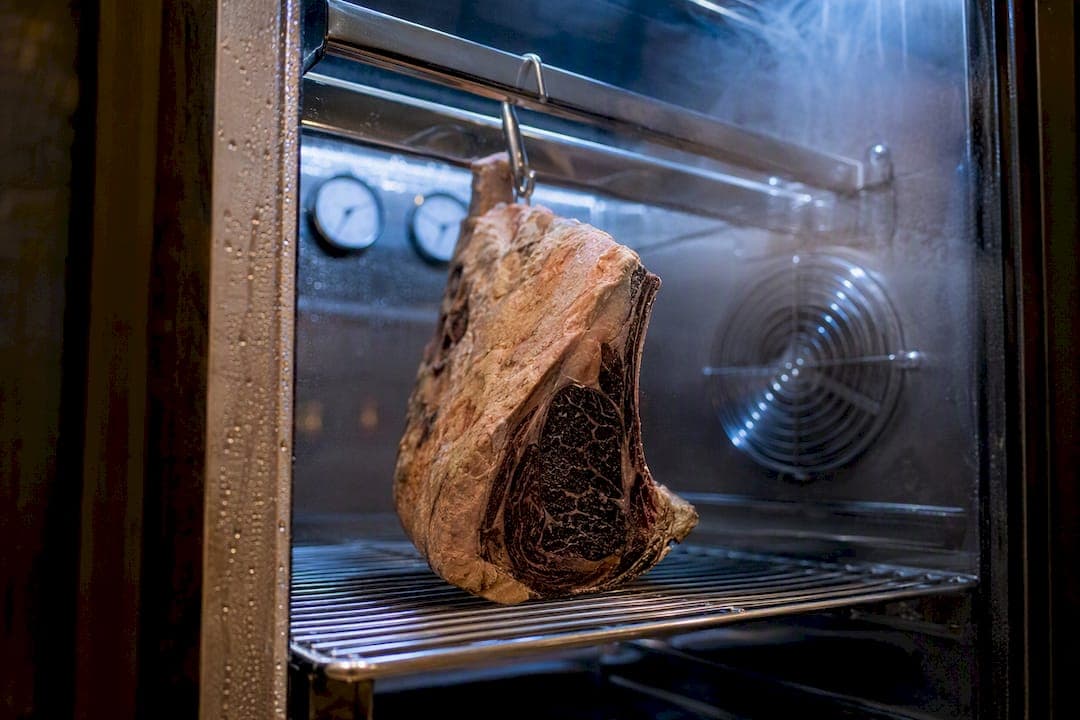
A dry aged steak is a cut from a larger primal that's rested for weeks in a controlled, low-humidity cooler, where moisture evaporates and natural enzymes soften the muscle and concentrate its flavor. Most commercial programs hold beef in that state for 3 to 7 weeks, though specialty cuts go longer. The short answer on value: buy it for a special dinner or a night out, not for your Tuesday pan-fry.
- Flavor vs. cost: dry aged beef costs more per pound, but the taste difference is real, not marketing.
- Best use case: date nights, celebrations, or when you want to understand what the fuss is about.
- Where to try it without guesswork: a kitchen that already handles the aging and the cooking, like Big Shots Amsterdam, takes the risk out of a first try.
- Cooking note: hit the right kerntemperatuur (internal temperature) and you'll taste what the aging actually did.
Key Takeaways
Dry aged steak delivers concentrated flavor and added tenderness through weeks of controlled evaporation and enzymatic breakdown, and the 3 to 7 week commercial window balances that payoff against cost and risk.
| Point | Details |
|---|---|
| Definition | Dry aged steak comes from a subprimal aged in a controlled, low-humidity cooler for several weeks. |
| Sweet spot for aging | Most commercial programs run 3 to 7 weeks; tenderness gains plateau after about 28 days. |
| Price driver | Weight loss of 15 to 30% or more plus trim waste explains most of the price premium. |
| Buying checklist | Ask for exact aging days, breed, and visible storage conditions before buying. |
| Cooking target | Reverse sear to roughly 55°C for medium-rare, then rest before cutting. |
| Where to try it easily | Big Shots Amsterdam serves dry aged steak already sourced and cooked to temperature, removing the guesswork of buying and cooking it yourself. |
Table of Contents
- How Dry Aging Works: Process, Environment, and Timeline
- Why Dry Aged Beef Tastes Different From Fresh Cuts
- How Long Is Too Long for Dry Aging?
- Where to Buy Quality Dry Aged Steak
- How to Cook Dry Aged Steak the Right Way
- Why Dry Aged Steak Costs More Than Fresh Beef
- Can You Dry Age Steak at Home Successfully?
- Is Dry Aged Beef an Environmentally Responsible Choice?
- The Dutch Market for Dry Aged Beef
- What the Conventional Advice on Dry Aging Gets Wrong
- Try Dry Aged Steak at Big Shots Amsterdam
- Sources
How Dry Aging Works: Process, Environment, and Timeline
Dry aging is not just "letting meat sit out." Commercial coolers hold beef at temperatures just above freezing, roughly 36 to 39°F (2 to 4°C), with humidity typically kept in the 75 to 85% range. Too dry and the meat hardens into jerky at the edges. Too humid and you invite the wrong kind of microbial growth. Airflow matters just as much as temperature. A fan or vent keeps air moving across the surface so moisture leaves evenly instead of pooling.
Butchers age whole subprimals, big sections like a rib primal or a strip loin, rather than individual steaks. That's not tradition for tradition's sake. A single steak has too much surface area relative to its mass, so it would lose an unworkable amount of weight to evaporation before it ever developed real flavor. Aging a whole subprimal instead means the outer layer, which does most of the drying, protects the interior. Combined weight and trim loss on a properly aged subprimal often runs 30 to 40%, and that number alone explains a lot about the price tag you'll see later in this guide.
The timeline shapes the flavor:
- 1 to 2 weeks: minimal change, mostly moisture loss begins.
- 3 to 4 weeks: noticeable tenderizing and a mild, beefier taste.
- 5 to 7 weeks: the range most steakhouses target, where nutty, slightly funky notes develop alongside real tenderness gains.
- 8+ weeks: flavor keeps intensifying, but this territory belongs to specialists comfortable managing higher risk and cost.
Pro Tip: If a fridge at home doesn't hold a rock-steady 36 to 39°F with a working thermometer, don't attempt this yourself. A few degrees of drift is the difference between aged beef and spoiled beef.
Why Dry Aged Beef Tastes Different From Fresh Cuts
The flavor shift comes from three things happening at once, not one single trick. Moisture evaporates steadily over the aging period, which concentrates the beef's natural flavor compounds the same way reducing a sauce intensifies it. Meanwhile, proteolytic enzymes inside the muscle break down connective tissue, which is the biological reason aged steak feels more tender on the fork than a fresh-cut steak of the same grade.
- A dry, dark crust forms on the exterior during aging, along with visible surface mold in longer-aged pieces.
- That crust isn't spoilage. It's trimmed away before cooking, and the enzymatic activity happening beneath it is what shapes the final taste.
- The result sits on a continuum: milder at 3 weeks, noticeably nuttier and more savory by 5 to 7 weeks, and downright funky at extended ages that most people never encounter outside a specialty steakhouse.
Here's the part that surprises people who assume "longer equals better": tenderness gains largely plateau after about 28 days, while flavor keeps building well beyond that point. So the extra weeks you're paying for at the high end aren't buying you a softer bite. They're buying you a stronger, more concentrated taste.
How Long Is Too Long for Dry Aging?
Most commercial programs stop somewhere in that 3 to 7 week window on purpose, not because longer aging is impossible, but because it stops making economic and practical sense. Every additional week means more moisture loss, more trim waste, and more cooler time tying up capital. Push past roughly 45 to 60 days and you're in specialist territory where flavor gets genuinely intense and margin for error shrinks fast.
You'll occasionally see menus or headlines bragging about 300-day dry aged beef. That's a real technique, but it's an experimental showcase piece, not a standard commercial practice, and it demands equipment and monitoring well beyond a typical butcher shop's setup.
What actually matters when you're buying:
- Ask for the exact age in days, not a vague "aged" label.
- Buy from a source that can describe its cooler conditions (temperature, humidity) without hesitation.
- Look for visible, consistent storage, glass-front cases or clearly managed cold rooms, not meat sitting in ambiguous packaging.
- Be wary of steep discounts on "dry aged" beef. Proper aging costs money in weight and time, and the price reflects that.
Where to Buy Quality Dry Aged Steak
Three channels dominate the market, and each comes with trade-offs.
- Specialist butchers give you the most control. You can ask exact questions and often see the aging room. The trade-off is price and the need to cook it yourself with precision.
- Online retailers offer convenience and sometimes wider selection, but you're trusting labeling and shipping conditions you can't personally inspect.
- Steakhouses and restaurants hand you the finished product, cooked correctly, with zero risk of ruining an expensive cut at home. This is the lowest-effort way to actually taste what dry aging does.
Whichever route you pick, ask the same core questions: How many days was this aged? Was it aged on the bone or off? What breed and marbling grade is it? How was it trimmed, and how is it stored now? A seller who answers specifically is more trustworthy than one who just says "dry aged" on a sign.
Packaging tells its own story. Glass-front aging lockers you can see into signal real dry aging happening on-site. Vacuum-sealed "dry aged" claims deserve more scrutiny, since vacuum sealing is closer to wet aging and doesn't produce the same flavor development. Drybag methods, a breathable membrane wrap, are a legitimate middle ground that some producers use to control moisture loss more precisely.
If you'd rather skip the sourcing questions entirely and just eat well, that's exactly where a venue that already does the vetting for you earns its keep, more on that later in this guide.
How to Cook Dry Aged Steak the Right Way
Thick dry aged cuts reward patience more than heat; this is why understanding how wagyu is prepared professionally can enhance your cooking technique for premium beef. The reverse sear method, cooking low and slow first, then finishing with a hard sear, works especially well here because it brings the interior up to temperature gently before the crust forms fast and hot.
- Salt the steak generously at least 40 minutes before cooking, or right before it hits the pan. There's no middle ground that works well.
- Bring it to a low oven (around 200°F) or a cooler part of the grill until it's close to your target temperature.
- Finish in a screaming-hot cast iron pan or over direct high heat for a minute or two per side, adding butter and pepper near the end.
- Rest the steak for 5 to 10 minutes before cutting. Resting lets juices redistribute instead of spilling onto the cutting board.
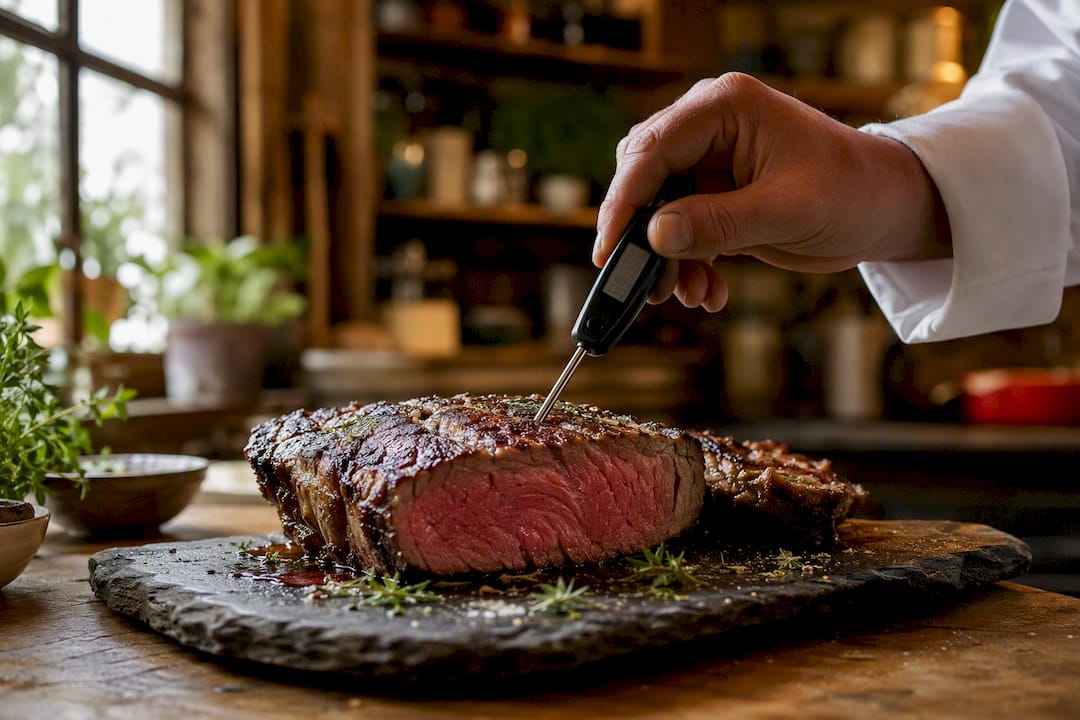
Target internal temperatures (kerntemperatuur): medium-rare sits around 55°C (131°F), rare a bit below that, medium a bit above. Use an actual thermometer rather than guessing by touch. Cooking time depends heavily on thickness, so a 1.5 inch dry aged strip loin needs a different approach than a thin sirloin, even at the same target temperature.
Pro Tip: Buy a cheap instant-read thermometer if you don't own one. Dry aged beef is too expensive to risk overcooking on a guess, and the difference between 55°C and 65°C is the difference between tasting the aging and tasting nothing but char.
Why Dry Aged Steak Costs More Than Fresh Beef
Three real costs stack up here, not marketing fluff. Weight loss from evaporation runs 15 to 30% or more depending on how long the beef ages. Trim loss adds another chunk on top of that, since the dried crust gets cut away entirely. Cooler space and time aren't free either. A subprimal tying up a temperature-controlled locker for five weeks costs a butcher real money in overhead before it's even sold.
- Longer aging generally means a higher price, since more weight and trim get lost the longer beef sits.
- Splurge on dry aged when you want a specific, concentrated flavor experience or you're marking an occasion.
- Skip it when you just want a good weeknight steak. A well-sourced fresh cut, cooked properly, is genuinely better value most days.
Can You Dry Age Steak at Home Successfully?
Home dry aging is possible, but it comes with real constraints most people underestimate. You need a dedicated refrigerator, not your everyday kitchen fridge full of groceries, because temperature swings from constant door-opening will ruin the process. That fridge needs to hold a steady 36 to 39°F with a fan for airflow and enough space for a whole subprimal, not a single steak.
Some home setups use a starter piece, a small amount of already-aged beef placed alongside the new cut to introduce favorable microbial activity faster. Skip this step and you'll likely wait longer for the flavor to develop, since you're relying on ambient microbes to establish themselves naturally.
Realistically, the biggest barrier isn't skill. It's fridge space and the willingness to dedicate an entire appliance to one project for weeks at a time. For most home cooks, the smarter move is buying from a butcher who already has the equipment, the space, and the experience to manage the risk properly. If you do want to try it yourself, start with a smaller subprimal like a strip loin rather than a whole rib section, keep meticulous notes on temperature and humidity, and accept that your first attempt may not match what a professional cooler produces.
Is Dry Aged Beef an Environmentally Responsible Choice?
The environmental picture around dry aged beef is mixed, and it's worth understanding rather than assuming either way. On one hand, the weight loss inherent to dry aging, that 15 to 30% or more lost to evaporation, means you need more raw beef to produce the same amount of finished product compared to wet aging or unaged cuts. That translates to a larger per-pound footprint tied to the resources already invested in raising the animal.
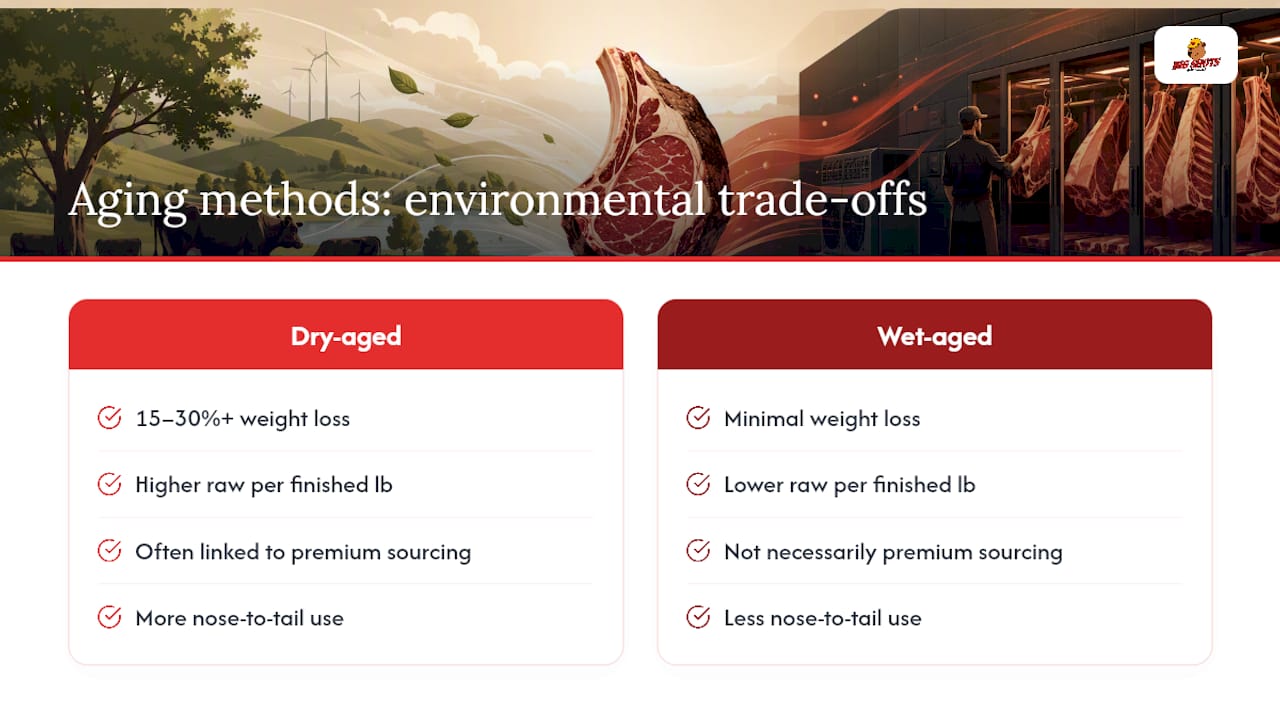
On the other hand, dry aging channels whole subprimals through a process that often pairs with higher animal welfare and quality standards, since producers investing in premium aging programs tend to also invest in better breed selection and feeding practices upstream. Nose-to-tail use also factors in here: a butcher aging whole primals is typically also finding uses for the trim and off-cuts rather than treating them as pure waste, even though the aging crust itself is discarded.
Ethically, the bigger question for most consumers isn't the aging process itself but the sourcing behind it: where the animal came from, how it was raised, and whether the seller can speak to that with specifics rather than vague claims. A butcher or restaurant that can tell you the breed, the farm region, and the aging duration is generally a better ethical bet than one that can only tell you the price.
The Dutch Market for Dry Aged Beef
The Netherlands has a genuine specialty butcher culture, and dry aged beef has become a standard premium offering rather than a rare novelty at high-end shops and steakhouses, particularly in Amsterdam's dining scene. Prices for dry aged cuts at Dutch retail butchers and restaurants generally sit well above standard fresh steak pricing, reflecting the weight loss and cooler time discussed earlier in this guide, though exact pricing varies significantly by cut, age, and individual seller.
When shopping in the Netherlands, the same buying rules apply as anywhere else: ask for the specific number of aging days, ask about breed and marbling, and look for a seller willing to show or describe their storage setup rather than just slapping "dry aged" on a label. Amsterdam's restaurant and bar scene, in particular, has embraced steak as a centerpiece menu item well beyond the traditional steakhouse format. Sports bars, lounges, and casual dining spots increasingly feature dry aged options alongside more casual fare, which gives diners more ways to try a proper dry aged cut without booking a formal steakhouse reservation.
If you're new to the category, ordering one at a restaurant remains the lowest-risk way to taste it before deciding whether it's worth buying to cook yourself.
What the Conventional Advice on Dry Aging Gets Wrong
Most guides to dry aged steak treat longer aging as automatically better, as if 100 days must beat 30 by definition. That's not what the evidence actually supports. Tenderness gains flatten out after roughly four weeks, so anyone buying a 90-day steak purely expecting a softer bite is paying for something else entirely: a much stronger, funkier flavor that not everyone actually enjoys.
The bigger blind spot in most advice is treating dry aging as a home project first and a restaurant experience second. Realistically, it's the reverse for almost everyone. You need a dedicated fridge, precise humidity control, and the patience to accept an occasional failed batch. Skipping that risk and letting a professional kitchen handle the aging and the cooking gets you a better result with a fraction of the effort.
My honest read: prioritize finding a source, whether butcher or restaurant, willing to answer specific questions about age, breed, and storage over chasing the longest aging number on a menu. Confidence in sourcing matters more than bragging rights on days.
Try Dry Aged Steak at Big Shots Amsterdam
If sourcing your own dry aged cut sounds like more equipment and risk than you want to take on, Big Shots Amsterdam already handles the hard part: proper aging, correct kerntemperatuur cooking, and a menu built to showcase what the process actually delivers. You get the flavor payoff without buying a dedicated fridge or guessing at rest times.

The venue serves its steak menu alongside a full sports bar and lounge atmosphere, whether you're settling in for dinner or ordering in for a night at home. Pair your cut with a glass of red wine and you'll notice how the tannins cut through the concentrated, savory flavor a properly aged steak delivers. Book a table or order online and see what the aging was actually for.
Sources
Menu decisions around dry aged beef usually come down to balancing what customers actually want against what a kitchen can consistently deliver at scale. A venue serving dozens of steaks a night can't chase experimental 200-day ages. It needs a reliable window that delivers noticeable flavor without wild batch-to-batch variation.
Dry aged steak works on a menu when the kitchen treats it as a flavor decision, not a novelty. The goal is a cut that tastes distinctly different from a standard steak, served at the right temperature, without customers needing a meat-science lecture to enjoy it.
At Big Shots Amsterdam, that premium cut sits alongside a broader steak-forward menu built for a lively sports bar and lounge setting. If you're ordering one out, ask your server how it's aged and how they recommend it cooked. A kitchen that answers confidently is one you can trust with an expensive cut.
- Aged beef — Wikipedia
- How to dry age steak at home: a complete guide — Jess Pryles
- Dry Aged Steak – What, Why, and How — Bill's Thoughts on Wine, Travel, and Food
- Steak