
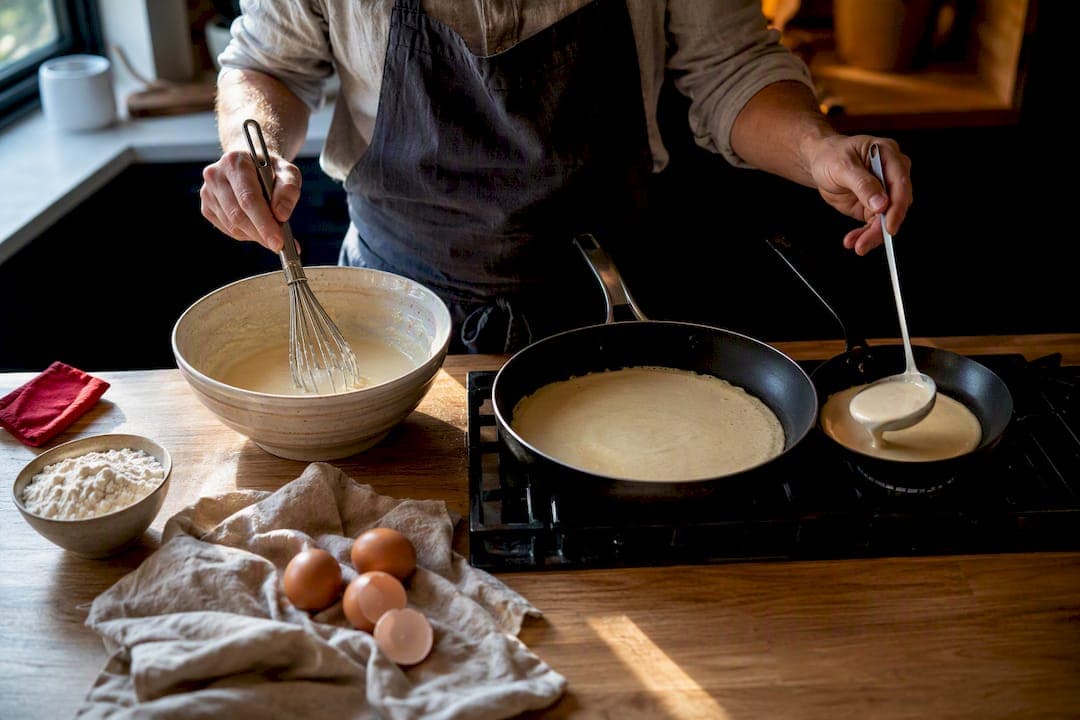
A Dutch pannenkoek is a large, plate-sized pancake, thicker than a French crêpe but thinner than an American flapjack, while a crêpe is paper-thin and pliable, and built for delicate fillings. According to Wikipedia's entry on the pannenkoek, it can stretch up to an ample size commonly served on large plates; culinary outlets like Taste treat the crêpe as its featherweight cousin. One is dinner. The other is dessert wearing a napkin.
TL;DR:
- Dutch pannenkoeken are larger, thicker, and often served as a main course with savory or sweet toppings, unlike the thin, flexible crêpes used for desserts.
- Pannenkoek batter typically includes leavening agents like baking powder or yeast, resulting in a slightly lofted texture, whereas crêopes rely on no leavening for a flat, pliable consistency.
- Proper skillet choice is essential: a wide, deep skillet works best for pannenkoeken, while a low-lipped crêpe pan is ideal for thin, delicate crêpes.
- While crêpes are suited for quick street food or light meals, pannenkoeken serve as hearty, shareable dishes often enjoyed for dinner or brunch.
- Resting crêpe batter for 30 to 60 minutes improves its spreadability, but pannenkoek batter needs little to no resting before cooking.
Table of Contents
- Pancake vs Crepe: A Side-By-Side Comparison
- What Goes Into Each Batter (And Why It Matters)
- Cooking Method and the Right Tools for Each
- Fillings, Toppings, and When to Serve Each
- Getting the Texture Right at Home
- How These Dishes Earn a Spot on a Modern Menu
- Craving One of These In Amsterdam?
- Where These Facts Come From
- Sources
- FAQ
Pancake vs Crepe: A Side-By-Side Comparison
The two dishes share a mixing bowl but land on opposite ends of the texture spectrum. A quick scan of the numbers makes the split obvious.
| Feature | Pannenkoek (Dutch Pancake) | Crêpe |
|---|---|---|
| Thickness | Noticeably thicker, closer to a thin cake | Paper thin, almost translucent |
| Typical diameter | Often plate sized, quite large | Usually 8 to 10 inches, sometimes smaller |
| Batter ingredients | Wheat flour, eggs, milk; occasional buckwheat | Wheat flour, eggs, milk, often a splash of melted butter |
| Leavening | Sometimes none, sometimes a touch of baking powder | None, always unleavened |
| Typical fillings/toppings | Bacon, apple, cheese, raisins, stroop, appelstroop, powdered sugar | Nutella, fruit, sugar and lemon, or savory ham and cheese in a galette |
| Cookware | Wide skillet or flat griddle | Dedicated crepe pan or flat griddle |
| Serving occasion | Main course, often shared | Dessert, snack, light lunch, or street food |
A few things jump out once you see it laid side by side. The pannenkoek is a fork-and-knife meal, according to Britannica's pannekoek entry, often eaten as dinner rather than a side dish. The crêpe, by contrast, plays multiple roles depending on the hour, sliding from breakfast cart to late-night dessert stand without changing its basic recipe. And the comparison guides that put them head to head consistently land on the same verdict: pannenkoeken sit in the middle ground, heartier than a crêpe but never as fluffy as an American pancake.
What Goes Into Each Batter (And Why It Matters)
The ingredient list looks almost identical on paper. The ratios and extras are where the two dishes diverge.
A classic pannenkoek batter is wheat flour, eggs, and milk, whisked into something closer to heavy cream than water. Some traditional versions swap in buckwheat, and a handful of recipes add a pinch of baking powder or even yeast, which is where the size and slight loft come from, according to Wikipedia. Most modern home versions skip the leavening entirely and rely on egg for structure.
Crêpe batter is leaner: flour, eggs, milk, sometimes melted butter, and little to no sugar if you're making it savory. There's no leavening agent at all, which is exactly why crêpes stay flat and flexible instead of puffing at the edges. Galettes, the buckwheat cousin of the crêpe, swap out the wheat flour entirely and lean savory almost by default, per Taste's breakdown of crêpes and galettes.
Quick batter comparison:
- Pannenkoek: wheat flour, eggs, milk, occasionally buckwheat or sometimes a small amount of leavening
- Crêpe: wheat flour, eggs, milk, often butter, no leavening
- Galette: buckwheat flour, eggs, milk, no leavening, almost always savory
Pro Tip: If your pannenkoek batter comes out gummy instead of tender, you probably added too much flour relative to egg. Crack in one more egg before you reach for more milk. It fixes the texture without watering down the flavor.
Cooking Method and the Right Tools for Each
Size and thickness dictate the cookware, and using the wrong pan is the fastest way to ruin either dish.
A crêpe pan, or any wide, flat, low-lipped skillet, is built for the crêpe's whole method: ladle a small pool of thin batter into the center, then tilt and swirl the pan or use a wooden spreader to push it into a near-transparent circle. Heat stays medium, and the pan should be hot enough that the batter sets within seconds of hitting the surface.
A pannenkoek needs a wider, slightly deeper skillet because the batter is thicker and the portion covers more surface area. Here's the practical breakdown for getting it right:
- Preheat the pan on medium heat and coat lightly with butter or oil, enough to keep the edges from sticking without frying them.
- Pour a full ladle of batter and let it spread on its own rather than swirling the pan; pannenkoek batter is thick enough to hold its shape.
- Add toppings while the top is still wet, pressing bacon, apple slices, or cheese gently into the surface so they cook into the pancake instead of sitting on top.
- Watch the edges, not the center, for your flip cue. Once the border turns golden and starts to lift on its own, it's ready to turn.
Diameter tells the same story as thickness. A crêpe rarely exceeds around 10 inches and often runs smaller, while a pannenkoek can fill an entire dinner plate, per Wikipedia's Dutch pancake entry.
Fillings, Toppings, and When to Serve Each
Sweet or savory, both dishes flex in either direction, but tradition points them toward different meals.
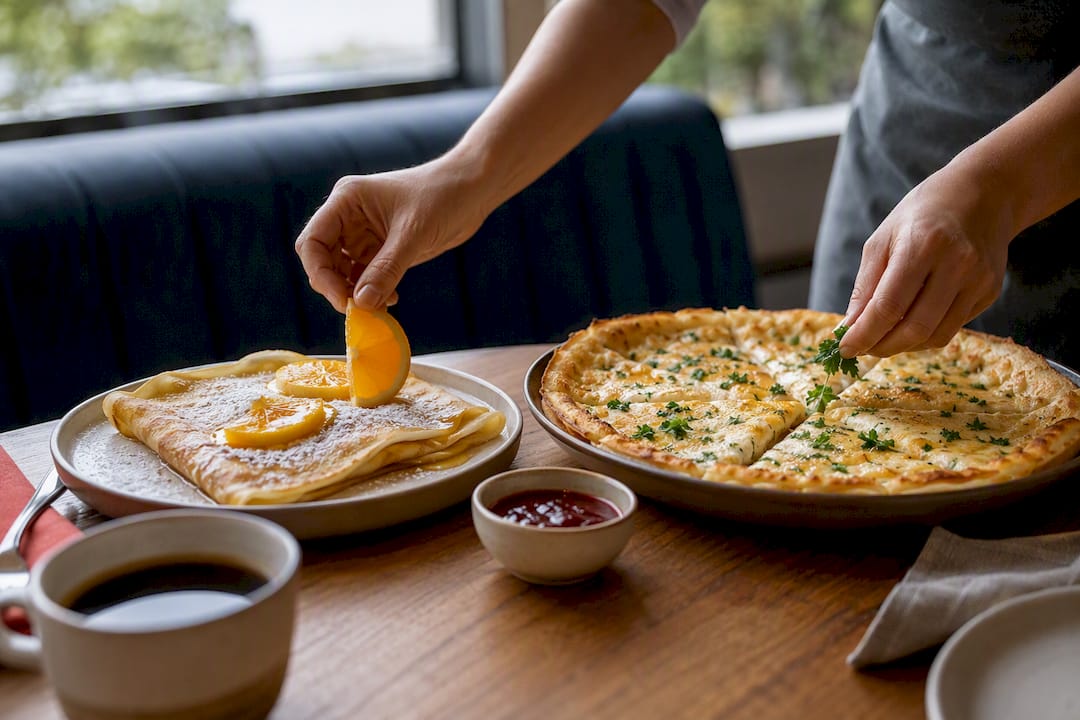
Crêpes lean dessert and street food. Nutella and banana, fresh berries, or a simple dusting of sugar and lemon juice are the classic sweet fillings. On the savory side, the buckwheat galette takes over, typically stuffed with ham, cheese, and a soft egg cracked right into the center, a combination Taste highlights as the defining galette move.
Pannenkoeken skew toward the main course. Common add-ins include:
- Bacon and cheese folded into the batter for a salty, savory version
- Apple slices cooked right into the pancake for natural sweetness
- Raisins scattered through for texture without extra sugar
- Stroop or appelstroop drizzled over a plain pannenkoek, plus a dusting of powdered sugar for the simplest version
The context matters as much as the topping. A crêpe works as a light lunch, a dessert, or something grabbed from a street cart. A pannenkoek is usually the whole meal, often shared family-style straight off the pan.
Getting the Texture Right at Home
Consistency is the single biggest variable most home cooks get wrong, and it's fixable with a spoon test before the pan ever heats up.
- Test crêpe batter with the spoon-drip method. Lift a spoon out of the bowl; the batter should run off in a thin, steady stream, closer to heavy cream than pancake batter. If it clings to the spoon, add milk one tablespoon at a time.
- Let crêpe batter rest for 30 to 60 minutes before cooking. This relaxes the gluten in the flour and makes the batter spread more evenly, a step Taste's crêpe guide calls out as one of the most overlooked steps in home kitchens.
- Skip the long rest for pannenkoek batter. It's thicker to begin with and can usually go straight into the pan, though a 10-minute rest never hurts.
- Adjust heat as you go. Crêpes want higher, faster heat for a lacy edge; pannenkoeken want medium heat held steady so toppings cook through without scorching the bottom.
Pro Tip: If a crêpe keeps tearing when you flip it, the batter is probably too thick or the pan isn't hot enough yet. Thin the batter slightly and give the pan another minute before your next attempt.
How These Dishes Earn a Spot on a Modern Menu
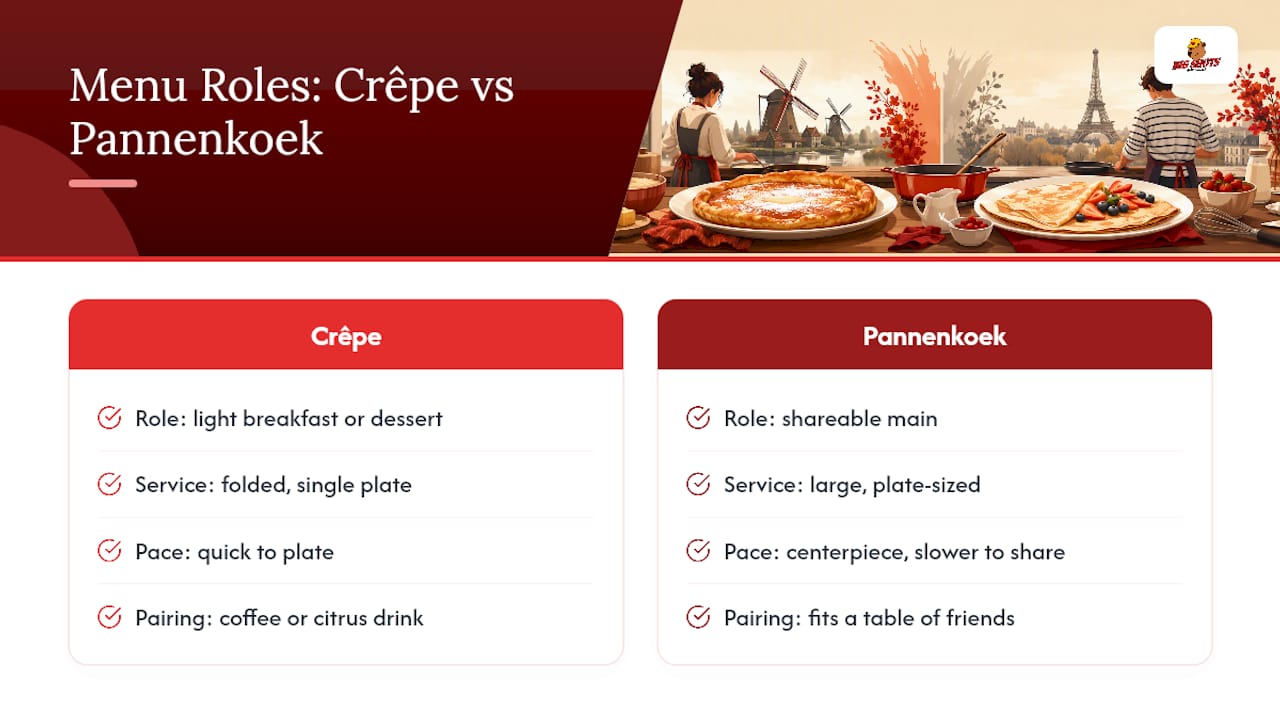
A folded crêpe reads as a lighter breakfast option or a clean dessert course, easy to plate quickly and easy to pair with coffee or a simple citrus drink. A pannenkoek does the opposite job: it's the shareable, conversation-starting main that fits a table of friends rather than a single diner. Menus built around Amsterdam's breakfast and brunch culture tend to use exactly this split, positioning the crêpe as the quick, elegant option and the pannenkoek as the centerpiece dish people order to split. Some cookbooks describe the pannenkoek as a bridge between fluffy American pancakes and delicate French crêpes, a hearty middle ground that suits a full plate rather than a side dish. That framing holds up: good brunch menus usually give each dish a distinct lane instead of treating them as interchangeable.
Craving One of These In Amsterdam?
A local hospitality venue in Amsterdam runs a breakfast and brunch menu around hearty plates built for sharing, without forcing you to choose between a quick bite and a real sit-down meal.

If a shareable pannenkoek sounds better than cooking one yourself, the Bigshotsamsterdam menu lists the current breakfast and brunch lineup, alongside steaks, burgers, and plates built for groups. Not near a venue right now? The delivery page lets you order from home instead. Menu items rotate with the season, so check online ordering for what's currently available before you plan a visit. Planning something bigger, like a group hangout around sports or shisha? The lounge experiences page covers what's on offer for that kind of night out.
Where These Facts Come From
The comparisons above draw on Wikipedia's Dutch pancake entry, Britannica's pannekoek entry, Taste's crêpe and pancake breakdown, and Cook Geeks' side-by-side showdown. For savory variations and dietary swaps worth trying on either dish, Wild Foodz's guide to vegan foods in Brugge is worth a look.
Sources
- Pannenkoek
- The real difference between pancakes and crepes
- Pannekoek — Britannica
- Crepes vs pannenkoeken: the ultimate showdown for breakfast pancakes - Cook Geeks
FAQ
What Is the Difference Between a Pancake and a Crepe?
A pancake, whether American or Dutch, is thicker and often relies on some leavening for a softer bite. A crêpe has no leavening at all and stays thin and pliable, according to Taste.
What's the Difference Between Regular Pancakes and Dutch Pancakes?
American pancakes are fluffier and smaller, thanks to baking powder creating lift. Dutch pancakes, or pannenkoeken, are wider and flatter, closer to a foot in diameter, and lean on egg rather than heavy leavening for structure, per Wikipedia.
What Is a Dutch Pancake Called?
It's called a pannenkoek, and the plural is pannenkoeken. The name shows up directly on menus and in recipes without much translation, since it's already the accepted English-language term in most cookbooks.
What Makes a Pancake "Dutch"?
The defining traits are size and thinness relative to American pancakes, plus toppings like stroop, appelstroop, or savory add-ins such as bacon and cheese cooked into the batter, according to Britannica. It sits squarely between an American pancake and a French crêpe, thick enough to be a meal but thin enough to fold.
Where Can I Try a Pannenkoek or Crepe-Style Dish in Amsterdam?
Bigshotsamsterdam's breakfast and brunch menu features hearty, shareable comfort food in this style, viewable on the menu page or ordered through delivery. Specific dishes rotate, so check current listings before you visit.