
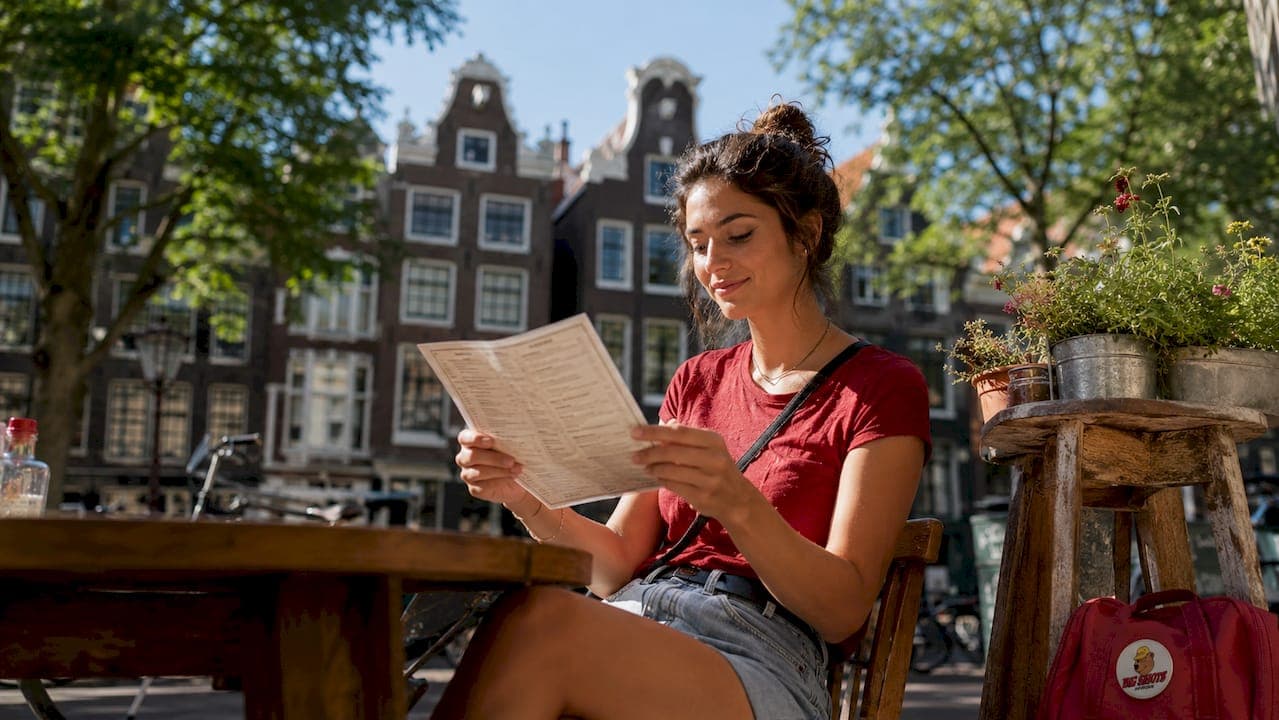
TL;DR:
- English menus in Amsterdam are essential tools that improve communication, safety, and revenue for restaurants. They help reduce misunderstandings and trust issues while increasing check sizes through clearer descriptions and allergen filters. Short, high-quality English menus signal professionalism and attract international guests, especially in tourist-heavy neighborhoods.
English menus in Amsterdam are defined as restaurant menus written in English to serve the city's large international visitor population, and they are the single most effective tool for reducing ordering friction between tourists and local dining venues. The role of English menus in Amsterdam goes well beyond simple translation. These menus shape confidence, spending behavior, and overall dining satisfaction for the millions of tourists and expatriates who visit each year. Amsterdam's hospitality sector treats English as its primary guest-facing language, making English menus a baseline expectation rather than a bonus feature.
How prevalent is English in Amsterdam restaurants?
English is the working language of Amsterdam's tourism industry. About 85% of Amsterdam residents speak Dutch as their first language, yet English proficiency among hospitality workers is exceptionally high. That combination means most servers can explain a menu in English, but the menu itself still needs to be clear and well-written to avoid misunderstandings.
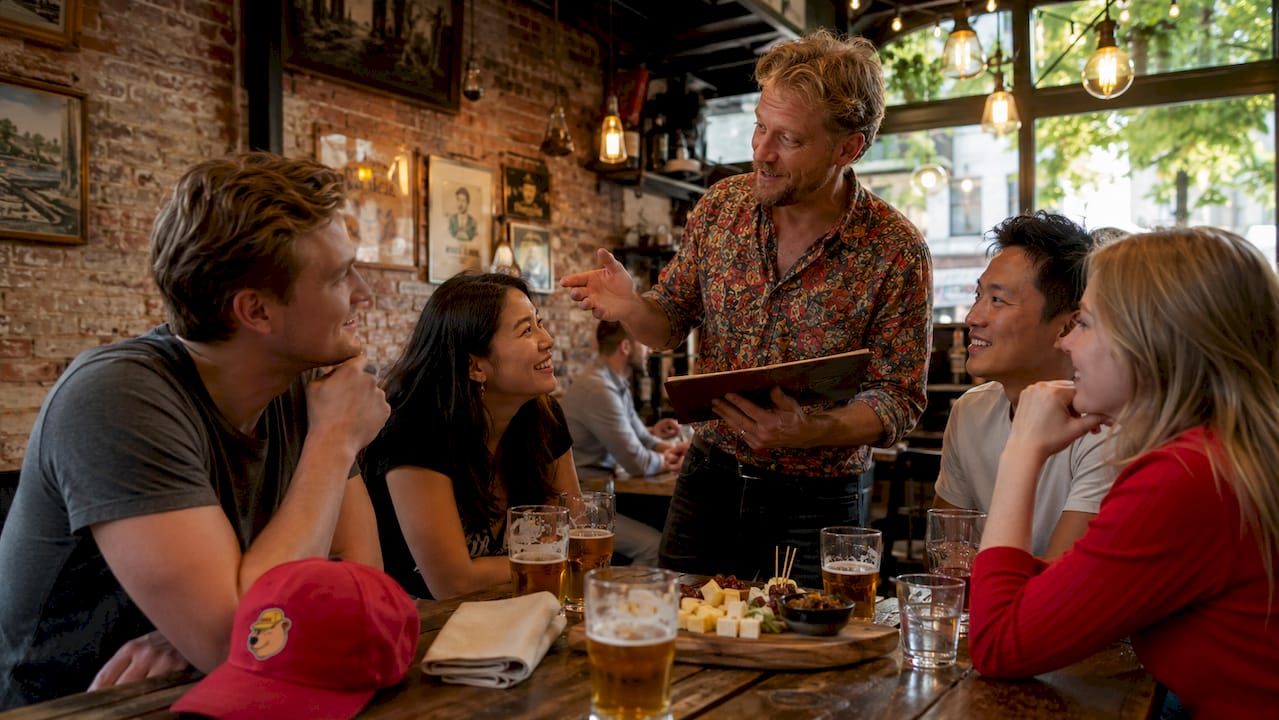
Tourist-heavy neighborhoods make English menus standard practice. Areas like the Museum Quarter, Dam Square, and the Jordaan all feature English menus prominently in their restaurant windows and on their tables. Visitors in these zones rarely need to ask for a translation because English is already the default presentation language.
English menus reduce a specific type of friction that kills dining satisfaction: the moment a tourist points at something on a Dutch-only menu and receives a dish they did not expect. That experience damages reviews, reduces tip size, and discourages return visits. Restaurants that eliminate this friction through clear English menus protect both their reputation and their revenue.
Key reasons English menus matter in Amsterdam's restaurant scene:
- They allow tourists to read allergen information independently, which is a safety issue, not just a convenience.
- They let visitors identify premium dishes and specialty items they might otherwise skip.
- They reduce the time servers spend explaining basics, freeing staff to focus on hospitality.
- They signal to international guests that the venue welcomes them, which directly affects first impressions.
- They support expatriates who live in Amsterdam long-term but have not yet mastered Dutch.
What is the business impact of English menus on revenue?
English menus are a direct revenue driver, not a courtesy feature. Tourist-area restaurants that implement multilingual digital menus report check-size increases of 12–18%. That figure reflects what happens when guests can read full descriptions, understand portion sizes, and confidently order add-ons like sides, sauces, and drinks.
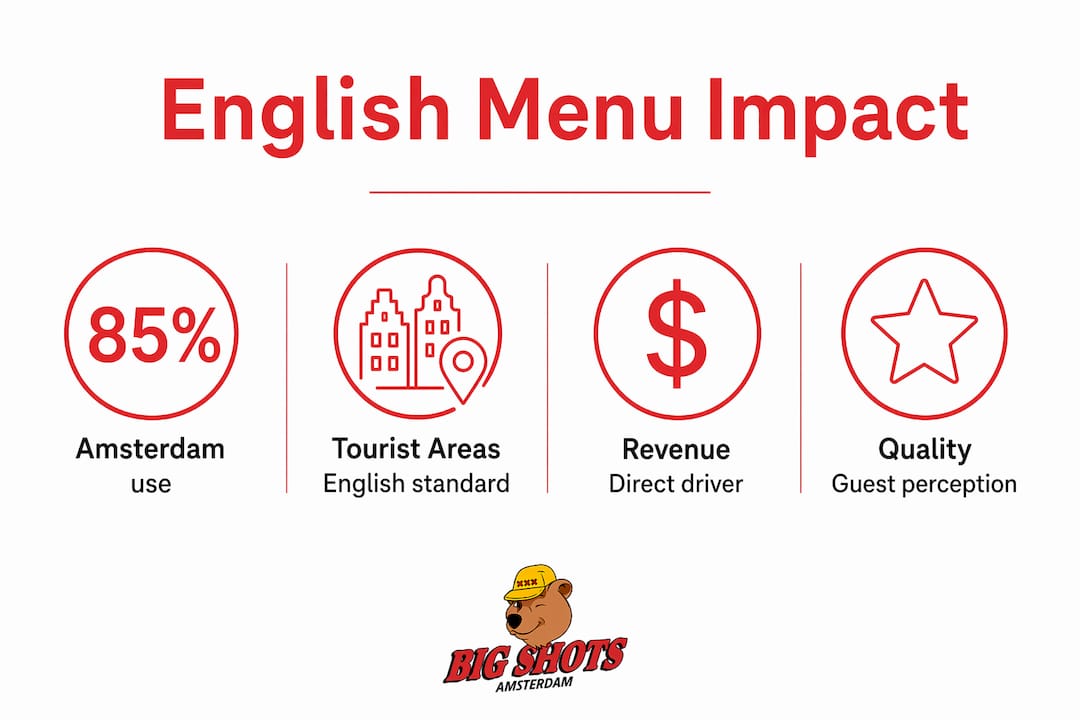
The cost of skipping English menus is equally measurable. Venues with international guest traffic that rely on single-language menus face an estimated 8–12% annual revenue loss. That loss comes from smaller orders, more returns, and lower satisfaction scores that suppress repeat business and online ratings.
Pro Tip: If you are choosing between two Amsterdam restaurants and one has a clear English menu with dish descriptions while the other offers only a Dutch menu, the English-menu venue will almost always deliver a faster, more accurate, and more satisfying experience.
Digital menus with allergen filtering improve both safety and satisfaction simultaneously. Guests who can filter for gluten-free or nut-free options without asking a server feel more in control of their meal. That sense of control translates directly into higher spending and better post-meal reviews.
Restaurants with multilingual digital menus also report fewer server errors. When guests self-select from a clear English menu rather than relying on verbal communication, the chance of a wrong dish arriving at the table drops significantly. Fewer errors mean fewer comped meals, less food waste, and more time for servers to build genuine rapport with guests.
Does translation quality change the dining experience?
Translation quality shapes perceived restaurant quality. Menu language variation directly impacts purchasing decisions, with sensory-rich and culturally authentic descriptions outperforming basic word-for-word translations. A menu that reads "slow-braised Dutch beef with caramelized onion and aged Gouda" performs better than one that reads "beef with onion and cheese." The first version creates appetite. The second creates doubt.
Poor translation signals carelessness. Tourists who see grammatically broken English on a menu often assume the same carelessness extends to the kitchen. That perception is not always fair, but it is consistent. Restaurants that invest in quality English copywriting, not just machine translation, communicate professionalism before a single dish arrives.
| Menu type | Guest perception | Likely outcome |
|---|---|---|
| Sensory-rich English descriptions | High quality, worth the price | Larger orders, better reviews |
| Basic word-for-word translation | Acceptable but uninspiring | Average orders, neutral reviews |
| Machine-translated with errors | Low quality, possible tourist trap | Smaller orders, negative reviews |
| Six or more languages, thin descriptions | Tourist trap signal | Skepticism, reduced spending |
Pro Tip: Look for menus written in English and one or two other languages with full, descriptive sentences. That combination usually signals a venue that cares about its international guests without sacrificing quality for volume.
Menus printed in six or more languages with minimal descriptions are a known tourist trap signal in Amsterdam. These venues prioritize table turnover over guest experience. The menu breadth is designed to catch every passing tourist, not to communicate genuine culinary identity. Recognizing this pattern saves you from a mediocre meal in a prime location.
Checking out gastronomy trends in 2026 shows that the best Amsterdam venues are moving toward shorter, more focused English menus with richer descriptions. That shift reflects a broader understanding that quality language sells food more effectively than quantity of options.
How can tourists navigate English menus in Amsterdam effectively?
Tourists who approach Amsterdam's dining scene with a few practical habits get dramatically better results. The menu itself is your first piece of information about a restaurant, and reading it critically takes less than two minutes.
Practical habits that improve your Amsterdam dining experience:
- Check the menu language count. A menu in English and Dutch, or English and one other language, signals a venue that knows its audience. A menu in eight languages with tiny print signals volume-focused service.
- Use QR code menus when available. Digital reservation and ordering platforms often include allergen filters, photos, and full ingredient lists that printed menus omit. These tools give you more information and more control.
- Read descriptions, not just dish names. A dish called "Amsterdam special" tells you nothing. A description that mentions smoked eel, rye bread, and pickled mustard tells you exactly what you are ordering and whether it suits your taste.
- Ask servers in simple, direct English. Staff using simple English and a warm tone can compensate for gaps in menu detail. A polite, specific question like "Does this contain nuts?" gets a faster and more accurate answer than a vague one.
- Cross-reference with the food lover's guide to Amsterdam restaurants before you sit down. Knowing what a venue specializes in before you arrive helps you order with confidence even if the menu is unfamiliar.
Expatriates face a slightly different challenge. They visit the same neighborhoods repeatedly and eventually want to move beyond tourist-area English menus into local spots with Dutch-only menus. The practical solution is to learn ten to fifteen food-related Dutch words, which covers most menu situations and earns genuine appreciation from local staff.
Key Takeaways
English menus in Amsterdam are a measurable business tool and a practical necessity for tourists, with translation quality determining both guest confidence and restaurant revenue.
| Point | Details |
|---|---|
| English is the hospitality standard | Amsterdam's tourism zones treat English menus as the default, not an option. |
| Revenue impact is quantifiable | Clear English menus drive 12–18% higher check sizes in tourist-area venues. |
| Translation quality signals restaurant quality | Sensory-rich descriptions increase order value; broken translations reduce it. |
| Six-plus language menus signal tourist traps | Menus overloaded with languages typically indicate volume-focused, low-quality venues. |
| Digital menus add safety and satisfaction | QR-based menus with allergen filters reduce errors and increase guest confidence. |
Why English menus define Amsterdam dining in 2026
I have spent enough time in Amsterdam's restaurant scene to say this clearly: the menu is the first handshake between a venue and its international guests. When that handshake is confident and clear, the entire meal goes better. When it is clumsy or absent, guests spend the first ten minutes anxious instead of excited.
The mistake I see tourists make most often is treating a bad English menu as a minor inconvenience. It is not. A poorly translated menu creates a chain reaction. You order the wrong thing, the server misunderstands your correction, the dish arrives wrong, and you leave dissatisfied. That chain starts with the menu, not the kitchen.
What I find genuinely encouraging is the shift toward shorter, better-written English menus in Amsterdam's better venues. The food presentation standards at quality Amsterdam restaurants now extend to the language on the page. Chefs who care about how a dish looks also care about how it reads.
My honest advice: treat the English menu as a quality filter before you sit down. A well-written English menu with honest descriptions and clear allergen information tells you that the venue respects your time and your experience. That respect usually shows up in the food too.
— Leo
Bigshotsamsterdam: Where English menus meet real hospitality
Bigshotsamsterdam is the kind of venue that makes the principles in this article visible in practice. The menu is written in clear English, the staff speaks it fluently, and the atmosphere is built for tourists and expatriates who want a genuine Amsterdam experience without the guesswork of a language barrier.
Whether you are settling in for a steak, starting your morning with breakfast, or unwinding with craft cocktails after a day of sightseeing, Bigshotsamsterdam delivers the full package. The venue combines a sports bar, shisha lounge, restaurant, and café under one roof, making it one of the most versatile spots in the city for international visitors. Check out the full menu and venue details to plan your visit and see exactly what is on offer before you arrive.
FAQ
Why do Amsterdam restaurants use English menus?
Amsterdam's tourism industry relies on English as its primary guest-facing language. Restaurants in tourist-heavy areas use English menus to reduce ordering errors, increase guest confidence, and drive higher check sizes.
Are English menus standard across all Amsterdam neighborhoods?
English menus are standard in tourist-dense areas like the Museum Quarter, Dam Square, and the Jordaan. Local neighborhood restaurants outside these zones may offer Dutch-only menus, though staff often speak enough English to assist.
How do I spot a tourist trap using the menu?
A menu printed in six or more languages with thin, generic descriptions is a reliable tourist trap signal in Amsterdam. Quality venues typically offer English and one or two other languages with full, descriptive dish explanations.
Do digital menus improve the dining experience for tourists?
Digital menus with allergen filters and full ingredient descriptions reduce ordering errors and increase guest satisfaction. They give tourists more control over their meal choices without relying entirely on server communication.
What should I do if a restaurant has no English menu?
Use simple, direct English questions with staff, who in Amsterdam's hospitality sector typically have strong English proficiency. Alternatively, check the venue's website or a QR code menu for a digital version with more detail.