
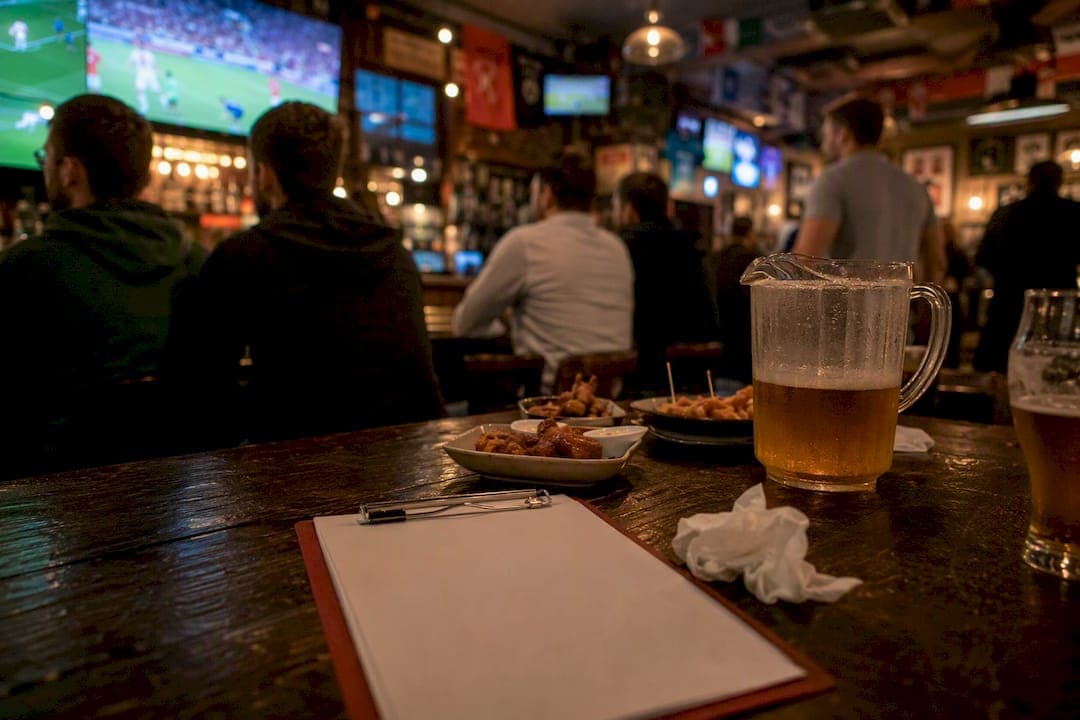
To reserve a sports-bar space for a private event, decide your guest count and date first, then pick a hire type (table, section, or full buyout), and confirm minimum spend and deposit terms before you sign anything or pay.
That's the whole sequence. Everything else is detail work. Here's what to do in the next hour if you're planning something for next month:
- Nail down your guest count and two or three possible dates, including a weeknight backup.
- Shortlist two or three venues that fit your group size and vibe.
- Email each one with your date, headcount, and event type, and ask for their private event package.
Pro Tip: If your date lands on a major holiday or a big-match weekend, venues typically ask for 3 to 6 months of lead time — reach out now even if the event feels far away.
Key Takeaways
Booking a sports bar for a private event comes down to locking guest count and date early, choosing the right hire type, and confirming money terms in writing before you pay a deposit.
| Point | Details |
|---|---|
| Decide the essentials first | Fix guest count, date, budget, and event format before contacting any venue. |
| Match hire type to group size | Use table reservations for small groups, section hire for 20 to 60 guests, and buyouts for full control. |
| Confirm the money in writing | Deposits run 20% to 50%, and shortfall, tax, and service charges should all be spelled out before signing. |
| Lock the final headcount early | Give venues your final count 7 to 10 days out to avoid shortfall surprises. |
| Consider Big Shots Amsterdam | Multiple spaces, food, and A/V under one roof make it a practical option for Amsterdam group events. |
Table of Contents
- Explaining Sports Bar Booking for Events: What to Decide First
- Table, Section, or Full Buyout: Which Hire Type Fits?
- What to Ask Before You Book: A Checklist
- How Much Does a Sports Bar Event Actually Cost?
- When to Book: A Realistic Timeline
- Making Event Day Run Smoothly
- Ready to Book Your Event at Big Shots Amsterdam
- Frequently Asked Questions
- Sources
Explaining Sports Bar Booking for Events: What to Decide First
Before you contact anyone, nail down five things: guest count, date and time window, budget range, event format, and your food and drink approach. Venues can't quote you accurately without them, and vague inquiries get vague, slow answers.
Each choice moves the price. A Saturday night during a major tournament will carry a higher minimum spend than a Tuesday screening of a regular-season game. Sports bar event planning almost always rewards flexibility on timing, since a quieter weeknight slot gives you real leverage to negotiate down.
- Guest count. Round up slightly. Venues plan staffing and seating around this number.
- Date and time window. Have a primary choice and a backup.
- Budget range. Know your ceiling before you hear a quote.
- Event format. A casual watch party needs different setup than a birthday or a corporate mixer.
- Food and drink style. Buffet, plated, or bar tab all change the pricing conversation.
Prepare a short one-paragraph event brief, your preferred channel or broadcast package, any A/V needs, accessibility requests, and a single point of contact. That last part matters more than people expect. Venues juggling five texts from five different friends lose track fast.
Pro Tip: Ask about a weeknight slot even if you'd prefer a weekend. Moving your date can lower the minimum spend enough to fund an upgraded food package instead.
Table, Section, or Full Buyout: Which Hire Type Fits?
Sports bars generally offer three ways to reserve space, and picking the right one is the single biggest decision in booking events at sports bars.
A table reservation holds a set number of seats in the open room, works for groups up to about 20, and costs the least, but you're still sharing the space and the sound with regular patrons. A reserved section or area hire blocks off part of the venue while it stays open to the public. This model tends to work well for groups of roughly 20 to 60 people, and gives you a dedicated screen or zone at a lower cost than shutting the whole place down. A full-venue buyout means exclusive use, total control over music and screens, and the freedom to bring in outside vendors or decorations, but it costs considerably more and usually requires a bigger minimum guarantee.
- Casual watch party with coworkers: a table reservation or small section hire.
- Milestone birthday with 40 guests: a section hire, since it balances privacy and cost.
- Corporate event or product launch: a full buyout, especially if branding or catering needs total control.
- Large wedding-adjacent celebration: full buyout, mainly for noise control and exclusivity.
The bigger the guest list and the more control you want over the room, the more it pushes you toward a buyout.
What to Ask Before You Book: A Checklist
Send one clear email instead of five scattered questions. Use a subject line like "Private Event Inquiry: [Date], [Guest Count]" and include your date, headcount, event type, and rough budget in the first two lines. That single move gets you a real quote faster than a vague "do you do private events?" message.
Ask these questions before you commit to anything:
- Is the date and time available, and what's the maximum capacity for my hire type?
- Exactly what counts toward the minimum spend (food, drinks, or both)?
- What's the deposit amount, and is it refundable if plans change?
- Are sales tax and service charges added on top of the quoted minimum?
- What's the finishing time or curfew for the space?
For A/V, ask specifically about input ports, which broadcast package or channel access they use, whether someone can switch between multiple games, and whether a technician is on-site during your event. This one detail trips up more group watch parties than anything else.
A tight event-process checklist means getting every promise in writing: confirm what counts toward the minimum, verify the curfew time, and check whether outside bottles or decorations are permitted before you assume they are.
Before signing, confirm these contract clauses specifically:
- Deposit refund window and deadline
- Shortfall policy if you don't hit the minimum spend
- Relocation clause if the venue needs to move your event to a different space
- Force majeure terms for cancellations outside anyone's control
Venues typically want a final headcount 7 to 10 days before the event, with final payment due on or close to that same date.
How Much Does a Sports Bar Event Actually Cost?
Most venues price private events one of three ways: a flat hire fee, a minimum spend you need to hit through food and drink orders, or straight pay-as-you-go with no minimum at all. Minimum spend is the most common model for section hires and buyouts, and if your group doesn't reach it, you pay the difference as a shortfall charge at the end of the night.
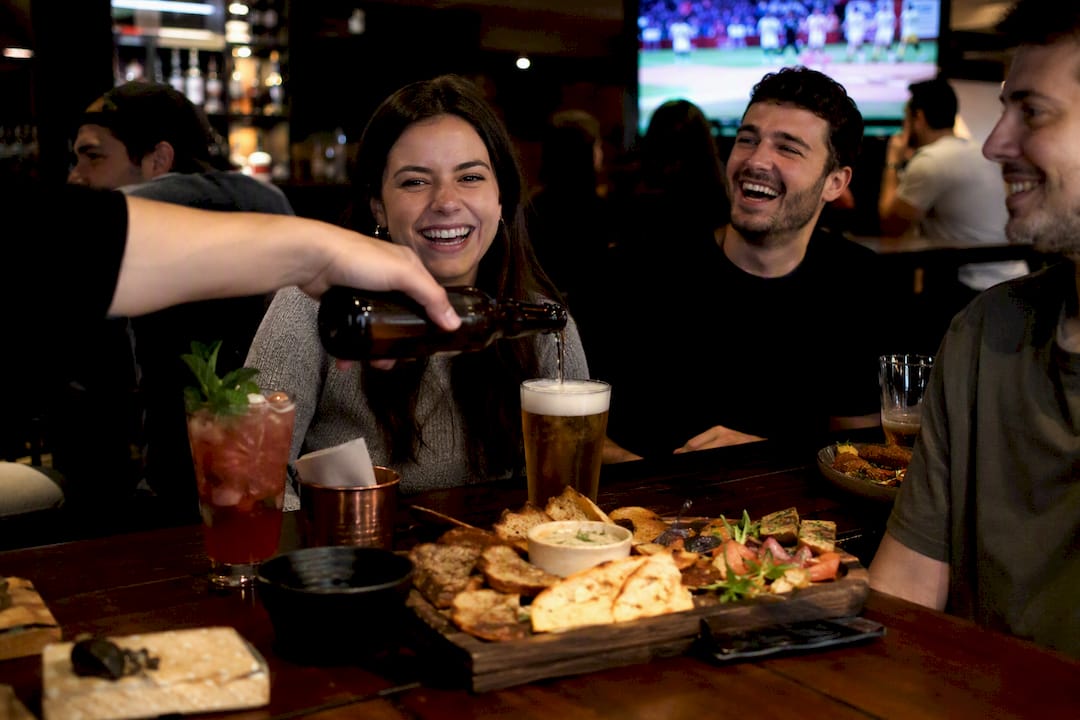
Deposits commonly run 20% to 50% of the estimated total, and that amount is usually credited toward your final bill rather than charged separately. It's often nonrefundable once you pass a certain cancellation window, so check that date before you pay.
Watch for these add-ons, which rarely show up in the headline price:
- Sales tax on the full bill
- Automatic service charge or gratuity, sometimes as high as 20%
- A/V or technician fees for extra screens or private feeds
- Corkage or outside-food fees if you bring in catering
- Room setup or decoration fees for full buyouts
Casual group food-and-drink packages commonly run $25 to $50 per person, and that flat-rate model tends to make more sense than an open tab once your group passes about 15 people. Below that, running a tab often costs less and gives guests more choice.
When to Book: A Realistic Timeline
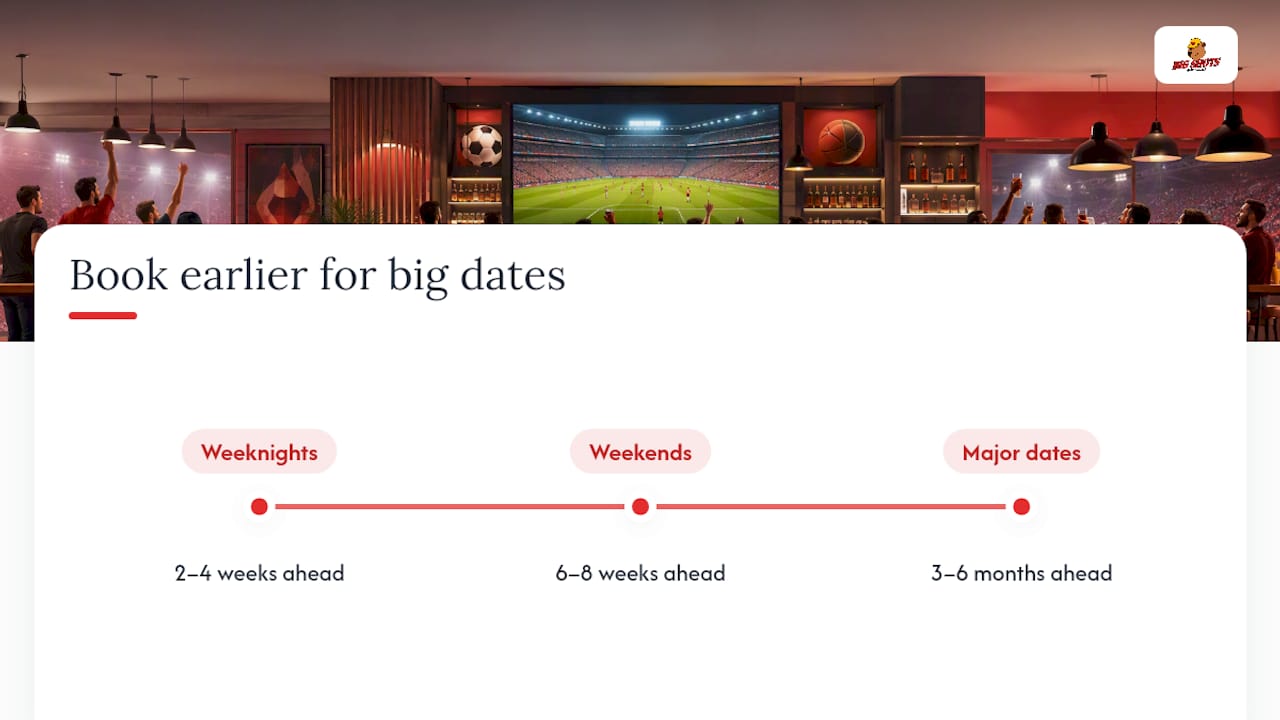
Lead time depends entirely on the date. For major holidays, playoff nights, or any date with citywide demand, book 3 to 6 months out. Regular Friday or Saturday nights need 6 to 8 weeks. A quiet weeknight often only needs 2 to 4 weeks, and that shorter runway also gives you more negotiating room on the minimum spend.
- Deposit paid and date confirmed.
- Contract signed within the venue's stated window.
- Menu or package selection finalized.
- Final guest count locked in 7 to 10 days out.
- Final payment settled on or near the same deadline.
Get the cancellation policy, shortfall liability, curfew time, and damage responsibility confirmed in writing before you sign. Verbal promises don't hold up when the bill arrives.
Making Event Day Run Smoothly
Arrive 20 to 30 minutes early to walk the space with the on-site manager and confirm the layout matches what you booked. Simple signage at the entrance, or a staff member briefed to direct arrivals, keeps guests from wandering the wrong room.
- Set a hard cap on the bar tab and ask staff to flag you before it's hit.
- Consider a per-head package instead of an open tab for predictable costs.
- Confirm restrooms, walking routes, and any accessibility requests are actually set up as discussed.
- Brief one staff member as your single contact for the night.
Pro Tip: Sending reminders at 7 days, 3 days, and the morning of your event can lift real attendance from roughly 30% of RSVPs to closer to 50%, which matters a lot when you're locked into a headcount-based minimum.
What Venues Actually Want From You
The single most helpful thing a booker can bring us is a firm final headcount and one point of contact, not five people emailing separately about the same event. At Big Shots Amsterdam, clear communication upfront turns a stressful booking into an easy one for everyone.
Ready to Book Your Event at Big Shots Amsterdam
Big Shots Amsterdam gives you something a lot of venues can't: multiple spaces under one roof, from a full sports bar to a shisha lounge and restaurant, so your group can watch the match, eat well, and keep the night going without moving locations. That flexibility matters most for group events where not everyone wants the same thing all night.
If you're planning a watch party, birthday, or private gathering, reach out through the event booking page with your date, guest count, and event type ready to go, the same details that speed up any venue's response. You can also browse our guide to hosting events at a sports bar in Amsterdam for a closer look at our screens, food, and layout options before you contact us by email or phone.
Frequently Asked Questions
How far in advance should I book a sports bar for a private event? For major holidays or big-match dates, book 3 to 6 months ahead. Regular weekends need 6 to 8 weeks, and weeknights often only need 2 to 4 weeks.
What's the difference between a section hire and a full buyout? A section hire reserves part of the venue while it stays open to the public, typically suiting 20 to 60 guests. A full buyout gives you the entire space exclusively, at a higher cost.
How much deposit should I expect to pay? Most venues ask for 20% to 50% of your estimated total, credited toward your final bill and often nonrefundable past a certain date.
What counts toward a minimum spend? This varies by venue, so ask directly, but it usually includes food and drink purchases and sometimes excludes tax, service charges, or add-on fees.
When do I need to confirm my final guest count? Most venues want your final headcount 7 to 10 days before the event, which is also when final payment is typically due.
Sources
- A Guide to Sports and Social Private Events
- How to Book a Bar for a Private Event — The Complete Guide
- Sports Watch Party Planning: Setup, Food, and a Complete Guide — Dream Event
- The soccer watch party checklist — 7 days out to final whistle · Pitch Party