

TL;DR:
- Food reviews in Amsterdam significantly influence restaurant revenue, reputation, and local dining dynamics. High review volumes and recent positive responses build consumer trust, while tourist-driven feedback can obscure authentic local venues. Utilizing multiple platforms and recent reviews helps diners make more informed dining choices in this competitive city.
Food reviews are the primary trust signal shaping Amsterdam dining experiences, directly determining which restaurants fill their tables and which ones close. Platforms like Google, Yelp, and TripAdvisor now function as the city's unofficial dining authority, influencing where tourists and locals spend their money every single night. The role of food reviews in Amsterdam dining goes far beyond simple star ratings. Reviews drive discovery, filter competition, and increasingly define what "authentic" Amsterdam cuisine even means. Understanding how this system works gives you a real edge when planning where to eat.
How food reviews impact amsterdam restaurant revenue
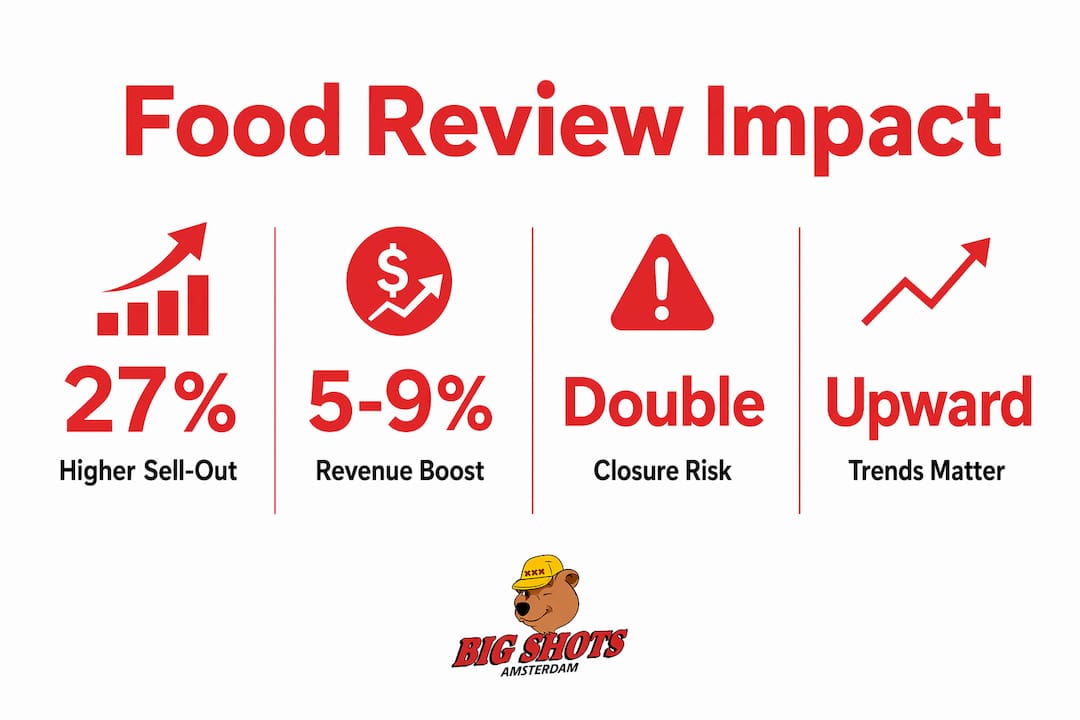
The financial stakes behind online reviews are concrete and well-documented. A one-star increase on Yelp can boost restaurant revenue by 5–9%. That is not a marginal gain. For a mid-range Amsterdam restaurant turning over €1 million annually, a single star improvement translates to €50,000–€90,000 in additional revenue.
The effect compounds at peak hours. Restaurants rated 4 stars versus 3.5 stars see a 27% higher sell-out rate during busy periods. In a city like Amsterdam, where Friday and Saturday dinner reservations fill weeks in advance, that gap is the difference between a thriving business and an empty dining room.
Digital visibility follows the same pattern. Improving a Google rating from 4.0 to 4.5 stars increases discovery clicks by 15–30% within 90 days in competitive markets. Amsterdam's dining scene qualifies as one of the most competitive in Europe, making that click-through boost especially significant for newer venues trying to build a customer base.
The downside is equally stark. Low-rated restaurants in tourist-heavy markets face double the probability of closure after mobile review platforms gain adoption. Amsterdam's historic center and the Jordaan district are prime examples of tourist-heavy zones where this effect plays out visibly. Restaurants that fail to maintain strong review scores in these areas rarely survive more than two seasons.
Pro Tip: Before booking a restaurant in Amsterdam, check whether its rating has trended upward or downward over the past six months. A 4.2 rating climbing from 3.8 tells a better story than a 4.5 rating that has dropped from 4.8.
What makes a food review actually trustworthy?
Not all reviews carry equal weight, and knowing the difference saves you from bad meals. Review volume increases trustworthiness more reliably than a perfect score with very few reviews. A restaurant holding a 4.6 rating across 2,500 reviews is a far safer bet than one with a 5.0 rating from 10 reviews. Volume signals that the experience is consistent, not just lucky.
The content of reviews matters as much as the score. Extreme reviews, both 1-star and 5-star, are perceived as more helpful by consumers, but nuanced reviews with contradictory commentary actually deliver more useful information. A review that says "the steak was excellent but the service was slow on a busy Saturday" tells you something real. A review that says "absolutely perfect in every way" tells you almost nothing.
Here is what separates genuinely useful Amsterdam food reviews from noise:
- Specificity over sentiment. Reviews mentioning specific dishes, service details, or atmosphere cues are more reliable than vague praise or blanket criticism.
- Recency. A restaurant can change ownership, chef, or quality within six months. Reviews older than a year carry limited weight in Amsterdam's fast-moving dining scene.
- Response behavior. Restaurants that respond to over 90% of reviews see a 10–20% improvement in conversion rates. A restaurant that engages with feedback, including negative feedback, signals genuine investment in quality.
- Balanced commentary. Reviews that acknowledge both strengths and weaknesses are statistically more useful than purely positive or purely negative ones.
Pro Tip: Sort reviews by "most recent" rather than "most relevant" on Google and TripAdvisor. Platforms often surface older, high-engagement reviews by default, which can mask recent quality drops or improvements.
How reviews shape amsterdam's dining culture and competition
Online reviews do more than rank individual restaurants. They reshape the entire geography of Amsterdam's food culture. Consumer attention concentrates on top-rated spots, reinforcing established culinary hubs like the Pijp neighborhood, Leidseplein, and the canal belt. This creates a feedback loop where visibility drives traffic, traffic drives reviews, and reviews drive more visibility.
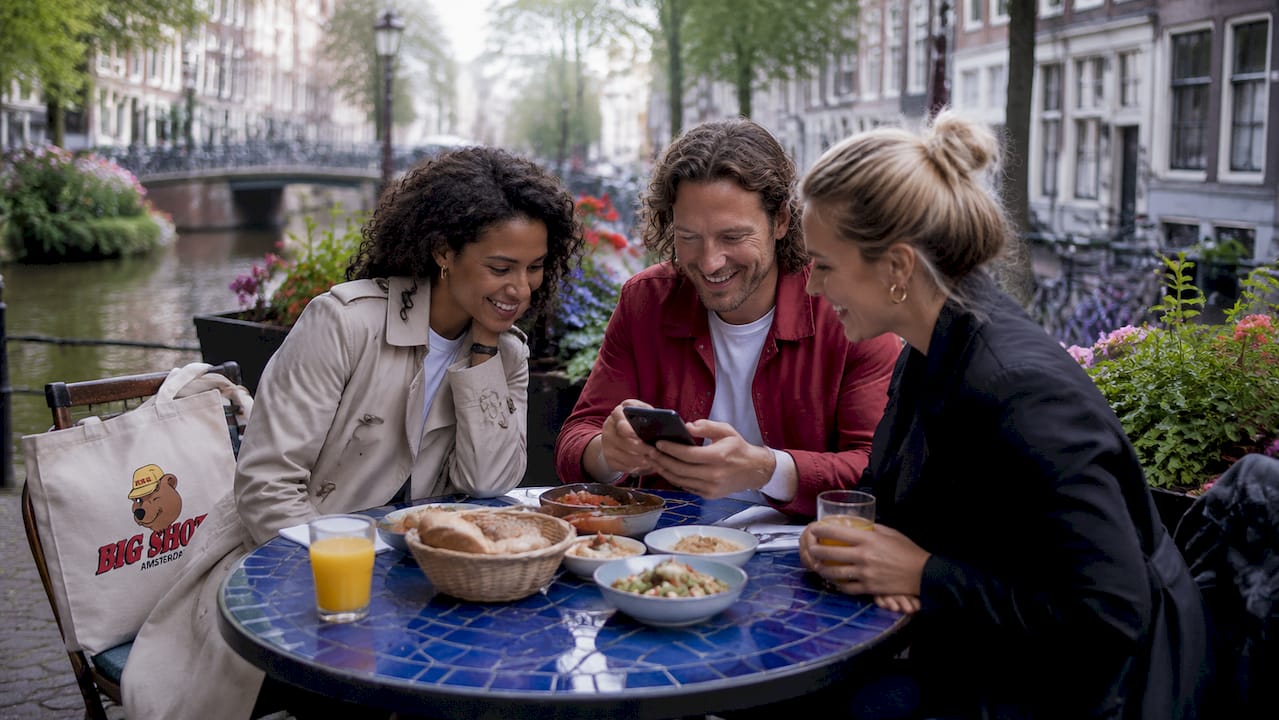
The competitive pressure this creates has a positive side. Review platforms reduce dining search costs and push low-quality restaurants out, encouraging quality upgrades across the board. Amsterdam's overall dining quality has risen measurably over the past decade, and the accountability of public review systems is a significant factor in that improvement.
The risk, though, is real. When reviews prioritize tourist-friendly experiences, authentic local venues can get buried. A traditional Dutch eetcafé in the Oud-West neighborhood may serve better food than a polished Instagram-ready spot near the Rijksmuseum, but the latter gets ten times the review volume simply due to foot traffic. This creates what researchers call a "review bubble," where the dining map reflects tourist patterns more than actual culinary quality.
| Effect | Positive Impact | Risk |
|---|---|---|
| Visibility concentration | Strengthens quality culinary hubs | Sidelines authentic local venues |
| Competitive pressure | Pushes out low-quality restaurants | Favors tourist-friendly formats |
| Discovery efficiency | Reduces search time for diners | Creates geographic dining blind spots |
| Review volume feedback | Builds reliable trust signals | Disadvantages newer or quieter spots |
For food enthusiasts who want to explore Amsterdam's hottest restaurant trends beyond the obvious tourist circuit, understanding this dynamic is the first step toward finding genuinely memorable meals.
How to use amsterdam food reviews without getting burned
Reading reviews well is a skill. These steps will help you get the most out of the Amsterdam dining scene without falling into common traps.
-
Cross-reference platforms. A restaurant with strong Google ratings but weak TripAdvisor scores, or vice versa, deserves closer scrutiny. Combining high-star ratings with local community input from Reddit or Amsterdam-specific forums gives you a more complete picture than any single platform.
-
Recognize tourist trap signals. Multi-language laminated menus and staff soliciting customers outside are reliable indicators of tourist-targeted venues, regardless of their star ratings. These spots often maintain decent ratings through sheer volume of one-time visitors who never return.
-
Check the review response pattern. Scroll to the owner responses on Google or TripAdvisor. Restaurants that respond thoughtfully to negative reviews are more likely to take quality seriously. Restaurants that ignore or argue with reviewers are showing you exactly how they handle problems.
-
Weight volume alongside score. A 4.3 rating with 1,800 reviews outperforms a 4.7 rating with 80 reviews in terms of reliability. Use both numbers together, not just the star average.
-
Ask your hotel concierge or local contacts. Concierge recommendations often surface restaurants that are excellent but not heavily reviewed online. These are frequently the best meals you will have in Amsterdam.
-
Use the Amsterdam food checklist from Bigshotsamsterdam to identify local dishes and dining experiences worth prioritizing before you even open a review app.
The goal is not to distrust reviews. The goal is to read them as one data point in a broader research process, not as the final word on where to eat.
Key takeaways
Food reviews in Amsterdam directly shape restaurant revenue, consumer discovery, and the competitive health of the city's dining scene, making them the single most important tool for planning a quality meal.
| Point | Details |
|---|---|
| Star ratings drive real revenue | A one-star increase can boost restaurant revenue by 5–9%, with major effects on peak-hour bookings. |
| Review volume signals reliability | A 4.6 rating with 2,500 reviews is more trustworthy than a 5.0 rating with 10 reviews. |
| Reviews reshape Amsterdam's food map | Consumer attention concentrates on tourist-heavy hubs, which can obscure authentic local venues. |
| Response behavior reveals quality | Restaurants responding to over 90% of reviews convert 10–20% more potential diners. |
| Cross-referencing beats single-platform trust | Combining Google, local forums, and concierge advice gives a more accurate dining picture. |
What i've learned about reviews and real amsterdam dining
The most interesting meals I have had in Amsterdam did not come from the top of a TripAdvisor list. They came from a combination of decent ratings, high review volume, and one specific detail buried in a recent review that told me the kitchen actually cared.
Star ratings are a starting point, not a verdict. A 4.1 rating with 900 reviews and a chef who responds to every complaint is often a better bet than a 4.8 rating with 40 reviews and no engagement. The score tells you the average. The reviews tell you the story.
The tourist trap problem in Amsterdam is real and underappreciated. The city's historic center is full of well-rated restaurants that survive on one-time visitors who never come back. High ratings in those areas can reflect volume and novelty rather than consistent quality. When I want to eat well in Amsterdam, I look at neighborhoods like De Pijp, Oud-West, and Noord, where the audience is more local and the review patterns are harder to game.
My honest advice: treat reviews as a filter, not a guarantee. Use them to eliminate bad options, then make your final call based on recency, response behavior, and a gut check on whether the place is cooking for locals or performing for tourists.
— Leo
Experience amsterdam dining at Bigshotsamsterdam
Bigshotsamsterdam is a venue that takes its online reputation seriously. As a sports bar, shisha lounge, restaurant, and café rolled into one, it serves a wide range of guests, from locals catching a match to tourists looking for a genuine Amsterdam night out.
The kitchen covers everything from breakfast to steaks to gourmet dishes, and the team actively engages with guest feedback across review platforms. That responsiveness is not just good practice. It reflects the kind of venue that actually wants you to come back. If you are planning your Amsterdam dining itinerary and want a spot with strong reviews, a lively atmosphere, and food worth talking about, visit Bigshotsamsterdam and see what the experience is about.
FAQ
How do food reviews affect amsterdam restaurant success?
A one-star increase on platforms like Yelp or Google can boost restaurant revenue by 5–9% and increase peak-hour sell-out rates by up to 27%. In Amsterdam's competitive market, low-rated restaurants face double the probability of closure.
Which review platforms matter most for amsterdam dining?
Google, TripAdvisor, and Yelp are the dominant platforms shaping Amsterdam dining decisions. Google carries the most weight for local discovery, while TripAdvisor remains heavily used by international visitors planning trips.
How can i spot a tourist trap using reviews?
Multi-language laminated menus and staff soliciting customers outside are reliable tourist trap indicators, regardless of star ratings. Cross-reference Google ratings with local Reddit forums or concierge recommendations to find more authentic options.
Is a higher star rating always better?
Not always. A 4.6 rating with 2,500 reviews is more reliable than a 5.0 rating with 10 reviews. Review volume is a stronger trust signal than a perfect score with limited data behind it.
Do restaurants that respond to reviews perform better?
Restaurants that respond to over 90% of reviews see a 10–20% improvement in conversion rates from online impressions to actual bookings. Active engagement with feedback is one of the clearest signals of a quality-focused venue.