
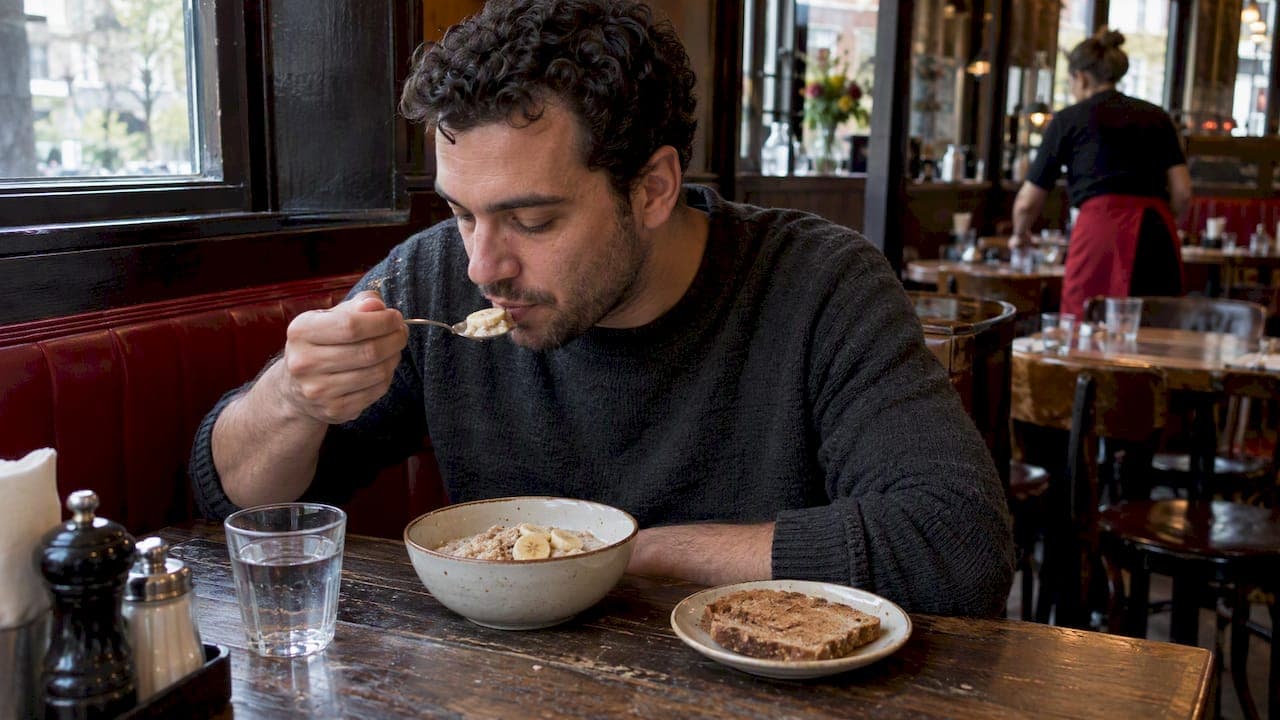
Reach for hydrating liquids, bland carbs like toast or porridge, eggs, broth and a banana, because rehydration and time do most of the work. There is no instant cure, as NIAAA and the Cleveland Clinic both stress. Small, frequent portions beat forcing down one big, greasy plate.
TL;DR:
- NIAAA reports that hangover symptoms often peak when blood alcohol returns to about zero and may last 24 hours or longer.
- Alcohol suppresses vasopressin, increasing fluid loss; broth and electrolyte drinks replace water and salts, while toast, rice, and porridge provide gentle carbohydrates.
- Coffee is not a proven cure, though a small routine cup is acceptable; alternate it with water, and avoid more alcohol, which delays recovery.
- Ask a pharmacist or doctor before using painkillers: acetaminophen with alcohol can harm the liver, while aspirin and ibuprofen may irritate the stomach.
Table of Contents
- 1. Which hangover breakfast foods are worth reaching for?
- 2. Why do these foods help after a night of drinking?
- 3. Which quick hangover recipes can you make in five minutes?
- 4. What should you avoid after drinking?
- 5. What hangover breakfast ideas work best on a venue menu?
- 6. How do you prepare and serve hangover breakfasts in a busy restaurant?
- 7. Which drinks pair best with hangover breakfast foods?
- 8. Our approach to hangover-friendly breakfasts
- 9. Where can you order a comforting breakfast from us?
- FAQ
- Sources
1. Which hangover breakfast foods are worth reaching for?
Think in jobs rather than recipes. Some foods replace fluid, some calm your stomach, some steady your energy, and a few do a bit of everything. Pick based on how you feel and what's in your kitchen.
- Water, coconut water and electrolyte drinks: You wake up dry, so start here. Sip a glass of water first, then alternate with coconut water or an electrolyte drink. The Cleveland Clinic lists coconut water among its recommended options.
- Clear broth: Warm, salty and easy to keep down. Heat a mug of store-bought chicken or vegetable broth and sip it slowly, like tea.
- Toast, crackers and rice: Plain, simple carbs give your body steady fuel without taxing your stomach. Dry toast with a thin scrape of butter is a fine place to begin.
- Porridge or oatmeal: Soft, warm and filling. Cook it with water or milk and keep the toppings mild.
- Bananas and applesauce: These round out the classic BRAT group (bananas, rice, applesauce, toast). Bananas also bring potassium, and a ripe one is easy to eat even when you feel queasy.
- Melon and diluted fruit juice: Watery fruit adds fluid and a little sugar. Cut juice with water if it feels too sharp.
- Soft-cooked eggs: Eggs give you protein and B vitamins, and the Cleveland Clinic includes them in its suggested foods. Scrambled soft or poached tends to sit best.
- Plain yogurt: Cool, gentle protein for mornings when nothing hot appeals.
- Ginger tea: Steep a few slices of fresh ginger in hot water. It's a classic for queasy stomachs, and it also counts toward your fluids.
- Salty extras: A few pickles or a pinch of salt on your eggs can help if you tolerate them, since you've lost fluid along with sodium.
- Mild smoothies: Blend banana, yogurt and a splash of coconut water. Skip citrus-heavy blends, which can aggravate a sore stomach.
You don't need all of these. Choose two or three that sound doable and start with the lightest.
2. Why do these foods help after a night of drinking?
Hangovers feel like a pile-up because several things happen at once. According to NIAAA, symptoms such as fatigue, nausea, headache and thirst usually peak when your blood alcohol level returns to about zero, and they can last 24 hours or longer. The agency points to mild dehydration, stomach irritation, inflammation and a buildup of acetaldehyde, a byproduct of breaking down alcohol.
Fluid loss. Alcohol suppresses vasopressin, a hormone that helps your body hold on to water, so you lose more fluid than you take in. That's why broth, coconut water and electrolyte drinks feel so good: they put back both water and salts.
Blood sugar swings. After drinking, your energy can dip and wobble. The Cleveland Clinic notes that bland, easy-to-digest foods rich in complex carbohydrates help stabilize blood sugar and settle an upset stomach, which is the logic behind toast, rice and porridge.
An irritated stomach. Heavy food asks a lot from a gut that's already unhappy. Dietetic guidance from University Hospital Southampton recommends hydration, soft or liquid textures and small, frequent meals. Grazing with small, frequent meals helps maintain blood sugar without overloading your stomach, and soups, porridge and smoothies deliver nutrients with little digestive effort.
The takeaway: no single food is magic, and neither is any one drink. Rehydrate, eat gently, and give your body time.

3. Which quick hangover recipes can you make in five minutes?
Too rough to cook? Skip ahead to the ordering option at the end of this section. Otherwise, these take minutes and use pantry basics.
- Banana porridge. Stir instant oats into hot water or milk and cook until soft, then top with sliced banana. Add a pinch of salt if you like.
- Broth with toast. Heat clear broth and sip it while plain toast cools slightly. Dunk the toast if that helps it go down.
- Soft scrambled eggs on toast. Whisk eggs, cook gently in a little butter over low heat until just set, and spoon onto toast. Low heat keeps them soft and mild.
- Banana and yogurt smoothie. Blend banana, plain yogurt and a generous splash of coconut water. Drink it slowly.
- Ginger tea. Pour hot water over a few slices of fresh ginger or a spoonful of grated ginger, steep until fragrant, and add a little honey.
- Salted rice bowl. Warm leftover or microwave rice, add a splash of broth and a soft egg on top.
Fast substitutions: instant oats instead of regular, store-bought broth or bouillon instead of homemade, and a ready-made electrolyte drink in place of coconut water. If you're on holiday or short on ingredients, healthy-eating ideas like those in this guide to eating well while traveling show how simple smoothies and broths can be swapped around.
Pro Tip: Eat small, frequent bites and sip fluids slowly rather than pushing through a full plate at once.
Can't face the stove at all? We deliver, and you can browse gentler options on our menu or check delivery from your couch.
4. What should you avoid after drinking?
A few habits can slow your recovery or put you at risk, so keep these in mind.
Skip the heavy, greasy plate if you're nauseated; your stomach is already irritated and doesn't need extra work. Go easy on coffee too. Scientific evidence doesn't support common fixes like coffee, cold showers or "hair of the dog," and Wake Forest Health notes that time is the only thing that reliably ends a hangover. Drinking more alcohol just delays the crash.
Be careful with painkillers. Mixing alcohol with acetaminophen (paracetamol) can be toxic to the liver, and aspirin or ibuprofen can irritate a sensitive stomach, according to Williams College Health Services. Check with a pharmacist or doctor first. If symptoms are severe, sip clear fluids and get medical advice.
5. What hangover breakfast ideas work best on a venue menu?
A good hangover menu leans soft, warm and salty, with plenty to sip. If you run a café or restaurant, or you're just curious how we think about it, here's how we'd build the page.
Start with a base of gentle carbs: porridge with banana, thick-cut toast and soft scrambled eggs. Add a bowl of clear soup or broth, since salty liquids hit the spot for guests who feel dried out. Offer a protein plate with eggs, yogurt and a little fruit, and a lighter option with melon and plain yogurt for those who can't face anything heavy.
Give guests choices of intensity. A "gentle" tier (porridge, broth, toast) sits next to a "hearty" tier (eggs, a savory plate) so people can match their stomach. For inspiration beyond Europe, miso soup with clams is a popular traditional hangover breakfast in Japan, as Tsunagu Japan describes, and a salty, soothing soup is easy to adapt to almost any kitchen.
Keep portions modest and let guests top up. That mirrors the grazing approach that dietetic guidance favors, and it reduces waste when appetites are unpredictable.

6. How do you prepare and serve hangover breakfasts in a busy restaurant?
Speed matters most on the mornings when guests are least patient. Plan around a short list of items you can prepare in batches.
Batch the base. Hold a large pot of broth and a pot of porridge at serving temperature, then finish each order with toppings. Hard-boiled or soft-set eggs can be prepped ahead and finished to order.
Keep the menu tight. Five or six hangover-friendly items beat fifteen. Fewer components mean faster tickets and fewer errors when the room is full.
Use simple build stations. A toast and spread station, a porridge-topping station and a hot drinks station let one person assemble several orders quickly.
Serve water first. Put a carafe on every table before anyone orders. Hydration is the most important step for most guests, so it should never wait on the kitchen.
Train the floor team. Staff should know which dishes are mild and which are rich, so they can steer a queasy guest toward porridge or broth instead of a heavy plate. Guests who ask for something "light" are rarely asking for a salad; they usually want warm, soft and salty.
Plan for takeaway. Soups and porridge travel well in sealed containers, and offering them for delivery means guests who can't leave home still get a proper meal.
7. Which drinks pair best with hangover breakfast foods?
Pair each dish with something that adds fluid. The goal is gentle sipping alongside your food, not a heavy drink that competes with it.
With porridge or toast: Herbal tea works well, especially ginger or peppermint. Both are warm and mild, and ginger is a long-standing favorite for queasiness.
With eggs: Fresh orange juice is popular, but if citrus bothers your stomach, dilute it with water or pick apple juice. A glass of water on the side is never a bad idea.
With soup or broth: You may not need another drink at all, since the broth itself rehydrates. Follow it with a glass of water.
With a smoothie: It already counts as a drink, so pair it with something solid like toast to keep your blood sugar steady.
With fruit and yogurt: Coconut water or a light electrolyte drink fits, and it replaces some of the salts you lost.
On coffee: a small cup is fine if it's part of your routine, but don't count it as hydration and don't make it the whole breakfast. Alternate with water, and stop if it upsets your stomach.
8. Our approach to hangover-friendly breakfasts
Big Shots Amsterdam is a hospitality venue with a sports bar, shisha lounge, restaurant and café, so we see plenty of late nights and slow mornings. We lean on gentle textures and plenty to drink when we think about breakfast for guests recovering from a big night. Our breakfast menu and delivery service mean a comforting morning meal can come to you. If you'd rather not cook, have a look at the menu or order delivery.
— Leo
9. Where can you order a comforting breakfast from us?
When cooking feels like too much, we've got you covered. Browse our menu or arrange delivery, and look for gentle choices like these:
- Breakfast options
- Soup from our soups selection
- A drink to sip alongside

Order from our menu today, or stop by and we'll take care of breakfast.
This article is general information, not a substitute for advice from a qualified doctor. Consult a qualified healthcare professional about your own circumstances before acting on anything here.
FAQ
Is breakfast good for a hangover?
Yes, if you keep it gentle. Light, bland foods like toast, porridge, eggs and bananas help stabilize blood sugar and settle your stomach, as the Cleveland Clinic explains. Small portions work better than one big meal.
What food is good for a hangover in the morning?
Start with fluids such as water, coconut water or broth, then add soft carbs and protein like toast, oatmeal and eggs. Bananas add potassium. Eat a little every hour or two instead of waiting until you feel hungry.
What do Japanese eat for a hangover?
A common choice is miso soup with clams, which is warm, salty and easy on the stomach. Tsunagu Japan describes it as a popular traditional hangover breakfast. Any gentle, salty broth makes a good stand-in.
What should you do the morning after a hangover?
Rehydrate, eat small bland meals and rest. NIAAA says symptoms can last 24 hours or longer and there's no proven cure, so patience matters. Check with a pharmacist before taking painkillers.
Sources
- Hangovers | National Institute on Alcohol Abuse and Alcoholism (NIAAA)
- 6 Best Foods To Eat for a Hangover
- Nutritional advice for people drinking alcohol at high levels or dependently - patient information
- Health