
TL;DR:
- Happy hours in Amsterdam are regulated to limit discounts and emphasize atmosphere, food, and community. Bars mainly offer bundled deals, fixed menus, or experience-based promotions instead of traditional discounts, creating a more curated social environment. Visitors benefit from early evening visits, seeking authentic atmospheres like borrel and canal-side terraces for a richer nightlife experience.
Happy hours in Amsterdam bars are defined not by steep discounts but by a strict regulatory framework that limits alcohol price reductions and pushes venues toward curated social experiences. The role of happy hours in Amsterdam bars is shaped by the Alcoholwet, the Dutch alcohol law enforced by the municipality, which caps drink discounts and redirects bar culture toward atmosphere, food pairings, and community. If you arrive expecting two-for-one shots and half-price pitchers, Amsterdam will surprise you. What you find instead is richer, more intentional, and worth understanding before your first night out.
How do amsterdam's happy hour regulations shape bar promotions?
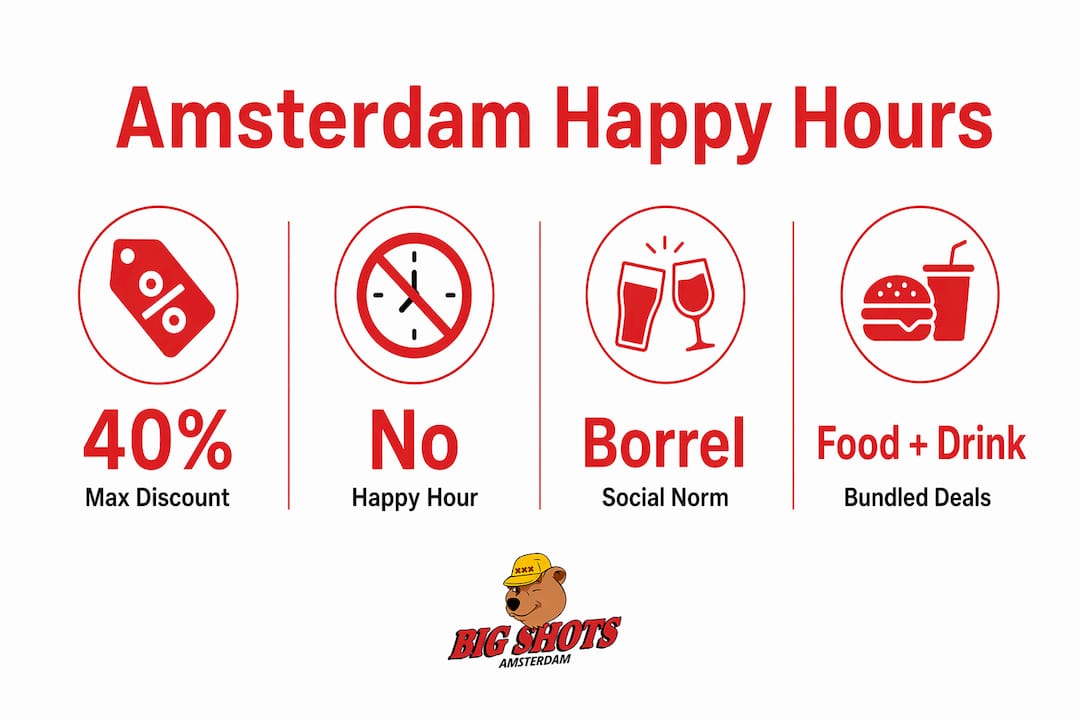
Amsterdam's approach to bar promotions is governed by rules that most visitors never see coming. The Alcoholwet and Amsterdam municipality guidelines prohibit alcohol discounts exceeding 40%, meaning any drink must be priced at a minimum of 60% of its standard price. That single rule eliminates the aggressive discount culture common in cities like London or New York.
The practical effect is significant. Bars cannot legally run a "buy two, get one free" promotion on drinks, because that structure implies a 33% discount per drink only if you buy three. More aggressive deals collapse entirely under the 40% cap. Time-limited flash sales on alcohol are also off the table. KHN, the Dutch hospitality industry association, advises venues to avoid heavy use of "happy hour" branding altogether to prevent enforcement actions.
Bars that comply do so by shifting the value proposition away from the drink price itself. Common compliant strategies include:
- Food and drink combos at a bundled fixed price, where the food component absorbs part of the perceived discount
- Fixed-price after-work menus that include a drink, snack, and sometimes an activity
- Non-time-limited offers that stay on the menu all evening, removing the urgency framing that regulators associate with irresponsible drinking
Venues that emphasize experience over discounts stay on the right side of the law while building stronger guest loyalty.
Pro Tip: When scanning a bar's promotion board, check whether the deal includes food or an activity alongside the drink. If it's a pure drink discount, verify the math. A €6 beer discounted to €3.50 is just under 42% off and technically non-compliant. Compliant venues usually bundle rather than slash.
What cultural shifts have influenced amsterdam's nightlife?
Amsterdam's nightlife culture has moved decisively away from cheap drinks as the primary draw. 90% of Amsterdam residents participated in nightlife in 2025, with an average spend of €41–€60 per night. That level of engagement signals a mature, experience-driven market, not a bargain-hunting one.
Mirik Milan, Amsterdam's former Night Mayor and a leading voice in European nightlife policy, describes the shift as a move from alcohol-driven culture to community-based, curated night culture. His framing matters because it explains why bars compete on atmosphere, programming, and food quality rather than drink prices. The city's nightlife infrastructure, including VibeLab's research and the Night Mayor office, actively supports this direction.
"Amsterdam's nightlife is no longer about getting drunk cheaply. It's about gathering, connecting, and experiencing something worth remembering." — Mirik Milan
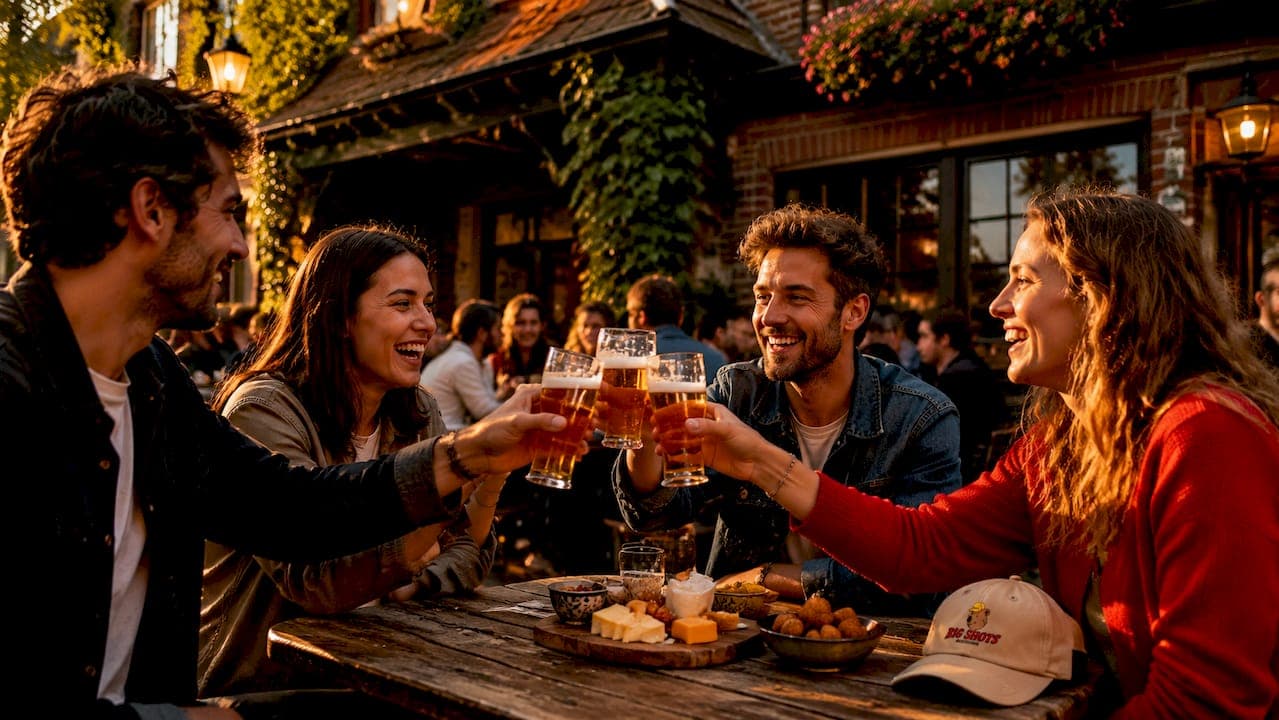
The Dutch concept of "borrel" captures this shift perfectly. A borrel is an after-work social gathering built around drinks and small snacks called borrelhapjes, things like bitterballen, cheese, and cured meats. The borrel tradition centers on communal atmosphere, not discount pricing. Locals choose a spot for its terrace, its crowd, and its snacks. The drink price is secondary.
This cultural norm directly shapes what visitors experience. Socializing in Amsterdam bars rewards those who slow down, order well, and stay for the conversation. Rushing through cheap rounds is not the local way.
How do amsterdam bars adapt promotions to attract visitors?
Bars across Amsterdam have developed creative, compliant alternatives to the traditional happy hour format. The most common adaptation is the bundled after-work offer. A venue might advertise a glass of wine or a local draft beer paired with a small snack plate for a fixed price between €8 and €12. The drink alone might cost €5, so the bundle delivers real value without crossing the 40% discount threshold.
Terminology has also shifted. Rather than advertising "happy hour," venues use terms like "after-work drinks," "aperitivo hour," or branded concepts like "AperiTOZI." These alternative terms help bars market the experience without triggering regulatory scrutiny. The framing moves the conversation from "cheap drinks" to "a moment worth having."
The type of bar you visit shapes what promotions you encounter. Here is a direct comparison:
| Bar Type | Promotion Style | Visitor Experience |
|---|---|---|
| Brown bar (bruine kroeg) | No formal promotions; fixed menu pricing | Historic ambiance, local regulars, no-frills atmosphere |
| Cocktail bar (Door 74, Tales & Spirits) | Curated menus, selective seasonal specials | Technically accomplished drinks, mixology focus |
| Sports bar | Food and drink bundles during match events | High energy, communal viewing, group-friendly |
| Hotel bar | Fixed-price aperitivo menus | Polished setting, tourist-friendly, premium pricing |
| Terrace bar | Seasonal bundled offers, snack pairings | Outdoor social atmosphere, canal or street views |
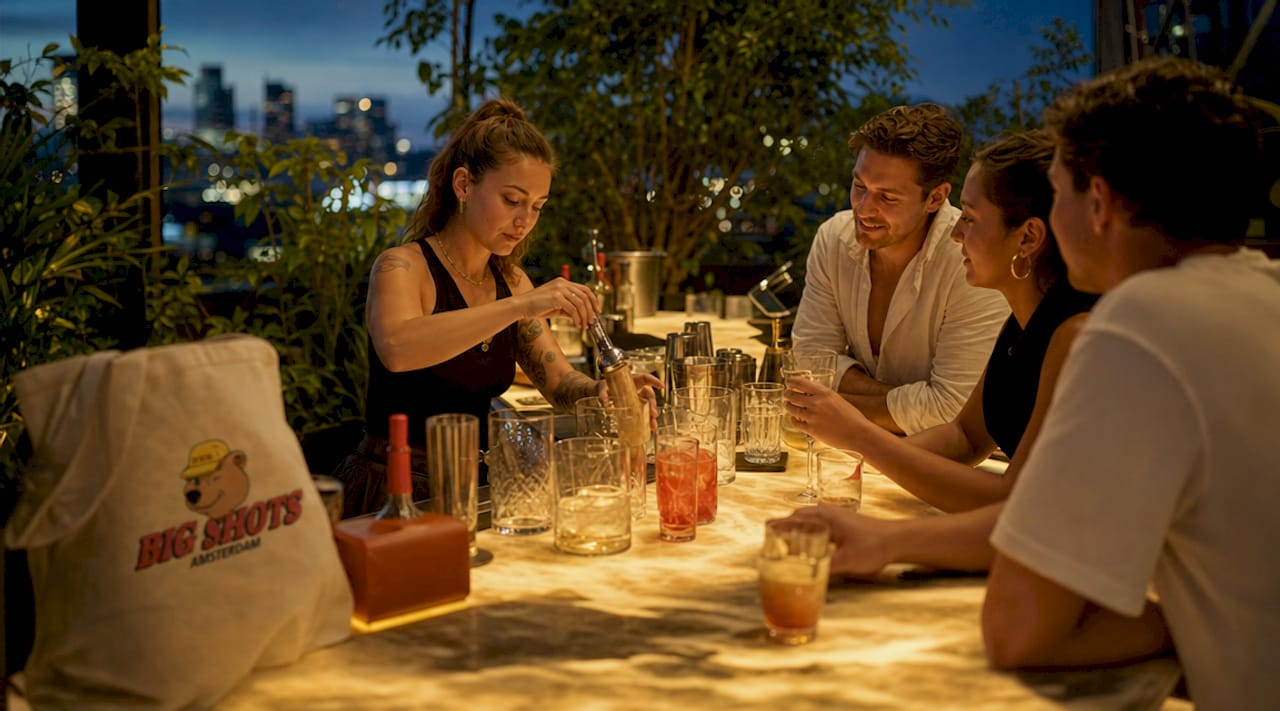
Traditional brown bars rely on historic ambiance and local loyalty rather than promotional pricing. Places like In 't Aepjen, one of Amsterdam's oldest bars, draw crowds through character, not discounts. Cocktail bars like Door 74 and Tales & Spirits compete on craft and creativity. Their "promotions" are more likely to be a seasonal cocktail menu than a price cut.
Pro Tip: If you want the best value at a cocktail bar, ask the bartender what they are excited about that week. Bartenders at craft-focused venues often have off-menu specials or seasonal ingredients they want to showcase. You get a better drink and a better story.
What should visitors know to enjoy amsterdam's bar culture?
Navigating Amsterdam's nightlife as a visitor is straightforward once you understand the local logic. The goal is not to find the cheapest drink. The goal is to find the right atmosphere for the kind of night you want. Here is what actually helps:
- Arrive between 5 PM and 7 PM for after-work energy. This is when locals gather for borrel, terraces fill up, and bundled food-drink offers are most available.
- Look for food on the promotion board. Compliant Amsterdam bar promotions almost always include a snack or small dish. If a deal is drink-only, it is either priced conservatively or worth a second look.
- Choose your bar type deliberately. Amsterdam's bar atmospheres range from centuries-old brown bars to modern cocktail lounges. Each delivers a different social experience. Matching the venue to your group's vibe matters more than finding a discount.
- Seek terraces near water. Amsterdam's canal-side terraces are where the borrel culture is most alive. The social energy on a warm evening at a waterfront terrace is the city's real happy hour.
- Use bundled menus as your price anchor. A €10 food-drink combo at a well-regarded bar is often better value than a €4 beer at a tourist-trap venue near Leidseplein.
For visitors who want to go deeper, Amsterdam's late-night bar scene extends well past midnight with a different rhythm entirely. Knowing when to transition from borrel to late-night is part of reading the city correctly.
Amsterdam's nightlife mix includes historic brown bars, cocktail-forward speakeasies, and hotel bars, each with distinct atmospheres and promotional styles. Choosing the right one for your evening is the skill that separates a good night from a great one.
Key takeaways
Happy hours in Amsterdam bars are defined by regulatory limits on discounts and a cultural preference for experience over price, making atmosphere and food pairings the real currency of a great night out.
| Point | Details |
|---|---|
| Discount cap is 40% | Amsterdam law prohibits alcohol discounts above 40%, so steep happy hour deals are illegal. |
| Bundled offers replace price cuts | Compliant bars pair drinks with food or activities to deliver value within legal limits. |
| Borrel culture drives socializing | Local after-work drinking centers on snacks and atmosphere, not cheap rounds. |
| Bar type shapes your experience | Brown bars, cocktail bars, and sports bars each offer distinct promotion styles and social vibes. |
| Arrive early for best offers | The 5 PM to 7 PM window captures peak after-work energy and most bundled promotions. |
Why i think most visitors get amsterdam nightlife wrong
Most visitors walk into Amsterdam expecting the same discount-driven bar culture they know from home. They scan the chalkboard for the cheapest beer, miss the bundled snack menu entirely, and leave thinking the city is overpriced. That reading is wrong, and it costs them a genuinely good night.
The regulatory framework here is not a barrier. It is a filter. It pushes bars to compete on quality, atmosphere, and food rather than on who can slash prices the furthest. The result is a bar scene where the average experience is noticeably better than in cities where happy hour means racing through €2 shots before 7 PM.
My honest recommendation: stop looking for a deal and start looking for the right room. A well-chosen borrel spot with a canal view, a plate of bitterballen, and a properly poured Heineken or Amstel at full price will outperform any discount bar you find near the tourist corridors. The bar dining experience in Amsterdam is genuinely worth paying for.
The one insider move I always suggest: visit a cocktail bar early in the evening before the crowd builds. Door 74 and Tales & Spirits are quieter before 8 PM, the bartenders have more time for you, and the quality of the interaction is as good as the drink itself. That is Amsterdam's real happy hour.
— Leo
Experience amsterdam nightlife the right way at Bigshotsamsterdam
Bigshotsamsterdam brings together everything that makes Amsterdam's bar culture worth experiencing. As a sports bar, shisha lounge, restaurant, and café rolled into one, it delivers the kind of food-and-drink pairing that compliant Amsterdam bar promotions are built around. The menu runs from gourmet dishes and steaks to craft cocktails, and the atmosphere works for a casual after-work borrel, a group match night, or a full evening out. Bigshotsamsterdam operates within Amsterdam's hospitality standards while giving you genuine value through quality and social energy. Visit Big Shots Amsterdam to see the full menu, check upcoming events, and plan your night.
FAQ
What is the legal limit for drink discounts in amsterdam bars?
Amsterdam bars cannot offer alcohol discounts exceeding 40% off the standard price. Any drink must be sold at a minimum of 60% of its normal price under the Alcoholwet.
Why do amsterdam bars avoid the term "happy hour"?
KHN advises venues to avoid "happy hour" branding because it signals alcohol-focused discounting, which can attract municipal enforcement. Bars use terms like "after-work drinks" or "aperitivo hour" instead.
What is a borrel and how does it relate to happy hour?
A borrel is a Dutch after-work social gathering centered on drinks and small snacks like bitterballen and cheese. It is the local equivalent of happy hour but focuses on atmosphere and community rather than discounted drinks.
Which bar types in amsterdam offer the best promotions?
Sports bars and terrace bars typically offer the most accessible food-drink bundles. Cocktail bars like Door 74 and Tales & Spirits compete on quality and seasonal menus rather than price promotions.
What time should visitors arrive to experience amsterdam's after-work bar culture?
Arriving between 5 PM and 7 PM captures peak borrel energy, when locals gather, terraces fill, and bundled food-drink offers are most widely available across popular bars in Amsterdam.