
TL;DR:
- Amsterdam cafes serve as vital third places fostering social connection and community.
- Tourists prefer trendy spots; locals favor neighborhood cafes with familiar rituals.
- Gentrification alters cafe culture, risking loss of diversity and authentic local interaction.
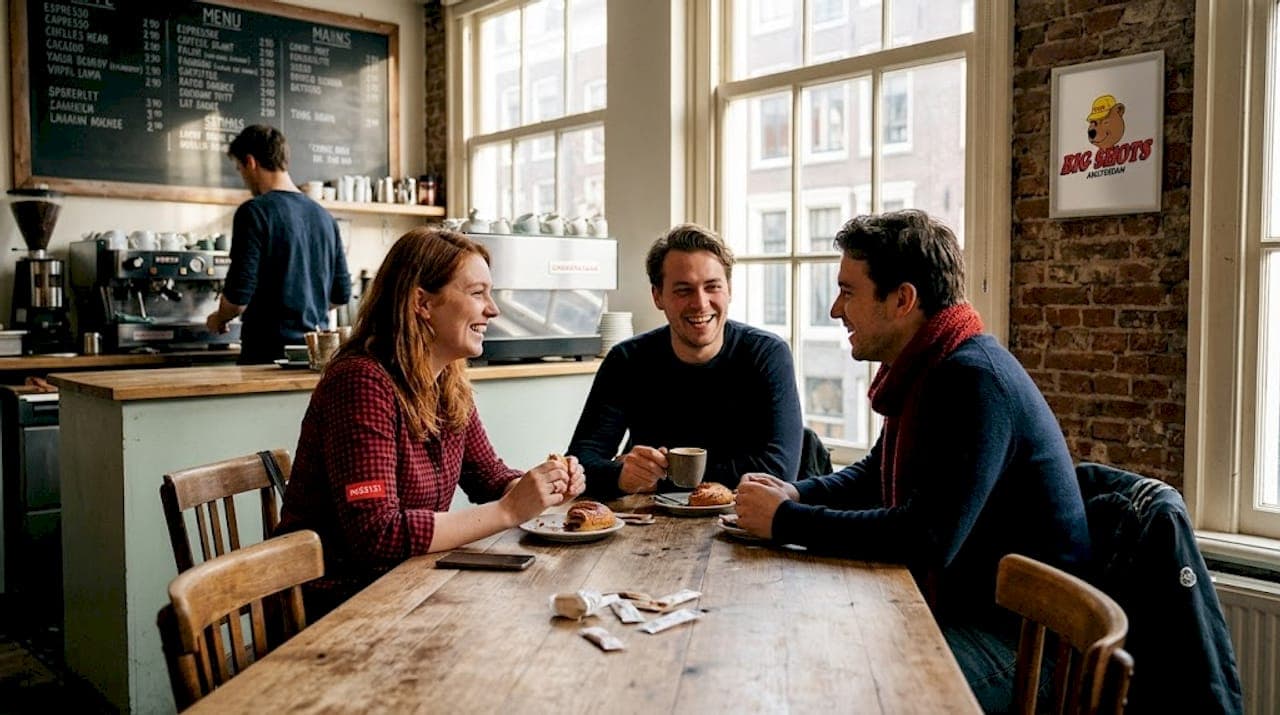
Amsterdam's cafes occupy a strange double life. Walk into one neighborhood spot and you'll find locals hunched over chess boards, debating football, or sharing a slow afternoon over a kopje koffie. Step into another a few streets over and it's all curated flat lays, influencer lighting, and tourists snapping photos before the foam on their latte settles. Both experiences are real. Both are Amsterdam. Understanding this tension, and how to navigate it, is what separates a forgettable visit from a genuinely social one. As research confirms, cafes here function as critical third places where people connect, converse, and build community across backgrounds.
Table of Contents
- Amsterdam cafes as vibrant third places
- The mechanics of connecting: Rituals, aesthetics, and digital influence
- Locals versus tourists: Navigating authenticity, gentrification, and inclusion
- The evolving community role of cafes: Bridging, exclusion, and future trends
- A fresh take: The uncomfortable truth behind vibrant cafe socializing
- Make the most of Amsterdam's social cafe scene
- Frequently asked questions
Key Takeaways
| Point | Details |
|---|---|
| Cafes are third places | Amsterdam's cafes provide casual, welcoming spaces for organic socializing among diverse people. |
| Tourism shapes cafe culture | Increasing tourism brings both vibrancy and challenges, sometimes pushing traditional local spots aside. |
| Authentic connections matter | Seek out cafes that encourage genuine interactions and community, not just trendy aesthetics. |
| Be mindful of inclusion | Vibrant cafe scenes can unintentionally exclude some groups, so actively support inclusive venues and events. |
Amsterdam cafes as vibrant third places
Sociologist Ray Oldenburg coined the term "third place" to describe spaces that are neither home nor work but where real social life happens. Think barbershops in New Orleans, piazzas in Rome, or corner pubs in Dublin. In Amsterdam, that role belongs to the cafe. These spots are where the city breathes.
The Dutch concept of gezelligheid (roughly translated as coziness or convivial warmth) is baked into cafe culture here. It is not just about the coffee. It is about the unhurried pace, the communal tables, the willingness to let a conversation stretch past its natural end. Cafes in Amsterdam serve as third places, enabling people to connect, converse, and network in ways that more formal settings simply do not allow.
What makes these spaces so effective at building connection? A few things stand out:
- Low barrier to entry: You only need the price of a coffee to belong.
- Communal seating: Long shared tables naturally dissolve the invisible walls between strangers.
- Predictable rhythm: Regulars create a cast of familiar faces, making newcomers feel less like outsiders.
- No agenda required: Unlike networking events or organized meetups, cafes allow connection to happen organically.
For tourists, this is genuinely valuable. You are not just grabbing a drink. You are stepping into a living social space where the city's personality shows up unfiltered. Exploring vibrant cafe experiences in Amsterdam means understanding that the room itself is part of the experience.
"Amsterdam's cafe scene is increasingly performative, shaped by social media, personal branding, and the desire to be seen in the right spaces." — The Amsterdammer, 2026
That performative layer is real. But underneath it, the original social function persists. The trick is knowing where to look.
Pro Tip: Sit at a communal table rather than grabbing a corner seat. Order something that takes time, like a pour-over or a full breakfast. Slow down. Locals who are open to conversation will signal it. If you are planning to come with a group, booking group reservations in advance saves you the stress of scrambling for seats during peak hours.
Deep dives into Amsterdam café culture reveal just how layered these social dynamics really are.
The mechanics of connecting: Rituals, aesthetics, and digital influence
Connection in Amsterdam cafes does not happen by accident. It follows a set of social mechanics that are worth understanding before you walk through the door.
Dutch coffee rituals are a natural conversation starter. Ordering a koffie verkeerd (coffee with lots of milk, similar to a latte) or a cappuccino with a small cookie on the side signals familiarity with local habits. It is a small gesture that locals notice. These rituals create shared reference points, which is exactly how conversations begin.
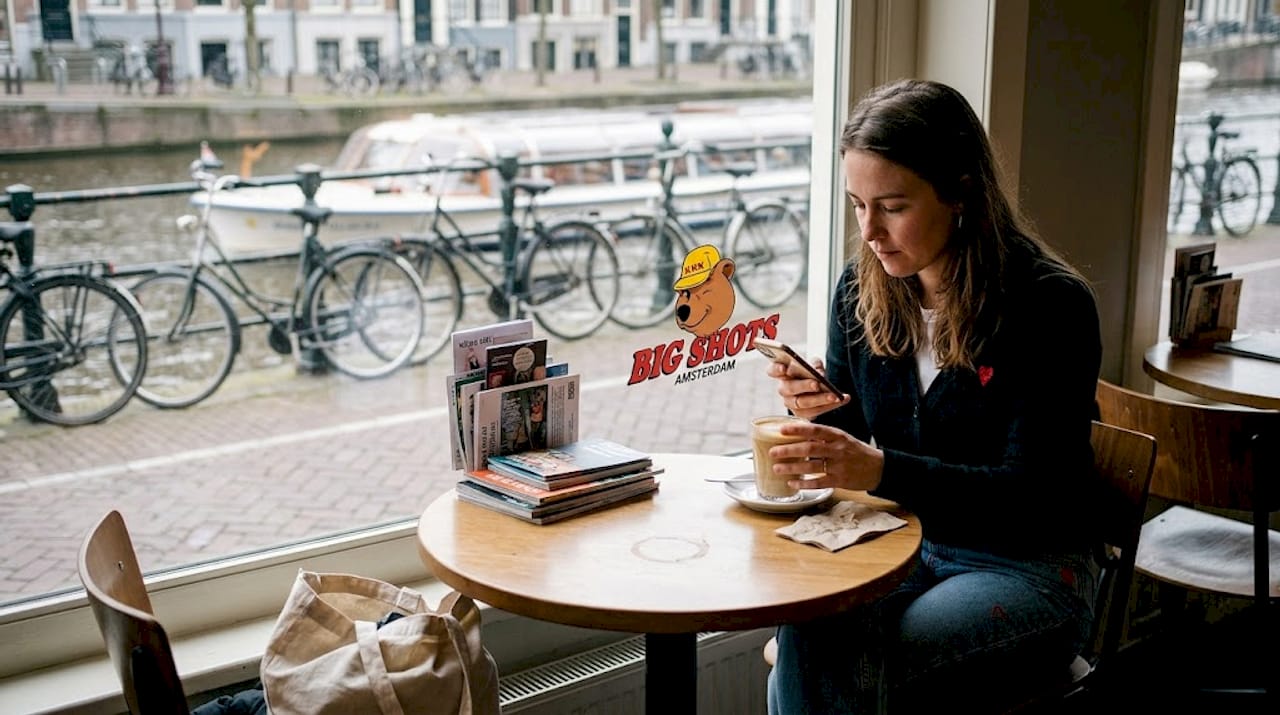
The performative nature of cafe culture in Amsterdam, driven by social media and curated aesthetics, has also reshaped who shows up and why. Instagram-worthy interiors attract a younger, globally connected crowd. This is not inherently bad. It means cafes have become social magnets for people who want to be seen as cultured, creative, and connected.
Here is how different groups typically use cafe spaces:
| Group | Primary use | Preferred vibe |
|---|---|---|
| Local regulars | Daily ritual, community | Quiet, familiar, unpretentious |
| Students | Studying, casual meetups | Relaxed, affordable, Wi-Fi enabled |
| Couples | Dates, slow mornings | Intimate, aesthetically pleasing |
| Tourists | Exploration, photo ops | Trendy, central, English-friendly |
| Expats | Networking, belonging | Mixed, international, lively |
Top cafe rituals worth joining if you want to connect:
- Morning coffee hour (8 to 10 a.m.): The most authentic window. Locals are on their way to work and the pace is real, not performed.
- Midday lunch crowd: Great for meeting expats and remote workers who treat cafes as their office.
- Late afternoon borrel: The Dutch equivalent of happy hour. Conversations get looser and more genuine.
- Weekend brunch: A social event in itself. Tables fill with friends catching up, making it easy to join the energy.
Tourist volume matters here too. Tourist stays in Amsterdam doubled over the past decade, with short-term rental listings surging in parallel. That shift has changed the audience makeup of cafes in central neighborhoods significantly. If you want a more local feel, exploring lively bar venues just outside the tourist belt is often a better bet.
Locals versus tourists: Navigating authenticity, gentrification, and inclusion
Not all Amsterdam cafes are created equal, and the gap between local-oriented and tourist-oriented venues has widened over the past few years.
Tourist demand leads to more tourist-oriented cafes, which can displace the neighborhood spots that gave Amsterdam its social character in the first place. Prices rise. Menus shift toward safe, internationally recognizable options. The staff switches to English by default. None of this is malicious. It is just market logic responding to who is walking through the door.
Signs of an authentic local cafe:
- Menu is primarily in Dutch, with English as a secondary option
- Regulars greet the staff by name
- Prices are noticeably lower than the tourist-facing spots nearby
- Decor is lived-in rather than designed for photography
- The Wi-Fi password is not posted on a chalkboard by the entrance
| Feature | Local cafe | Tourist-focused cafe |
|---|---|---|
| Atmosphere | Warm, unpretentious, familiar | Polished, curated, photo-ready |
| Clientele | Neighborhood regulars, Dutch speakers | International visitors, influencers |
| Pricing | Moderate, neighborhood-level | Premium, city-center rates |
| Menu | Dutch staples, simple options | Trendy items, global-friendly |
| Language | Dutch-first | English-first |
"As tourism reshapes urban amenities, the risk is that cities optimize for visitor experience at the cost of resident satisfaction and neighborhood identity." — Location Sorting and Endogenous Amenities, University of Chicago
This is not just a vibe issue. It affects who feels welcome. When a cafe that once served as a community anchor becomes a tourist stop, the regulars who built its culture quietly disappear. Exploring hospitality venues in Amsterdam with this awareness helps you make smarter choices about where to spend your time and money.
If you are celebrating in Amsterdam or just want to eat well without the tourist markup, leaning into essential local dining spots is always worth the extra ten minutes of walking.
The evolving community role of cafes: Bridging, exclusion, and future trends
Cafes do more than serve coffee. At their best, they build what sociologists call "bridging capital," which means connections between people who would not normally cross paths. A student sitting next to a retired teacher. A tourist sharing a table with a local artist. These low-stakes encounters are where real social fabric gets made.
Third places like cafes promote bridging capital, but gentrification gradually shifts them toward higher-income users, narrowing the range of people who feel comfortable walking in. The more expensive and aesthetically curated a cafe becomes, the more it signals who belongs and who does not.
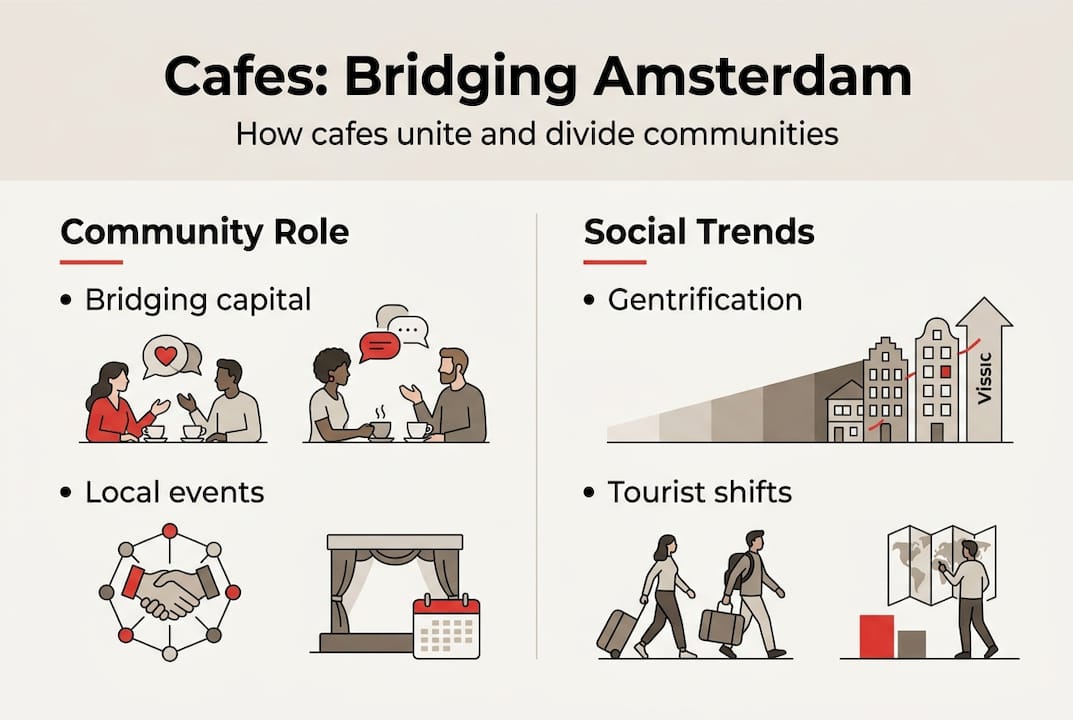
Research from Rotterdam found that cafes in mixed-income neighborhoods generated significantly more cross-group social interactions than those in either high-income or low-income areas alone. The diversity of the room matters as much as the quality of the coffee.
Ways to foster authentic, inclusive connections in Amsterdam cafes:
- Choose neighborhood cafes over city-center hotspots when you want genuine interaction.
- Attend hosted events like quiz nights, book swaps, or language exchanges. These structured formats lower the social risk of approaching strangers.
- Learn a few Dutch phrases. Even a basic goedemorgen (good morning) signals respect and opens doors.
- Go at off-peak hours. Midweek mornings are when the real regulars show up.
- Support cafes that actively program community events. They are investing in connection, not just coffee.
Pro Tip: Check cafe Instagram pages and neighborhood Facebook groups for community events. Many Amsterdam cafes host weekly meetups, creative workshops, or informal language exchanges that are open to anyone. These are gold for both tourists and new expats looking to build a social circle fast.
The role of breakfast cafes in this ecosystem is often underrated. Morning hours create a different social energy than evenings, and understanding what breakfast cafés offer beyond food helps you use them as genuine community entry points.
A fresh take: The uncomfortable truth behind vibrant cafe socializing
Here is what most Amsterdam guides will not tell you: a lively, beautiful cafe does not automatically mean better connections. Sometimes it means the opposite.
When a space is optimized for aesthetics and social media performance, the pressure to present yourself well can actually suppress genuine conversation. People perform rather than connect. They curate rather than share. The very features that make a cafe feel vibrant, the lighting, the crowd, the energy, can create a social performance where everyone is an audience member and nobody is really present.
We have seen this at Big Shots Amsterdam. The most memorable nights are rarely the ones with the biggest crowds or the most impressive cocktail lists. They are the ones where the energy is right, the atmosphere invites people to relax their guard, and the conversation flows because nobody feels like they are on stage.
The duality is real. Every new trendy cafe that opens in Amsterdam creates new opportunities for connection while quietly narrowing who feels welcome. If you want real Amsterdam café culture, be intentional. Seek out the places where the vibe serves the people, not the other way around.
Make the most of Amsterdam's social cafe scene
Now that you know what drives social life in Amsterdam's cafes, and what can quietly undermine it, you are in a much better position to find the experiences worth having.
At Big Shots Amsterdam, we have built a space that takes the best of Amsterdam's social cafe energy and adds layers: a sports bar, a shisha lounge, gourmet food, craft cocktails, and a crowd that genuinely mixes locals and visitors. Whether you are looking for a relaxed breakfast, a lively evening out, or somewhere to watch the match with a group of friends, we bring the warmth of a third place with the energy of a proper night out. Come see why regulars keep coming back.
Frequently asked questions
What makes Amsterdam cafes unique for socializing?
Amsterdam cafes blend Dutch coffee traditions, walkable city design, and a deeply rooted culture of gezelligheid to create natural social hubs where locals and visitors connect without pretense.
How do tourists and locals use cafes differently?
Tourists tend to seek trendy, photogenic cafes in central locations, while locals gravitate toward neighborhood spots built on shared rituals and familiar faces. Tourist demand has gradually shifted some cafes away from their local roots.
Do Amsterdam cafes help people make new friends?
Yes. Communal seating, low-pressure atmospheres, and regular community events make it genuinely easy to meet people. Cafes facilitate low-barrier socializing through rituals and shared space that formal settings rarely replicate.
Are cafes in Amsterdam being affected by gentrification?
Absolutely. Rising tourism and premium pricing have pushed some cafes toward higher-income users, which limits diversity and can erode the inclusive community feel that made them valuable in the first place.