
TL;DR:
- Amsterdam steakhouses serve as vibrant social hubs blending tradition with nightlife and celebration.
- They originated from 19th-century male-only political banquets and evolved into inclusive, sensory experiences.
- Modern venues integrate dining, entertainment, and social energy, making them ideal for group and romantic occasions.
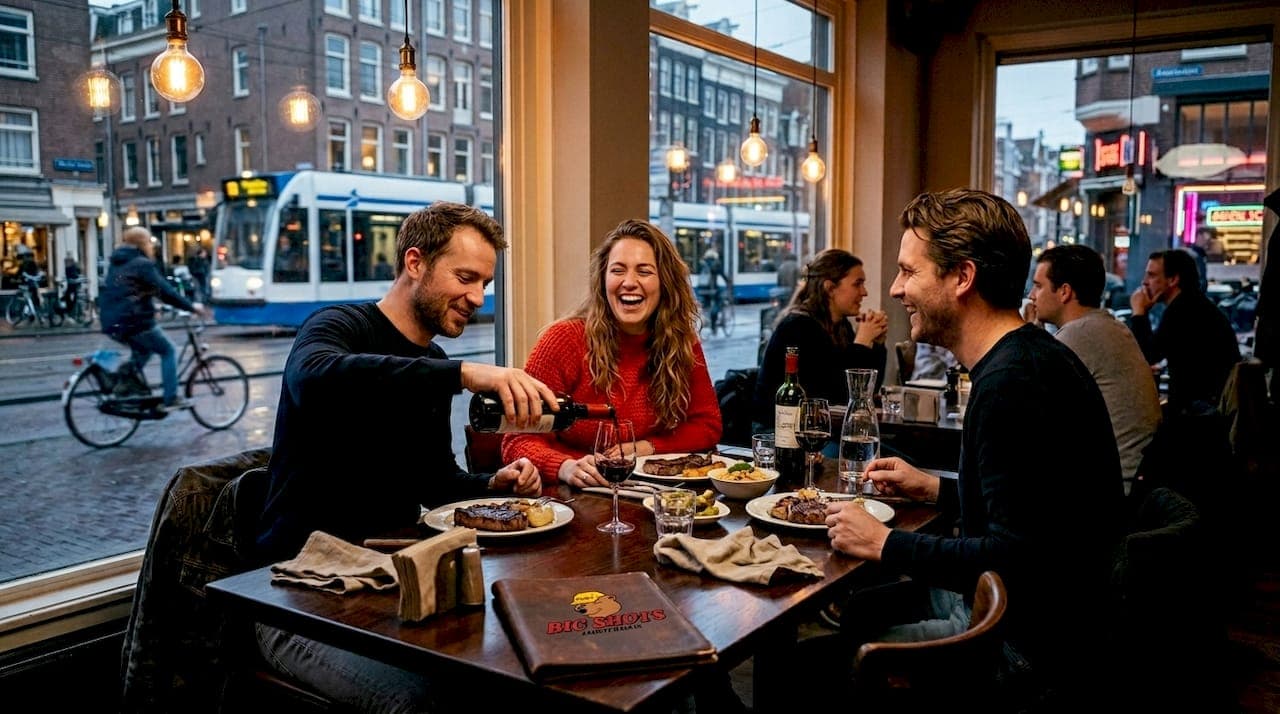
Most people walk into a steakhouse thinking about the cut on their plate. But the steak is almost beside the point. What really draws people back, night after night, is the energy in the room: the clinking glasses, the low lighting, the sense that something worth celebrating is always happening nearby. Amsterdam's steakhouse scene has quietly become one of the city's most dynamic social ecosystems, blending centuries of tradition with a modern appetite for nightlife, connection, and indulgence. Whether you're planning a birthday dinner, a casual night out with friends, or a celebratory gathering after closing a deal, understanding why steakhouses matter here changes how you experience them.
Table of Contents
- Steakhouse origins: From New York banquets to Amsterdam icons
- Celebration, status, and indulgence: What draws crowds to steakhouses?
- Steakhouses as nightlife hubs: Dining, dancing, and social connection in Amsterdam
- Critiques and conversation: Ethics, indulgence, and revival
- Why Amsterdam steakhouses redefine social connection
- Experience Amsterdam's social life at Big Shots Steakhouse & Bar
- Frequently asked questions
Key Takeaways
| Point | Details |
|---|---|
| Historic social hubs | Steakhouses evolved from exclusive banquets to inclusive venues central to Amsterdam’s lively social scene. |
| Luxury and celebration | Steakhouses symbolize status and indulgence, making them favored spots for memorable group events. |
| Nightlife synergy | Amsterdam steakhouses uniquely blend dining with vibrant nightlife, offering dynamic gathering spaces. |
| Ethical debate and revival | Despite controversies on beef and indulgence, steakhouses are seeing a nostalgic resurgence for sociable dining. |
| Practical local options | Big Shots Amsterdam leads the way in steakhouse social life, perfect for casual hangouts and celebrations. |
Steakhouse origins: From New York banquets to Amsterdam icons
Before steakhouses became the polished, dimly lit venues we know today, they were something far rowdier and more politically charged. 19th-century beefsteak banquets) in New York were men-only, beer-soaked events tied to political fundraisers, labor unions, and personal testimonials. Guests ate with their hands, wore aprons to protect their suits, and bonded over shared indulgence. These weren't fine dining experiences. They were rituals of belonging.
"Steakhouses historically serve as social hubs for celebrations and gatherings, originating from 19th-century working-class beefsteak banquets in New York that were men-only, beer-soaked events for political fundraisers and testimonials, evolving to include women and become more formal."
Over time, the format shifted. Women joined the table. Menus became more refined. The rough-edged banquet hall gave way to leather booths and candlelight. But the core function never changed: steakhouses were always about gathering, not just eating.
Amsterdam absorbed this tradition and filtered it through its own distinct lens. The city's rich Amsterdam café culture already prized the idea of the "third place," a social space that was neither home nor work but somewhere in between. Steakhouses slotted naturally into that role. Here's how the evolution unfolded:
- Exclusivity to inclusivity: Early steakhouses catered to men in positions of power. Modern Amsterdam venues welcome everyone, from solo travelers to large birthday parties.
- Function over form: The original banquets were functional and messy. Today's steakhouses layer in design, music, and atmosphere to create a full sensory experience.
- Political roots to social rituals: What began as a space for deal-making and fundraising has become a space for personal milestones and casual connection.
- Local identity: Amsterdam venues blend the steakhouse legacy with Dutch directness and a cosmopolitan openness that makes the experience feel genuinely welcoming rather than stuffy.
Understanding this history reframes everything. When you sit down at a steakhouse in Amsterdam, you're participating in a tradition that's over 150 years old. The table has always been political, social, and celebratory all at once.
Celebration, status, and indulgence: What draws crowds to steakhouses?
There's a reason people choose steakhouses for their most important nights. Steak symbolizes luxury, status, and indulgence, and that symbolism is reinforced through premium cuts, high-end ambiance, and the influence of celebrity chefs who have made the steakhouse a cultural touchstone for business meetings and special occasions alike.
But the appeal goes deeper than symbolism. Steakhouses create a specific social atmosphere that other restaurant formats struggle to replicate. The combination of bold flavors, generous portions, and theatrical presentation (think tableside sauces, carved meats, and dramatic plating) gives guests something to react to together. Shared reactions build connection.
Here's a comparison of how steakhouse visits differ depending on the occasion:
| Occasion | Atmosphere | What to prioritize |
|---|---|---|
| Birthday celebration | Lively, festive, group-focused | Group packages, specialty cocktails |
| Business dinner | Polished, quieter sections | Premium cuts, wine pairings |
| Casual hangout | Relaxed, bar-adjacent seating | Shareable plates, craft drinks |
| Date night | Intimate, mood lighting | Tasting menus, attentive service |
| After-work gathering | Social, mid-energy | Happy hour deals, bar seating |
The most common occasions that bring groups to Amsterdam steakhouses include:
- Birthday dinners where the guest of honor wants something more memorable than a standard restaurant.
- Deal closings and business celebrations where the setting communicates success and generosity.
- Milestone anniversaries where couples want a venue that feels genuinely special rather than just expensive.
- Friend reunions where people want a shared experience rather than just a meal.
- Post-event gatherings after concerts, sports games, or work conferences.
For celebrations in Amsterdam, the steakhouse format works particularly well because it scales. A table of four feels just as celebrated as a table of fourteen. The venue does the heavy lifting in terms of atmosphere, so you can focus on the people you're with.
Pro Tip: Many Amsterdam steakhouses offer group packages that include set menus, dedicated servers, and reserved sections. Booking these in advance not only guarantees your spot but often unlocks perks that aren't available for walk-in guests. Ask specifically about what's included when you call ahead.
What also makes steakhouses appealing for romantic restaurant experiences is the built-in theater of the meal. A great steak dinner has pacing, drama, and sensory pleasure. It gives two people something to talk about beyond themselves, which is exactly what a good date needs.
Steakhouses as nightlife hubs: Dining, dancing, and social connection in Amsterdam
Amsterdam doesn't let dinner be just dinner. The city's social culture pushes venues to offer more than a single experience, and steakhouses have responded by evolving into genuine nightlife destinations.
Steak Club Leidse is a strong example of this shift. The venue combines steakhouse dining with a club atmosphere on weekends, transforming after dinner into a space for dancing and socializing. Guests who start the evening with a ribeye find themselves still there hours later, meeting new people and extending the night in ways a standard restaurant never allows.
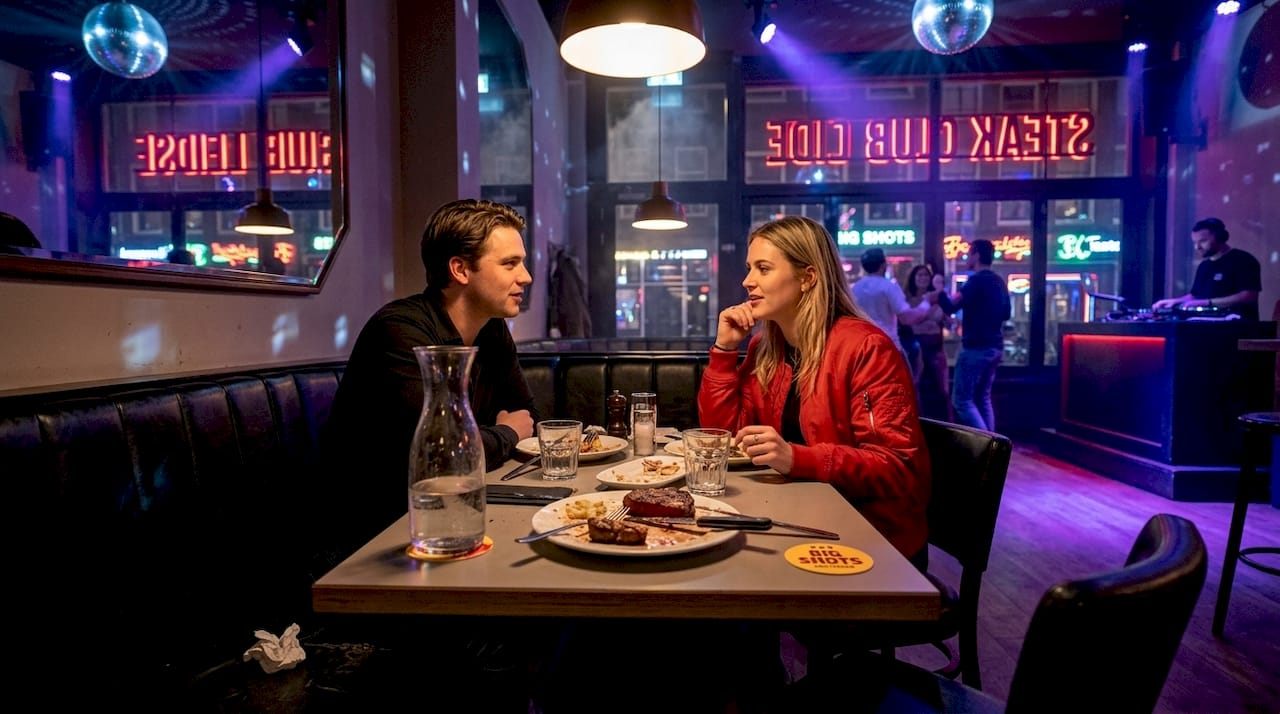
Here's a look at how Amsterdam steakhouses typically structure their social programming:
| Time slot | Dining mode | Social atmosphere |
|---|---|---|
| 6:00 PM to 8:00 PM | Full dinner service | Relaxed, conversational |
| 8:00 PM to 10:00 PM | Late dinner and cocktails | Energetic, group-focused |
| 10:00 PM onward | Bar and lounge mode | Lively, nightlife-adjacent |
| Weekends | Club transformation | High energy, dancing, DJ sets |
The social benefits of this format are significant. You get:
- Continuity of experience: No need to leave one venue and find another. The night evolves around you.
- Organic social mixing: Dinner guests and bar guests blend naturally, creating opportunities to meet people outside your usual circle.
- Flexible pacing: Some groups want to linger over dessert and cocktails. Others want to transition into dancing. The venue accommodates both.
- Memorable storytelling: A night that moves from a steak dinner to a dance floor gives you something worth talking about the next day.
For anyone exploring lively bar venues in Amsterdam, the steakhouse format offers something genuinely distinct. You're not choosing between a good meal and a good night out. You're getting both in one place.
The way steak elevates bar menus in Amsterdam's nightlife scene reflects a broader shift in how the city thinks about hospitality. Food and entertainment are no longer separate categories. They're part of the same social experience. And venues that understand this are the ones that build loyal, returning crowds.
Pro Tip: If you're planning a weekend visit to a steakhouse that doubles as a nightlife venue, reserve your table for 7:30 PM or 8:00 PM. This gives you a full dinner experience before the energy shifts, and you'll already be seated when the venue transforms. Spots fill fast, especially for groups of six or more.
The unique nightlife themes that Amsterdam venues develop around their steakhouse identity also contribute to their social magnetism. A venue with a clear personality, whether that's a classic American steakhouse aesthetic, a modern industrial look, or a sports-forward atmosphere, gives guests a reason to choose it specifically rather than defaulting to whatever's nearby.
Critiques and conversation: Ethics, indulgence, and revival
No honest conversation about steakhouses skips the uncomfortable parts. Ethical concerns around steakhouses are real and growing. Critics point to beef consumption's environmental footprint, the historical association of steakhouses with masculinity and excess, and the economic pressure of rising beef prices, which climbed by 14.7% in 2025, making premium cuts less accessible for many diners.
These critiques matter. They shape how younger diners in Amsterdam approach the steakhouse experience and push venues to adapt.
Here's where the conversation currently stands:
- Environmental pressure: Beef production is resource-intensive, and environmentally conscious diners are increasingly asking venues about sourcing, sustainability, and alternatives.
- Price accessibility: A 14.7% rise in beef costs means steakhouses must either absorb costs, raise prices, or find creative ways to offer value without compromising quality.
- Gender and cultural associations: The old "men's club" image of the steakhouse still lingers in some corners of the industry, though Amsterdam venues have largely moved past it toward genuinely inclusive atmospheres.
- Nostalgia as a counterforce: Despite the critiques, steakhouses are seeing a cultural revival. People are drawn to the indulgence precisely because it feels like a deliberate, intentional choice in an era of dietary restriction and food anxiety.
"The steakhouse revival isn't about ignoring the critiques. It's about choosing to gather around a table anyway, fully aware of what that choice means."
The sports bar atmosphere that many Amsterdam venues blend into their steakhouse identity actually helps address some of these tensions. A more casual, inclusive environment lowers the perceived exclusivity of the steakhouse format and makes it feel accessible to a broader audience. You don't need to be celebrating a six-figure deal to belong at the table.
The most forward-thinking Amsterdam steakhouses are responding to ethical critiques not by abandoning their identity but by evolving it. Better sourcing transparency, plant-based additions to the menu, and a shift toward shared plates and social dining formats all reflect a venue culture that's listening to its guests while staying true to what makes steakhouses worth visiting in the first place.
Why Amsterdam steakhouses redefine social connection
Here's the take that most food guides miss: Amsterdam steakhouses aren't succeeding because they serve great steak. Plenty of places serve great steak. They're succeeding because they've figured out how to make people feel like they're somewhere worth being.
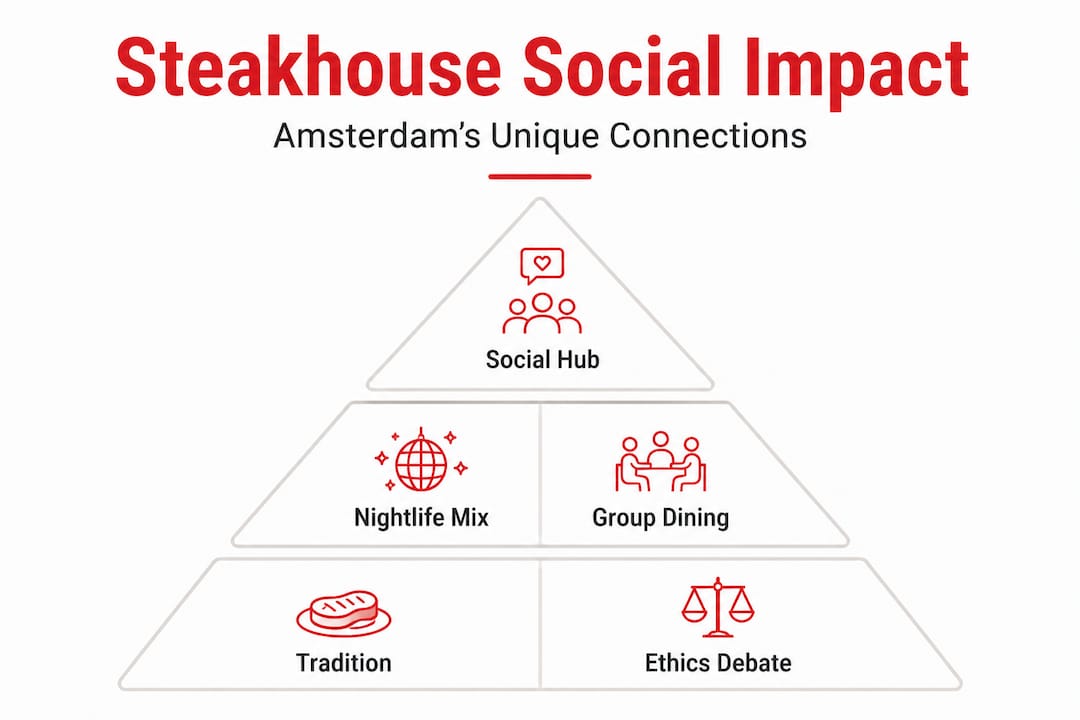
Conventional wisdom frames steakhouses as either dated relics of masculine excess or premium dining destinations for special occasions only. Both framings are too narrow. In Amsterdam, the best steakhouse experiences sit at the intersection of food, music, atmosphere, and genuine social energy in a way that's hard to replicate in any other format.
What makes this intersection work is intentionality. A venue that knows its identity, whether that's a sports-forward bar with premium steaks or an intimate dinner spot that transforms on weekends, gives guests a clear reason to choose it. And when guests choose a venue with intention, they show up ready to connect. That readiness is what turns a dinner into a memory.
The ethical debates around steakhouses also contribute to their social vitality in an unexpected way. When a table of friends discusses where their beef came from, or debates whether the indulgence is worth it, they're doing something steakhouses have always enabled: having real conversations around food. That's not a liability. It's a feature.
Amsterdam's hospitality venues that embrace this complexity, offering premium dining alongside genuine social programming and a willingness to engage with their guests' values, are the ones building communities rather than just customer bases. That's the real evolution of the steakhouse. Not a menu update. A shift in purpose.
Experience Amsterdam's social life at Big Shots Steakhouse & Bar
You've seen how Amsterdam's steakhouse culture blends history, nightlife, and genuine social connection into something far bigger than a meal. Now it's time to experience it firsthand.
Big Shots Amsterdam brings together everything that makes the city's social scene worth showing up for: premium steaks, craft cocktails, a sports bar atmosphere, shisha lounge, and a lively crowd that ranges from casual hangout groups to full-on celebration parties. Whether you're planning a birthday dinner, a night out with friends, or just want somewhere with real energy and great food, Big Shots Amsterdam delivers the full experience. Check out the menu, explore upcoming events, and book your table online. The night starts when you decide to show up.
Frequently asked questions
Why are steakhouses popular for group events in Amsterdam?
Steakhouses offer a vibrant atmosphere, premium food, and often include entertainment, making them ideal for casual hangouts and celebratory group events. Amsterdam venues like Steak Club Leidse combine dining with nightlife, giving groups a full evening experience in one place.
How did steakhouses become social hubs historically?
Steakhouses originated from exclusive 19th-century beefsteak banquets) focused on celebration and political gathering, evolving over time into venues that welcome broader social interaction across all demographics.
Do ethical concerns impact the role of steakhouses today?
Yes, rising beef prices and environmental questions shape public perception, but steakhouses are seeing a cultural revival as intentional indulgence-oriented social venues that are actively adapting their sourcing and menus.
What makes Amsterdam steakhouses unique compared to other cities?
Amsterdam's steakhouses often combine vibrant nightlife with dining, transforming into clubs for dancing and socializing after dinner, creating a seamless social experience that extends well beyond the meal itself.