
TL;DR:
- Opening a sports bar involves complex licensing, high build-out costs, and strategic location choices.
- Success depends on detailed planning, equipment selection, defining a niche, and disciplined performance monitoring.
- Breaking industry norms and focusing on a unique concept can lead to long-term differentiation and loyalty.
Opening a sports bar in a competitive urban market is one of the most exciting and financially demanding moves in hospitality. You're not just launching a bar; you're building a destination where sports, food, and atmosphere collide. The margins can be strong, the community loyalty fierce, and the energy electric. But the failure rate is equally real. Licensing alone can take over a year, build-out costs spiral fast, and the wrong location can kill a concept before the first game kicks off. This guide walks you through every critical stage, from legal setup and site selection to launch day and early performance verification, so you can move with confidence.
Table of Contents
- Planning and requirements: Get the essentials right
- Finding the perfect location and concept
- Step-by-step opening process: From permits to launch
- Pitfalls and how to verify your sports bar's success
- A contrarian take: Why the best urban sports bars break the rules
- Ready to open your urban sports bar? Next steps
- Frequently asked questions
Key Takeaways
| Point | Details |
|---|---|
| Urban sports bars require serious planning | Licensing, location, and technical setups are complex and time-consuming but critical for success. |
| Location and concept drive results | High-traffic areas with the right concept can accelerate breakeven even with higher costs. |
| Execution and verification are ongoing | Following a step-by-step plan and consistently checking key metrics helps avoid costly mistakes. |
| Only the bold stand out | Innovative concepts that challenge industry norms can create a loyal fan base and long-term profitability. |
Planning and requirements: Get the essentials right
Before you sign a lease or buy a single TV screen, you need to understand what defines a sports bar in the eyes of your local regulators, your customers, and your investors. The legal foundation is non-negotiable, and skipping steps here is where most first-time operators get burned.
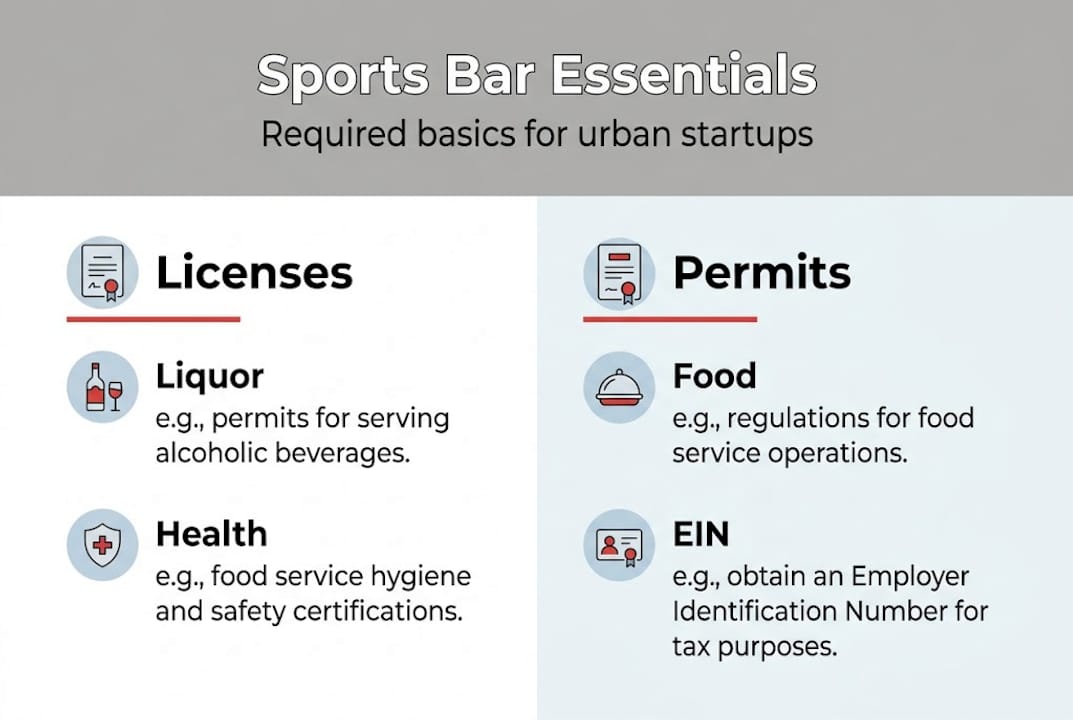
You'll need liquor, health, and safety licenses along with food permits and an EIN, and the full approval process can take 6 to 18 months depending on your city. That timeline is not a suggestion. It's a hard operational reality that shapes your entire launch calendar. Apply early, apply correctly, and budget for delays.
Urban locations add another layer of complexity. Higher foot traffic is a genuine advantage, but it comes paired with higher upfront costs for build-out, AV infrastructure, and commercial-grade equipment. You'll also face stricter zoning rules, noise ordinances, and fire code requirements than suburban venues typically deal with.
One of the first strategic decisions you'll face is whether to go independent or franchise. Here's a quick comparison:
| Factor | Independent | Franchise |
|---|---|---|
| Startup cost | Lower to moderate | Higher (fees + royalties) |
| Brand recognition | Build from scratch | Established name |
| Creative control | Full | Limited |
| Operational risk | Higher | Lower |
| Profit margin | Higher ceiling | Capped by fees |
For most urban operators with a strong concept and local market knowledge, independent ownership offers the best long-term upside. Franchises reduce risk but also reduce your ability to differentiate, which matters enormously in a city where customers have dozens of options.
Use a detailed sports bar checklist to track every operational requirement before opening. On the equipment side, your core needs include:
- Multiple large-format screens (minimum 65 inches for primary viewing zones)
- Commercial sound system with zone control
- POS system with table management and inventory tracking
- Bar refrigeration, draft beer lines, and back-bar storage
- Kitchen equipment scaled to your menu scope
- Reliable high-speed internet for streaming and payment processing
Review equipment requirements carefully before purchasing, as undersized or mismatched gear is a common and costly mistake.
Pro Tip: Apply for your liquor license on day one of your planning process. It's the longest lead-time item and the one most likely to delay your entire launch if you treat it as an afterthought.
Finding the perfect location and concept
With legal and operational groundwork in place, your next mission is to secure a winning location and define your unique brand. Location is not just about rent. It's about visibility, accessibility, and the psychology of your target customer on a Saturday night.
Urban venues face high build-out and AV costs alongside the risk of scope creep, where a project expands well beyond its original budget and timeline. The best way to fight scope creep is to define your concept tightly before you touch a single wall.
Here's what to evaluate when scouting urban locations:
- Foot traffic volume during peak sports hours (evenings and weekends)
- Proximity to transit hubs, stadiums, or entertainment districts
- Parking availability or rideshare accessibility
- Visibility from the street (signage potential)
- Existing plumbing and electrical capacity for bar and kitchen use
- Ceiling height for screen mounting and sound projection
- Noise ordinance limits and neighboring business compatibility
AV and sound design deserve special attention. A great sports bar atmosphere is built on clear sightlines and balanced audio, not just the number of screens. Overspending on AV in a small venue wastes capital. Underspending in a large one kills the experience. Match your AV investment to your square footage and your concept.
Here's a realistic cost and breakeven snapshot for different urban venue sizes:
| Venue size | Estimated build-out cost | Monthly operating cost | Estimated breakeven |
|---|---|---|---|
| Small (under 2,000 sq ft) | $150,000 to $250,000 | $25,000 to $40,000 | 6 to 12 months |
| Medium (2,000 to 4,000 sq ft) | $300,000 to $500,000 | $45,000 to $75,000 | 12 to 24 months |
| Large (over 4,000 sq ft) | $500,000 to $1M+ | $80,000 to $150,000 | 18 to 36 months |
Study bar build-out mistakes before finalizing your floor plan. Watching how successful venues handle layout, traffic flow, and staff positioning will save you from expensive redesigns after opening.
Stay current on sports bar trends as you define your concept. The most profitable urban sports bars in 2026 are not trying to be everything to everyone. They pick a lane, whether that's premium dining with sports, a craft beer focus, or a social lounge vibe, and they own it completely.
Step-by-step opening process: From permits to launch
Once your vision and location are locked down, it's time to execute with precision. A staggered, sequential approach prevents costly overlaps and keeps your timeline realistic.
- File all licenses and permits on day one. Liquor, business, health, safety, and food service permits run concurrently, not sequentially.
- Negotiate and sign your lease only after confirming zoning compliance and AV feasibility for the space.
- Hire a contractor with hospitality build-out experience. General contractors unfamiliar with bar environments consistently underestimate plumbing, electrical, and ventilation needs.
- Order AV equipment and kitchen gear early. Supply chain delays are real, and lead times on commercial screens and draft systems can stretch 8 to 12 weeks.
- Build your menu and beverage program in parallel with construction, not after. Your kitchen layout depends on it.
- Hire and train staff at least 4 to 6 weeks before opening. Run soft-open events to stress-test service.
- Launch a pre-opening marketing campaign across social media, local press, and community events to build anticipation.
- Host a soft launch with invited guests before your public opening to identify service gaps without public scrutiny.
Breakeven in 3 months is achievable with strong weekend volume, but only about 17 to 30% of bars survive year one. That gap between potential and reality is closed by disciplined execution, not enthusiasm.
To drive early traffic, host events at your sports bar from week one. Watch parties, trivia nights, and local sports team viewing events fill seats on nights that would otherwise be slow.
Pro Tip: Don't wait for weekends to build your customer base. Off-peak programming like weekday lunch specials during major league games or midweek trivia builds habit-forming visits that sustain revenue between big event nights.
For a real-world example of how a venue can combine sports, dining, and atmosphere into a cohesive and profitable concept, the Big Shots Amsterdam story offers a compelling case study worth studying.
Pitfalls and how to verify your sports bar's success
Executing the plan is only half the battle. Ongoing verification separates thriving bars from early closures. Most sports bars that fail in year one don't fail because of a bad concept. They fail because the owner stopped paying attention to the numbers.
The most common urban sports bar mistakes include:
- Scope creep during build-out: Adding features mid-construction that blow the budget and delay opening
- AV overkill: Spending $150,000 on screens in a 1,500-square-foot venue that seats 60 people
- Underestimating operating expenses: Staffing, utilities, licensing renewals, and streaming rights add up fast
- Ignoring slow nights: A bar that only performs on weekends is structurally fragile
- Weak inventory management: Over-ordering perishables and under-ordering high-margin spirits kills your margins
Track these KPIs every single week in your first six months:
- Average order value (AOV): Are customers spending more per visit over time?
- Covers per shift: How many guests are you actually serving versus your capacity?
- Fixed cost coverage ratio: Are weekly revenues reliably covering rent, payroll, and utilities?
- Customer return rate: Are first-time visitors coming back within 30 days?
Use customer feedback actively, not passively. Read every review. Survey regulars. Compare your hospitality benchmarks against industry standards and adjust your programming, menu, and staffing accordingly.
"Only 17% of restaurants survive the first year. Verify your success metrics every single week, not every quarter."
If your metrics are lagging, act fast. Adjust your event calendar, revisit your pricing, or invest in lively bar entertainment to re-engage your audience. Waiting for a slow month to reverse itself is how profitable concepts become cautionary tales.
A contrarian take: Why the best urban sports bars break the rules
Every industry guide, including this one, will tell you to follow the template: get your licenses, nail your AV, hire experienced staff, and market aggressively. That advice is correct. But it won't make you memorable.
The sports bars that build genuine loyalty in cities are almost always the ones that made a counterintuitive choice. They invested in food quality when everyone said sports bars don't need good food. They skipped the 40-screen setup and focused on a single premium viewing experience. They targeted a niche audience, like expats, female sports fans, or esports viewers, instead of chasing the broadest possible crowd.
Following emerging sports bar trends matters, but copying trends blindly is just as dangerous as ignoring them. The operators who win long-term understand the rules well enough to know which ones to break strategically. They take calculated risks on atmosphere, concept, and community that the template-followers won't touch. That's where real differentiation lives, and in a crowded urban market, differentiation is survival.
Ready to open your urban sports bar? Next steps
If you're ready to move from planning to action, take inspiration and support from proven venues and industry experts. Seeing a successful concept in person is worth more than a hundred articles.
Big Shots Amsterdam is a working example of how a sports bar can evolve into a full hospitality destination, blending dining, entertainment, and atmosphere into a venue that keeps guests coming back. Studying the Big Shots Amsterdam model gives you a real-world blueprint for what a well-executed urban concept looks like in practice. Visit, observe, and connect with operators who have already solved the problems you're about to face. The fastest path to a successful launch is learning from venues that are already thriving.
Frequently asked questions
What licenses do I need to open a sports bar?
You'll need business, health, safety, and liquor licenses and may also require food permits and an EIN, depending on your state. Requirements vary significantly by city and jurisdiction, so consult a local licensing attorney early.
How much money do I need to open a sports bar?
Expect high upfront costs in urban markets driven by build-out, AV, and licensing, typically ranging from $250,000 to $500,000 or more. Larger venues in premium city locations can easily exceed $1 million before opening day.
How long does it take to open a sports bar?
Plan for 6 to 18 months from business plan to launch, depending on location, permit timelines, and build-out complexity. The liquor license is almost always the longest lead-time item in the process.
What is the average sports bar breakeven timeline?
With strong weekend volume, breakeven in 3 months is possible, but most urban sports bars take 12 to 24 months to reach consistent profitability. Your concept quality and cost discipline determine where you land in that range.
Recommended
- Explore top sports bar trends transforming nightlife
- What is a sports bar? Amsterdam's guide to lively venues
- How to host events at a sports bar in Amsterdam
- Sports bar checklist for Amsterdam: A fan's guide
- Kako urediti restoran: vodič za funkcionalan prostor
- Smims Mixology | Event Bartending Services | Dallas, TX