
TL;DR:
- Amsterdam's culinary scene reflects its colonial history, migration, and chef-led innovation, making it one of Europe's most diverse food cities. The city's international cuisine includes Indonesian, Surinamese, Chinese, Turkish, Moroccan, and Caribbean influences, served across various neighborhoods and dining levels. Authentic community-driven food experiences, from markets to Michelin restaurants, highlight its storytelling power and multicultural identity.
Amsterdam's role as a multicultural food capital is defined by centuries of migration, colonial trade, and a relentless appetite for global flavors. The role of international cuisine in Amsterdam goes far beyond restaurant menus. It is a living record of the city's history, its people, and its place in the world. From Indonesian rijsttafel served in the Jordaan to Surinamese roti in Amsterdam Zuidoost, every dish tells a story. With over 20 Michelin-starred restaurants blending classical French technique with Dutch and global ingredients, Amsterdam stands as one of Europe's most compelling dining destinations.
How did colonial history shape amsterdam's international cuisine?
Amsterdam's food identity is rooted in colonial history, with Indonesian and Surinamese cuisines woven into the fabric of daily life. The Dutch East India Company and Dutch West India Company built trade networks that connected the Netherlands to Southeast Asia, South America, and the Caribbean. Those connections did not end when the ships stopped sailing. They moved into kitchens, markets, and family recipes.
The migration story is specific and traceable. Between 1873 and 1939, around 70,000 contract laborers, mostly Indians and Javanese, migrated to Suriname. That movement created a layered food culture that eventually traveled to Amsterdam as Surinamese communities settled in the Netherlands after independence in 1975. Today, Surinamese restaurants in Amsterdam serve dishes like pom, moksi meti, and roti that carry the flavor memory of three continents.
Indonesian influence arrived through a different path. Dutch colonizers in the Dutch East Indies developed rijsttafel, a communal feast of small Indonesian dishes, as a way to showcase the colony's abundance. When Indonesia gained independence in 1945, thousands of Dutch-Indonesian families relocated to the Netherlands, bringing their recipes with them. The result is a cuisine that feels both foreign and deeply Dutch at the same time.
"Amsterdam's food culture is not borrowed. It was built by people who made the city their home and brought everything they knew with them."
Key culinary traditions introduced through colonial migration include:
- Rijsttafel: A multi-dish Indonesian communal feast, now a signature Amsterdam dining experience
- Roti and pom: Surinamese staples reflecting Indian and African culinary influences
- Satay and nasi goreng: Indonesian street food classics found across Amsterdam's casual dining scene
- Sambal and ketjap manis: Condiments now standard in Dutch home cooking
What international cuisines define amsterdam's food scene today?
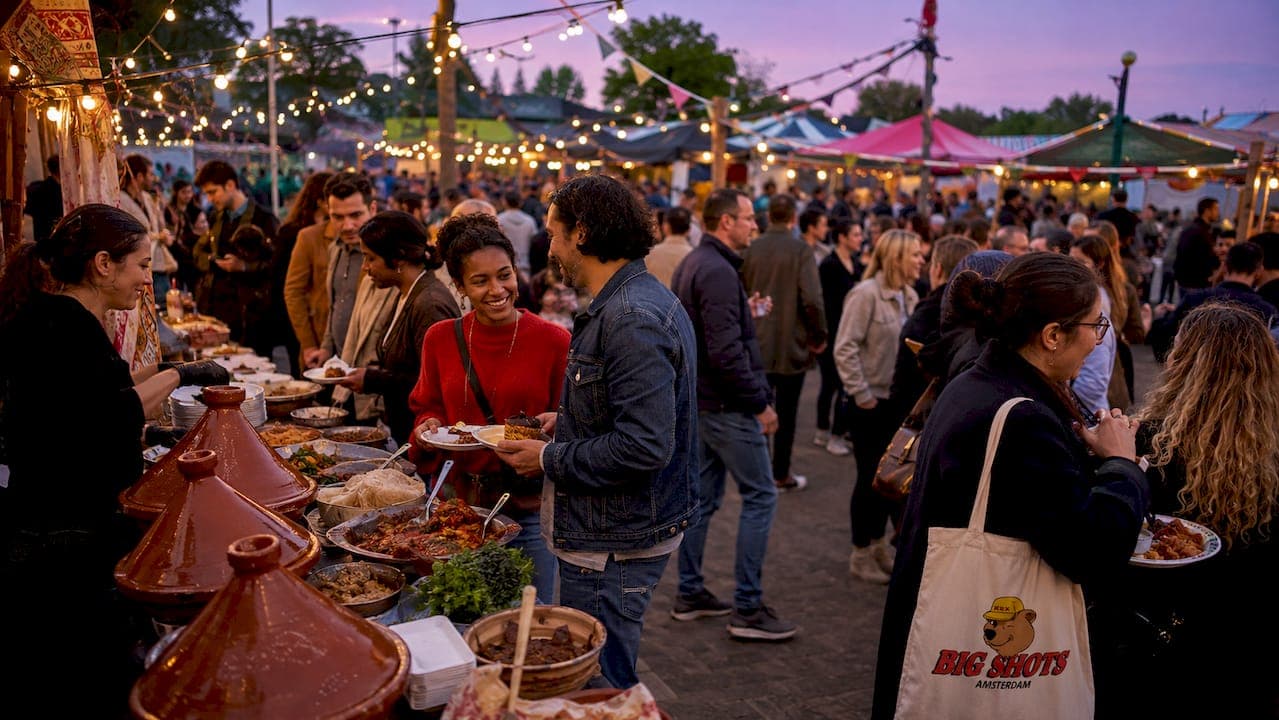
Amsterdam's current international food scene reflects the city's evolution from colonial port to global city. Indonesian and Surinamese cuisines remain the most deeply embedded, but the full picture is far wider. Chinese restaurants have operated in the city since the early 20th century, concentrated around Zeedijk Street. Turkish and Moroccan communities, who arrived as guest workers in the 1960s and 1970s, brought kebab shops, bakeries, and spice markets that now anchor entire neighborhoods.
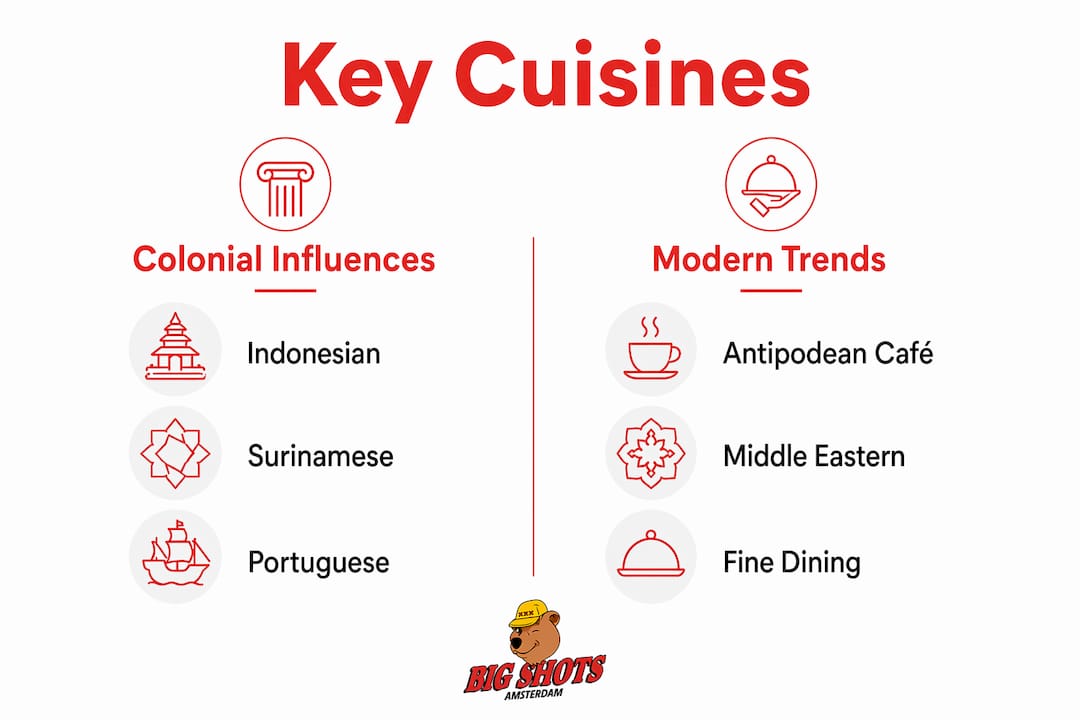
Since 2010, Antipodean expats have reshaped café culture in Amsterdam, introducing flat whites, smashed avocado, and all-day brunch menus that changed how the city thinks about breakfast. Neighborhoods like Amsterdam Zuidoost have become hubs for Ghanaian and Caribbean cuisines. That shift reflects the city's ongoing multicultural evolution and the way food communities form around shared heritage.
| Cuisine | Key Dishes | Notable Neighborhoods |
|---|---|---|
| Indonesian | Rijsttafel, nasi goreng, satay | Jordaan, De Pijp |
| Surinamese | Roti, pom, moksi meti | Bijlmer, Amsterdam Zuidoost |
| Chinese | Dim sum, Peking duck, noodle soups | Zeedijk, Chinatown |
| Turkish and Moroccan | Kebab, tagine, baklava | Oud-West, De Baarsjes |
| Ghanaian and Caribbean | Jollof rice, plantain, curry goat | Amsterdam Zuidoost |
| Antipodean | Flat whites, brunch plates, avocado toast | De Pijp, Jordaan |
At the fine dining level, Amsterdam's Michelin-starred restaurants pull from this same global pool. Chefs at venues like Bord'Eau and Spectrum use Dutch seasonal produce alongside Japanese umami techniques, North African spice profiles, and South American citrus. The result is a fine dining culture that feels genuinely international rather than imitative.
Pro Tip: If you want to experience Amsterdam's international food scene without a reservation, visit the Albert Cuyp Market in De Pijp on a weekday morning. You will find Indonesian snacks, Surinamese street food, Turkish bread, and Dutch stroopwafels within a single city block.
How do chefs in amsterdam innovate with international cuisine?
The role of chefs in Amsterdam dining has shifted from execution to authorship. Leading figures like Luc Kusters have pushed the city's culinary conversation toward sustainable, plant-forward gastronomy and circular food systems. Kusters actively collaborates with other chefs to train young talent on feeding the planet using local, seasonal produce. That philosophy now shapes menus across the city, from casual cafés to tasting rooms.
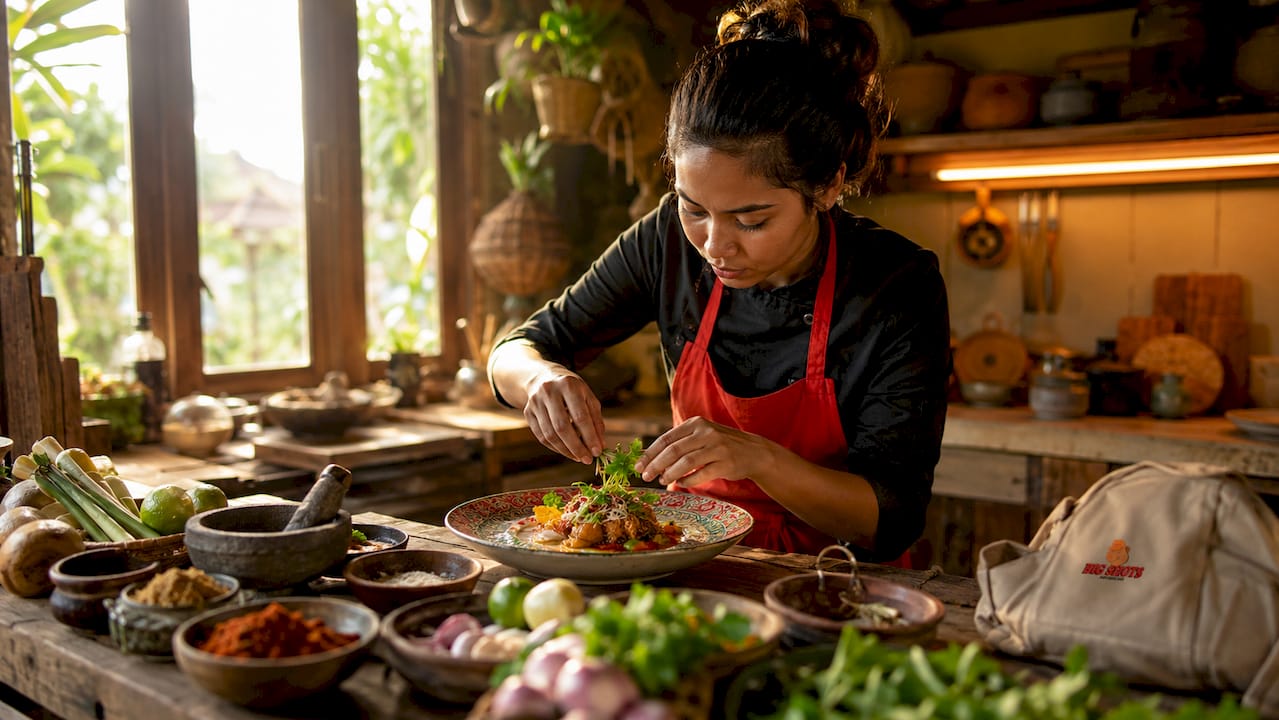
Chef Devinder Oberoi of Amsterdam City Farm Tasting Room represents another direction. His approach centers on narrative-driven dining, where meals feel personal and intimate rather than formulaic. Oberoi's menus change with the season and the story he wants to tell, creating a home-like atmosphere that contrasts sharply with rigid tasting menu formats. This style of dining has become a defining feature of Amsterdam's culinary identity.
Several patterns define how Amsterdam chefs work with international ingredients today:
- Fusion without confusion: Chefs combine Indonesian spice pastes with Dutch dairy or Japanese fermentation techniques without losing coherence
- Seasonal sourcing with global flavor: Local Dutch vegetables are paired with West African pepper blends or Peruvian aji amarillo
- Storytelling menus: Dishes are presented with the context of their cultural origin, making the meal educational as well as enjoyable
- Collaboration culture: Amsterdam chefs frequently guest at each other's restaurants, cross-pollinating ideas from different culinary traditions
Many of Amsterdam's top restaurants are housed in luxury hotels, which provides resource stability that standalone venues often lack. Hotel-based Michelin restaurants like those at the Waldorf Astoria Amsterdam and Hotel de l'Europe have maintained their stars for over a decade. That consistency allows chefs to experiment with international ingredients without the financial pressure that forces shortcuts.
Pro Tip: Check Amsterdam's hottest restaurant trends before booking. Narrative-driven tasting menus and plant-forward concepts are filling up weeks in advance in 2026.
Why is international cuisine culturally significant in amsterdam?
International cuisine in Amsterdam is not a trend. It is the city's primary language for expressing multicultural identity and community belonging. Food is the most accessible form of cultural exchange. You do not need to speak Bahasa Indonesia to understand the warmth of a shared rijsttafel, and you do not need a history degree to taste the story of Surinamese migration in a bowl of pom.
The cultural significance of Amsterdam's global food scene operates on several levels:
- Heritage preservation: Surinamese, Indonesian, and Chinese communities maintain culinary traditions that connect generations and keep cultural memory alive in a new country.
- Community building: Neighborhood restaurants and markets in areas like De Pijp and Amsterdam Zuidoost serve as gathering points where different communities interact and share.
- Cultural education for visitors: Travelers who eat their way through Amsterdam's international food scene leave with a more accurate understanding of Dutch history than any museum exhibit provides.
- Ethical and sustainable food movements: Amsterdam's culinary scene reflects collaboration between chefs committed to planet-friendly dining, which increasingly draws on traditional non-Western food systems that were always more sustainable.
- Economic inclusion: International restaurants provide pathways to entrepreneurship for immigrant communities, reinforcing Amsterdam's reputation as a city where diverse backgrounds translate into economic participation.
Amsterdam's diversity is a direct result of its historic role as a global trade hub and its modern environmental and culinary values. That combination makes the city's food scene feel earned rather than curated.
How can you experience amsterdam's international cuisine?
Experiencing Amsterdam's global cuisine requires a plan, but not a complicated one. The city rewards curiosity and punishes over-preparation. Here is what actually works:
- Start in De Pijp: The Albert Cuyp Market and surrounding streets offer Indonesian, Surinamese, Turkish, and Moroccan food within walking distance. This neighborhood is the most concentrated expression of Amsterdam's multicultural food culture.
- Book rijsttafel for a group: Rijsttafel is a communal feast designed to be shared. Order it for at least two people, ideally four, to get the full range of dishes. Solo dining misses the point entirely.
- Visit Amsterdam Zuidoost for Ghanaian and Caribbean food: This neighborhood is undervisited by tourists and overflowing with authentic West African and Caribbean restaurants that reflect the city's newest wave of culinary immigration.
- Dress smart-casual for fine dining: Amsterdam dining culture is remarkably casual, even in high-end settings. Smart-casual attire is the norm. Visitors who arrive in formal wear often feel out of place.
- Make reservations early for Michelin venues: Amsterdam's top international restaurants book out weeks in advance. Use a restaurant reservation guide to plan ahead and avoid disappointment.
- Explore Zeedijk for Chinese food: Amsterdam's Chinatown along Zeedijk Street has operated since the early 1900s and offers some of the most authentic dim sum and roast duck outside of Asia.
For drinks, look for venues that reflect the same multicultural spirit as the food. Craft cocktail bars in the Jordaan often incorporate Indonesian spices, Caribbean rum, and Surinamese bitters into their menus. That crossover between food culture and drink culture is uniquely Amsterdam.
Key takeaways
Amsterdam's international food culture is the direct product of colonial history, migration, and chef-driven innovation, making it one of the most culturally layered dining cities in Europe.
| Point | Details |
|---|---|
| Colonial roots run deep | Indonesian and Surinamese cuisines entered Amsterdam through migration tied to Dutch colonial history. |
| Diversity spans every price point | From Zuidoost street food to Michelin-starred hotel restaurants, global flavors appear at every level. |
| Chefs drive cultural storytelling | Figures like Luc Kusters and Devinder Oberoi use international ingredients to tell personal and cultural stories. |
| Rijsttafel is best shared | This Dutch-colonial communal feast requires a group to appreciate its full range of Indonesian dishes. |
| Dress down, eat well | Amsterdam's fine dining culture is casual. Smart-casual attire is standard even at top-rated restaurants. |
Amsterdam's food scene rewards the curious, not the cautious
I have eaten in Amsterdam more times than I can count, and the single biggest mistake I see food travelers make is treating the city's international cuisine as a checklist. They book the famous Indonesian restaurant, order the rijsttafel, take a photo, and move on. They miss everything.
The real story of Amsterdam's food culture lives in the unplanned meals. The Surinamese roti shop in Bijlmer where the owner's grandmother's recipe has not changed in 40 years. The Ghanaian spot in Zuidoost where the jollof rice is cooked in a kitchen the size of a closet and tastes like nothing you have had in a Western restaurant. The Jordaan café where an Australian barista makes the best flat white in the city because Amsterdam's café culture absorbed Antipodean coffee standards a decade ago and never looked back.
What I find most compelling about Amsterdam's culinary diversity is that it is not performed for tourists. These cuisines exist because real communities built real lives here and cooked what they knew. That authenticity is what separates Amsterdam from cities that import international food as a marketing strategy. The food here has weight. It has history. Eat it with that in mind and you will leave understanding the city in a way that no walking tour can deliver.
— Leo
Experience amsterdam's international spirit at Bigshotsamsterdam
Bigshotsamsterdam captures exactly what makes Amsterdam's food and drink culture worth experiencing. As a sports bar, shisha lounge, restaurant, and café rolled into one, it reflects the city's instinct for mixing influences and making everyone feel at home. The menu spans gourmet dishes, steaks, and breakfast plates, all served in a lively atmosphere that fits a casual lunch or a late night out equally well. Whether you are a local looking for your next regular spot or a traveler wanting to taste Amsterdam's social energy, Bigshotsamsterdam delivers. Visit Big Shots Amsterdam to explore the menu, book a table, or order online.
FAQ
What is the role of international cuisine in amsterdam?
International cuisine in Amsterdam reflects the city's colonial history and multicultural identity, with Indonesian and Surinamese dishes most deeply embedded in daily food culture. The city's global food scene spans street markets, neighborhood restaurants, and Michelin-starred venues.
What is rijsttafel and how should you order it?
Rijsttafel is a Dutch-colonial communal feast of multiple Indonesian dishes, best ordered for a group of two or more people. It is not a traditional Indonesian dining format but a Dutch invention designed to showcase the variety of Indonesian cuisine.
How many michelin-starred restaurants does amsterdam have?
Amsterdam has over 20 Michelin-starred restaurants, many of which blend classical French techniques with Dutch seasonal produce and global culinary influences. Several are located inside luxury hotels, which contributes to their long-term consistency and quality.
What should you wear to a fine dining restaurant in amsterdam?
Smart-casual attire is the standard for Amsterdam's fine dining scene, including Michelin-starred restaurants. Formal dress is unnecessary and often out of place given the city's relaxed, ingredient-focused dining culture.
Which amsterdam neighborhoods are best for international food?
De Pijp offers the widest variety of international cuisines in a walkable area, while Amsterdam Zuidoost is the best destination for Ghanaian, Caribbean, and Surinamese food. Zeedijk in the city center is the historic home of Amsterdam's Chinese food community.