
TL;DR:
- Ambiance is a layered sensory experience influencing guest emotions and behavior instantly.
- Proper design of lighting, sound, scent, touch, and temperature creates memorable dining atmospheres.
- Adjusting and understanding ambiance elements helps guests find venues aligned with their mood.
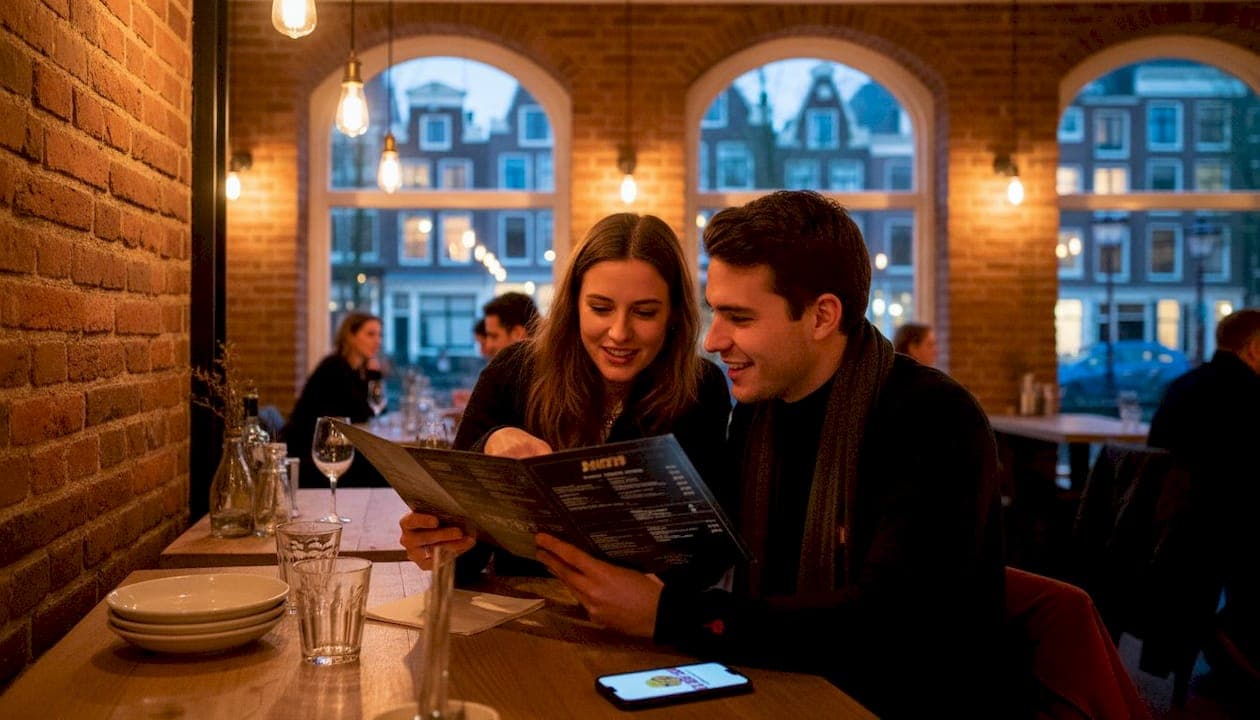
You walk into a restaurant and within seconds you feel it—something relaxed, electric, or intimate. No one told you how to feel. The room did it for you. Restaurant ambiance is the overall sensory atmosphere designed to influence guest emotions, satisfaction, and behavior within seconds of entry. It is more than candles on tables or a playlist running in the background. It is a carefully orchestrated experience that shapes how long you stay, what you order, and whether you come back. In Amsterdam's vibrant dining and nightlife scene, understanding ambiance gives you a real edge in choosing nights worth remembering.
Table of Contents
- Defining restaurant ambiance: Beyond the basics
- The science behind ambiance: How senses shape your dining mood
- Ambiance in Amsterdam: Real venues, signature vibes
- Maximize your experience: How to choose and enjoy the right ambiance
- Our perspective: Ambiance is your secret sauce to unforgettable nights
- Discover vibrant ambiance at Big Shots Amsterdam
- Frequently asked questions
Key Takeaways
| Point | Details |
|---|---|
| Ambiance shapes experience | The atmosphere impacts your emotions, choices, and memories more than you might expect. |
| Senses in harmony | Lighting, sound, scent, and comfort should all work together to create a venue's signature vibe. |
| Amsterdam sets the bar | Local venues elevate ambiance through creative layering, from DJ-driven dining to moody hidden gems. |
| Choose smart, enjoy more | By noticing and influencing ambiance cues, you enhance your night out in the city. |
Defining restaurant ambiance: Beyond the basics
Ambiance is not one thing. It is the result of every sensory signal in a room working together, or failing to. Think of it as the invisible stage design behind every great meal you have ever had. When it works, you barely notice it. When it falls apart, the food rarely saves the night.
Restaurant ambiance is built from visual, auditory, olfactory, tactile, and thermal elements, each one pulling at your emotions in subtle but powerful ways. Here is how each sense plays a role in Amsterdam's dining culture:
- Sight: Warm amber lighting in a Jordaan café creates intimacy. Bold neon signs in a De Pijp cocktail bar signal energy and edge.
- Sound: A resident DJ spinning deep house at a waterfront venue shifts the entire social dynamic of the room.
- Smell: The aroma of slow-braised Dutch beef or fresh stroopwafel batter hits you before you even see the menu.
- Touch: The weight of a linen napkin, the smoothness of a marble bar top, or the give of a velvet booth all communicate quality and comfort.
- Temperature: A warmly heated terrace on a cold Amsterdam evening transforms what might have been a quick drink into a two-hour stay.
These five sensory elements work as a system, not in isolation. A venue can nail its lighting and music but lose guests with poor ventilation or seating that is too stiff.
| Sense | Ambiance element | Amsterdam example |
|---|---|---|
| Sight | Lighting and color palette | Candlelit tables at a Leidseplein café |
| Sound | Music tempo and volume | Live DJ sets at Volkshotel rooftop |
| Smell | Food aromas and ventilation | Dutch cheese and herb notes at a brown café |
| Touch | Seating texture and surfaces | Leather banquettes at a premium steakhouse |
| Temperature | Heating and airflow | Heated terraces along the Amstel in winter |
"Ambiance is a guest's first impression before a single dish is served. It sets emotional expectations that food and service either confirm or struggle to overcome." — Hospitality design perspective via NineGuides
This is why Amsterdam's café culture runs so deep. The gezelligheid, that untranslatable Dutch sense of cozy togetherness, is built entirely through layered sensory design. It is ambiance with a local soul.
The science behind ambiance: How senses shape your dining mood
Ambiance is not just atmosphere. It is applied psychology. Every lighting choice and playlist decision is a behavioral nudge, even if neither the owner nor the guest is consciously aware of it.
Lighting is arguably the highest-leverage tool in the room. Dim, warm lighting at around 2700 to 3000 Kelvin extends guest stays, increases spending, and improves the perceived quality of food in full-service restaurants. Bright, cooler lighting pushes turnover, which is why fast-casual spots use it deliberately.
Music does something even more specific. Slow tempo music lengthens stays and boosts drink spending. Loud volumes nudge guests toward indulgent orders, increasing unhealthy food choices by roughly 20 percent. Classical music, notably, raises perceived quality and can push spending up by as much as 20 percent. The wrong playlist is not just annoying. It actively costs the venue money and costs you a good time.
| Variable | Low-energy setting | High-energy setting |
|---|---|---|
| Lighting | Dim, warm tones | Bright, cool or colored |
| Music tempo | Slow, ambient | Fast, rhythmic |
| Stay duration | Longer | Shorter |
| Spending pattern | Higher on drinks and desserts | Higher on quick, indulgent items |
| Mood effect | Relaxed, intimate | Social, electric |
Poor acoustics and excessive noise are among the top satisfaction killers in any venue. Temperature is just as critical. An overheated room or a cold draft from an open kitchen does not just cause minor discomfort. It overrides every other positive signal in the environment.
Pro Tip: When scoping a new spot, arrive within the first 30 minutes of an evening service. You will catch the venue's intended ambiance before crowd noise changes the acoustic profile entirely.
For Amsterdam specifically, pairing authentic Amsterdam drinks with the right ambient setting dramatically changes how the drink tastes and how the night feels. And if you are hunting for places that do this by design, browsing unique bar themes will save you a lot of trial and error.
Ambiance in Amsterdam: Real venues, signature vibes
Amsterdam is not short on interesting spaces. But a handful of venues have turned ambiance into an art form, using it to blur the line between restaurant, bar, and social experience.
Café in the City at Leidseplein is a strong example. It blends dining, cocktails, and a resident DJ into a single evolving night. Canvas at Volkshotel literally clears its tables as the evening progresses, converting a dining space into a dancefloor. Satchmo uses moody warm lighting and layered textures to build an intimate, almost cinematic energy.
Here is what to look for when you visit a well-designed Amsterdam venue:
- Dynamic lighting shifts from dinner service to late-night mode
- DJ or live music transitions that signal a mood change without disruption
- Varied seating zones offering both social and private options in the same space
- Scent consistency that reflects the menu and season
- Staff energy that mirrors and sustains the intended atmosphere
Amsterdam's hybrid venues like Bar TWLV with its zodiac-themed cocktails and artful interiors, or Lion's Head with its brewery vibe, are built on the idea that ambiance should shift across an evening, rewarding guests who stay.
How to spot ambiance layering at any Amsterdam venue:
- Notice the lighting when you arrive versus an hour later. Did it change?
- Listen to the music tempo shift between 7pm and 10pm.
- Observe how table settings and decor evolve as the night crowd replaces the dinner crowd.
- Check whether staff presence and pace changes with the room's energy.
- Ask yourself if the space felt different at different points in the night.
"The best Amsterdam venues do not just set a mood. They evolve it across the evening, turning a dinner into a night and a night into a memory."
If you are building your own list of go-to spots, reviewing top Amsterdam venues and lively venues in Amsterdam gives you a strong starting point.
Maximize your experience: How to choose and enjoy the right ambiance
Knowing how ambiance works is useful. Knowing how to use that knowledge to plan a better night out is the real payoff.
Here is a straightforward process for matching a venue's ambiance to your actual mood:
- Decide what you want to feel. Romantic and slow? Energized and social? Focused on food and conversation? Name the mood first.
- Check recent reviews for sensory language. Words like "loud," "cozy," "dim," or "buzzing" tell you more than star ratings.
- Arrive at the right hour. Most Amsterdam venues shift from relaxed to high-energy between 9pm and 11pm. Time your visit deliberately.
- Read the room when you walk in. Trust your first instinct. If the vibe feels off immediately, it usually will not improve.
- Communicate with staff. Ask which area of the venue is quieter or livelier. Good hospitality teams will place you accordingly.
Ambiance misalignment happens when elements contradict each other—romantic candlelight paired with thumping bass, or artful decor in a freezing room. These mismatches undermine the entire experience no matter how good the food is.
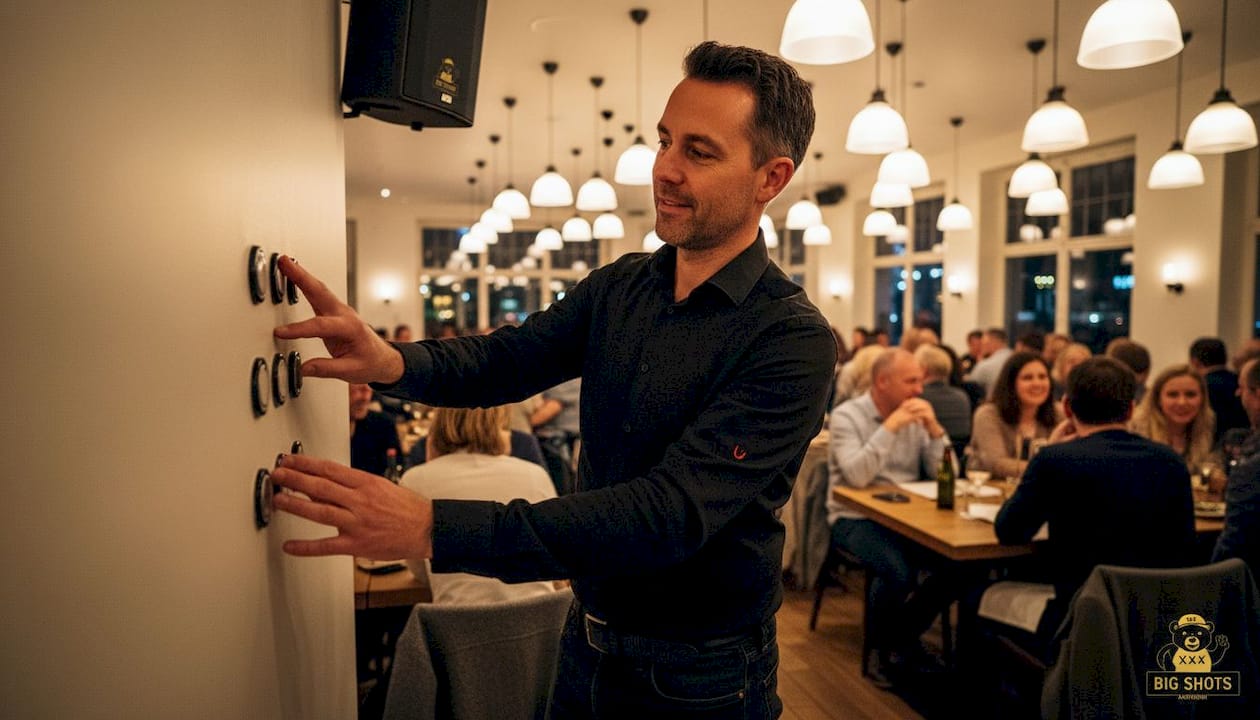
Red flags to watch for: music that does not match the crowd's energy, rooms that are significantly too hot or cold, layouts so crowded they eliminate personal space. Overcrowding and temperature discomfort consistently rank among the top satisfaction killers, overriding all other positive cues.
Pro Tip: Call ahead and ask if the venue has a quieter seating area or what time the DJ starts. Most staff are happy to help you plan your visit around your preferred energy level.
For a romantic Amsterdam night, matching soft lighting venues to your occasion is essential. Reading about romantic Amsterdam venues or exploring what makes a sports bar atmosphere tick helps you pick precisely the right fit every time.
Our perspective: Ambiance is your secret sauce to unforgettable nights
Here is something most dining guides will not tell you: the food rarely wins the memory. Ambiance does. Think back to the most memorable nights you have had in Amsterdam. Chances are you remember how the space felt, not the exact dish you ordered.
After years of watching Amsterdam's hospitality scene evolve, one pattern is undeniable. Venues that treat ambiance as a living, shifting feature, not a fixed backdrop, keep guests coming back. They build communities. They generate word-of-mouth. They outlast trends.
The contrarian truth is that most diners are still passively experiencing ambiance rather than actively seeking it. You now have the tools to do the opposite. Do not follow the crowd to the loudest or most Instagrammed spot. Ask yourself what mood you want to inhabit tonight, then find the venue that was designed for exactly that feeling.
Want to celebrate in Amsterdam in a way that actually sticks with you? Choose ambiance first. The rest will follow.
Discover vibrant ambiance at Big Shots Amsterdam
If this guide has you ready to stop reading and start experiencing, Big Shots Amsterdam is exactly the kind of venue where ambiance layering is not a concept but a nightly reality. From relaxed café mornings and gourmet lunches to lively bar evenings with craft cocktails and sports on screen, the energy shifts with you through the day.
Whether you are planning a casual hangout, a romantic evening, or a night out with your crew, Big Shots delivers the kind of atmosphere that turns an ordinary night into something worth talking about. Explore dining, drinks and sports at Big Shots and see for yourself how expertly curated ambiance changes everything about a night in Amsterdam.
Frequently asked questions
What are the most important elements of restaurant ambiance?
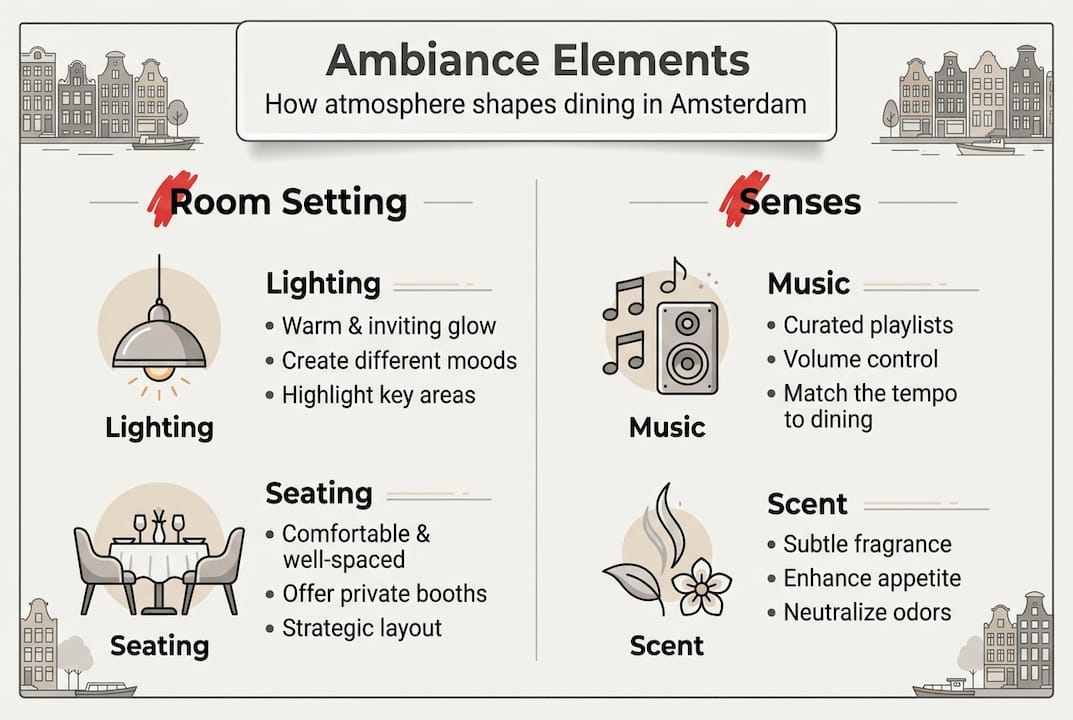
The key elements are lighting, music, scent, temperature, and tactile features such as seating and surfaces. Each one works as part of a sensory system that shapes how guests feel from the moment they walk in.
How does restaurant ambiance affect guest behavior?
Ambiance shapes behavior by influencing how long guests stay, what they order, and their overall satisfaction, often within seconds of arrival. Even small mismatches between elements can reduce spending and loyalty.
Where can I find restaurants in Amsterdam with unique ambiance?
Look for hybrid venues like Café in the City, Canvas at Volkshotel, and Satchmo, where lighting, music, and layout shift throughout the evening for a layered experience.
What ruins a carefully designed restaurant ambiance?
Ambiance misalignment such as romantic lighting paired with loud music, or an uncomfortable room temperature, disrupts the experience and overrides even excellent food and service.
Can I do anything to improve my ambiance experience as a guest?
Absolutely. Ask staff about quiet or lively hours and feel free to request a different seating zone or ask whether the music volume can be adjusted when the setting allows for it.