
TL;DR:
- Proper planning, early arrival, and reservations are key to a great sports bar experience.
- Technology, streamlined menus, and clear workflows ensure fast service during busy matches.
- Atmosphere and crowd energy are the main factors influencing fans' loyalty and overall experience.
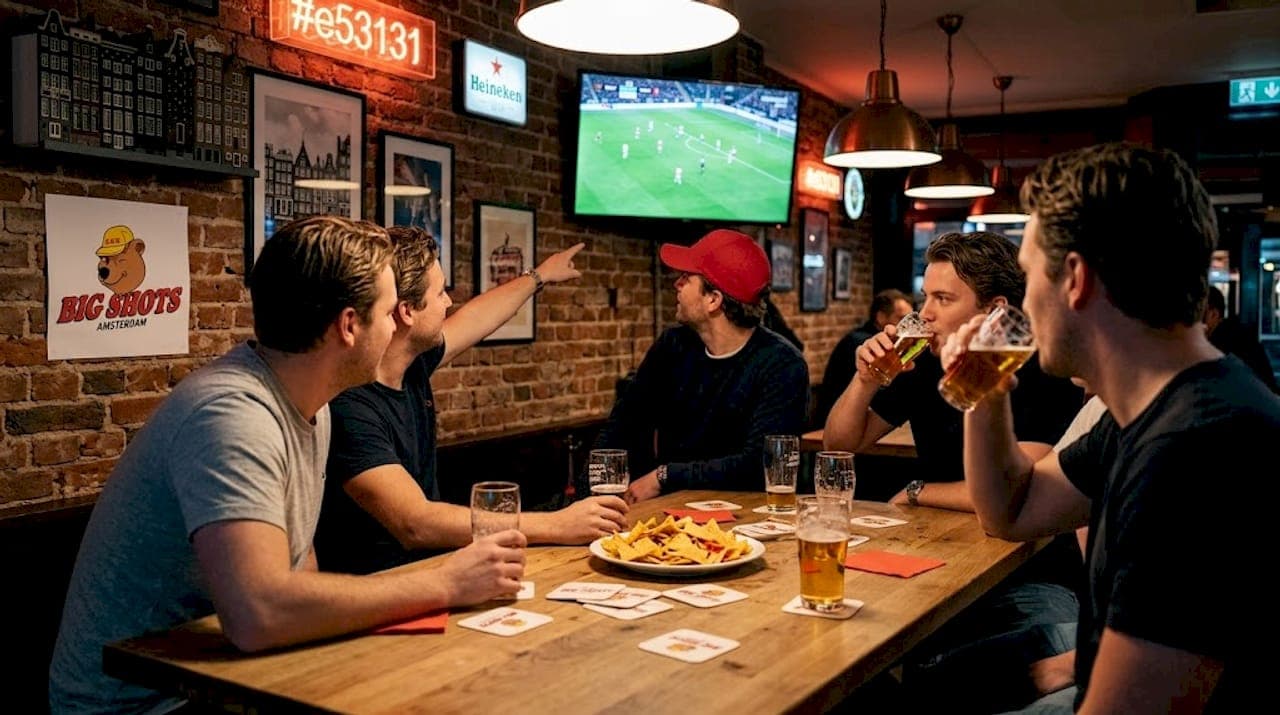
Picture this: it's 20 minutes before kickoff, the bar is packed wall to wall, and the only seats left face a pillar blocking the main screen. Your drink order gets lost in the chaos, the food arrives cold, and by the time you settle in, you've already missed the opening goal. Sound familiar? 45% of fans prefer watching matches at a bar for the atmosphere over watching at home, yet so many visits turn into stressful scrambles. This guide breaks down exactly how to master the sports bar experience workflow, so your next night in Amsterdam becomes the one everyone talks about on Monday morning.
Table of Contents
- Planning your sports bar visit: Essentials for fans
- How staff, tech, and menus drive your game-night workflow
- Unlocking atmosphere: What separates a great sports bar
- Post-game: Feedback, personal touches, and maximizing returns
- Why smart workflows—not just staff—define Amsterdam's sports bar magic
- Next steps: Experience Amsterdam sports bars at their best
- Frequently asked questions
Key Takeaways
| Point | Details |
|---|---|
| Arrive early, book ahead | Advance booking and early arrival secure the best seats for high-demand matches. |
| Smart tech powers service | Centralized TV control and pre-batched drinks streamline busy game nights for fans. |
| Atmosphere matters most | Crowd energy and venue layout are more important to guests than food or price. |
| Feedback shapes future visits | Digital feedback and loyalty apps improve experiences and unlock personalized offers. |
| Workflow beats luck | Mastering the sports bar workflow leads to better nights out, every time. |
Planning your sports bar visit: Essentials for fans
Having set the scene for the sports bar experience, let's get into the nuts and bolts of planning your visit. The difference between a great night and a frustrating one almost always comes down to what you do before you even walk through the door.
The customer journey at a sports bar starts long before the game kicks off. Smart fans treat the pre-arrival phase like a game plan: research the venue, check what screens are showing your match, and most importantly, book in advance. During Champions League finals or Ajax home games, popular Amsterdam spots fill up fast. Sending a quick reservation request 24 to 48 hours ahead locks in your preferred section before it disappears.
Arriving early is equally critical. Aim for 30 to 45 minutes before kickoff, especially on high-demand nights. This gives you time to settle in, order your first round without the rush, and scout the best sightlines in the room. Many venues now use tiered or reserved ticketing for major matches, meaning walk-ins may be turned away or seated in less desirable spots.
Here's what to check before you arrive:
- Match schedule and screen assignments (ask the venue which screen shows your game)
- Reservation policy (some venues require a deposit for high-demand events)
- Dress code and entry rules for the specific night
- Parking or transit options near the venue
- Loyalty app or digital check-in availability for faster entry
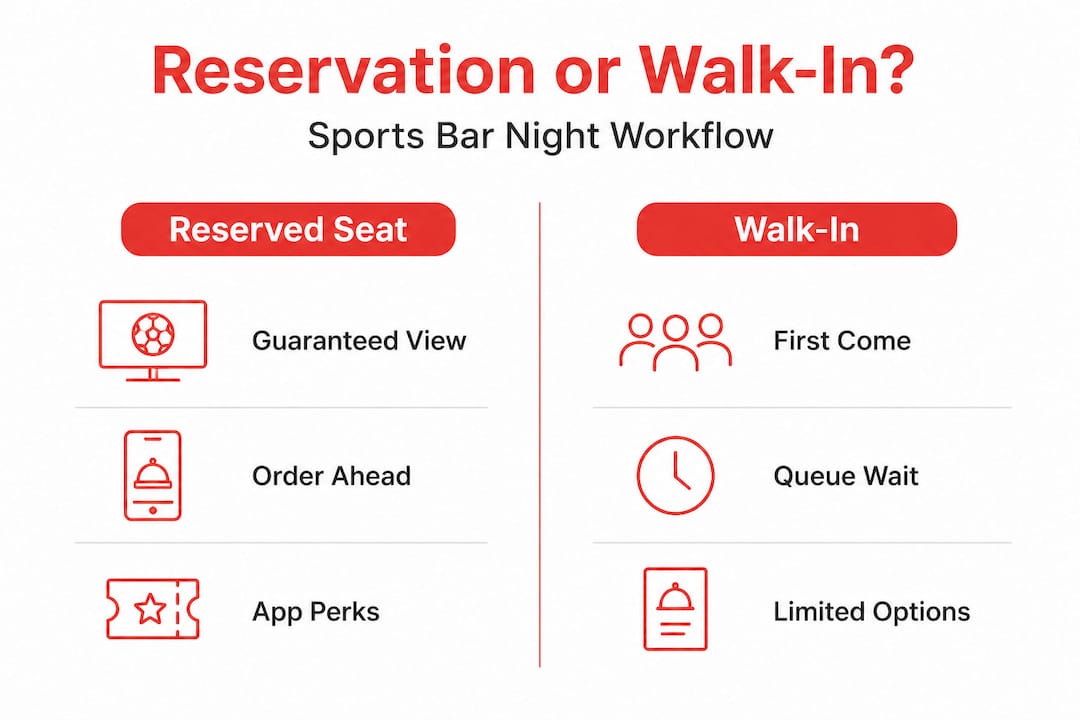
Comparison: Reserved vs. walk-in workflow
| Factor | Reserved seating | Walk-in |
|---|---|---|
| Seating quality | Best spots guaranteed | First come, first served |
| Wait time | Minimal, direct to table | Potentially 20+ min wait |
| Service priority | Often higher | Standard queue |
| Availability on big nights | Always a spot | High risk of capacity cutoff |
| Flexibility | Less spontaneous | More flexible arrival |
Pro Tip: Download the venue's loyalty app before you arrive. Many Amsterdam sports bars now let you pick your preferred table zone and get notified when it opens up, saving you the awkward hover-by-the-bar routine.
How staff, tech, and menus drive your game-night workflow
Once you're prepared, understanding how the bar works during matches will let you get the most from your visit. A modern sports bar isn't just a room with screens. It's a carefully engineered system designed to keep hundreds of guests fed, hydrated, and entertained simultaneously.
The backbone of this system is the TV control setup. The best venues use app-based TV control systems managing 30 or more screens from a single interface. This means staff can switch a specific screen to your match without disrupting the rest of the room. It also means no more arguing with a bartender who can't figure out how to change the input. When you arrive, ask the floor supervisor directly which screens are assigned to your match, and you'll avoid confusion entirely.
Behind the scenes, staffing surges by 25 to 75% on big match nights. This includes dedicated barbacks who restock ice and glasses, floor supervisors who manage guest flow, and additional kitchen staff briefed on a simplified event menu. Pre-event briefings ensure every team member knows the match schedule, which sections are reserved, and what specials are running.
Did you know? QR-based menus have increased 600% since 2020, cutting order processing time significantly. Meanwhile, 73% of Gen Z guests now expect craft or non-alcoholic options on the menu, while millennials represent 62% of monthly sports bar visits.
Menu design on match nights is intentionally lean. Instead of the full kitchen menu, most venues offer a match-day selection of 8 to 12 items that travel fast from kitchen to table. Think loaded fries, wings, burgers, and nachos. These aren't just crowd favorites; they're operationally smart choices that reduce ticket times dramatically.
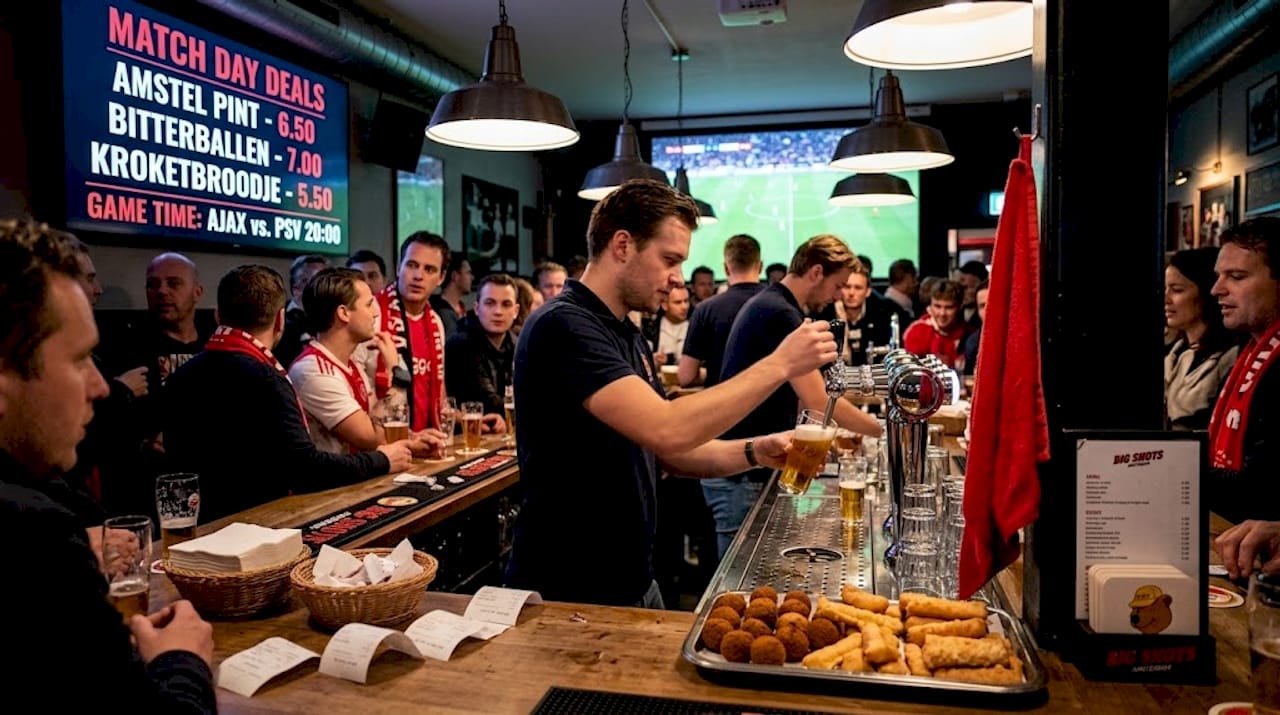
Pre-batching is the other secret weapon. Bartenders prepare large volumes of popular cocktails and mixers before the rush begins, cutting individual drink build time from 90 seconds to under 20 seconds per serve. High-margin batched cocktails are particularly common because they're fast, consistent, and profitable.
Step-by-step: How tech and menus work on a busy match night
- Staff briefing 90 minutes before kickoff: screens assigned, specials confirmed, sections allocated
- POS (point-of-sale) system loaded with the simplified match-day menu for faster input
- Bartenders pre-batch high-demand cocktails and prepare garnish stations
- App-based TV control synchronized across all screens before doors open
- QR menus activated at tables for contactless, faster ordering
- Floor supervisors monitor wait times and redistribute staff to high-traffic zones
- Post-match feedback prompts sent digitally to guests for next-visit improvements
Staff and service benchmarks on match nights
| Metric | Standard night | Match night |
|---|---|---|
| Staff-to-customer ratio | 1:20 | 1:10 to 1:12 |
| Average order processing time | 8 to 10 min | 4 to 5 min |
| Menu items available | Full menu (30+ items) | Match-day menu (8 to 12 items) |
| Drink pre-batching | Minimal | High volume |
Pro Tip: Always order draft beer or batched cocktails during peak match periods. These are already prepped and will reach your table in a fraction of the time it takes to build a custom cocktail from scratch.
For venue operators looking to take match-night hospitality further, a strong sports bar event hosting approach makes all the difference in managing crowd energy and service speed together.
Unlocking atmosphere: What separates a great sports bar
Tech and staff set the stage, but it's atmosphere that truly separates a forgettable night from a fantastic one. You can have the fastest service in the city, but if the energy in the room is flat, the experience falls apart.
Research is clear on this: atmosphere (56%) consistently outranks food quality (32%) as the primary reason guests choose one bar over another. When fans talk about their favorite spots, they rarely lead with the menu. They lead with the vibe, the crowd, and the energy in the room when a goal goes in.
55% of sports bar regulars say they prioritize vibe over price when choosing where to watch a match. That's a significant data point, because it tells you that premium venues can charge more and still win loyalty through atmosphere alone. Loyalty programs amplify this effect, boosting repeat visits by 2.3 times compared to non-member guests.
Signs of a genuinely vibrant venue:
- Screen placement at multiple angles, so no seat is a bad seat
- Sound zones that balance commentary volume with conversation space
- Lighting design that shifts for halftime versus active play
- Dedicated fan sections for specific teams or rivalry matches
- Live reactions encouraged through layout and open floor plans
- Crowd-facing bar placement so bartenders are part of the energy, not hidden away
The layout of a sports bar is actually a design science. Venues that get it right place screens at eye level from seated positions, use angled mounting to eliminate glare, and create "energy zones" where the most passionate fans cluster together. This isn't accidental; it's intentional architecture designed to amplify crowd energy.
Understanding what makes sports bar atmosphere in Amsterdam exceptional helps you filter out the average venues from the ones worth returning to every match weekend.
Post-game: Feedback, personal touches, and maximizing returns
As the game ends, your experience can shape future visits and unlock exclusive perks. Most fans skip this part entirely, which means they miss out on the compounding benefits of being a recognized, valued regular.
Feedback loops in hospitality follow a simple but powerful cycle: collection, analysis, and action. Venues using structured digital feedback systems close roughly 80% of actionable issues within one visit cycle. That means if you flag a problem with screen placement or slow service, a well-run bar will actually fix it before your next visit. Compare this to saying nothing and experiencing the same frustration repeatedly.
Staff turnover in hospitality is high. Relying on a single bartender to remember your preferences is a losing strategy. Smart venues counter this by logging guest preferences directly in the POS system, so any staff member pulling up your table profile can see that you prefer a specific beer, sit in the corner booth, or always order the same starter. This is personalization at scale.
How to participate in the feedback and loyalty loop:
- Download the venue's app or join their loyalty program on your first visit
- After the match, complete the digital feedback form (usually under two minutes)
- Be specific: mention your server's name, the screen quality, and food timing
- Check the app for personalized offers triggered by your feedback
- On your next visit, mention your loyalty membership at check-in for priority recognition
Additional tips for getting recognized and rewarded:
- Leave Google or TripAdvisor reviews mentioning specific staff by name; venues monitor these closely
- Engage with the venue's social media around match events for exclusive giveaways
- Ask about regulars' benefits directly; many venues don't advertise them but offer them freely
- Visit consistently during one sport's season to build recognition with specific staff shifts
Loyalty programs boost repeat visits by 2.3 times, making them one of the most cost-effective habits you can build as a sports bar regular. The combination of personalized POS data and active loyalty membership creates a feedback loop that genuinely improves your experience over time.
Exploring the broader landscape of Amsterdam hospitality venues gives you useful context for comparing what different spots offer in terms of loyalty perks and personalized service. And if you want a deeper look at one standout option, the Big Shots Amsterdam venue overview covers how they bring all these elements together in one space.
Why smart workflows—not just staff—define Amsterdam's sports bar magic
Here's the take most people miss entirely: everyone talks about finding a bar with "great staff," as if friendly service is the secret ingredient. It isn't. Friendly staff working a broken system still deliver a broken experience. The real differentiator in Amsterdam's best sports bars is operational workflow, and until you understand that, you'll keep rating venues on the wrong criteria.
Think about it this way. A charismatic bartender who can't get your order out because the POS is clunky, the menu is too long, and the TV system requires three staff members to change a channel is not delivering a great experience. Contrast that with a venue running app-based TV control and pre-batched cocktails generating 70 to 85% margins per serve. That venue is fast, profitable, and consistently excellent regardless of which staff member is on that night.
The contrarian truth is that systems protect you from bad nights. When a venue has a proper feedback loop, streamlined match-day menus, centralized TV management, and loyalty-driven personalization, the experience is good even when it's someone's first week on the job. Without those systems, even the most experienced team struggles under the pressure of a sold-out match night.
For visitors, this means you should be evaluating venues on their systems, not just their smiles. Does the bar have a structured booking process? Do they run a simplified match-day menu? Can they quickly switch screens without disrupting other guests? These are the markers of a venue built for the sports fan experience. Anyone curious about building one from the ground up can get a clear picture through a solid sports bar opening guide that covers the operational architecture behind successful venues.
For loyal guests, understanding the system lets you work with it rather than against it. Order the batched drinks, book in advance, use the loyalty app, and give digital feedback. You're not just being a good customer; you're actively optimizing your own experience.
Next steps: Experience Amsterdam sports bars at their best
Having mastered the workflow and learned the insider perspective, take the next step toward your ideal sports bar night. Everything covered in this guide, from early arrival strategies to loyalty loops to atmosphere-first venue selection, comes alive when you find a venue that actually puts these systems into practice.
Big Shots Amsterdam brings together everything that makes a sports bar experience genuinely worth your evening. Multiple screens, a carefully crafted match-day menu, craft cocktails, a shisha lounge, and a team that knows how to run a packed house without losing the energy that makes watching sports at a bar so much better than watching at home. Whether you're planning a group outing for the next big Champions League night or a casual midweek catch-up over a game, the workflow we described plays out here in real time. Book ahead, use the sports bar checklist to prepare, and show up ready to have a great night.
Frequently asked questions
What time should I arrive for high-demand sports matches in an Amsterdam bar?
Arrive at least 30 to 45 minutes before kickoff for the best seating, especially during reserved-ticket events or tiered capacity nights when sections fill up quickly.
How do sports bars use tech to optimize service during big games?
Many use app-based TV control managing 30 or more screens, combined with simplified menus and pre-batched drinks, to serve large crowds quickly and consistently.
What food and drink options are most popular at Amsterdam sports bars?
Draft beer and nachos are staples, with draft beer accounting for 35% of total drink sales and nachos appearing on 92% of sports bar menus.
How can I get personalized service or perks during my visit?
Join loyalty programs and give digital feedback after your visit. POS notes help staff recognize repeat guests across shift changes and tailor offers to your preferences.
Why is atmosphere valued more than price or food at sports bars?
56% of guests prioritize atmosphere over other factors, with crowd energy and smart screen layout making the venue memorable, while only 32% cite food quality as their top consideration.