
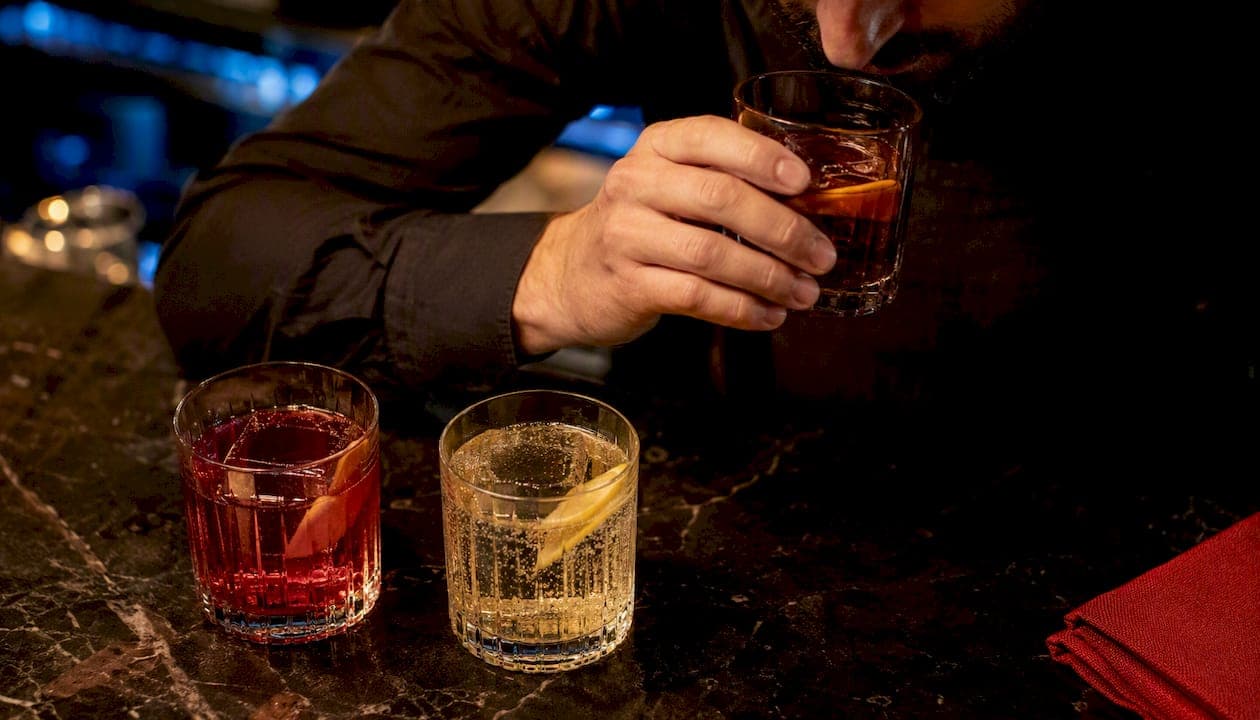
A Negroni variation swaps or rebalances one part of the classic template, gin, Campari, and sweet vermouth in equal measure, while keeping that signature bitter-sweet tension intact. This article gives you a working recipe list, from the White Negroni to a Frappé version, plus the ratio logic to adjust any of them by taste. Whether you're behind a home bar cart or a service well, these builds are ready to pour tonight.
TL;DR:
- Using a different base spirit like bourbon or mezcal can alter the drink's warmth, spice, or smokiness, but maintaining the 1:1:1 ratio is crucial for balance.
- Replacing Campari with bitters like Cynar or Suze softens bitterness and introduces unique herbal or caramel notes that appeal to different palates.
- When customizing a Negroni, adjust the bitter and sweet components carefully, as over- or under-balancing impacts drink harmony significantly.
- Variations like the Sbagliato or Negroni Sour are more approachable and pair better with lighter foods or daytime drinking.
- Proper ingredient freshness, especially of vermouth and large ice cubes for stirring, is essential to preserve flavor and avoid dilution issues.
Table of Contents
- Classic Negroni Formula, Ratios, and Essential Technique
- Curated Negroni Recipe Cards: 12 Variations Worth Making
- How to Balance and Customize Any Negroni Riff
- Common Mistakes to Avoid When Making Negroni Variations
- History and Origin of the Negroni Cocktail
- Tips for Selecting Quality Ingredients
- Pairing Negroni Variations With Food
- Big Shots Amsterdam: Venue-Tested Tips for Serving Negroni Variations
- Visit or Order Negroni Variations at Big Shots Amsterdam
- Sources
- FAQ
Classic Negroni Formula, Ratios, and Essential Technique
The standard Negroni runs equal parts gin, Campari, and sweet vermouth, usually 1 ounce of each, stirred over ice and strained into a rocks glass over a large cube. That 1:1:1 ratio is the anchor point for every riff in this guide. Bartenders lean on a few common departures depending on the crowd:
- 1:1:1 — the textbook build, balanced and bracing.
- 1.5:1:1 (gin-forward) — more botanical lift, softer bitterness, good for gin drinkers easing into the category.
- 2:1:1 — a spirit-heavy pour favored in some modern bar programs, closer to a bittered Martini.
Stirring, not shaking, is the right call here because every ingredient is clear and boozy. Shaking would just add unwanted air and dilution without the citrus or dairy that usually justifies it. Use a large ice cube if serving on the rocks. It melts slower and won't water down the drink before you finish it. For parties, batch the spirits in advance (no ice, no garnish) and add dilution to taste at pour time. A Frappé version, built over crushed ice, drinks lower and colder, making it a smart daytime or patio option.
Curated Negroni Recipe Cards: 12 Variations Worth Making
Each recipe below uses parts, so you can scale to any glass size. Start with equal parts unless noted, then adjust using the balancing rules in the next section.
-
Classic Negroni. 1 part gin, 1 part Campari, 1 part sweet vermouth, stirred and strained over a large ice cube, garnished with an orange peel. Tasting note: bittersweet, herbal, a little medicinal in the best way. A London Dry gin keeps it crisp; a rounder Old Tom softens the edges if Campari feels aggressive to you.
-
White Negroni. 1.5 parts gin, 1 part Suze or a similar gentian liqueur, 1 part Lillet Blanc or bianco vermouth. The White Negroni trades Campari's red bitterness for a paler, citrus-and-herb profile. Stir and strain over ice, garnish with a lemon twist. If Suze isn't on the shelf, a bittered orange liqueur with a bianco vermouth gets you close.
-
Negroni Sbagliato. 1 part sweet vermouth, 1 part Campari, topped with sparkling wine instead of gin. Build in the glass over ice, top with prosecco, and stir once gently. Lower ABV, brighter bubbles, and genuinely easier to drink two of.
-
Boulevardier. 1 part bourbon or rye, 1 part Campari, 1 part sweet vermouth, stirred and strained, orange peel garnish. The Boulevardier swaps gin's botanicals for whiskey's caramel and spice, giving you a warmer, oakier drink than the original. This is the answer to the "Negroni vs Boulevardier" question most people ask: same architecture, different backbone spirit.
-
Mezcal Negroni. 1 part mezcal, 1 part Campari, 1 part sweet vermouth. Stir and strain, garnish with a flamed orange peel if you want theater. The smoke plays surprisingly well against Campari's bitterness. Use a lighter, less peaty mezcal if you're new to the category.
-
Kingston Negroni. 1 part Jamaican rum, 1 part Campari, 1 part sweet vermouth. A funkier, tropical-leaning riff that trades gin's juniper for rum's fruit and spice. Stirred, strained, orange twist.
-
Cynar Negroni. 1 part gin, 1 part Cynar, 1 part sweet vermouth. Cynar's artichoke-and-caramel bitterness is gentler than Campari's, so this pours softer and more digestif-like. Good for guests who find the classic too aggressive.
-
Negroni Sour. 1.5 parts gin, 1 part Campari, 1 part sweet vermouth, 0.75 part lemon juice, dry shaken then shaken again with ice. Strain into a coupe. The acid cuts the bitterness hard, turning this into a brighter, more approachable pour.
-
Frozen Negroni (Frappé). 1 part gin, 1 part Campari, 1 part sweet vermouth blended or shaken hard with crushed ice, poured into a chilled glass unstrained. Slushy, cold, and dangerously easy to drink fast, so pace it.
-
Pomegranate Negroni. Classic ratio plus 0.5 part pomegranate juice or grenadine, stirred and strained. The Beefeater version leans on fruit to round out Campari's bitterness without masking it, a solid entry point for first-time Negroni drinkers.
-
Nonalcoholic Negroni. 1 part nonalcoholic gin alternative, 1 part nonalcoholic bitter aperitif, 1 part nonalcoholic sweet vermouth-style aperitif, stirred with ice. Zero-proof aperitif brands have gotten genuinely good at replicating bitterness and color, so this isn't a watered-down consolation prize anymore. Pair it with the same orange peel garnish as the original for visual consistency.
-
Cold-Brew Negroni. Classic ratio with 0.25 part cold-brew concentrate added, stirred and strained. Coffee's bitterness stacks with Campari instead of fighting it, giving you a darker, more brooding glass.
Pro Tip: Batch any of these by the ounce and multiply by your guest count, keep the batch in the freezer, and stir over one fresh ice cube per glass at serve time. It holds flavor better than pre-diluting and pouring from a pitcher.
How to Balance and Customize Any Negroni Riff
Every Negroni riff is a negotiation between five variables: bitter, sweet, alcohol, acid, and texture. Move one and the others need to answer for it.
- Too bitter: cut the bitter aperitif by a quarter part and add that back in sweet vermouth or a splash of soda.
- Too sweet: add a dash of orange bitters or increase the bitter component by a quarter part.
- Too boozy or flat-tasting: a few drops of fresh citrus or an orange twist expressed over the glass wakes up a dull pour without changing the ratio.
- Too thin: stir longer for a fuller texture, or drop the ice size up to slow dilution.
Bartenders generally treat the bitter-sweet tension as the whole design brief for a Negroni riff. Nail that balance first before worrying about garnish or glassware. When swapping a base spirit, keep the ratio the same on your first attempt. Whiskey and mezcal both carry more inherent sweetness and smoke than gin, so they can throw the balance off if you change more than one variable at once.
Pro Tip: If a riff tastes "off" but you can't pinpoint why, taste each ingredient solo first. Nine times out of ten the problem is a vermouth that's been open too long and gone flat.
Common Mistakes to Avoid When Making Negroni Variations
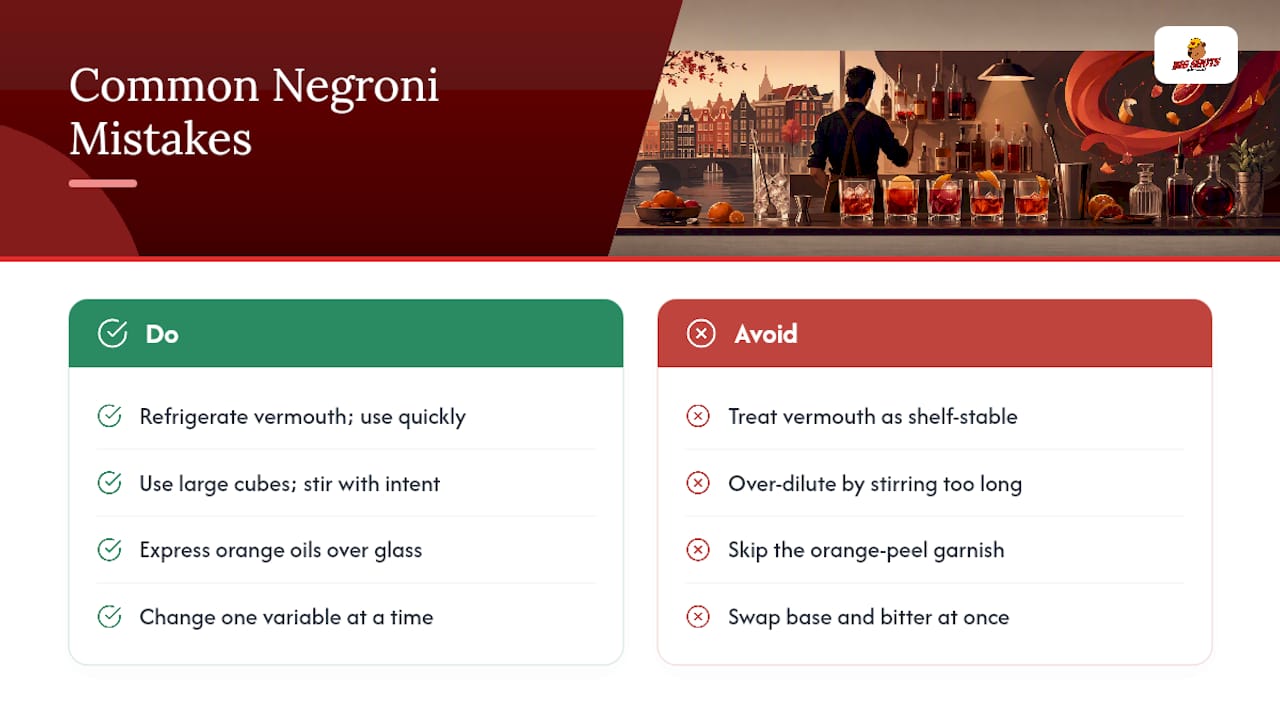
The most common mistake is treating vermouth as a shelf-stable spirit. It's fortified wine, and once opened it starts oxidizing within days, turning flat and dull within a couple of weeks even refrigerated. A tired vermouth will sink an otherwise well-made Negroni faster than a bad gin will.
The second mistake is over-diluting. Stirring for 45 seconds over small, fast-melting ice waters down the drink before you've even poured it. Use large cubes and stir with intent, not endlessly.
Skipping the garnish is a smaller sin but a real one. Orange peel isn't decoration here. Expressing the oils over the glass adds an aromatic top note that changes how the first sip reads.
People also swap the base spirit and the bitter component at the same time on a first attempt, which makes it nearly impossible to tell what's actually causing an imbalance. Change one variable, taste, then change the next.
Finally, serving every riff in the same rocks glass ignores that lower-ABV versions like the Sbagliato or a soda-topped build actually drink better in a wine glass or highball, where the bubbles and dilution have room to work. Glassware isn't just presentation. It affects how fast the drink warms and how the aromatics reach your nose.
History and Origin of the Negroni Cocktail
The Negroni's most repeated origin story traces back to 1919 in Florence, Italy, where Count Camillo Negroni supposedly asked a bartender to strengthen his Americano by swapping the soda water for gin. That story may be more legend than documented fact, but the drink itself has held its equal-parts template remarkably steady for over a century, unusual for a cocktail that predates Prohibition-era codification in American bar culture.
What's better documented is the Negroni's role as the template for an entire aperitivo tradition. The gin-Campari-vermouth structure became a format other bartenders could plug ingredients into, which is exactly why riffs like the Boulevardier (a 1920s Paris creation swapping in whiskey) and later the White Negroni emerged decades apart without breaking the drink's identity. Punch has documented this flexibility as the reason the Negroni has stayed relevant across nearly every cocktail revival since the 2000s, unlike more rigid classics that resist modification.
The Negroni Sbagliato has its own accidental origin story: a bartender reportedly grabbed sparkling wine instead of gin by mistake, and the "mistaken" version stuck around because it worked. That's arguably the most honest explanation for why Negroni variations exist at all. The format is forgiving enough that even accidents become menu staples.
Tips for Selecting Quality Ingredients
Your gin choice shapes the whole drink more than most people expect. A London Dry style, heavy on juniper and citrus peel, gives you the crispest, most classic profile. A softer Old Tom or a more floral contemporary gin rounds off Campari's sharper edges, which helps if you find the original too bracing.
Vermouth is where quality gaps show up fastest. Cheap sweet vermouth tends to taste flat and syrupy, while a well-made one carries real herbal complexity and a drier finish underneath the sugar. Buy a smaller bottle if you don't go through cocktails quickly, and refrigerate it after opening. It's wine, and it behaves like wine.
Campari is the default bitter, but it's not the only option. Cynar brings artichoke and caramel notes for a gentler build, while Suze's gentian bitterness anchors the White Negroni's citrus-forward profile. If you're building a home bar shelf, one classic red bitter and one gentian-style bitter cover almost every riff in this guide.
Orange bitters, kept on hand separately from the main bitter aperitif, are your finishing tool for the balancing adjustments covered earlier. A few drops can rescue a riff that's leaning too sweet without touching the core ratio.
Pairing Negroni Variations With Food
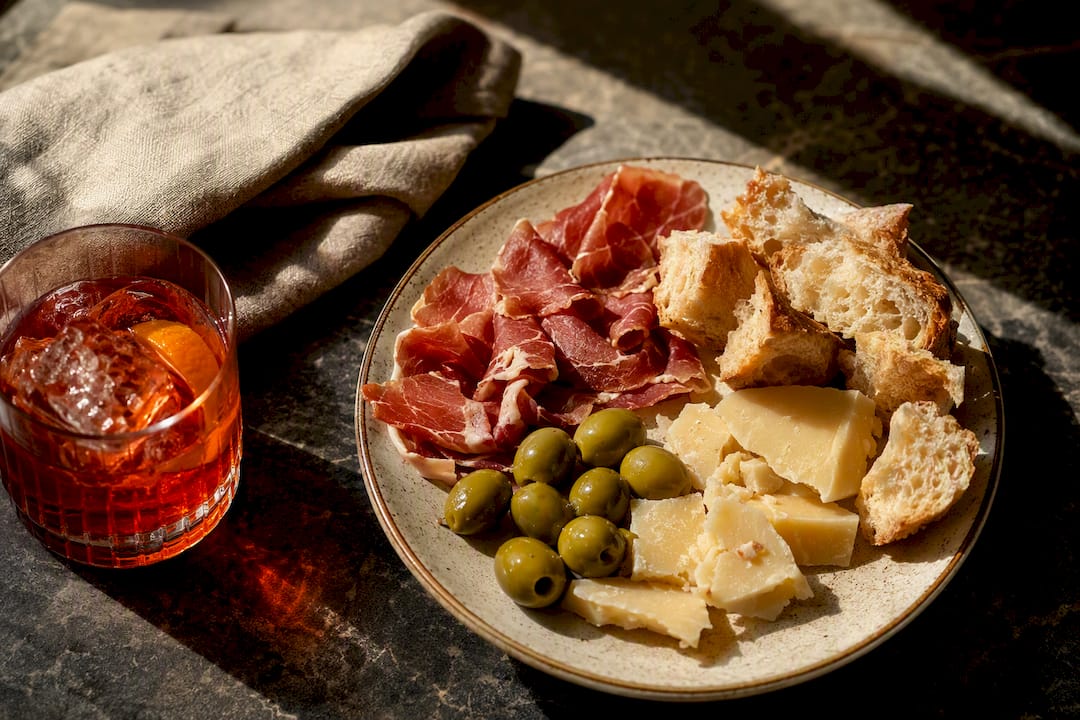
The Negroni's bitterness makes it a genuine aperitivo drink, meaning it's built to open your appetite rather than compete with a heavy meal. Salty, fatty snacks are the classic pairing: cured meats, olives, hard cheese, or a plate of good bread and oil. The bitterness cuts through fat the same way a dry white wine would.
Grilled and charred foods pair especially well with the smokier riffs. A Mezcal Negroni next to something off the grill, steak included, plays up the char without either side overwhelming the other. The Boulevardier's whiskey backbone does similar work alongside richer, slow-cooked dishes.
Lighter builds like the Sbagliato or the Negroni Sour fit better before or alongside lighter fare, seafood, salads, or a shared plate of tapas, where you want the drink's acidity or fizz to keep things moving rather than sitting heavy alongside a main course.
Big Shots Amsterdam: Venue-Tested Tips for Serving Negroni Variations
At Big Shots Amsterdam, the riff on rotation depends on the shift. Aperitivo hours lean on lighter builds like the Sbagliato, dinner service favors the Boulevardier alongside steaks, and late-night pours run heavier on the Mezcal or classic build for guests settling in for the evening. Batching is standard practice behind any busy bar: pre-mixing the spirits without dilution keeps pour times fast without sacrificing consistency across a full night of orders.
Garnish choice gets more attention than most home setups give it. A flamed orange peel over the Mezcal riff, a simple twist on the classic. Small details, but they change how a guest reads the drink before the first sip.
Visit or Order Negroni Variations at Big Shots Amsterdam
Reading recipes is one thing. Getting a properly balanced pour without babysitting a stirring glass is another, and that's the gap Bigshotsamsterdam fills for anyone who'd rather taste a well-made riff than troubleshoot their own ratios. A hospitality venue in Amsterdam combines a sports bar, shisha lounge, restaurant, and café, where a well-built Negroni variation appears alongside steaks, tapas, and a relaxed atmosphere, suitable for a night out or group gatherings.

Check the drinks and food menu to see what's pouring, or browse lounge experiences if you're organizing a group tasting or private booking around a Negroni flight. Can't make it in? The delivery page covers food orders for a night in, and the merch shop has something for anyone who wants to take a piece of the venue home. Book a table or place an order today.
Sources
- The 24 Best Negroni Cocktail Recipes to Make at Home | PUNCH
- 11 Negroni variations that take Italian aperitivo hour around the world | Food & Wine
- Liquor
- 8 NEGRONI VARIATIONS YOU’LL LOVE AS MUCH AS THE ORIGINAL | Beefeater
FAQ
Are there different types of Negronis?
Yes. Beyond the classic equal-parts build, common types include the White Negroni, Negroni Sbagliato, Boulevardier, Mezcal Negroni, Kingston Negroni, and nonalcoholic versions, each swapping one core ingredient while keeping the bitter-sweet structure.
What did Anthony Bourdain say about Negronis?
Bourdain famously called the Negroni an acquired taste that "will kick you in the ass" and described it as tasting like "an alcoholic negative energy field," a backhanded compliment for a drink he still clearly respected.
What mixes well with Negroni?
Salty, fatty snacks like cured meats, olives, and hard cheese pair naturally with a Negroni's bitterness, and smokier riffs like the Mezcal Negroni work well alongside grilled or charred dishes.
What are the flavors of a Negroni?
A classic Negroni tastes bittersweet and herbal, with Campari's medicinal bitterness balanced by sweet vermouth's dried-fruit sweetness and gin's juniper and citrus notes underneath.
Is a Boulevardier the same as a Negroni?
No. A Boulevardier uses bourbon or rye instead of gin, giving it a warmer, spicier profile, while the Negroni's gin base stays crisper and more botanical. The debate over Negroni or Boulevardier usually comes down to whether you want gin's brightness or whiskey's depth.