
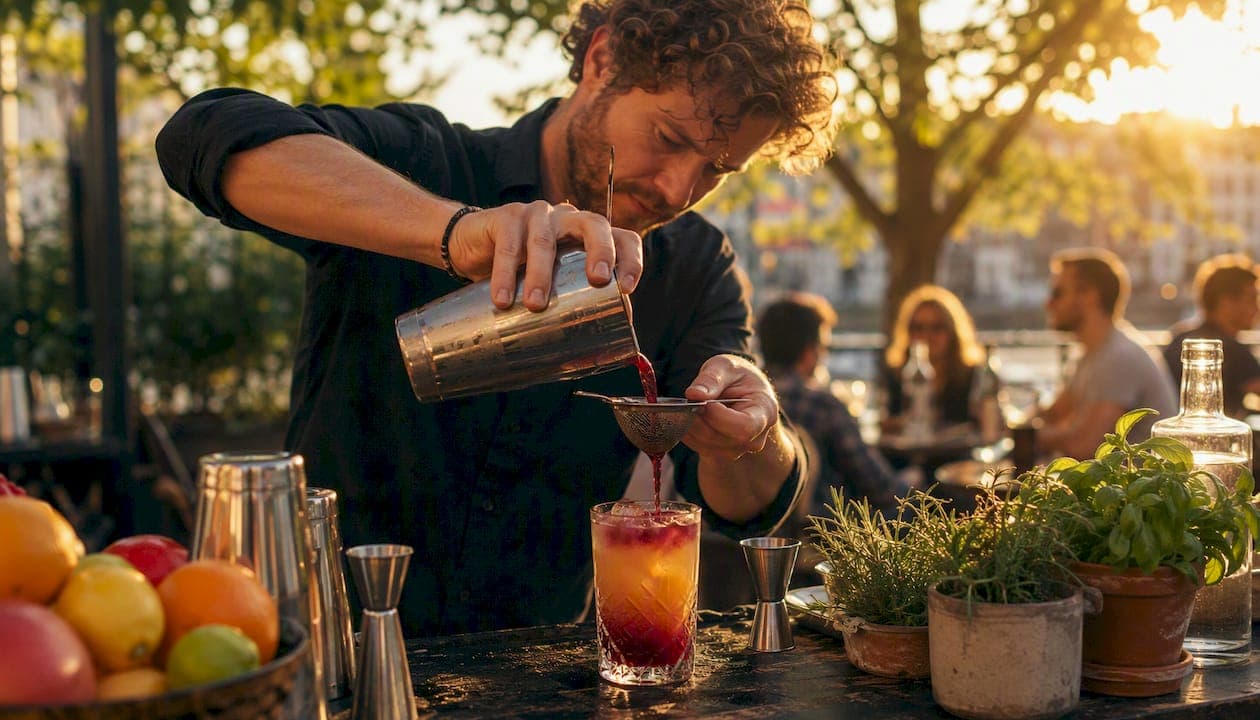
Mixology turns the bar into a site of menu innovation, guest experience design, and measurable operational value. It is not simply a fancier word for bartending. The art and science of cocktail creation covers flavor theory, technique, presentation, and menu engineering together, and when applied deliberately, it changes what a bar earns, how staff perform, and what guests remember.
- Menus become strategic assets, not just drink lists, with contribution margins tracked per serve.
- Staff skill frameworks shift from speed-and-classics to formulation, sourcing, and storytelling.
- Guest perception lifts when a cocktail carries a narrative, a technique, or a visual moment worth sharing.
Key Takeaways
Mixology drives measurable operational and guest-experience outcomes when treated as a strategic function rather than a creative add-on.
| Point | Details |
|---|---|
| Mixology is a strategic role | It covers menu engineering, sourcing, training, and guest storytelling, not just drink-making. |
| Techniques need justification | Adopt modern methods when they improve flavor, stability, or efficiency; skip them when they are novelty only. |
| Consumer demand is documented | Many consumers value memorable experiences and check ingredient provenance, according to Bacardi's 2026 research. |
| Batching reduces variability | Pre-batching with standardized dilution and acid systems improves consistency and cuts waste at scale. |
| Measure contribution margin first | Pour cost percentage alone misses the real profitability signal; track gross profit per serve from day one. |
Table of Contents
- What is the role of mixology in modern bars?
- How the bartender's role evolved into beverage innovation
- What skills does a modern mixologist actually need?
- Which modern techniques actually improve a cocktail program?
- What mixology trends are driving bar innovation right now?
- How does mixology affect menus, margins, and operations?
- How does mixology shape what guests actually experience?
- How are mixologists trained, and what does a career path look like?
- How Bigshotsamsterdam applies mixology across a multi-concept venue
- A step-by-step plan for managers to use mixology strategically
- What most people get wrong about mixology's value
- Sources
What is the role of mixology in modern bars?
Mixology is defined as the combined art and science of cocktail creation, covering flavor balance, technique, presentation, and menu design. That definition matters because it separates mixology from general bartending by function, not just title.
A bartender's primary KPIs are service speed, accuracy, and guest satisfaction during a shift. A mixologist's KPIs extend upstream: menu contribution margin, recipe standardization, ingredient sourcing, and the creation of signature serves that differentiate the venue. Both roles coexist in most bars. The distinction is about where the work happens, not who is more skilled.
In practice, venues use several job titles to describe this spectrum. A barback handles setup and restocking. A bartender executes the menu. A head mixologist or bar manager designs the menu, runs training, and manages supplier relationships. A beverage director sits above that, owning the full drinks program across multiple concepts or locations. Understanding where each role sits in the org chart helps operators hire and train with precision rather than vague expectations.
Mixology also intersects with cocktail types across the full spectrum, from classics to venue-specific originals, giving the mixologist a creative and commercial mandate at the same time.
How the bartender's role evolved into beverage innovation
The shift from classic bartending to modern mixology did not happen overnight. A short timeline shows the forces at work:
- Classic era (pre-1990s): Speed, volume, and a tight canon of recipes. The bartender was a service technician.
- Craft renaissance (2000s–2010s): Small-batch spirits, fresh juice, and a return to pre-Prohibition recipes. Guest expectations for quality rose sharply.
- Scientific and production models (2010s–early 2020s): Culinary crossover arrived. Clarification, fat-washing, sous-vide infusions, and pre-batching entered bar programs. The bar started borrowing from the kitchen.
- Experiential and maximalist moment (mid-2020s–present): Industry reporting in 2026 describes a return to cocktail "maximalism," with theatrical garnishes, layered presentations, and what operators call "controlled theatre" behind the bar. Memorable, repeatable, and shareable.
Three forces drove this evolution. Social media made every serve a potential piece of content, raising the visual bar for every drink. Guest expectations migrated from restaurants into bars, with diners expecting the same creativity in a cocktail as in a tasting menu course. And kitchen-bar crossover gave bartenders access to culinary techniques and ingredients that were previously off-limits. Bars combining restaurant-style culinary creativity with classic cocktail foundations now create venue-specific signature drinks and seasonal menus as a matter of course.
The result is a role that looks less like a service position and more like a creative and operational partnership inside the venue. Amsterdam's mixology scene reflects this shift clearly, with local practitioners combining technical depth and cultural storytelling.
What skills does a modern mixologist actually need?
Sensory and palate development
A mixologist needs a calibrated palate above everything else. That means identifying flavor imbalances, recognizing off-notes in a batch, and adjusting acidity, sweetness, or dilution on the fly. This is not innate talent; it is trained through repeated blind tasting, comparative exercises, and structured sensory labs.
Technical execution
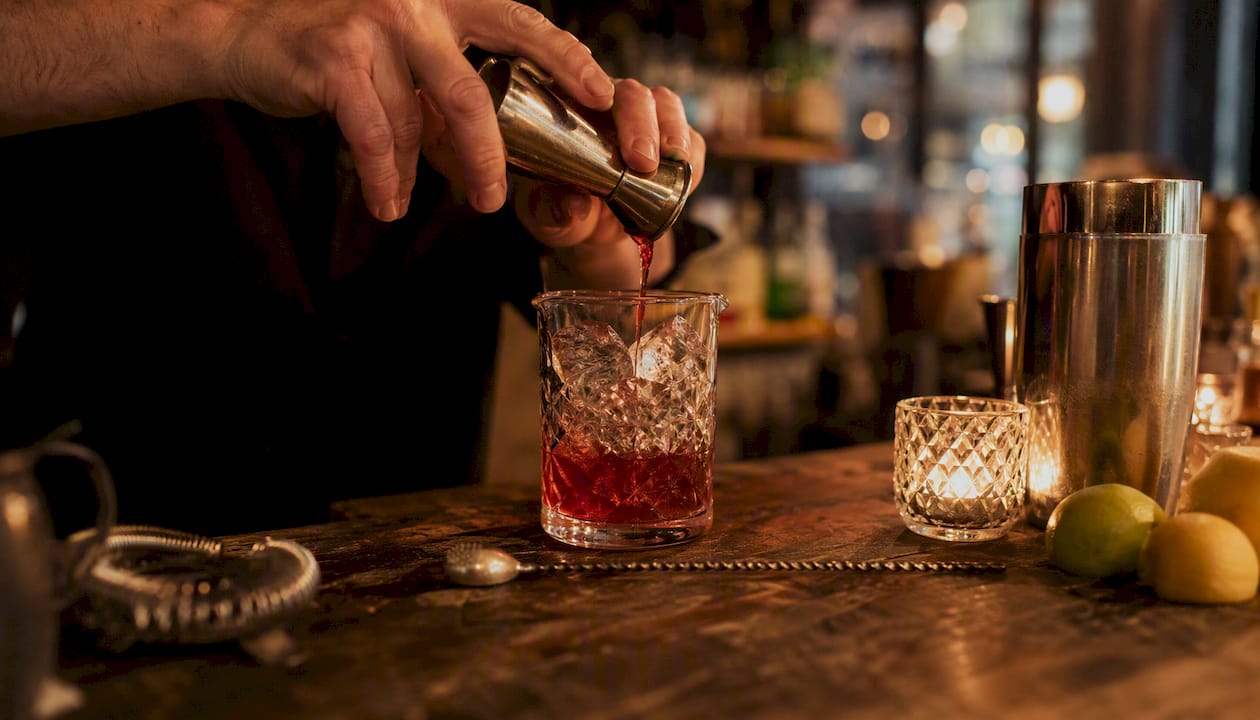
Technique covers both classic and modern methods: proper dilution and chilling, precise measuring, understanding how temperature affects texture, and executing advanced processes like clarification or fat-washing without compromising service speed. The goal is consistency across every pour, not just the first one.
Beverage design and menu engineering
Menu design requires understanding contribution margins, seasonal ingredient availability, and how a drink's visual and flavor profile fits the venue's identity. A mixologist who cannot cost a recipe or explain why a serve belongs on the menu is only doing half the job.
Ingredient sourcing and supplier relationships
Knowing where ingredients come from, how to evaluate quality, and how to negotiate with suppliers directly affects both menu quality and cost control. This skill becomes especially relevant as provenance-driven menus grow in importance.
Guest interaction and storytelling
A cocktail with a story sells itself. Mixologists who can explain a technique, a local ingredient, or a flavor concept in two sentences add perceived value without adding cost. This is a teachable skill, not a personality trait.
Operational and managerial responsibilities
Beyond the bar, a head mixologist typically owns inventory control, recipe standardization documents, and staff training programs. These responsibilities require organizational discipline and the ability to translate creative decisions into repeatable systems.
Pro Tip: During a trial shift, give candidates an unlabeled spirit and three ingredients, then ask them to build and explain a drink. You learn palate, technique, and communication in one exercise, far more than any theoretical interview question reveals.
For those starting out, cocktail skill-building exercises provide a practical foundation before moving into advanced technique.
Which modern techniques actually improve a cocktail program?
Modern mixology borrows heavily from culinary technique, and the tools available to a contemporary bar program are genuinely impressive. The key question is whether a technique solves a real problem or just looks good on a menu.
Tools and their functions:
- Rotary evaporator (rotovap): Distills flavors at low temperature, preserving delicate aromatics that heat would destroy. High capital cost; justified in high-volume cocktail bars with a strong R&D culture.
- Centrifuge: Clarifies juices and stocks without heat, producing crystal-clear liquids with full flavor. Reduces waste from cloudy batches.
- Sous-vide circulator: Infuses spirits with herbs, spices, or fats at controlled temperatures in minutes rather than days. Low cost relative to impact; widely accessible.
- Carbonation rig: Adds controlled effervescence to batched cocktails or house-made sodas. Useful for consistency and speed on carbonated serves.
- Vacuum infuser: Rapid cold infusion using pressure differential. Faster than sous-vide for some applications.
- Clarification agents (agar, gelatin, milk): Produce shelf-stable, visually striking clear cocktails. Extends the life of batched citrus-based drinks.
- Foaming agents (lecithin, xanthan gum): Create stable foams without egg white. Useful for allergen-conscious menus.
When a technique is justified,:
- It solves a flavor, stability, or shelf-life problem that simpler methods cannot.
- It reduces labor cost over time by enabling batching or pre-preparation.
- It can be executed consistently by trained staff, not just the head mixologist.
- It fits the venue's service pace without creating bottlenecks.
When it is novelty only:
- The technique adds visual drama but no measurable flavor improvement.
- It requires specialist equipment that sits idle outside of one signature serve.
- Service time per cocktail increases without a corresponding lift in average spend.
Scientific techniques including molecular mixology, fermentation, and clarification are reshaping cocktail menus globally, but operators who adopt them without an operational plan often find the novelty fades faster than the equipment cost.
Safety and space matter too. Rotovaps and centrifuges require ventilation, training, and maintenance schedules. A bar that introduces them without a clear workflow risks service disruption and staff injury.
What mixology trends are driving bar innovation right now?
The trends shaping mixology and bar culture in 2026 split roughly into two categories: those that require capital investment and those that are largely philosophy and sourcing shifts.
Current high-impact trends:
- Localogy and provenance: Menus built around local and regional ingredients, with producers named on the menu. Guests increasingly check where ingredients come from.
- Sustainability: Zero-waste programs, spent-citrus syrups, fermented byproducts, and reusable garnish systems. Reduces cost and signals values alignment.
- Low- and no-ABV innovation: Sophisticated non-alcoholic cocktails using distillates, shrubs, and fermented bases. Amsterdam's mocktail scene reflects this shift with growing menu depth.
- Theatrical presentation and maximalism: Smoke, edible garnishes, tableside elements, and multi-sensory serves. The Spirits Business reports that "controlled theatre" is the operative concept: elaborate but repeatable.
- Lab-inspired techniques and batch stability: Pre-batching with standardized dilution and acid systems for consistency at scale.
- Experiential and cultural branding: Cocktails tied to a venue's identity, neighborhood, or a specific cultural reference. Storytelling as a menu strategy.
The 2026 Bacardi cocktail trends report puts consumer numbers behind these shifts.
| Trend | Consumer Signal | Capital Requirement |
|---|---|---|
| Provenance / local sourcing | Many consumers check ingredient origin | Low (sourcing and menu copy) |
| Memorable experiences | Many consumers value heightened, memorable experiences | Medium (training, presentation) |
| Low/no-ABV options | Growing menu category across all venue types | Low to medium |
| Theatrical presentation | Social media amplification drives adoption | Medium (props, training) |
| Lab techniques (clarification, batching) | Operational efficiency and consistency gains | Medium to high |
Gastronomy trends running parallel to these shifts, including local sourcing and sensory design, reinforce the case for operators who want to align their bar and kitchen programs.
How does mixology affect menus, margins, and operations?
Mixology choices have direct financial consequences. The KPIs that matter most:
- Menu contribution margin per cocktail: Not just pour cost percentage, but the actual gross profit per serve after all ingredient costs.
- Pour cost percentage: Target varies by venue type, but most cocktail programs aim for 18–25%.
- Service time per cocktail: A theatrical serve that takes four minutes on a busy Friday night costs more than its ingredients suggest.
- Waste rate: Clarified juices, acid-adjusted solutions, and pre-batched cocktails all extend shelf life and reduce spoilage.
- Average check lift: A well-designed cocktail menu with clear upsell tiers raises average spend without requiring more covers.
- Repeat purchase rate: Signature serves that guests return for specifically are a loyalty metric worth tracking.
Practical checklist for menu cost control:
- Cost every recipe before it goes on the menu, including garnish and glassware amortization.
- Set a maximum pour cost threshold per tier (house cocktails vs. premium signatures).
- Review ingredient costs quarterly; seasonal substitutions protect margins without changing the menu concept.
- Batch high-volume serves to reduce per-unit labor cost and improve consistency.
- Audit waste weekly during the first month of a new menu.
Modern bars moving toward laboratory models pre-batch, standardize dilution, and use acid systems to reduce service variability. This approach moves quality decisions upstream, into preparation rather than execution, which means a less experienced bartender can deliver a consistent product on a busy night. The tradeoff is upfront time investment in recipe development and staff training.
Fresh juice sourcing and stabilization is one of the clearest operational decisions a bar faces: fresh juice signals quality but adds waste and labor, while stabilized or clarified alternatives extend shelf life at some flavor cost.
How does mixology shape what guests actually experience?
A cocktail is not just a drink. It is the first thing a guest interacts with at the bar, a conversation starter, a social media post, and a memory anchor. Beverage design used intentionally can shape the guest journey at every stage of a visit.
A simple guest journey map:
- Arrival: A welcome drink or signature house cocktail sets the tone. Low-effort, high-impact first impression.
- Table interaction: The server's ability to describe two or three cocktails with a brief story drives upsell and perceived expertise.
- Communal moments: Shareable serves, punch bowls, or tableside preparations create group engagement and social content.
- Late-night: Shorter, spirit-forward serves or digestif-style cocktails match the energy shift and reduce service complexity.
Two serve scenarios:
Low-key culinary cocktail: A clarified gin and tonic with house-made elderflower cordial and a single fresh herb sprig. Clean, elegant, and fast to execute. Pros: high margin, repeatable, suits a wide audience. Cons: less shareable, relies on flavor to justify the price.
High-drama maximalist serve: A smoked negroni delivered under a glass cloche, with a branded coaster and a 30-second tableside reveal. Pros: strong social media moment, justifies a premium price point, creates a memory. Cons: requires training, adds service time, and can feel gimmicky if the drink itself does not deliver.
The guest experience design framework that hospitality professionals use applies directly here: every touchpoint either adds or subtracts from the guest's overall perception of value. Presentation, narrative, and tactile elements, including glassware weight, garnish texture, and the sound of a tableside pour, all contribute to perceived value and influence tipping and return visits.
Bar design and physical space also shapes how mixology lands with guests. A visible prep area, well-lit back bar, and open service counter all amplify the theatre of cocktail making.
How are mixologists trained, and what does a career path look like?
Most working mixologists follow a recognizable progression. A barback learns the physical environment, stock systems, and basic prep. A bartender builds speed, accuracy, and guest interaction skills. A head mixologist or beverage director adds menu design, supplier management, and training leadership. The jump from bartender to head mixologist is where most venues lose people, because the skills required change fundamentally from execution to creation and management.
Hiring checklist for mixology-focused roles:
- Trial shift with a blind tasting component (identify spirit, describe flavor profile).
- Build a drink from a short list of provided ingredients with no recipe.
- Explain a technique or ingredient to a hypothetical guest in plain language.
- Demonstrate batching or pre-preparation of a high-volume serve.
- Show familiarity with recipe costing and pour cost calculation.
Recommended training activities and cadence:
- Sensory labs (monthly): Blind tasting of spirits, syrups, and bitters. Builds palate and vocabulary.
- Recipe standardization sessions (quarterly): Review and update standard recipes; document changes and rationale.
- Menu development workshops (seasonally): Cross-functional sessions with kitchen and front-of-house to align flavor profiles and service narratives.
- Guest interaction drills (ongoing): Role-play scenarios where bartenders practice describing cocktails and handling objections.
Food's role in hospitality and beverage programming are increasingly intertwined, and training programs that bring kitchen and bar staff together produce menus with stronger internal coherence.
How Bigshotsamsterdam applies mixology across a multi-concept venue
Bigshotsamsterdam operates across four distinct concepts in Amsterdam: a sports bar, a shisha lounge, a restaurant, and a café. Each concept has a different guest profile, service pace, and occasion type. That makes mixology not a single program but a layered one, where the same underlying skill set produces different outputs depending on the room.
In the sports bar, the priority is speed and shareability. Batched cocktails, sports bar-friendly serves, and visually bold presentations that work in a high-energy environment with ambient noise and divided attention. A signature house punch or a branded bucket serve fits this context far better than a delicate clarified cocktail.
In the shisha lounge, the pace slows and the pairing opportunity opens up. Cocktails paired with shisha require flavor consideration: lighter, citrus-forward serves complement floral tobacco blends, while spirit-forward cocktails can compete with heavier smoke profiles. This is where provenance storytelling and low-ABV options add real value, because guests are settled and receptive.
The restaurant and café concepts allow for the most menu-driven approach. Seasonal cocktails aligned with the food menu, culinary technique crossover, and a clear upsell structure from house to premium signatures.
Practical takeaways for multi-concept operators:
- Design a core recipe library that scales across concepts, then layer concept-specific signatures on top.
- Use batching for high-volume concepts (sports bar) and reserve made-to-order complexity for slower-paced ones (restaurant, lounge).
- Align cocktail menu launches with food menu changes to keep both teams in sync.
- Train all staff on the story behind two or three signature serves, not just how to make them.
The bar-restaurant hybrid model that Bigshotsamsterdam operates within is one of the most demanding environments for a mixology program, precisely because it requires the program to flex across service styles without losing coherence.
A step-by-step plan for managers to use mixology strategically
Step 1: Pilot
- Select two to three signature cocktails that represent the venue's identity and cover different price tiers.
- Cost each recipe fully, including garnish and glassware.
- Train the full bar team on execution and the story behind each serve.
- Run the pilot for four to six weeks on a defined section of the menu.
Hiring questions for this stage:
- "Walk me through how you would cost a new cocktail recipe."
- "Describe a time you adapted a serve for a high-volume service without losing quality."
- "What is one technique you have used that genuinely improved a drink's flavor, and why?"
Step 2: Measure
- Track contribution margin per cocktail weekly.
- Log service time per serve during peak hours.
- Monitor waste rate on perishable ingredients.
- Collect guest feedback on the specific serves, not just general satisfaction.
- Set a minimum sample size of 200 covers before drawing conclusions.
Step 3: Scale
- Promote the highest-margin, highest-satisfaction serves to permanent menu status.
- Build a batching or pre-prep protocol for any serve that passed the pilot.
- Use pilot learnings to brief the next round of menu development.
- Introduce one new technique or trend per quarter rather than overhauling the menu at once.
Menu selection guidance helps operators structure this process around guest occasions rather than just ingredient availability.
What most people get wrong about mixology's value
The debate in hospitality circles tends to land in one of two places: mixology is either treated as a luxury add-on for high-end venues, or it is reduced to a marketing exercise built around Instagram-worthy garnishes. Both framings miss the point.
The real value of a strong mixology program is not the smoke cloche or the clarified cocktail. It is the upstream thinking that produces those serves: the costed recipe, the standardized batch, and the trained team member who can explain the drink in a sentence. Venues that invest in mixology as a system, rather than as a collection of showpieces, tend to see the returns show up in average check, repeat visits, and staff retention, not just in social media impressions.
There is also a tendency to treat low- and no-ABV options as a concession to a niche audience. The Bacardi data suggests otherwise. When nearly three-quarters of consumers are actively checking ingredient provenance, the audience for thoughtful, ingredient-led non-alcoholic serves is not niche at all. It is a mainstream expectation that most bar programs are still catching up to.
The operators who get this right share one habit: they treat the bar program with the same analytical rigor they apply to the kitchen. Menu engineering, waste tracking, staff development, and guest feedback loops. The cocktail is the product. Mixology is the production system.
Sources
- Theatre, hospitality and social media: The new cocktail maximalism - The Spirits Business
- Chapter 22 Modern Mixology and Liquid Intelligence – Dining Room & Beverage Management for Culinary Students
- Introduction to Mixology: The Art and Science of Cocktail Creation | Elixiary Education
- Connections: Local flavors and luxurious experiences top the 2026 Bacardi cocktail trends report
- 2026 bar and cocktail trends - Distiller Magazine