
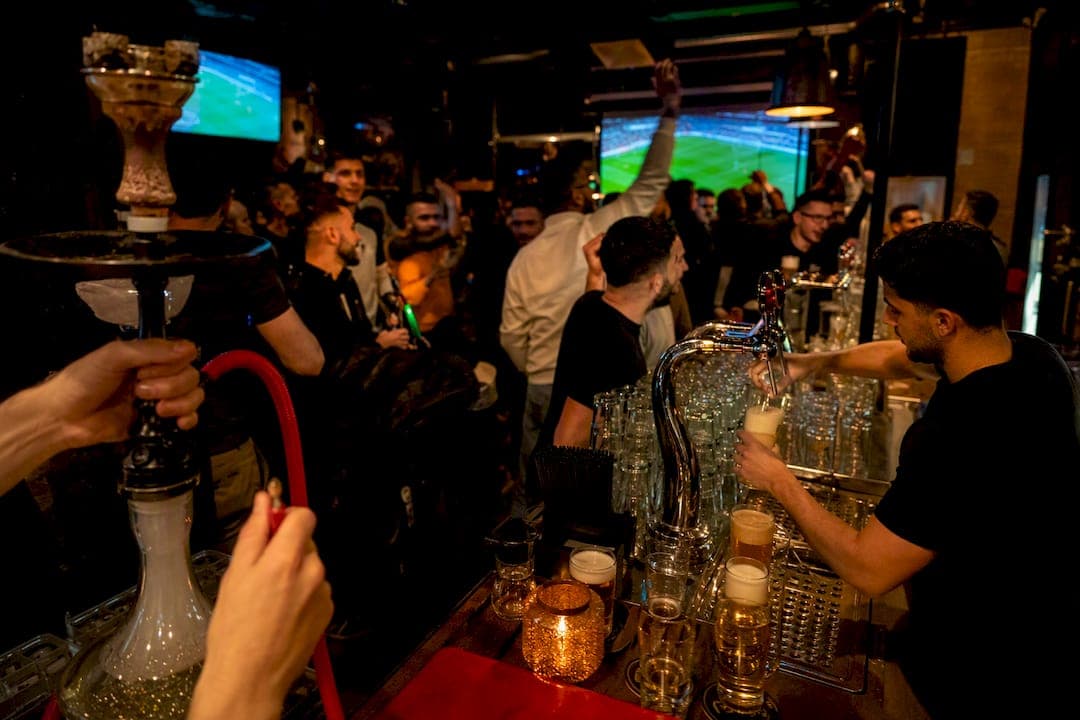
The Premier League turns 90 minutes of football into a predictable, high-value social event, and that single fact reshapes how pubs and bars program, staff, and market entire seasons. Fixtures drive mass broadcast reach, sponsorship money, and fan rituals that keep tills ringing long after the final whistle.
The main mechanisms behind the role of Premier League in bar culture break down into a handful of levers venues pull every matchday:
- Mass broadcast reach that pulls casual viewers out of the house and into a shared room
- Sponsorship and branding that link specific drinks and products to the match experience
- Fan rituals, from pre-match meetups to post-match debriefs, that repeat weekly
- "Matchday theatre," the deliberate staging of screens, sound, and staff to make a fixture feel like an event
- Measurable footfall and spending increases tied directly to fixture scheduling
Seven in ten pubgoers say increased access to live Premier League football has made them visit pubs more often, and 81% of sports viewers say they spend more in a pub or bar when live sport is showing.
That single data point, drawn from industry reporting on pub visits, explains why so many venues now build entire weekly schedules around the fixture list rather than around a food menu.
Key Takeaways
The Premier League functions as a recurring commercial and social engine for pubs and bars, driving footfall, sponsorship revenue, and fan rituals that extend well beyond the 90 minutes of play.
| Point | Details |
|---|---|
| Broadcast reach drives visits | Seven in ten pubgoers report visiting pubs more often because of increased access to live Premier League football. |
| Matchday spending is substantial | Premier League and Women's Super League matchdays generate an estimated £2.3 billion in local economic spending per season. |
| Rituals matter more than screens | Fans treat pubs as an emotional third space for shared highs and lows, not just a place with a television. |
| Sponsorship shapes matchday marketing | Historical alcohol sponsorships, like Carling's, and modern betting and energy-drink tie-ins broaden the commercial ecosystem around every fixture. |
| Loyalty extends past the season | Year-round economic benefits depend on venues building genuine social habits, not just fixture-driven foot traffic. |
Table of Contents
- The Role of Premier League in Bar Culture Has Deep Roots
- Players, Alcohol, and the Image Management Era
- Why Fans Treat the Pub as Part of the Match
- Sponsorship, Marketing, and the Alcohol Connection
- The Premier League and Matchday Theatre for Bar Operators
- Public Health Concerns Around Football and Drinking
- What Comes Next for Football and Bar Culture
- Regional Differences in How Fans Watch Football
- Beyond Matchdays: The Year-Round Economic Effect
- How Social Media Extends the Pub Experience
- A Local Take on Football Nights and Community
- Frequently Asked Questions
- Sources
The Role of Premier League in Bar Culture Has Deep Roots
Football and drinking didn't start together in 1992, but the modern version of that relationship did. Before the Premier League existed, most fans watched matches on the terraces or caught highlights on a Saturday night program, and pubs were a place to discuss the match afterward rather than watch it live. Satellite broadcasting changed that almost overnight.
When the Premier League launched in 1992, it bundled itself with a broadcast deal that made live football a weekly television event for the first time at scale. Pubs with satellite dishes suddenly had a reason to open early and stay busy through the afternoon. Sponsorship followed the same trajectory. Carling's association with English football in the 1990s and 2000s helped cement the idea that beer brands and football were natural partners, a pattering documented in historical accounts of alcohol sponsorship in the sport.
Player culture shifted alongside the business model. The heavy-drinking dressing rooms of the 1980s and early 1990s gave way, gradually, to a sports-science approach that treats alcohol as a performance liability rather than a team-bonding ritual. That professionalization didn't kill drinking culture around the game. It just moved the drinking from the players to the stands and the pub.
What hasn't changed is the basic appeal: football gives people a reason to leave the house on a weekday afternoon or a Sunday morning, gather somewhere loud, and watch something together. The technology and the sponsors changed. The pull toward a shared room full of strangers who care about the same 90 minutes did not.
Players, Alcohol, and the Image Management Era
Premier League players used to drink in public, sometimes heavily, and the tabloids covered it as freely as they covered goals. Stories about late-night drinking sessions before big matches were common currency in the 1980s and 1990s. That era is largely gone. Modern clubs run nutrition programs, sleep tracking, and strict off-field conduct clauses that make a headline-grabbing bar crawl a career risk rather than a rite of passage.
A few things stand out about how that shift plays out today:
- Clubs now treat alcohol-related incidents as reputational and disciplinary matters, not just tabloid fodder.
- Player social media moments, whether a celebration clip or a night-out photo, still drive pub conversation even when the player himself is barely drinking.
- Fitness culture among players has arguably widened the gap between what players do and what fans do when watching them.
Academic research on supporter behavior finds that alcohol consumption around football functions as a form of social capital among fans, a routinized practice that has stayed remarkably stable even as player behavior professionalized. The players got healthier. The pub culture around watching them didn't change nearly as much.
That gap matters for venues. Fans aren't looking to the pitch for permission to drink. They're looking for a room, a screen, and people who feel the same way they do about the next 90 minutes.
Why Fans Treat the Pub as Part of the Match
Ask a regular why they watch at a pub instead of at home, and the answer rarely mentions the drinks first. It's about noise, company, and the specific misery or joy of watching alongside people who feel exactly what you feel at exactly the same moment. Wolves manager Vitor Pereira put it plainly when explaining why he heads to a local pub after matches to sit with supporters rather than celebrate privately: first the points, then the pints.
That instinct describes what researchers and journalists sometimes call an emotional third space, somewhere that isn't home and isn't the stadium but carries the emotional weight of both. Fans build entire routines around it:
- A set meetup time before kickoff, often with the same group of friends every week
- Chanting and singing that mirrors stadium behavior, sometimes louder in a packed pub than in a half-empty away end
- Post-match rituals, whether that's a celebratory round or a shared, silent pint after a loss
- Fantasy league check-ins and side conversations about betting or transfer news that keep the room engaged even during a dull match
- Loyalty to a specific pub tied to a specific team, sometimes passed down within families or friend groups
Pro Tip: If you run a venue, don't just show the match. Build the 20 minutes before and after kickoff into the experience. A pre-match playlist, a staff member who knows the lineups, or a simple "predict the scoreline" board on the bar keeps people in their seats longer and turns a single fixture into a full social occasion.
Venues that understand this stop thinking of matchdays as background television and start treating them as programmed events. That's a meaningful difference in how you staff, how you plan food service, and how you design the room itself, something we'll get into with actual layout guidance in sports bar seating design.
Sponsorship, Marketing, and the Alcohol Connection
Alcohol brands didn't stumble into football sponsorship. They built entire campaigns around the assumption that a pint and a match go together, and for decades the Premier League gave them a stage to do it. Stadium signage, official beer partnerships, broadcast sponsorship slots, and point-of-sale materials inside pubs all connect a specific brand to the act of watching football, whether the fan notices the connection consciously or not.
Carling's long association with English football in the 1990s and 2000s remains one of the clearest historical examples of how a beer brand can become culturally fused with the sport itself. Even now, decades later, matchday features on manager routines still reference a curry, a Carling, and a table in front of the TV as shorthand for a certain kind of English football ritual.
The pub isn't just a viewing location. It's part of the marketing infrastructure that turns a match into a branded, drinkable event.
The commercial ecosystem has widened well past beer. Betting sponsorships now sit alongside alcohol branding on shirts and boards, and energy drink partnerships have crept into the same promotional space once dominated by lager brands. That broadening matters for bars because it means matchday marketing isn't just about the beer taps anymore. It touches:
- In-venue POS material tied to official partners or seasonal promotions
- Broadcast sponsorship segments that air during halftime and full-time analysis
- Co-branded promotions timed to specific fixtures, like derby weekends or title run-ins
- Betting-adjacent activations that draw a different kind of engagement than a straightforward drink promotion
For an independent venue, none of this requires an official partnership to matter. It just means customers arrive already primed by weeks of advertising to associate football with a drink in hand.
The Premier League and Matchday Theatre for Bar Operators
Screens alone don't build a matchday crowd. What separates a genuinely busy sports bar from one that's simply got the game on is what the industry calls matchday theatre: high-impact signage, football-led aesthetics, coordinated staffing, and event-style programming that make a fixture feel like something worth showing up for early. Trade reporting on pub revenue drivers consistently links this kind of staged experience to stronger footfall and longer dwell time compared with venues that treat football as passive background noise.
Bigshotsamsterdam applies that same logic across its Amsterdam locations, where sports bar, shisha lounge, and restaurant functions overlap on matchdays. Big kickoff weekends mean earlier doors, a food menu built for grazing through a full 90 minutes rather than a sit-down meal, and seating arranged so every table has a sightline to a screen. The goal isn't just to show the match. It's to give fans a reason to arrive an hour early and stay an hour after full-time, whether that means a pre-match breakfast crowd or a shisha table that keeps groups lingering well past the final whistle.
Success on a matchday isn't measured only in ticketed sales. It's measured in how long people stay and whether they come back next weekend.
Pro Tip: Stagger your staffing around halftime rather than kickoff. That 15-minute window is when drink and food orders spike hardest, and understaffing it loses more revenue than being light during the match itself.
One operational caution worth flagging: busier matchdays mean tighter obligations around responsible service and crowd management, particularly for high-stakes derbies or title-deciding fixtures where emotions and drink orders both run high. Good venues plan for that in advance rather than reacting to it in the moment, a topic covered in more detail in why sports bars open early for matches.
Public Health Concerns Around Football and Drinking
Football's relationship with alcohol isn't without real tension. Antisocial behavior around high-stakes matches, drink-driving after long afternoon sessions, and underage access at family-oriented sports bars are recurring concerns raised by public health researchers and licensing authorities alike.
The research picture is more nuanced than tabloid headlines suggest. Academic work on supporter culture finds that alcohol consumption around football functions as routinized social behavior tied to identity and community rather than football uniquely driving heavier drinking than any other major social occasion. That distinction matters for regulators trying to craft proportionate policy rather than blanket restrictions.
Several regulatory levers already shape how this plays out in practice:
- Stadium alcohol restrictions that limit sales to specific windows before and after matches
- Advertising rules that increasingly scrutinize gambling and alcohol sponsorship visible to younger audiences
- Local licensing enforcement that holds venues accountable for over-service, particularly during high-attendance fixtures
- Age verification requirements that apply the same in a football-themed sports bar as in any other licensed venue
Venues can manage this risk without sacrificing the commercial upside of matchday crowds. Clear last-orders policies tied to full-time, visible ID checks at the door, and staff trained to spot over-service are standard practice at well-run sports bars, and they coexist perfectly well with a packed, loud room on derby day. The two goals aren't in tension nearly as often as regulatory debates suggest.
What Comes Next for Football and Bar Culture
Streaming has already started reshaping how fans watch, and pubs are adapting rather than losing relevance. Late kickoff times tied to global broadcast windows have pushed some venues toward hybrid formats that blend a football screening with DJ sets and extended licenses once the final whistle blows, a trend already visible in UK venues experimenting with club-style football nights.
Drink menus are shifting too. No- and low-alcohol options have grown steadily on matchdays, giving venues a way to serve fans who want the atmosphere without the drinking, while stout and traditional lager lines still see seasonal spikes tied to football fixtures.
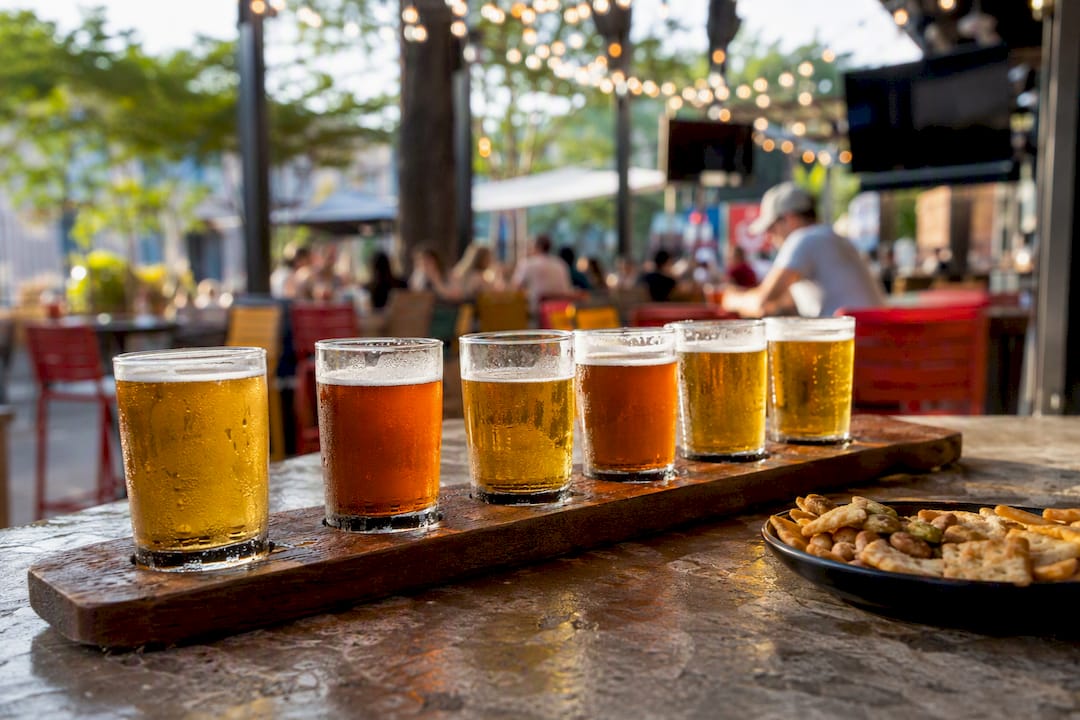
Pro Tip: Don't assume your regulars want the same drink range year-round. Track which nights the no-alcohol taps actually move and adjust your order guide instead of guessing.
Digital fan communities, fantasy leagues, and social media chatter increasingly determine which fixtures pull a crowd on a random Tuesday night. Not every market responds identically. What draws a full house in one city might barely register in another, so testing local demand before overhauling a drink range or screening schedule beats copying a trend wholesale.
Regional Differences in How Fans Watch Football
Bar culture around the Premier League doesn't look the same everywhere, even within a single country. Northern English cities with strong local club identities tend to build pub culture around a specific team's fixtures, with pubs openly branded in club colors and match schedules dictating weekend footfall almost entirely. London's more transient, multi-club population produces a different pattern, with venues often programming multiple simultaneous fixtures across different screens to capture fans of competing clubs under one roof.
Internationally, the picture shifts again. In cities without a strong local football tradition, Premier League matches function less as tribal loyalty and more as a broadly appealing social occasion, something to gather around regardless of which team a person actually supports. Amsterdam fits this pattern well: a mixed crowd of expats, tourists, and locals who follow English football without necessarily having grown up fifteen minutes from a stadium. That changes what a venue needs to offer. Multiple screens showing different fixtures, flexible seating that doesn't assume one dominant fan base, and staff who can explain kickoff times across time zones all matter more in an international city than in a single-club English town.
The common thread across every region is timing. Wherever the venue sits, footfall tracks the fixture list almost exactly, and the pubs that thrive are the ones that treat that schedule as the backbone of their weekly planning rather than an afterthought.
Beyond Matchdays: The Year-Round Economic Effect
The financial impact of the Premier League on bars doesn't switch off between fixtures. Barclays analysis estimates that Premier League and Women's Super League matchdays generate roughly £2.3 billion in spending for local economies each season, concentrated heavily in pubs, cafés, and restaurants near kickoff time. That figure alone tells you football is a genuine line item in hospitality revenue planning, not a nice bonus on top of a normal week.
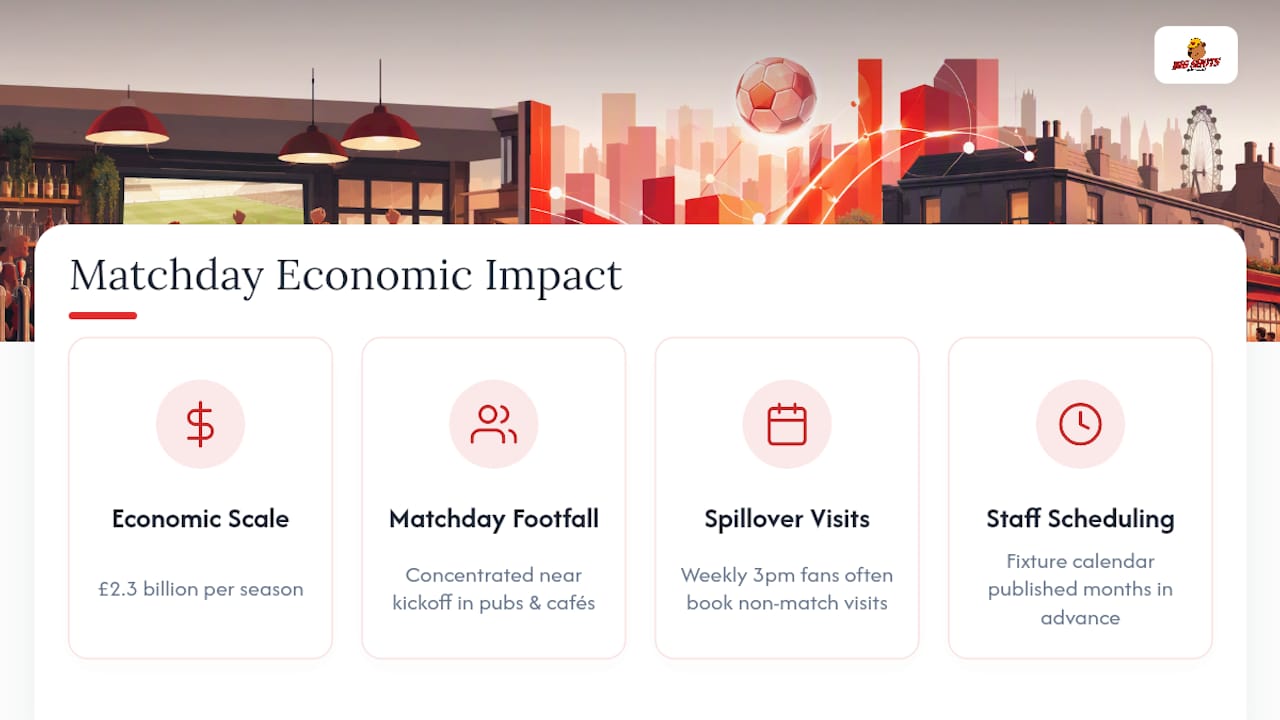
The knock-on effects extend well past matchdays themselves. Fixture-driven footfall builds repeat customer relationships that carry into non-matchday visits, since a fan who comes in weekly for the 3pm kickoff is also a candidate for a Tuesday dinner booking or a Friday night out. Staff scheduling built around a predictable fixture calendar also gives venues a planning advantage that few other recurring events can match, since the football calendar is published months in advance and rarely shifts.
Off-season periods present a real test of that loyalty. Venues that only show up for football lose the community relationships built over a full season the moment the fixture list goes quiet in the summer. The ones that hold onto customers year-round tend to be the ones that built genuine social habits, not just viewing habits, during the season, something covered further in the real reasons fans gather for match nights.
How Social Media Extends the Pub Experience
Online fan communities and in-person pub culture feed each other constantly now. A pre-match thread on social media about lineups or team news often turns directly into a conversation starter at the bar an hour later. Fixture previews and betting content, including coverage like match preview analysis from BetsyScore, circulate widely before kickoff and shape which fixtures fans decide are worth leaving the house for.
Live commentary on social platforms during a match has, if anything, made in-person viewing more appealing rather than less. Watching alone while scrolling a timeline full of reactions from other fans is a poor substitute for being in a room where everyone reacts to the same moment at the same time. Venues that lean into this, by posting live updates from their own bar, running prediction contests tied to a hashtag, or simply making sure Wi-Fi is strong enough for fans to check fantasy league scores at halftime, turn a passive digital audience into a walking customer base.
Post-match, the cycle continues. Photos and clips from a packed pub during a big win circulate back online, which builds exactly the kind of visible community proof that draws new customers in for the next fixture.
A Local Take on Football Nights and Community
Watching a big match in a full room hits differently than watching it alone, and that's not a marketing line, it's just what happens when forty people react to the same goal at the same second. Running venues through Premier League seasons makes clear how much of the atmosphere comes from repeat faces rather than one-off crowds. Regulars build friendships around a fixture list, and that community value outlasts any single result.
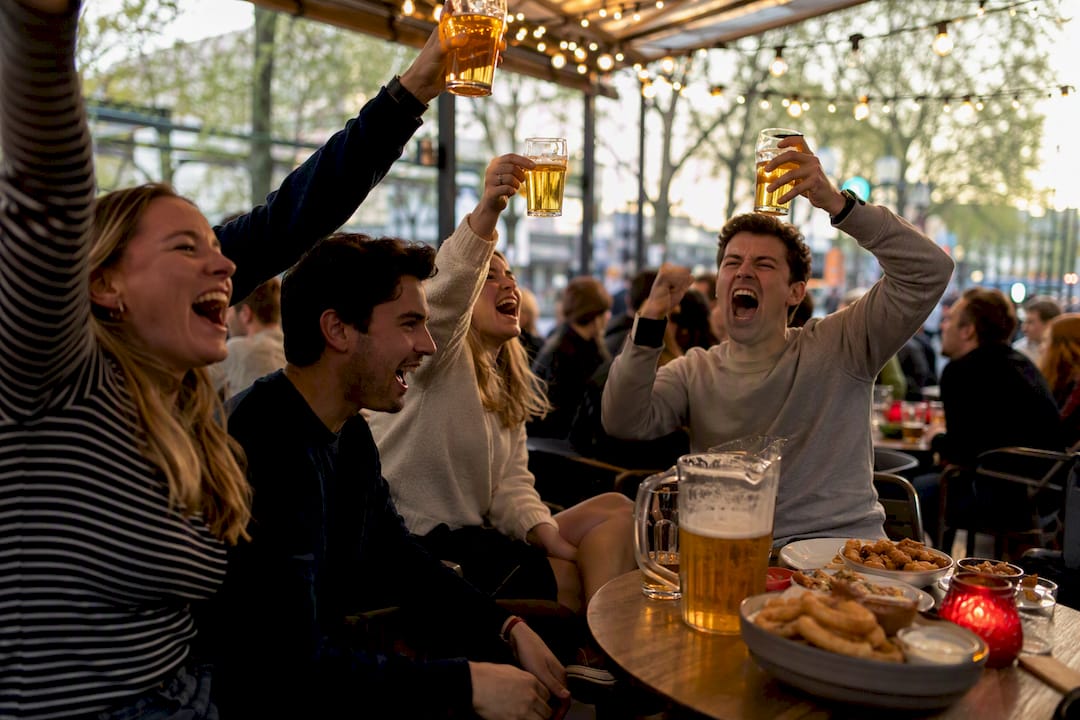
None of that works without taking service seriously. A full house during a derby still needs clear last-orders timing, attentive staff, and a room that stays welcoming even when a result goes badly. The shared experience is the real product on a matchday. The drink in hand is just part of how people mark the occasion together.
Frequently Asked Questions
What is the role of Premier League in bar culture today? The Premier League functions as a weekly, predictable driver of pub footfall and spending, turning televised fixtures into programmed social events that shape how venues staff, market, and design their spaces around matchdays.
Why do fans prefer watching Premier League matches in pubs over at home? Pubs offer shared emotional experience, noise, and community that a living room can't replicate, functioning as what researchers describe as an emotional third space between home and stadium.
How has alcohol sponsorship in the Premier League changed over time? Beer brands like Carling had prominent historical ties to English football in the 1990s and 2000s, and while direct beer sponsorship has evolved, betting and energy-drink partnerships now occupy much of that same promotional space.
Do Premier League matchdays actually boost bar revenue? Yes. Industry data links live fixtures to measurably higher pub visits and spending, and seasonal estimates put matchday economic impact for pubs and local economies in the billions of pounds.
How can a bar or sports venue benefit from Premier League programming beyond just showing the match? Venues that build matchday theatre, with strong AV, staggered staffing around halftime, tailored food and drink offers, and rituals like prediction boards, see longer dwell time and stronger repeat visits than venues that simply put the game on a screen.
Sources
- football-matchdays-generate-23bn-boost-for-pubs-and-local-economies
- Alcohol consumption among UK football supporters: Investigating the contested field of the football carnivalesque