
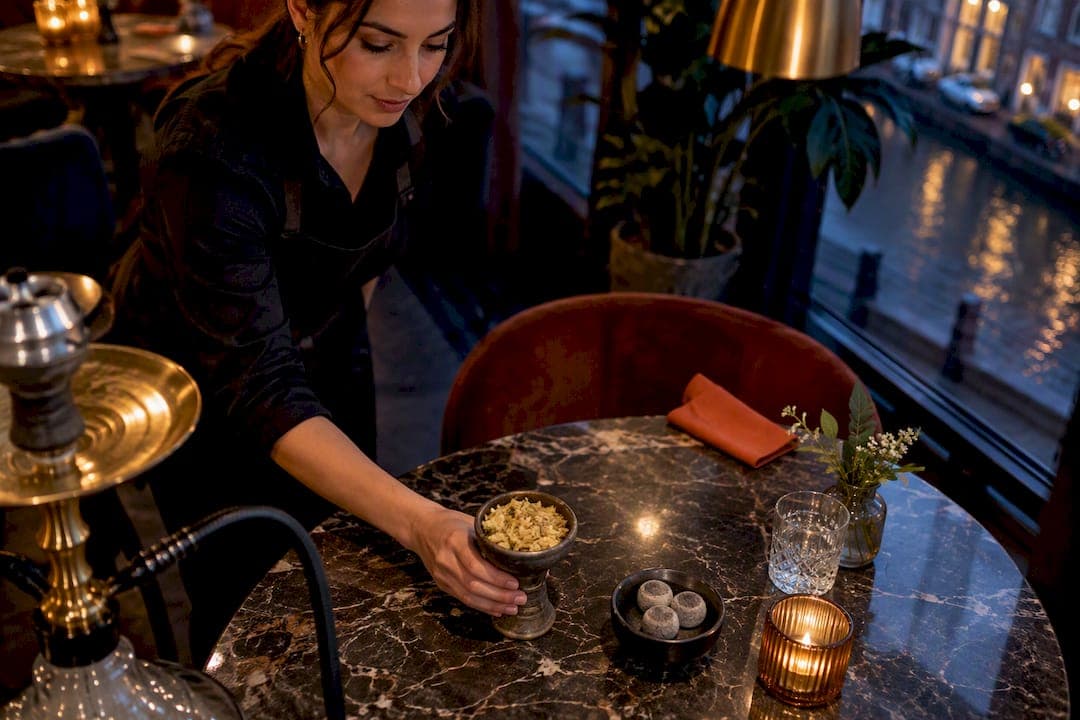
Yes: tobacco-free shisha (herbal mixes, steam stones) currently falls outside the Netherlands' indoor smoking ban and may be smoked inside Dutch horeca venues. That doesn't mean anything goes. Sellers must respect the 18+ age limit, follow packaging and labeling rules, and secure the right municipal permits before opening a lounge. Ondernemersplein and RIVM are the two sources worth trusting on this.
TL;DR:
- Herbal shisha and steam stones are legal to smoke indoors in Dutch horeca venues, but only if they contain no tobacco and proper permits are secured.
- Charcoal combustion, not the herbal mix, produces most toxins, meaning smoke from tobacco-free shisha is still harmful and not a health-safe alternative.
- Municipal zoning and permit rules vary, so owners must verify local approval and install suitable ventilation to meet safety standards.
- Enforcement checks focus on ingredient labeling, tobacco content verification, age verification, and ventilation performance, making documentation crucial.
- Marketing herbal shisha as harmless or tobacco-free can be misleading, as the smoke still contains harmful substances produced mainly by charcoal.
Table of Contents
- Which Laws Govern Shisha Without Tobacco in the Netherlands?
- Is Tobacco-Free Shisha Actually Safe to Smoke?
- What Do Horeca Owners Need to Set Up a Compliant Shisha Lounge?
- Age Limits, Labeling, and Advertising Rules for Herbal Shisha
- How Inspectors Check Shisha Lounges for Compliance
- How Big Shots Amsterdam Runs Herbal Shisha Sessions
- A Compliance-First Take on the Herbal Shisha Boom
- Book a Compliant Herbal Shisha Session in Amsterdam
- Sources
- FAQ
Which Laws Govern Shisha Without Tobacco in the Netherlands?
The Tabaks- en rookwarenwet bans smoking tobacco indoors in cafés, restaurants, and bars. As written today, that law targets tobacco specifically. Waterpipe mixtures without tobacco, meaning herbal shisha and steam stones, sit outside its reach, which is why herbal shisha lounges can legally serve customers indoors while a cigarette smoker gets sent outside.
Ondernemersplein, the Dutch government's business portal, spells this distinction out for entrepreneurs directly. Its guidance, mirrored on Business, walks through what a shisha lounge owner needs to check before opening, starting with whether the product actually contains tobacco.
National law is only half the picture. Municipalities control the rest through the local omgevingsplan and horeca permitting:
- Your municipality decides whether a shisha lounge counts as a permitted use at your address, separate from whatever the building's general horeca zoning allows.
- Most locations need a horeca-exploitatievergunning, and some municipalities review shisha service specifically before granting one.
- Local health and safety rules can add ventilation or capacity conditions on top of the national baseline.
Don't assume a general restaurant license covers shisha service automatically. It often doesn't.
The picture isn't frozen in place either. A policy document from the Eerste Kamer confirms herbal products sit outside today's smoking ban, but it also lays out scenarios lawmakers are weighing to close that gap. Owners who build a business around herbal shisha should treat the current rules as the starting point, not a permanent guarantee.
Is Tobacco-Free Shisha Actually Safe to Smoke?
No, and this is where most marketing claims fall apart. "Tobacco-free" describes what's legally in the mix, not how safe the smoke is to breathe.
RIVM, the Dutch national health institute, states plainly that herbal mixtures and steam stones can still release harmful substances. Some herbal blends have even turned up containing nicotine despite being sold as nicotine-free, which is one reason enforcement checks focus so heavily on lab-verified ingredient lists rather than package claims.

The science behind the smoke: A crossover study published on PMC had the same smokers use tobacco and tobacco-free waterpipe preparations under controlled conditions. The result: carbon monoxide, PAHs (polycyclic aromatic hydrocarbons), volatile aldehydes, and tar came out at similar levels regardless of whether tobacco was in the mix. Nicotine was the one thing that actually differed, showing up only when tobacco was present.
Why does removing tobacco barely move the toxicant numbers? Because a large share of what a smoker inhales comes from the burning charcoal itself, not the flavored mix underneath it.
- Charcoal combustion, not the herbal filler, drives most of the CO and PAH output.
- Heating method matters: electric heating elements produce meaningfully less charcoal-sourced toxicant load than traditional charcoal.
- Secondhand exposure for staff working a shift near multiple hookahs adds up over hours, not minutes.
For venue owners, that means never marketing herbal shisha as a "healthy alternative." The legal gap and the health picture are two separate questions, and blurring them into one marketing line is how venues end up in local news for the wrong reason.
What Do Horeca Owners Need to Set Up a Compliant Shisha Lounge?
Getting the paperwork right before you open a single session saves you from a far more expensive conversation with an inspector later.
- Check your omgevingsplan first. Contact your municipality before signing a lease or ordering equipment. Some municipalities treat shisha lounges as a distinct use-class, and a location zoned for general horeca won't automatically clear you to serve waterpipes.
- Apply for a horeca-exploitatievergunning. Confirm whether shisha service triggers extra conditions in your specific municipality, and check separately if you want to allow shisha on an outdoor terrace, since terrace rules often differ from indoor rules.
- Install proper ventilation and CO monitoring. Multiple hookahs burning charcoal in an enclosed room raise carbon monoxide levels fast; a ventilation system built for kitchen fumes usually isn't rated for this load.
- Keep supplier documentation on file. Ingredient declarations and lab results proving a product is genuinely tobacco-free and accurately labeled protect you if an inspector questions what's actually in the mix.
Pro Tip: Call your municipality's zoning desk before you sign a lease, not after. A verbal "that should be fine" from a landlord is not the same as written confirmation from the omgevingsplan office, and that gap has closed more than one lounge in its first year.
Age Limits, Labeling, and Advertising Rules for Herbal Shisha
Since July 1, 2017, selling herbal shisha products to anyone under 18 has been illegal, matching the age limit for regular tobacco products. That rule applies at the point of sale and inside the lounge itself.
Beyond the age check, a few packaging and marketing rules apply:
- Packaging must carry health warnings, even on products marketed as herbal or tobacco-free.
- Advertising and sponsorship tied to shisha products face the same restrictions that apply to tobacco marketing generally.
- Some herbal products get mislabeled, intentionally or not, and can contain nicotine despite claiming otherwise, according to RIVM.
That last point is why supplier vetting matters more than most owners expect. A mislabeled product isn't just a health issue. It's a compliance failure that inspectors are specifically trained to catch.
How Inspectors Check Shisha Lounges for Compliance
Enforcement runs through a few different bodies: the NVWA (Netherlands Food and Consumer Product Safety Authority), municipal inspectors, and public health authorities each have a stake in what happens inside a shisha lounge.
Inspectors typically look at:
- Whether the product actually contains tobacco, regardless of what the label says.
- Packaging and warning labels on every mix in use, not just the ones on display.
- Staff compliance with age verification at the door and at the table.
- Ventilation performance and carbon monoxide readings in the smoking area.
Official regulatory filings on waterpijp and kruidenmengsels compliance point to labeling mismatches and undisclosed tobacco content as recurring problems inspectors flag.
Pro Tip: Keep a physical binder, not just a digital folder, of supplier declarations at the host stand. Inspectors move faster and form a better impression of your operation when documentation is visible and organized on the spot.
How Big Shots Amsterdam Runs Herbal Shisha Sessions
Big Shots Amsterdam's lounge experiences combine shisha sessions with its sports bar and restaurant setting, and the venue operates within the local age and permitting rules outlined above rather than treating herbal shisha as a loophole to exploit.
In practice, that means:
- Checking ID at the point of ordering, not just at the door.
- Vetting suppliers for accurate ingredient declarations before a mix goes on the menu.
- Briefing staff on session length, ventilation checks, and how to answer guest questions about what's actually in the mix.
- Posting warnings where guests can see them before they order, not buried in fine print.
Guests planning a visit can review what to ask before booking a session or read up on how charcoal heating actually works before choosing a lounge night.
A Compliance-First Take on the Herbal Shisha Boom
The legal gap around tobacco-free shisha creates a temptation every venue owner should resist: marketing "herbal" as a synonym for "harmless." The PMC crossover study settles that question. Strip the tobacco out and you still get CO, PAHs, and volatile aldehydes at levels close to the tobacco version, because charcoal is doing most of the damage, not the leaf underneath it.
Owners who treat this as a legal technicality to exploit are building on ground that could shift, given the scenarios the Shisha - ALLES rund um das Thema - TOP and the Eerste Kamer is already reviewing. The smarter move is documenting supplier information now and posting a clear health warning near every shisha service area, before a regulator or a headline forces the issue.
— Leo
Book a Compliant Herbal Shisha Session in Amsterdam
One venue runs shisha sessions with age checks at the table, vetted suppliers, and ventilation that is actually maintained, not just installed once and forgotten. That's the practical difference between a lounge that treats compliance as an afterthought and one that builds it into every shift.
Pair a session with steaks, tapas, or a full plate from the menu, or grab a hoodie or mug from the merch shop on your way out. If you're planning a night out with friends, reserve your table and confirm session length and age requirements through the lounge experiences page before you arrive.
This article is general information, not a substitute for advice from a qualified doctor. Consult a qualified healthcare professional about your own circumstances before acting on anything here.
Sources
- Stappenplan shishalounge runnen
- Waterpijp — RIVM
- Does switching to a tobacco-free waterpipe product reduce toxicant intake? A crossover study
- Waterpijpgebruik en het rookverbod — Eerste Kamer
FAQ
Is Shisha Legal in the Netherlands?
Shisha with tobacco cannot be smoked indoors under the Tabaks- en rookwarenwet. Tobacco-free versions, herbal mixes and steam stones, currently fall outside that ban and may be used inside horeca venues, according to Ondernemersplein.
Is Possession of Snus Punishable?
Snus is a separate product from shisha and falls under its own tobacco regulations in the Netherlands, which this article does not cover in detail. Check current national guidance directly for snus-specific rules rather than assuming shisha rules apply.
How Many Cigarettes Equal One Hour of Shisha?
There's no reliable, sourced comparison that converts an hour of shisha smoking into a specific number of cigarettes, and claims like this vary too much by session length, charcoal type, and inhalation pattern to state a number. What the evidence does show is that a single waterpipe session exposes smokers to CO, PAHs, and volatile aldehydes at levels the PMC crossover study found comparable between tobacco and tobacco-free preparations.
Is Shisha Worse Than Vaping?
The two products expose users to different toxicant profiles, and no single source in this article's research directly compares shisha to vaping on a like-for-like basis. What's established is that shisha, tobacco-free or not, produces CO, PAHs, and tar through charcoal combustion, which RIVM flags as a genuine health concern regardless of nicotine content.
Can a Restaurant in Amsterdam Serve Tobacco-Free Shisha Indoors?
Yes, if the product genuinely contains no tobacco and the venue holds the right municipal permits. A general horeca license doesn't automatically cover shisha service, so owners should confirm zoning and permit requirements with their municipality before offering it, as Ondernemersplein recommends.