
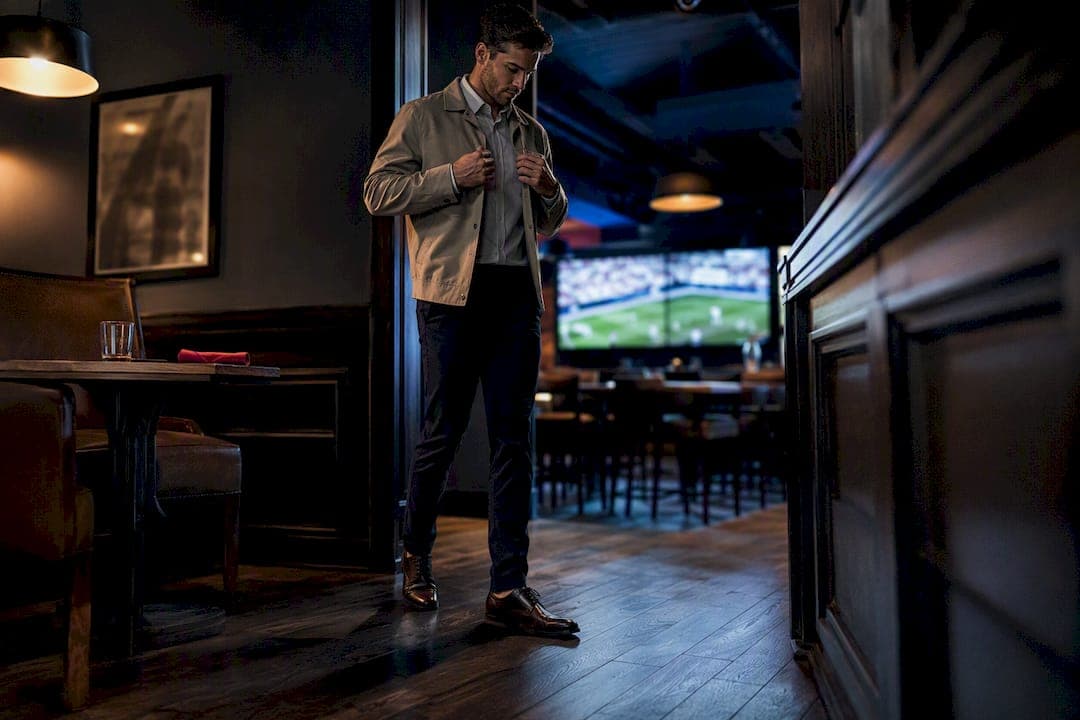
Dark denim or chinos, a collared shirt or fitted tee, clean sneakers, and one light layer you can shed as the room heats up: that combination clears the door at nearly every sports bar. It's polished enough to pass a smart-casual policy and relaxed enough that you won't feel out of place three hours into overtime. The one caveat worth remembering is that dress codes aren't universal, so if a venue looks upscale or hosts a big event, a quick check of its policy saves you an awkward conversation with a doorman.
TL;DR:
- Dark jeans or chinos with a simple, deliberate top like a polo, fitted tee, or casual button-up ensures an appropriate and versatile look for most sports bars.
- Clean sneakers or casual leather boots are essential footwear, while flip-flops, visibly worn shoes, or stained footwear should be avoided here.
- Wearing team colors as accessories, such as a cap or sneakers, is effective without risking a sloppy appearance, especially when balanced with neutral clothing pieces.
- Layers that include a breathable base and an outer jacket or overshirt allow for adjusting to fluctuating indoor and outdoor temperatures.
- Always verify a venue's specific dress policy when visiting upscale or multi-experience locations, especially during high-traffic nights or big events.
Table of Contents
- What Counts as a Sports Bar Dress Code, Really?
- Shoes and Small Details That Change the Whole Look
- Wearing Team Gear Without Looking Sloppy
- Outfit Mistakes That Can Get You Turned Away
- Layering for a Long Night of Overtime and Extra Innings
- What Actually Works at a Multi-Experience Venue
- How Sports Bar Dress Codes Shift Around the World
- Dressing for Playoffs, Fan Meetups, and Other Big Nights
- Daytime Versus Nighttime: Should Your Outfit Change?
- Where This Guidance Comes From
- The Real Lesson Behind Sports Bar Dress Codes
- Sources
- FAQ
What Counts as a Sports Bar Dress Code, Really?
Most sports bars don't post a formal list of rules. What they enforce instead is a vibe, and that vibe has a name: polished casual. It's the middle ground between "just rolled out of the gym" and "dressed for a client dinner," and it's the same standard GQ's smart casual guide uses to describe clothing that looks put together without trying too hard.
Dark denim and chinos are the safest bottoms because they read as neutral in almost any lighting or setting, from a booth by the big screen to a high top near the bar. Above the waist, you've got more room to play:
- A camp-collar shirt or knit polo, which one men's game-night style guide calls the fastest single upgrade to an otherwise plain outfit
- A fitted tee, which looks intentional in a way a stretched-out, years-old shirt never will
- A casual button-up, sleeves rolled, for a slightly sharper look on date night or a work happy hour
The trick isn't buying more clothes. It's picking one piece that looks deliberate. A structured jacket or a clean collar does more for how put-together you look than five smaller tweaks combined, according to the same GQ guide. Stick to breathable fabrics like cotton or lightweight blends, and skip anything baggy or worn thin. Loose gym shorts and stretched-out sweats are the fastest way to look like you wandered in from a workout, not a night out.
Shoes and Small Details That Change the Whole Look
Footwear does more work in a sports bar outfit than people give it credit for. Clean sneakers are the default that fits nearly every scenario, and they show up constantly in practical sports bar outfit guides for exactly that reason. On cooler nights, a pair of Chelsea boots or casual leather boots adds a bit of polish without looking overdressed.
What to leave at home:
- Flip-flops or slides, which most venues consider too casual even for a laid-back crowd
- Shoes that are visibly worn out, scuffed past the point of "lived in," or falling apart at the sole
- Anything that's genuinely painful after twenty minutes of standing, because you'll be on your feet more than you think
Accessories should stay minimal: a watch, a simple chain, maybe a small crossbody bag if you're not carrying pockets full of stuff. Skip anything bulky or flashy in a crowded room. It gets in the way and it's one more thing to keep track of when you're squeezing past people to get to the bar.
Pro Tip: Grooming matters more than people expect. A quick check in the mirror before you leave, hair, deodorant, breath, keeps you from being the reason someone else's night gets awkward.
Wearing Team Gear Without Looking Sloppy
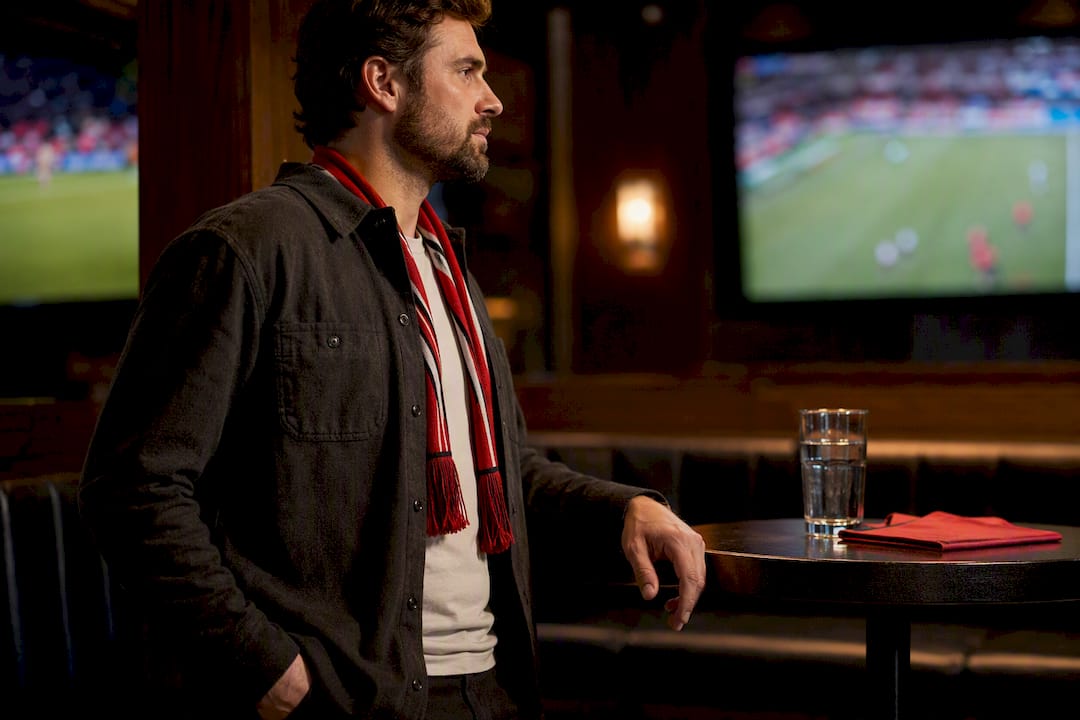
Team apparel is basically expected at a sports bar, but there's a right way to wear it. Fitted or modern-cut jerseys read as intentional. Oversized, decades-old fan kits tend to look like something pulled out of a costume bin, and they're better saved for tailgates or official fan meetups where everyone's in the same boat.
A smarter approach is to treat team colors as an accent rather than the whole outfit:
- A team cap paired with a plain tee and dark jeans
- Team-colored sneakers instead of a full jersey
- A scarf or small pin if the sport calls for it
If you do want to wear the jersey itself, balance it with something structured, like a denim jacket or overshirt layered on top. That one move takes an outfit from "fan costume" to "guy who happens to be wearing his team's colors." Browsing Big Shots Amsterdam's merch is a decent way to find accent pieces that work as a subtle nod to game day without going all in.
Outfit Mistakes That Can Get You Turned Away
Most sports bars aren't strict, but they do enforce a baseline. Venue policies commonly bar clothing tied to offensive slogans, visible underwear, or gang and motorcycle-club colors, all in the name of keeping the room comfortable for everyone else in it, a standard laid out plainly in Legends Sports Grill's own dress policy. Some venues extend that same logic to clothing linked with specific group affiliations, a precaution more common in door policies focused on crowd safety than fashion.
Hygiene gets treated the same way. Severe body odor or visibly filthy clothing is grounds for a staff member to step in, not because anyone's being precious about it, but because it affects other guests packed into the same space.
Before you head out, run through this quick check:
- No offensive graphics, slogans, or imagery on your shirt
- No visible underwear or exposed waistbands
- No shoes with holes, stains, or a smell that announces themselves before you do
- No ripped clothing beyond a subtle, factory-distressed detail
Dress-code strictness really does vary by venue. Some places genuinely don't care past "wear a shirt and shoes," while others explicitly ban athletic wear, flip-flops, or baggy clothing outright. When you're not sure which one you're walking into, it's worth a quick look at the venue's own site or a phone call ahead of time, especially before a high-traffic night when staff tend to enforce the rules more closely for crowd control, something Legends Sports Grill's policy notes directly.
Layering for a Long Night of Overtime and Extra Innings
Sports bars run hot near the screens and cold near the door, and that swing is exactly why layering matters more here than at a regular dinner out. Vogue's guide to dressing for game day recommends building around pieces you can add or shed as the room and the crowd change, rather than committing to one heavy outfit for the whole night.
A simple way to think about it, adapted from the classic three-layer approach:
- Base layer: a breathable tee or lightweight button-up that works fine on its own if the place is packed
- Middle layer: a flannel, cardigan, or overshirt you can tie around your waist or stuff in a bag
- Outer layer: a denim jacket or bomber for the walk over and any patio seating
Stick with fabrics that breathe, and break your shoes in before game night, not during it. Nothing kills a good outfit faster than obviously new sneakers that are cutting into your heel by the second quarter.
Pro Tip: Pack your middle layer small. A cardigan that folds flat in a bag is more useful than a bulky one you end up carrying around all night.
What Actually Works at a Multi-Experience Venue
Big Shots Amsterdam runs as a sports bar, shisha lounge, restaurant, and café under one roof, and that mix changes the math on what to wear. An outfit that only works for one type of room, say, gym shorts that are fine at a sports bar but out of place in a lounge seating area, isn't going to carry you through a night that moves between spaces.
The fix is picking pieces that flex. A collared shirt over dark jeans works at a bar table watching the match and holds up just as well if you drift toward the lounge later for shisha and a slower conversation. Leo's take, after looking at how these mixed venues actually get used: don't dress for one room, dress for the whole building.
A few things worth keeping in mind on match nights or lounge evenings:
- Bring one layer you can lose if the lounge area runs warmer than the bar side
- Save the full jersey for outdoor fan events; a team-colored accent works better indoors across multiple room types
- Check the specific venue's page for any posted dress notes before a big event night, since policies can tighten during high-traffic games
How Sports Bar Dress Codes Shift Around the World
What passes as appropriate at an American sports bar doesn't always translate elsewhere, and that's worth knowing before you assume one set of rules applies everywhere. In the United States, the polished-casual baseline, jeans, a decent shirt, real shoes, covers the vast majority of venues, sports-focused or not.
In parts of Europe, sports bars sit closer to the pub tradition, which tends to be more forgiving of pure casual wear but less tolerant of anything overtly athletic, like gym shorts or tank tops, outside of dedicated fan zones during major tournaments. Upscale bars in city centers, including multi-experience venues that blend dining with sports viewing, lean smarter: think collared shirts and proper shoes rather than pure streetwear.
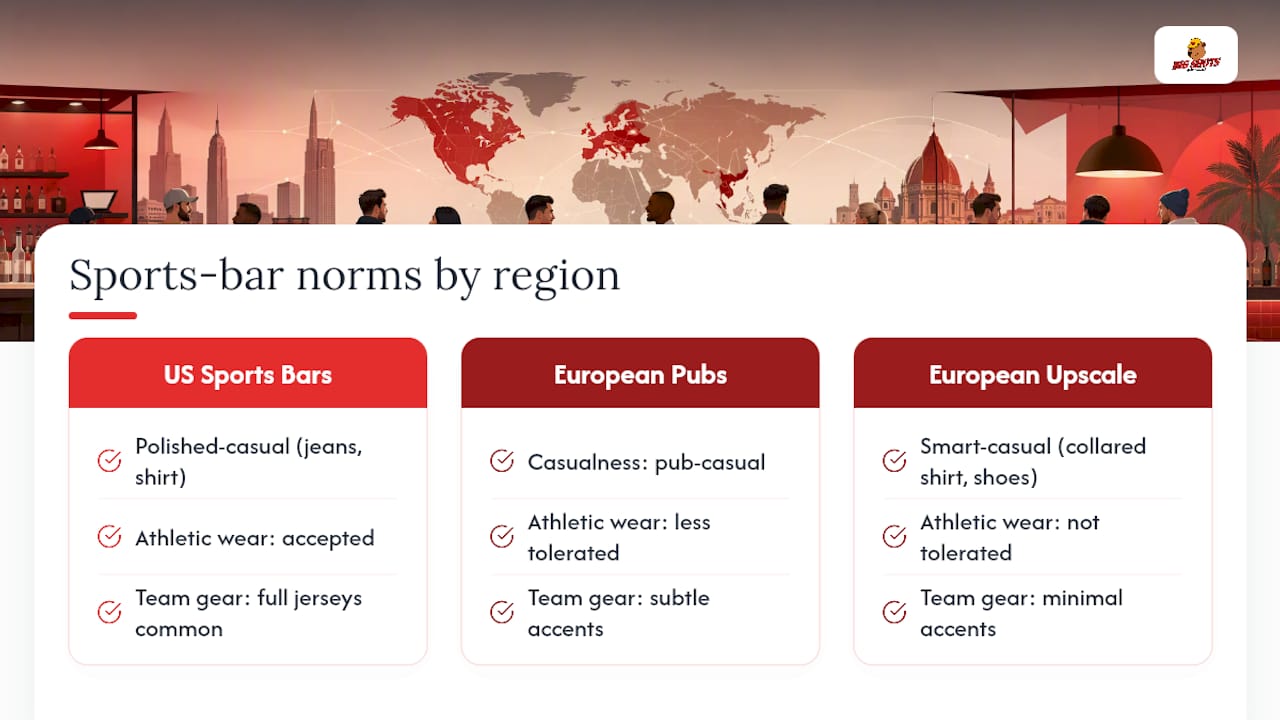
Culturally, team gear also reads differently depending on where you are. In American sports culture, wearing a full jersey to a bar is completely normal, even expected during playoffs. In some European settings, a full kit outside of an actual match or fan meetup can look like you're trying too hard, where a subtle accent, a scarf, a cap, a pin, communicates the same loyalty with less effort.
The safest move when you're unfamiliar with a specific city or venue is defaulting to the polished-casual formula and dialing team gear up or down based on what you see other patrons wearing when you walk in. It costs nothing to glance around before you commit to head-to-toe team colors.
Dressing for Playoffs, Fan Meetups, and Other Big Nights
Regular-season Tuesday and a playoff Sunday call for different levels of effort, even at the same bar. On a normal night, the baseline formula, dark denim, a decent top, clean sneakers, is more than enough. Playoffs and marquee matchups change the equation because venues get louder, more crowded, and often stricter about enforcing whatever dress policy they have.
For those bigger nights, a few adjustments help:
- Lean into team colors more heavily than usual. Full jerseys make more sense at organized fan meetups or playoff watch parties than on a quiet weeknight.
- Expect tighter door enforcement. Crowded, high-stakes nights are when staff tend to hold the line on hygiene and clothing rules most closely, since a packed room amplifies any problem outfit.
- Arrive a bit earlier if you want a specific seat, and dress assuming you'll be standing for stretches, not just sitting.
Private fan meetups and watch parties hosted at a venue sometimes come with their own informal expectations, matching team colors, a group theme, or a specific jersey year. If you're attending one organized through a specific group, it's worth asking the organizer directly rather than guessing. For everything else, the standard smart-casual approach with a team-color accent covers the vast majority of playoff and rivalry nights without any extra planning.
Daytime Versus Nighttime: Should Your Outfit Change?
A noon kickoff and a 9 p.m. tip-off don't call for identical outfits, even at the same bar. Daytime sports bar visits, especially weekend afternoon games, tend to skew more relaxed. Sunlight streaming through windows, families and groups grabbing lunch, and a generally lower-key atmosphere mean chinos, a fitted tee, and sneakers cover almost any daytime scenario without a second thought.
Nighttime shifts the expectations up slightly, particularly at venues that double as a lounge or restaurant after dark. The lighting gets more intentional, the crowd often includes people stopping in after work or before dinner elsewhere, and a slightly sharper outfit, a collared shirt instead of a plain tee, a structured jacket instead of a hoodie, tends to fit the room better.
Weather plays into this too. Daytime games, especially outdoor patio seating, call for breathable fabrics and sun-friendly choices. Evening games indoors mean the temperature swings mentioned earlier become more relevant, since AC and body heat from a packed room can shift the comfort level fast. A light layer you can add back on for the walk home covers both ends of that swing.
The simplest rule: treat daytime as casual-comfortable and nighttime as casual-polished. Neither extreme, gym clothes at noon or a full suit at 9 p.m., fits the actual room you're walking into.
Where This Guidance Comes From
Several sources back up the polished-casual approach recommended throughout this guide, including GQ's breakdown of smart casual dress, Vogue's game-day layering advice, and practical outfit roundups like Thirsty First's sports bar guide. Real venue policy, including hygiene and clothing rules, comes from Legends Sports Grill's own dress code page.
Rules vary by location and by night, so when you're genuinely unsure, check the specific venue's website or give them a call before you go. It takes two minutes and saves you a wasted trip.
The Real Lesson Behind Sports Bar Dress Codes
Most advice on this topic overcomplicates something fairly simple. You don't need a different outfit for every sport, every city, or every bar. You need one reliable formula, and the discipline to swap in a single sharper piece, a collared shirt, cleaner shoes, a better-fitting jacket, when the venue or the occasion calls for it.
Where conventional advice falls short is treating jerseys and team gear as an all-or-nothing decision. The better move, backed by how modern sports bars and lounges actually operate, is using color and accessories as a signal rather than a costume. A cap and a pair of team-colored sneakers say just as much as a full kit, without the risk of looking like you walked in from a tailgate.
If you take one thing from this guide, prioritize fit and cleanliness over brand names or trend pieces. A plain fitted tee and clean sneakers will always outperform an expensive jersey that's baggy or scuffed. Confidence at the door comes from looking intentional, not expensive.
— Leo
Sources
- Vogue — How to dress for Super Bowl date night
- Legends Sports Grill — Dress code policy example
- Thirsty First — What to wear to a sports bar
- Coofandy — What to wear to a sports bar on game night (men's guide)
FAQ
What Do You Wear to a Sports Bar?
Dark denim or chinos, a collared shirt or fitted tee, and clean sneakers cover most sports bars without effort as a versatile choice. Add a light jacket or overshirt so you can adjust as the room's temperature shifts, a combination GQ's smart casual guide recommends across most casual venues.
What Is the 3-3-3 Rule for Clothes?
The 3-3-3 rule is a wardrobe concept built around three tops, three bottoms, and three pairs of shoes that mix and match into multiple outfits. Applied to a sports bar visit, it works well as a layering mindset: a base layer, a middle layer, and an outer piece you can add or remove as the night and the crowd change.
What Is the Dress Code for a Bar?
Most bars, sports bars included, expect smart casual as the baseline: real shoes, a clean shirt, and nothing overly athletic or torn. Specific rules vary by venue, and some explicitly ban flip-flops or athletic wear while others have no formal policy beyond basic hygiene, according to Legends Sports Grill's own dress policy.
What to Wear to a Bar in 2026?
The polished-casual formula holds steady: dark denim, a collared shirt or fitted tee, clean sneakers, and a layer you can shed indoors. Team-color accents, like a cap or sneakers rather than a full jersey, remain the more versatile way to show support without looking overdressed for a lounge-adjacent space.
Do I Need to Check a Venue's Dress Code Before I Go?
It's worth a quick check if the venue looks upscale, hosts a major event, or combines multiple experiences like dining and lounge seating. For an everyday sports bar visit, the polished-casual formula covers nearly every scenario, but confirming ahead of time, or browsing Big Shots Amsterdam's menu and lounge offerings before you arrive, avoids surprises at the door.