
TL;DR:
- A step-by-step guide to hosting group dinners emphasizes careful planning, preparation, and timing to ensure a relaxed and enjoyable evening. Proper invitation timing, menu planning with familiar recipes, and a clear schedule help hosts manage stress and guest experience. Effective hosting focuses on connection once guests arrive, with attention to atmosphere, conversation, and accepting minor imperfections.
A step by step guide to hosting group dinners is defined as a structured planning process that takes you from guest list to final course without chaos. Most people treat group dinners as a casual affair and then wonder why the evening feels rushed or stressful. The difference between a memorable gathering and a forgettable one comes down to preparation, timing, and knowing when to stop cooking and start hosting. This guide covers every phase, from sending invitations to managing the mood at the table, using proven hospitality practices that professional event planners rely on.
What is the step by step guide to hosting group dinners?
Group dinner planning, sometimes called event meal hosting in professional hospitality circles, is the practice of organizing food, logistics, and atmosphere for multiple guests in a single sitting. The goal is not perfection. The goal is a relaxed, well-paced evening where everyone feels welcome and fed.
The core insight is simple: most dinner party stress comes from poor sequencing, not poor cooking. When you front-load your preparation and separate your cooking role from your hosting role, the evening runs itself. Hospitality professionals use this principle at every scale, from intimate dinners for six to large group meals for thirty.
How far in advance should you send invitations?
Timing your invitations correctly is the single most underrated step in organizing group dinners. Send invitations exactly two weeks ahead of the dinner date. That window keeps your event close enough to feel real but far enough for guests to clear their calendars.
What to include in the invitation
Your invitation should answer four questions immediately: date, time, location, and dress code if relevant. Add a short line asking guests to confirm attendance and flag any dietary restrictions. Collecting this information early prevents last-minute menu scrambling.
- Send via text, email, or a group messaging app depending on your crowd
- Request RSVPs within five days of sending the invite
- Ask specifically about allergies, not just preferences
- Follow up once with non-responders after three days
Pro Tip: Create a simple shared note or spreadsheet to track RSVPs and dietary needs. Reviewing it two days before the dinner prevents surprises at the table.
Last-minute cancellations happen. Build your plan around confirmed guests and treat any additions as a bonus. For guest engagement best practices, event planners recommend keeping your confirmed list firm 48 hours before the event.
How do you plan a menu for a group dinner?
Menu planning for group meals follows one rule above all others: cook what you know. Martha Stewart advises against experimenting with new or complex recipes during a dinner party. Stick to dishes you have made before and can execute confidently under mild pressure.
Portion sizing that actually works
For large group meals, plan 1 to 1.5 pounds of food per person, then add a 10% buffer on top. That buffer covers second helpings and the guest who eats more than expected. Running short on food is the one hosting failure guests remember.
A practical menu structure for groups:
- One hot main dish that holds well (braised meats, roasted chicken, pasta bakes)
- Two room-temperature sides that can be made hours ahead
- One make-ahead dessert that requires no day-of assembly
- Bread or a simple starter that guests can graze on arrival
Dietary needs checklist:
- Identify vegetarian and vegan guests from your RSVP list
- Flag nut and gluten allergies separately from preferences
- Offer at least one dish that works for most restrictions without modification
- Label dishes clearly if you are serving buffet style
Pro Tip: Test any new recipe at least two weeks before the dinner. If it fails in practice, you have time to swap it out without stress.
The make-ahead principle is the backbone of stress-free group meal planning. Dishes like lasagna, grain salads, and slow-cooked stews actually improve overnight. Building your menu around them gives you a head start before the day even begins.
What is the best timeline for dinner party preparation?
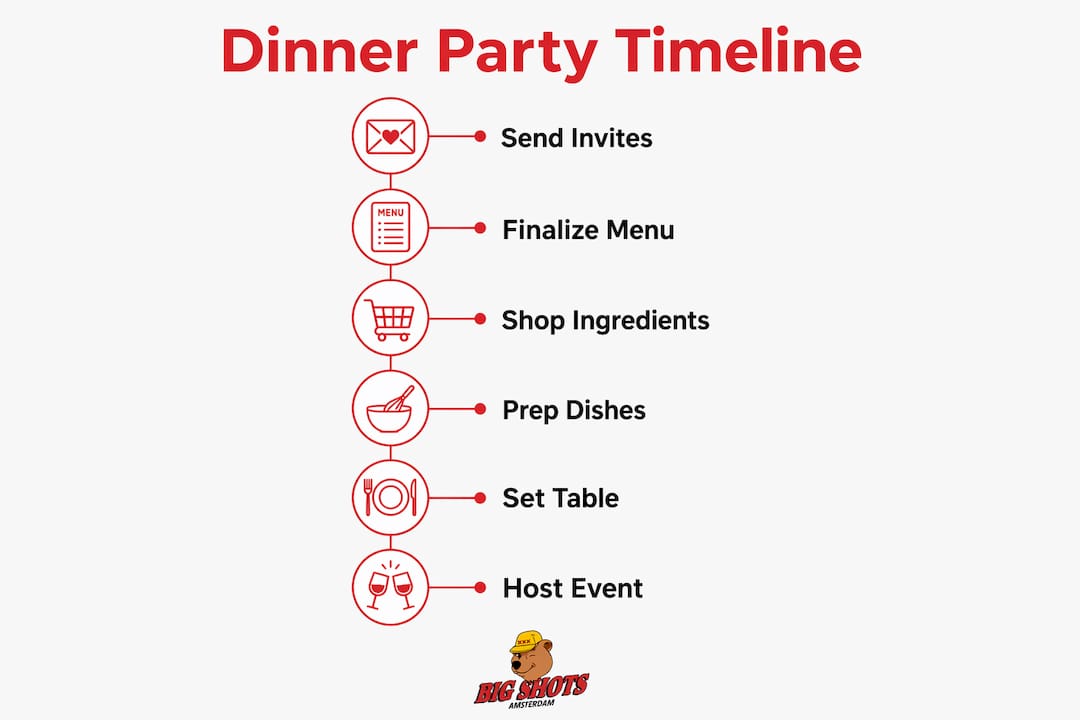
The best timeline for step-by-step dinner planning starts days before the event, not the morning of. Professional hosts treat the day of the dinner as finishing time, not starting time.
A practical preparation schedule
- Three days before: Confirm the guest count, finalize the menu, and shop for all non-perishables
- Two days before: Prepare any make-ahead dishes and store them properly
- The night before: Set the entire table including centerpieces, glassware, and napkins
- Morning of: Shop for fresh ingredients, prep vegetables, and marinate proteins
- Two hours before: Begin cooking hot dishes and assemble cold ones
- 30–60 minutes before: Finish all cooking and do a full walkthrough of the space
Setting the table the night before is one of the most effective habits a host can build. Cover the finished table with a clean cloth to keep settings dust-free. When you wake up on the day of the dinner, the visual work is already done and your mental load drops immediately.
| Task | When to complete |
|---|---|
| Send invitations | 2 weeks before |
| Finalize menu and shop | 3 days before |
| Make-ahead cooking | 2 days before |
| Table setting | Night before |
| Hot dish cooking | 2 hours before |
| Final walkthrough | 30–60 minutes before |
Finishing the majority of cooking before guests arrive keeps you out of the kitchen during the event. Day-of work should be assembly and finishing touches only. That 30 to 60 minute buffer before arrival is not optional. It is the window where you change, breathe, and shift from cook to host.
Pro Tip: Light scented candles 30 minutes before guests arrive, then extinguish them before you serve food. The scent sets a welcoming mood without competing with the aroma of your dishes.
How do you host effectively once guests arrive?
Effective hosting requires two separate mindsets: the cooking mindset and the hosting mindset. Once guests walk through the door, the cooking mindset must switch off completely. Your job is now connection, not food.
Greet guests away from the kitchen and without distractions. A warm greeting at the door sets the tone for the entire evening. Hand each guest a drink within the first five minutes. Drinks and light hors d'oeuvres on arrival give people something to do while the group assembles.
Common hosting pitfalls to avoid:
- Disappearing into the kitchen for more than ten minutes at a stretch
- Over-explaining every dish before guests eat
- Rushing the pace of dinner to clear the table faster
- Trying to manage every conversation at once
"The best hosts make guests feel like the evening was effortless. That effortlessness is the result of invisible preparation, not natural talent."
Background music shapes the energy of the room more than most hosts realize. Start with upbeat tracks during drinks and hors d'oeuvres, then shift to slower, quieter music once dinner is served. That tempo shift signals a natural transition and eases conversation into a more relaxed rhythm.
Pro Tip: Build two playlists before the event: one for the arrival hour and one for the dinner table. Switching between them takes ten seconds and changes the entire feel of the room.
What themes and conversation strategies make group dinners memorable?
A clear theme gives your dinner a spine. It does not need to be elaborate. A "Sunday roast" theme, a regional cuisine night, or even a simple color scheme for the table creates coherence and gives guests something to talk about before the food arrives.
Ideas that work for most groups:
- A cuisine theme tied to the menu (Italian, Japanese, Mediterranean)
- A seasonal theme using ingredients and decor from the current time of year
- A "bring a dish" format where each guest contributes one course
- A blind tasting format where guests guess ingredients or wine regions
Seating arrangements matter more than most hosts admit. Seat guests who do not know each other next to people who share at least one interest. Avoid placing two very dominant personalities side by side. A vibrant dining atmosphere depends on balanced conversation, not just good food.
Simple icebreaker questions work better than structured games for most adult groups. Ask each guest to share one highlight from their week, or pose a single hypothetical question to the table. These prompts dissolve awkward silences without feeling forced.
Accepting imperfection is the final and most underrated hosting skill. A dropped dish, a slightly overcooked protein, or a late guest does not ruin an evening. Your reaction to those moments does. Guests take their emotional cues from the host. Stay relaxed, and the table stays relaxed.
Key Takeaways
Successful group dinner hosting comes down to front-loading preparation, separating cooking from hosting, and building a timeline that gives you breathing room before guests arrive.
| Point | Details |
|---|---|
| Invite two weeks ahead | Send invitations 14 days before to maximize RSVPs and collect dietary needs early. |
| Plan portions with a buffer | Prepare 1 to 1.5 pounds of food per person plus a 10% buffer to avoid running short. |
| Set the table the night before | Complete all table settings the evening before to eliminate morning-of visual workload. |
| Finish cooking 30–60 minutes early | Use the buffer window to transition from cook to host before the first guest arrives. |
| Separate your roles | Once guests arrive, stop cooking mentally and focus entirely on connection and pacing. |
What I have learned from hosting too many dinners to count
The single biggest mistake I see hosts make is treating the dinner party as a performance. They rehearse dishes, obsess over plating, and then spend the entire evening half-present because they are mentally still in the kitchen. The guests notice. Not the food. The absence of their host.
A written checklist changed everything for me. Not a mental list. A physical one, written out two days before the event, with every task assigned to a specific time slot. When the day arrives, I am not making decisions. I am executing a plan. That shift from reactive to prepared is where the enjoyment lives.
The atmosphere shapes the memory more than the food does. I have attended dinners with average cooking and extraordinary warmth, and I remember them fondly. I have attended dinners with technically impressive food and a tense, over-managed host, and I left feeling vaguely exhausted. Lighting, music, and your own body language matter as much as what is on the plate.
My honest advice: host more often, not less. The first dinner party is always the hardest. By the third, you have a system. By the fifth, you have a signature style. Start before you feel ready.
— Leo
Where to go when you want the hosting done for you
Planning a group dinner at home is deeply rewarding. Sometimes, though, the occasion calls for a venue that handles the atmosphere, the food, and the logistics while you focus entirely on your guests.

Bigshotsamsterdam in Amsterdam combines a restaurant, sports bar, shisha lounge, and café under one roof, making it one of the most flexible group dining venues in the city. Whether you are planning a casual friends' night, a birthday celebration, or a relaxed family meal, the kitchen and staff handle the heavy lifting. The menu spans gourmet dishes, steaks, and craft cocktails, with an atmosphere that shifts naturally from lively to laid-back as the evening progresses. Book your group experience at Bigshotsamsterdam and arrive as a guest, not a host under pressure.
FAQ
How far in advance should I send dinner party invitations?
Send invitations exactly two weeks before the dinner date. This timing gives guests enough notice to clear their schedules while keeping the event close enough to stay top of mind.
How much food should I prepare for a group dinner?
Plan 1 to 1.5 pounds of food per person and add a 10% buffer on top. That extra amount covers second helpings and prevents the most common hosting failure: running out of food.
What is the best way to reduce stress when hosting a group dinner?
Finish all cooking and set the table at least 30 minutes before guests arrive. That buffer gives you time to transition from cook to host and greet guests with full attention.
Should I try new recipes for a dinner party?
No. Martha Stewart and most professional hosts advise sticking to tried-and-true dishes for group dinners. Save new recipes for low-stakes practice runs at least two weeks before the event.
How do I keep conversation flowing at a group dinner?
Use background music to ease natural silences and open the evening with one simple icebreaker question for the whole table. Seating guests who share at least one common interest next to each other also helps conversation start without effort.