
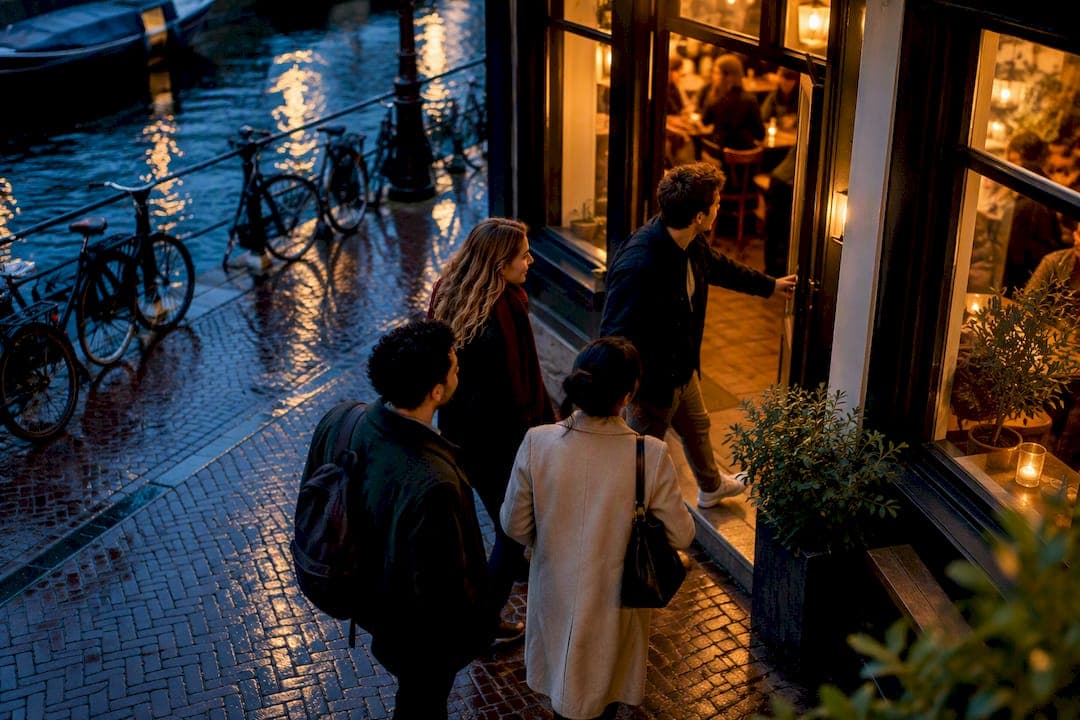
Yes, you can have a genuinely good night out in Amsterdam without booking a club table. Brown cafés, poppodia, rooftop bars and multi-experience spots like Big Shots Amsterdam mostly run on walk-in culture, not reservations. Regular horeca and heavier venues follow different closing windows set by the city, and improved GVB evening service makes it easier to move between neighborhoods late. Time your arrival right and you will rarely need to plan ahead.
TL;DR:
- Most of Amsterdam's nightlife, including cafés and live music venues, allows walk-in visits without prior reservations, emphasizing spontaneity.
- Neighborhood choice significantly impacts the experience, with Leidseplein and Rembrandtplein being the most energetic, while Jordaan and De Pijp offer calmer options.
- Knowing the difference between regular horeca and heavier venues helps predict closing times and manage expectations, especially on weekends.
- Many informal activities like canal walks, rooftop views, and live music can be enjoyed last-minute with minimal planning or booking.
- Multi-purpose venues like Big Shots Amsterdam cater to groups with diverse preferences, eliminating the need for advance reservations.
Table of Contents
- Walk-in venues that don't need a booking
- Best neighborhoods for a spontaneous night out
- How door policy and opening hours actually work
- Non-club activities worth building a night around
- Getting home safely and spending wisely
- Why multi-experience venues fit a spontaneous night
- Dress codes and blending in without a booking
- Budget-friendly drinks without club prices
- Local etiquette that makes a night out smoother
- Finding spontaneous events and live music on the fly
- The overrated reservation and the underrated walk-in
- Make tonight easy: walk into Big Shots Amsterdam
- Sources
- FAQ
Walk-in venues that don't need a booking
Amsterdam's nightlife runs on a different rhythm than club culture. Most of the city's evening scene, from brown cafés to poppodia, expects you to just show up. That is the whole appeal of a spontaneous night here: you follow the mood of the street instead of a reservation confirmation.
- Brown cafés ('bruine kroegen'): small, wood-paneled pubs with regulars at the bar and rarely a cover charge.
- Casual bars and terraces: walk-in by default unless a specific ticketed event is posted at the door.
- Poppodia and small live-music rooms: the attached café areas usually stay open to walk-ins even when the headline show is sold out.
- Rooftop bars and viewpoints: bar seating is normally first-come, though some charge a small entry fee during peak weekend hours.
- Late-night food vendors: a handful of spots stay open well past midnight for a spontaneous bite between stops.
This mix of formats is part of why Amsterdam's nightlife is often described as varied rather than club-centric, with brown cafés, terraces, and cultural venues doing most of the heavy lifting on any given night.
Pro Tip: Peek through the window before you commit. A packed room with no line outside usually means standing room only, while a half-full one signals an easy walk-in.
Best neighborhoods for a spontaneous night out
Where you start your evening shapes the whole night more than any single venue choice. Amsterdam's nightlife areas each have a distinct personality, so picking the right one matters as much as picking the right bar.
- Leidseplein and Rembrandtplein: the highest-energy hubs, packed with terraces, bars, and late crowds, and named among the city's central nightlife squares by local nightlife guides.
- De Pijp: relaxed bars and eateries with a strong terrace culture, better for conversation than crowd-surfing.
- Jordaan: cozy brown cafés and quiet canalside evenings, ideal if you want atmosphere over volume.
- Amsterdam-Noord: a creative, less touristy scene with rooftop bars and late cultural spaces across the water.
Weeknights are noticeably calmer everywhere, which means shorter waits and more room to linger. Weekend evenings get busy fast in Leidseplein and Rembrandtplein specifically, so if you want that energy without the crush, arrive before 10 PM. Most of these areas sit within a twenty-minute walk of each other, so hopping between two neighborhoods in one night is realistic on foot alone.
How door policy and opening hours actually work
Getting in without a reservation is less about luck and more about understanding how Amsterdam's horeca categories work. The city's horeca policy splits venues into regular horeca and heavier "zware horeca" categories such as nightclubs, each with its own permitted hours. That distinction explains why a brown café down the street closes hours before the club around the corner.
Door checks at walk-in venues are usually limited to age verification, and a cover charge only tends to appear at special ticketed events rather than on a normal night. The smartest timing tactic is arriving early on a busy weekend, since queues build fast after 11 PM in central squares, then thin out again past 1 AM as regular horeca starts closing.
Regular vs. heavy horeca closing times: Amsterdam's municipal horeca policy sets regular horeca hours at roughly 7 AM to 1 AM on Sunday through Thursday and 7 AM to 2 AM on Friday and Saturday, while zware horeca venues can stay open from 9 AM until 4 AM on weekdays and 5 AM on weekend nights. Knowing this gap helps you predict when a street will empty out and when the later crowd shifts toward heavier venues.

Non-club activities worth building a night around
A memorable Amsterdam evening does not need a club at all. Some of the most talked-about nights out in local coverage revolve around live music, water, and food instead.
- Walk-in live music: poppodia café rooms, small jazz bars, and open-mic nights fill in for club energy without a ticket, a format local dossier coverage has highlighted alongside other alternative formats like ecstatic dance nights.
- Rooftop and viewpoint stops: A'DAM-style lookout venues and rooftop bars work well as a mid-evening detour when you want a view instead of a dance floor.
- Canal walks after dark: the quieter stretches of the canal ring make for a genuinely different pace than bar-hopping, and they cost nothing.
- Late-night food markets: a flexible, no-reservation dinner that fits around whatever else the night turns into.
None of these require planning more than an hour ahead, which is the entire point of a reservation-free evening.
Getting home safely and spending wisely
A spontaneous night still benefits from a little structure, mostly around how you get home and what you spend along the way.
- Check GVB's evening schedule before heading out. The revised GVB timetable increased evening and weekend frequency on several tram and bus lines, so a route that used to mean a long wait may now run more often.
- Note your nearest tram or metro stop name before you start drinking. It sounds obvious until you need it at 2 AM.
- Stick to well-lit main streets when walking between venues, and keep your group together rather than splitting up late at night.
- Carry a small amount of cash alongside your card. Most Amsterdam bars accept contactless payment, but a few smaller cafés still prefer cash for rounds.
- Have a backup plan if a venue is full. Walk to the next street, try a nearby pub with terrace seating, or pivot to a late-night food stop instead of waiting in line.
Pro Tip: Screenshot your return tram or bus times before you leave the house. Phone signal in busy squares gets patchy fast once the crowds build.
Why multi-experience venues fit a spontaneous night
A venue that combines several formats under one roof solves the biggest problem with spontaneous plans: nobody in the group wants the same thing at 9 PM. Big Shots Amsterdam operates as a sports bar, shisha lounge, restaurant, and café together, which means a group can walk in undecided and still land somewhere that works. One person wants food, another wants a shisha session, someone else just wants a match on screen: a combined venue absorbs that without splitting the group up. That kind of flexible seating and varied menu availability is exactly what a walk-in evening needs.
Dress codes and blending in without a booking
Amsterdam's dress code culture is far more relaxed than in cities built around club scenes. Brown cafés, terraces, and poppodia rarely enforce anything beyond basic footwear rules, and even rooftop bars tend to favor smart-casual over formal wear. Jeans, a clean pair of sneakers, and a jacket for the canal breeze will get you into almost anywhere on this list.
The one place dress codes tighten slightly is at higher-end cocktail bars or upscale restaurant lounges, where a collared shirt or dressier top helps you blend in rather than stand out. Sports jerseys and beachwear are the most common reasons a door host might hesitate, so save those for daytime plans. Locals generally dress for comfort first, which is part of why Amsterdam nightlife feels less performative than club-heavy cities.
If you are moving between several venues in one night, layering matters more than styling. A light jacket you can shed indoors and put back on for the walk between bars solves more problems than any specific outfit choice. Blending in here is less about looking a certain way and more about matching the low-key energy of whichever venue you just walked into: a rooftop bar crowd dresses differently than a brown café crowd, and reading that room for thirty seconds before ordering will tell you everything you need to know.

Budget-friendly drinks without club prices
Skipping clubs is also one of the easiest ways to keep a night out affordable. Brown cafés typically price beer and house wine well below what a club charges for the same pour, and many terraces run informal happy hour windows in the early evening before the dinner crowd arrives. Ordering a local beer on tap is almost always the cheapest option on any menu, and it is the default order at most bruine kroegen for a reason.
Poppodia café areas tend to price drinks close to a regular bar rather than a venue markup, since the room is doing double duty as a hangout space and a pre-show bar. Rooftop bars are the exception: expect a modest premium for the view, especially at sunset on weekends, though weekday visits are usually cheaper across the board.
A simple money-saving pattern for a spontaneous night: start in a brown café or casual bar where drinks are cheapest, save the rooftop stop for later when you only need one or two drinks to enjoy the view, and treat food as the flexible budget line since portion sizes and prices vary widely between a quick snack bar and a full restaurant sit-down.
Local etiquette that makes a night out smoother
Amsterdam nightlife runs on a handful of unwritten rules that are easy to pick up once you know them. Ordering at the bar rather than waiting for table service is standard in most cafés and brown pubs, and tipping is appreciated but never expected the way it is in some other countries: rounding up or leaving a small amount for good service is plenty.
Locals tend to keep conversation volume moderate even in busy bars, and shouting across a crowded room reads as more tourist than local. Splitting a round rather than everyone ordering separately is common practice among groups of friends, and bartenders generally appreciate a clear, single order rather than a scattered one. Smoking indoors is restricted in most standard bars and restaurants, which is part of why dedicated shisha lounges and designated smoking venues exist as their own category.
Perhaps the most useful etiquette tip for a reservation-free night: if a venue looks full but not overflowing, it is usually fine to ask the staff whether there is room rather than assuming you need to leave. Amsterdam's walk-in culture means asking is normal, not awkward.
Finding spontaneous events and live music on the fly
Even without a reservation, you do not have to wander blind. A handful of resources make it easy to check what is happening on any given night before you commit to a neighborhood. Local nightlife roundups and dossiers, including ongoing coverage from Het Parool's nightlife dossier, regularly flag alternative formats like ecstatic dance nights and late live-music events that do not show up on typical tourist lists.
Poppodia often post same-day or same-week listings for smaller shows directly on their own venue pages, and checking those before heading out tells you whether a door ticket is realistic or whether the café area is your best bet instead. For food-focused evenings, guides on enjoying local food experiences offer a useful framework for approaching a city's food scene without over-planning it, which pairs naturally with a spontaneous bar-hopping night.
Beyond dedicated apps, a quick scroll through a venue's own social media the afternoon of your outing is often more reliable than a general events aggregator, since smaller bars and poppodia post last-minute changes there first.
The overrated reservation and the underrated walk-in
The conventional advice for a big night out in Amsterdam still leans heavily on booking ahead, and that advice oversells itself. Reservations matter for a specific dinner table on a specific night, but for most of what makes Amsterdam's evening scene interesting, a reservation is friction you did not need. The brown café, the poppodium café room, the rooftop bar at sunset: these all reward showing up and reading the room over planning weeks ahead.
What conventional guides underrate is timing over booking. Knowing that regular horeca closes earlier than zware horeca, or that a tram line now runs more often in the evening, does more for your night than any table reservation could. The reader's real priority should be sequencing: pick a neighborhood that matches your mood, start early if it is a weekend, and keep a fallback venue in mind rather than a fallback reservation. Spontaneity works in this city because the infrastructure, from transport to opening hours, is built to support it.
— Leo
Make tonight easy: walk into Big Shots Amsterdam
You do not need a plan to have a good night at Big Shots Amsterdam. As a sports bar, shisha lounge, restaurant, and café rolled into one, it gives a group somewhere to land no matter what everyone is in the mood for, without needing to book ahead.
- Check the full menu before you head out to see what sounds good tonight.
- Prefer to stay in? Order through delivery instead of waiting for a table.
- Bringing a bigger group? Look into a reservable lounge experience for the night.
Sources
- Horecabeleid 2025 (actualisatie 2026) — Gemeente Amsterdam
- Nieuwe GVB-dienstregeling vanaf 29 maart - Over GVB
- Amsterdam
- Dossier: tips voor uitgaan in Amsterdam — Het Parool
FAQ
What is the best nightlife area in Amsterdam?
Leidseplein and Rembrandtplein are generally considered the city's most central and lively nightlife hubs, packed with terraces, bars, and late crowds. Quieter alternatives like Jordaan or De Pijp suit readers who want a calmer, more local-feeling evening instead.
What are some quiet spots in Amsterdam at night?
Jordaan's canalside streets and brown cafés offer a noticeably calmer evening compared to the main squares, with small pubs and quiet waterside walks. Amsterdam-Noord also tends to feel less touristy while still offering rooftop bars and cultural spaces.
What can you do in Amsterdam at night without spending money?
Walking along the canals after dark, exploring quieter neighborhoods like Jordaan on foot, and enjoying rooftop views from public viewpoints all cost nothing beyond what you spend on food or drinks along the way. These options work well as a free complement to any bar or café stop.
What counts as the best city for going out?
That depends on what you are looking for, but Amsterdam's mix of brown cafés, poppodia, rooftop bars, and multi-experience venues makes it easy to build a varied night without relying on club reservations. The city's compact layout means you can sample several different atmospheres in a single evening on foot.
Do I need a reservation to visit Big Shots Amsterdam?
Some multi-experience venues are set up for walk-in visits, with flexible seating across sports bar, shisha lounge, restaurant, and café areas. Larger groups can also look into a reservable lounge experience if they want a dedicated space for the night.