
TL;DR:
- A bar-restaurant hybrid, or restobar, combines full-service dining with an active bar atmosphere to keep guests longer and increase revenue.
- Success depends on balancing food and drink sales, designing menus for efficiency, and creating an atmosphere that transitions from dining to nightlife.
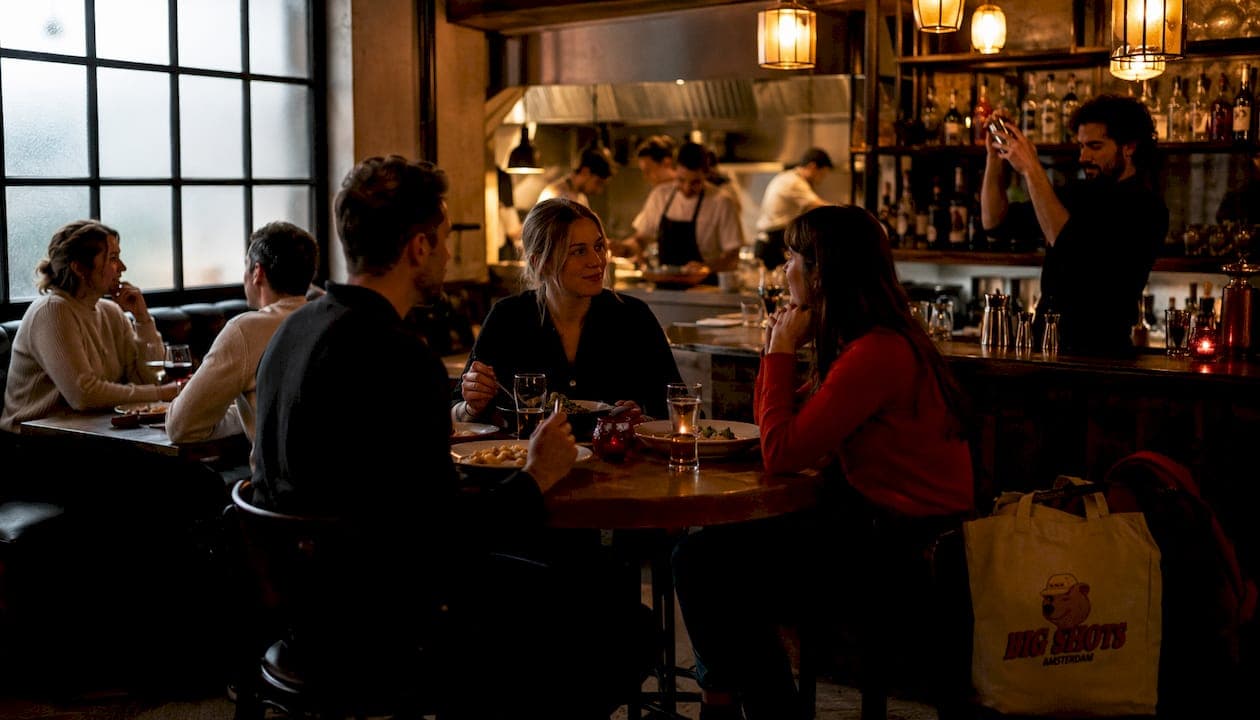
A bar-restaurant hybrid, often called a restobar, is a venue that delivers full-service dining and an active bar atmosphere under one roof, with a business model built around keeping guests at their tables longer. The industry term is "restobar," a portmanteau of restaurant and bar that first appeared in the 1990s and has since spread globally. What separates it from simply a restaurant that sells wine or a bar that offers nachos is the deliberate design of every element, from the menu to the lighting, to support both revenue streams at once.
The defining characteristics of a bar-restaurant hybrid include:
- Dual revenue streams: income from food sales and high-margin alcohol sales working together
- Extended dwell time: the environment encourages guests to stay past their meal for additional drinks
- Blended service style: table service for food orders combined with bar service for beverages
- Menu architecture: food designed to be quick to deliver and to prompt a second drink order
- Extended operating hours: typically running from lunch through late night
- Cohesive brand identity: music, lighting, and décor that transition the room from dining to nightlife
The revenue logic is straightforward. Food sales anchor the visit; alcohol sales drive the profit. A guest who stays ninety minutes instead of forty-five spends considerably more, and that extra spend is almost entirely on drinks.
How bar, restaurant, and hybrid models actually differ
The three models share a building and a kitchen, but they operate on fundamentally different financial logic.
A traditional bar runs on what the industry calls the "dwell factor": the longer a guest stays, the more they drink, and the more they spend. Preparation time per revenue dollar is low because pouring a cocktail is faster than cooking a steak. The risk is volume dependency. A slow Tuesday can wreck the week.
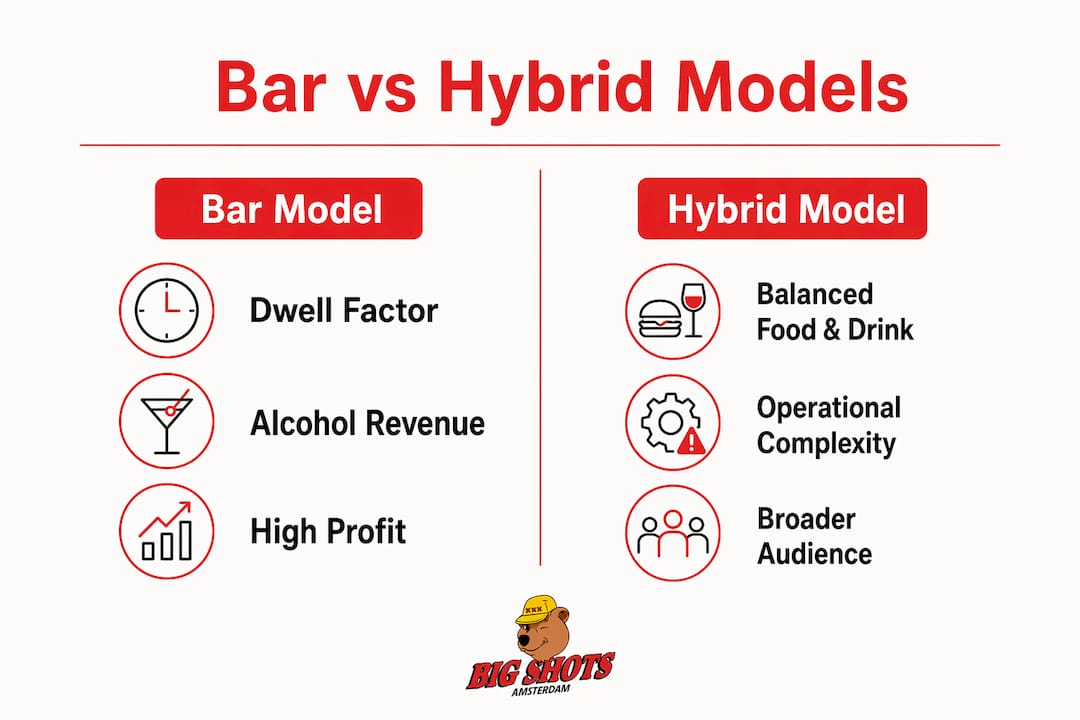
A restaurant flips that logic entirely. Revenue comes from seat turnover, measured in covers per hour, and the labor minutes spent per plate. The goal is to move guests through efficiently, not to keep them lingering. Traditional restaurants in the US operate at moderate net profit margins, with food costs consuming a large share of revenue.
Bars run profit margins on average, driven by the high markup on alcohol and lower operational overhead compared to a full kitchen. A hybrid sits between those poles, but only if food actively supports beverage sales rather than competing with them for staff attention and kitchen capacity.
| Model | Primary revenue driver | Customer behavior | Typical profit margin | Key operational risk |
|---|---|---|---|---|
| Bar | Alcohol sales | Long stays, high drink volume | Moderate profit margin | Volume fluctuation, inventory loss |
| Restaurant | Food sales, seat turnover | Short stays, multiple covers | Moderate profit margin | Labor cost per plate, food waste |
| Bar-restaurant hybrid | Alcohol + food combined | Medium-length stays, drink upsells | Variable, depends on balance | Operational complexity, dual staffing |
The hybrid wins only when food and drink are designed to support each other operationally. A balanced hybrid concept that matches local demand and runs reliable systems outperforms a trendy one that cannot hold service quality past 9 PM.
Menu design and operational challenges in hybrid venues
Menu design is where most hybrid operators either get it right or quietly fail. The goal of a bar menu is not creativity; it is operational efficiency. Bartenders should spend as little time preparing each drink as possible while maintaining quality. The same discipline applies to food.
Effective hybrid menus follow a specific set of rules:
- Use a limited number of SKUs that can combine across multiple dishes, reducing prep complexity
- Design every item for fast delivery so food never slows down drink orders
- Build each dish to encourage a second drink order, whether through salt, spice, or portion size
- Keep the food program bar-supportive: shareable plates, snackable items, and quick-serve formats rather than heavy entrées that anchor guests to the table without ordering more drinks
Pro Tip: Design your menu around the bar program, not the other way around. If a dish requires more than ten minutes of kitchen time during a busy Friday night, it does not belong on a hybrid menu.
Running simultaneous bar and restaurant workflows is genuinely hard. The kitchen and the bar compete for the same servers, the same POS system, and the same guest attention. Hybrid operations demand a unified point-of-sale setup that tracks both food and beverage tickets without creating bottlenecks. Operators who treat the kitchen and bar as separate departments typically see service break down during peak hours. For a deeper look at how bar food menus are structured to support this kind of operation, bar menu design is worth understanding in detail.
How atmosphere shapes the hybrid dining experience
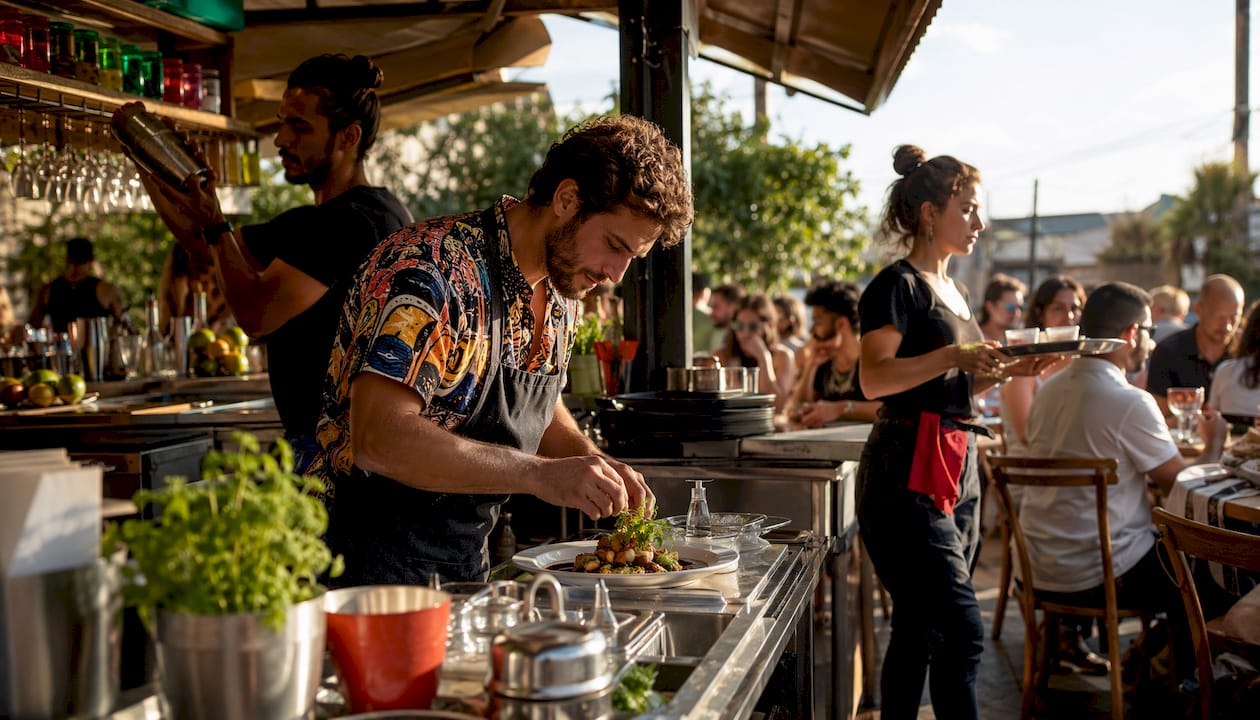
Atmosphere in a hybrid venue is not decoration. It is an operational tool that manages guest behavior across the arc of an evening.
"A true bar-restaurant hybrid is a lifestyle concept. The music, lighting, and menu must be curated to transition the room from dining to nightlife. Merely adding a bar to a restaurant does not create a hybrid." — Tap & Table
The practical challenge is the transition itself. At 7 PM, the room needs to feel welcoming for a dinner party. By 10 PM, the same space should feel like somewhere worth staying for a third round. Lighting that dims gradually, music that shifts in tempo, and a bar program that becomes more prominent as the kitchen winds down are all deliberate design choices, not accidents.
Staffing reflects this dual identity. Successful hybrids pair specialized bartenders who have deep technical knowledge of spirits and cocktails with hospitality-trained servers who understand pacing, upselling, and table management. Neither skill set alone is enough. A great bartender who cannot read a dining room will kill the early-evening revenue; a skilled server who cannot speak to the drink menu will leave money on the table after 9 PM.
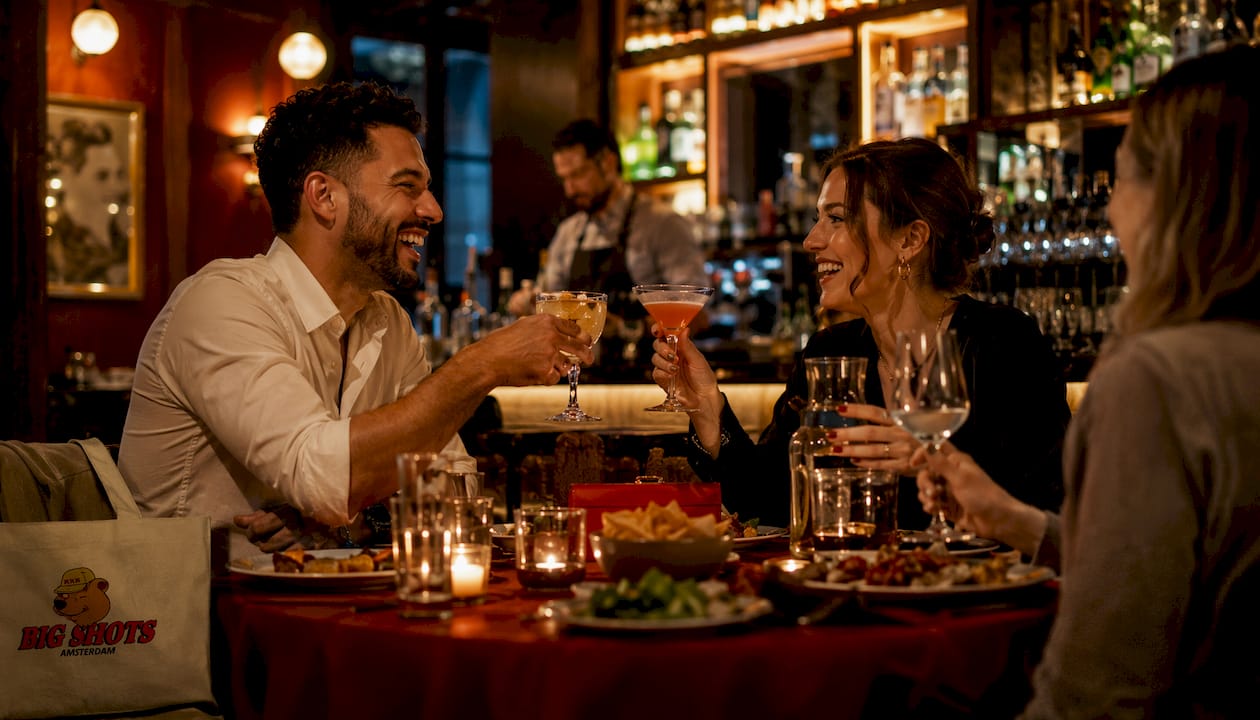
Bigshotsamsterdam in Amsterdam demonstrates this model in practice, combining a sports bar, shisha lounge, restaurant, and café under one identity, with an atmosphere calibrated for everything from a casual lunch to a late-night social. The bar design principles behind that kind of venue are worth studying for anyone planning a hybrid concept.
Who actually goes to a bar-restaurant hybrid?
The customer base for a hybrid venue is broader than either a bar or a restaurant attracts on its own, and that breadth is part of the model's appeal.
Young professionals in their mid-20s to late-30s are the core demographic. They want a place that works for a work dinner at 7 PM and a social night at 10 PM without requiring them to move venues. Couples use hybrids for date nights where the evening can extend naturally from dinner into drinks. Friend groups treat them as a one-stop destination, particularly when the venue offers entertainment like live music, sports viewing, or themed nights.
Tourists in urban markets are a reliable secondary audience. A hybrid venue that offers food, cocktails, and atmosphere in one location solves a real problem for visitors who do not want to navigate multiple spots in an unfamiliar city. Families with older children often visit during daytime or early-evening hours, particularly when the venue operates a café or brunch program alongside its bar service.
The key insight is that hybrids attract guests at multiple points in the day, which spreads revenue across more hours than a bar or a restaurant typically captures alone. A concept built around gastronomy trends for 2026, including experiential dining and social-first menus, maps directly onto what this demographic is actively seeking.
Licensing and regulatory requirements for hybrid venues in the US
Licensing is where the hybrid model gets legally complicated, and operators who ignore this early pay for it later.
In the US, the legal classification of a venue as a restaurant versus a bar carries real consequences for where you can operate and what you can serve. A zoning interpretation from Columbia, Tennessee illustrates the national pattern clearly: a restaurant is defined as an establishment whose principal activity is preparing and selling food, while a bar's principal activity is selling alcohol for on-premises consumption. The distinction is not just semantic. Bars face location restrictions, including prohibitions within 500 feet of churches or residentially zoned property, that restaurants do not.
For a hybrid, the critical question is where the majority of revenue comes from. If alcohol sales begin to outpace food sales, the venue may legally shift classification from restaurant to bar, triggering different licensing requirements, zoning restrictions, and compliance obligations. State Alcoholic Beverage Control (ABC) boards across the US use revenue ratios, licensing categories, and operational evidence to make this determination.
Practical steps every hybrid operator needs to take:
- Obtain a full liquor license (not a beer-and-wine-only permit) if cocktails are central to the concept
- Confirm local zoning classification before signing a lease, particularly in mixed-use or residential-adjacent areas
- Track food-to-alcohol revenue ratios monthly to stay within restaurant classification thresholds
- Register with the relevant health department and fire marshal as a food service establishment
- Review state-specific ABC rules on entertainment, late-night hours, and outdoor service separately from the base license
Marketing strategies that work for hybrid venues
A hybrid venue needs marketing that communicates its dual identity without confusing potential guests about what kind of place it actually is.
Social media is the most effective channel for this, specifically because it is visual and time-sensitive. Posting dinner content in the early evening and cocktail or entertainment content late at night trains the algorithm and the audience to understand the venue's full range. Instagram and TikTok both reward this kind of time-stamped content with higher organic reach during the relevant hours.
Event programming is a strong driver of new visits. Themed nights, live music, sports viewing events, and cocktail tastings each attract a different segment of the target audience and give existing guests a reason to return. A hybrid that runs three distinct weekly events can effectively operate as three different venues to three different audiences, all under one roof.
Local SEO matters more for hybrid venues than for single-concept spots because the search intent is broader. Someone searching "dinner and drinks near me" or "sports bar with food" is already describing a hybrid, and venues that appear in those results capture guests who have already decided they want the combined experience. A well-structured drinks menu that is visible online, with clear descriptions of the cocktail program, supports both conversion and search visibility.
Staffing models and key roles in hybrid operations
A hybrid venue cannot be staffed like a restaurant with a few extra bartenders. The roles are genuinely different, and the org chart reflects that.
The head bartender in a hybrid carries more responsibility than in a standard bar. They manage the cocktail program, train bar staff on technical skills, and coordinate with the kitchen on timing so that food and drink orders arrive together. In a busy hybrid, the bar is also the most visible part of the room, and the head bartender sets the social tone for the entire space.
Dual-trained servers are the operational backbone. They need to handle table service during dinner hours and shift smoothly into a more bar-forward service style as the night progresses. This means understanding both food pairings and cocktail recommendations, managing check timing to encourage additional drink orders, and reading the room well enough to know when a table wants to linger versus when they are ready to leave.
A floor manager who understands both service modes is often the difference between a hybrid that runs well and one that fragments into two separate operations sharing a space. They coordinate the transition from dinner service to bar service, manage staffing levels across both departments, and handle the guest experience issues that arise specifically from the hybrid format, like a table that wants to stay for drinks after their food check is closed.
Hybrid operations also benefit from a unified POS system that tracks food and beverage tickets together, giving managers real-time visibility into which revenue stream is performing and where service is slowing down.
Key Takeaways
A bar-restaurant hybrid succeeds when food and drink are designed to support each other operationally, not just placed in the same room.
| Point | Details |
|---|---|
| Dual revenue model | Food anchors the visit; alcohol drives profit, with bars typically having higher margins than restaurants. |
| Dwell factor is the differentiator | Hybrids are built to extend guest stay time, increasing average spend through additional drink orders. |
| Menu discipline is non-negotiable | Limited SKUs, fast delivery, and bar-supportive dishes keep kitchen and bar workflows from colliding. |
| Licensing follows revenue ratios | If alcohol sales outpace food sales, the venue may shift legal classification from restaurant to bar, with real zoning consequences. |
| Staffing requires dual expertise | Head bartenders, dual-trained servers, and a floor manager who understands both service modes are the core operational team. |
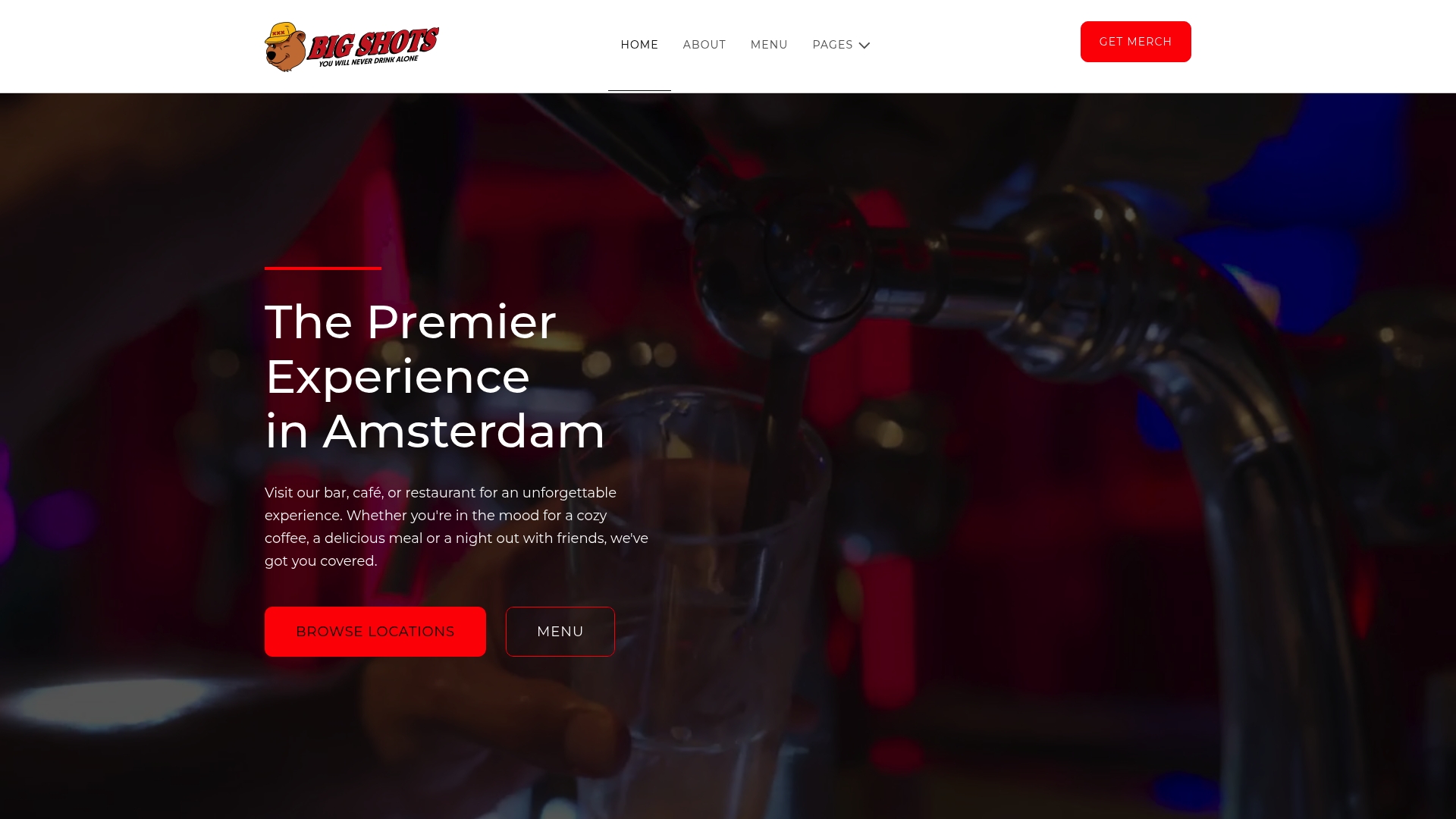
Bigshotsamsterdam brings the bar-restaurant hybrid concept to life in Amsterdam, combining a sports bar, shisha lounge, restaurant, and café into one venue built for every kind of night. Whether you are planning a dinner, a late-night social, or a full evening that covers both, visit Bigshotsamsterdam and see how a well-run hybrid actually feels from the inside.