
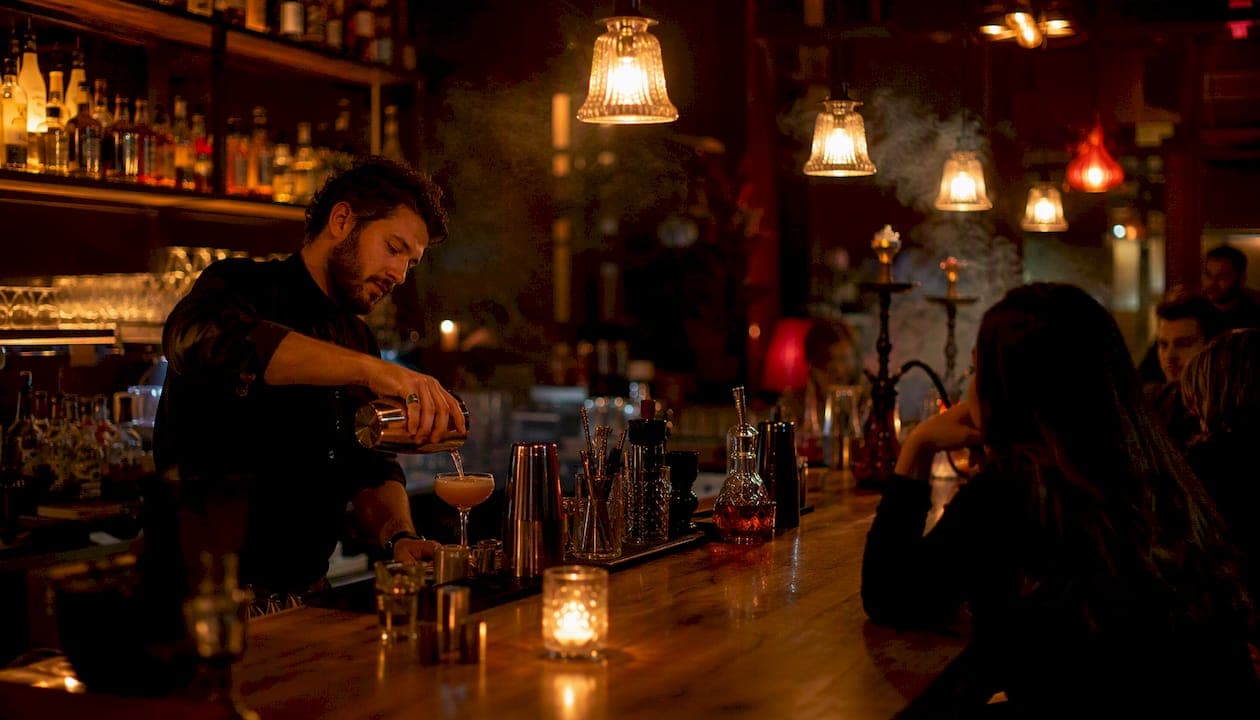
A local hangout spot is a third place: a public or semi-public setting distinct from home and work where people gather regularly, voluntarily, and without a formal agenda. The term comes from urban sociologist Ray Oldenburg, and the concept is more precise than it sounds.
Core features to look for at a glance:
- Neutral ground — nobody owns the space socially; anyone can show up and feel welcome
- Informal conversation — talk, not transactions, is the main activity
- Affordable access — a cheap coffee or a free bench keeps the barrier low
- Regulars and rituals — the same faces, the same corner table, the same Tuesday crowd
In the Netherlands, these qualities show up in brown cafés (bruine kroegen), local Amsterdam cafés, weekend markets like the Albert Cuypmarkt, and neighborhood parks. The form varies; the function is the same.
Key Takeaways
A local hangout spot works because it combines neutral ground, affordable access, predictable rhythms, and staff who prioritize relationships over pure transactions.
| Point | Details |
|---|---|
| Core definition | A third place is a public gathering spot distinct from home and work, built on informal conversation and open access. |
| Four cornerstones | Access, uses and activities, comfort and image, and sociability together determine whether a place becomes a community anchor. |
| Market sociability | People have roughly 4.—× more spontaneous conversations in market settings than in supermarkets, per PPS placemaking observations. |
| Fastest operator fix | Fix your hours, add one recurring weekly event, and train staff to greet regulars by name. |
| Bigshotsamsterdam | The Amsterdam venue offers diverse seating, live sports, recurring events, and a mixed local-tourist crowd that fits the hangout checklist. |
Table of Contents
- Where does the "third place" idea actually come from?
- What are the four cornerstones that define a hangout spot?
- What types of local hangouts exist in the Netherlands?
- How can you tell if a place is a true local hangout?
- How can venues and community groups build a real hangout?
- Why do local hangouts matter? What the research says
- What actually makes a place click as a community hangout
- Bigshotsamsterdam fits the hangout checklist
- Sources
Where does the "third place" idea actually come from?
Ray Oldenburg introduced the phrase in his 1989 book The Great Good Place, arguing that healthy communities need a third anchor beyond home and work. His framework has since become the standard reference for urban planners, architects, and hospitality operators worldwide.
The Project for Public Spaces (PPS) extended Oldenburg's thinking into practical placemaking. Where Oldenburg focused on the social experience, PPS translated it into observable design and programming criteria that city planners and venue operators can actually measure and act on. UNESCO has also adopted the third-place framework as a lens for understanding civic life and belonging in urban communities.
One underappreciated point from Oldenburg's work: successful third places create a social-leveling effect. Your job title and family role fade. You are just a person at the bar, at the market stall, or on the park bench. That suspension of status is what makes these places feel genuinely different from a networking event or a family dinner.
What are the four cornerstones that define a hangout spot?
Project for Public Spaces research identifies four dimensions that separate a true community anchor from a place people merely pass through. Each one has concrete, observable signs.
Access and linkage
- Visible from the street, with a permeable edge (windows, open doors, outdoor seating)
- Easy to reach on foot or by bike — a peer-reviewed urban study found that street permeability strongly correlates with sociability and place attachment
- Multiple entry points or seating zones so arriving alone feels natural
Uses and activities
- At least two or three reasons to be there (coffee, Wi-Fi, a game on screen, a weekly market)
- Low-cost or free options that don't require a purchase to justify staying
- Recurring programming — weekly trivia, live music, a regular market day — that builds repeat visits
Comfort and image
- Seating that invites lingering: varied heights, movable chairs, a mix of bar stools and sofas
- Clean, safe, and well-lit enough that people feel comfortable arriving alone
- A visible "personality" — art on the walls, a distinctive smell, a sound level that allows conversation
Sociability
- Regulars who greet each other and the staff by name
- Spontaneous conversation between strangers (not just within groups)
- Staff who know their repeat customers — this staff-to-regulars connection is often what turns a commercial venue into a community anchor
Pro Tip: On a single visit, sit near the bar or counter for 15 minutes and count how many times a staff member greets someone by name. Three or more is a reliable signal you've found a real hangout.
What types of local hangouts exist in the Netherlands?
The Netherlands has a particularly rich set of place types that map onto the third-place definition. Here is how the most common ones function:
- Brown cafés (bruine kroegen) — the Dutch archetype. Dark wood, low lighting, jenever on the shelf. Best visited on a weekday afternoon or Sunday when the regulars settle in for hours. See Amsterdam bar design for what makes the layout work socially.
- Neighborhood cafés and coffee bars — lighter, often with Wi-Fi and a mixed-age crowd. Morning and early afternoon are peak hangout hours.
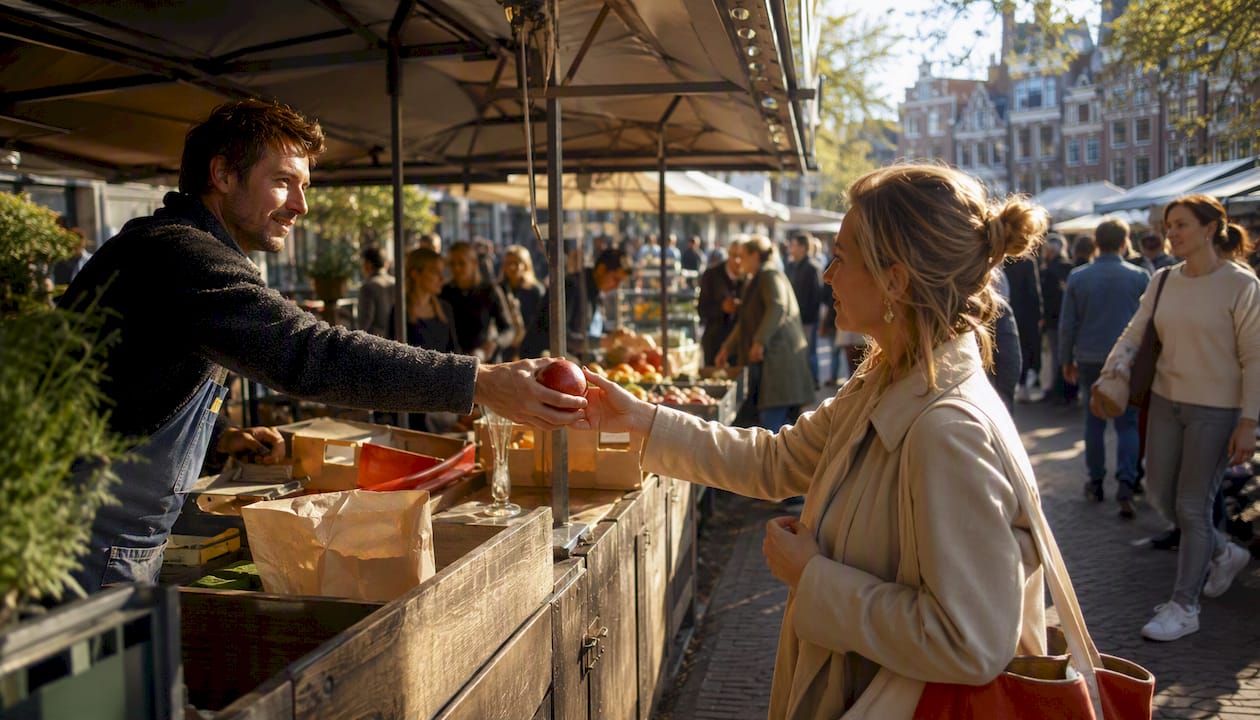
- Street markets — the Albert Cuypmarkt in De Pijp, the Noordermarkt in Jordaan. Saturday mornings are when the social density peaks. Local food experiences at market stalls are one of the most reliable ways to spark spontaneous conversation with strangers.
- Parks and plazas — Vondelpark, Oosterpark, and smaller buurtparken function as hangouts in warm months, especially around fixed benches and kiosks.
- Community centers (buurthuizen) — structured programming (language classes, chess clubs) creates the recurring rhythm that builds regulars.
- Sports bars and hybrid venues — live sport creates a shared focal point that lowers the barrier to talking to strangers. See the Amsterdam hospitality guide for a broader overview of how these spaces function.
How can you tell if a place is a true local hangout?
Run through this checklist on your next visit. Seven or more "yes" answers is a strong signal.
Red flags to watch for: aggressive table-time policies, prices that make a single drink feel like a commitment, no sight-lines to the street, and staff who don't acknowledge returning faces.
Pro Tip: Set a 15-minute timer when you arrive. Note whether anyone greets the staff unprompted, whether two separate groups make eye contact or exchange words, and whether the seating arrangement makes it easy to see other people. Those three observations tell you more than an hour of passive sitting.
How can venues and community groups build a real hangout?
The MU Extension's community guide on third places distills Oldenburg's criteria into practical actions. The most effective ones are also the cheapest.
For venue operators:
- Fix your hours and stick to them. Predictability is what allows regulars to form. A place that opens "whenever" never builds a Tuesday crowd.
- Arrange seating for interaction, not just capacity. Bar counters, communal tables, and movable chairs outperform rows of fixed two-tops for generating sociability.
- Keep at least one affordable option on the menu. A €2.50 coffee or a free water signals that lingering is welcome.
- Train staff to remember names. One recognized regular is worth ten first-time visitors for building the atmosphere that attracts more regulars.
- Add one recurring weekly event — a quiz night, a live set, a themed evening. Recurring programming is what converts visitors into regulars.
For community groups and organizers:
- Run a pop-up in an underused space (a parking lot, a church hall, a market square) on a fixed day each week. Consistency matters more than scale.
- Designate a volunteer host whose job is to introduce newcomers to regulars. That one role does more for belonging than any amount of décor.
- Keep the entry free or very low-cost. The moment financial pressure enters, the social dynamic shifts.
Pro Tip: The balance between welcoming newcomers and preserving a core of regulars is the hardest thing to manage. Solve it by having staff actively introduce first-timers to a regular — one warm introduction is more effective than a welcome sign.
Why do local hangouts matter? What the research says
The social case for third places is well-documented. PPS research shows that places scoring high on all four cornerstones attract measurably more social participation than those that score well on only one or two. The effect compounds: more sociability attracts more regulars, which deepens the sense of belonging, which attracts still more people.
One striking data point from PPS placemaking observations: people have roughly 4.— times more spontaneous social conversations in market settings than in supermarkets. The physical layout — open stalls, shared circulation, no checkout pressure — removes the transactional frame and lets conversation happen naturally.
For Dutch neighborhoods specifically, the implications are practical. Local councils and wijkteams that want to strengthen social cohesion get more return from supporting reliable, affordable third places (a well-maintained park bench cluster, a subsidized community café) than from one-off events. Predictable hours and low financial barriers matter more than programming ambition.
The peer-reviewed evidence points in the same direction. A study published in Environment and Behavior found that seating, shelter, personalization, and street permeability are among the design characteristics most strongly correlated with sociability and place attachment in main-street contexts. Those are cheap interventions. A covered outdoor bench with a view of the street does more work than an expensive interior renovation.
What actually makes a place click as a community hangout
The academic frameworks are useful, but they can make the whole thing sound more engineered than it is. In practice, the places that work have one thing in common: the staff genuinely like their regulars.
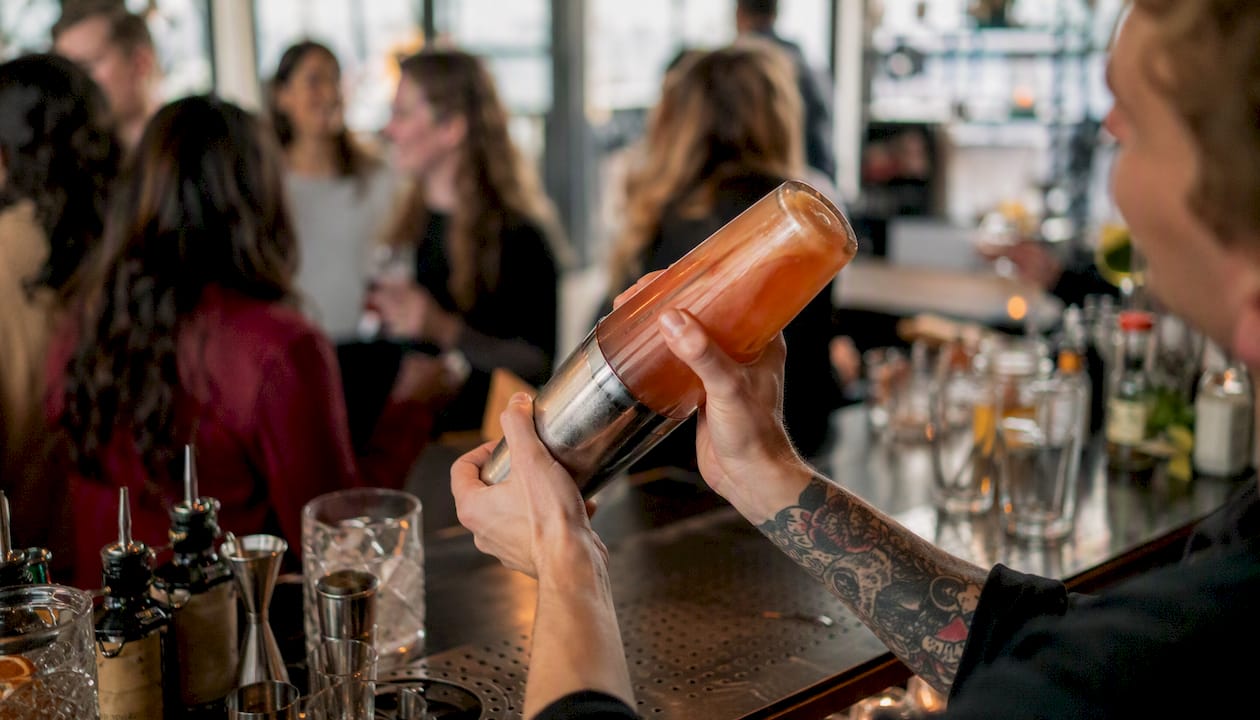
You can feel it the moment you walk in. Someone at the bar gets a nod before they've ordered. Two people who arrived separately end up talking because a bartender introduced them. The conversation isn't forced; it just happens because the room is arranged for it and the people running it want it to happen.
What most operators miss is that this isn't a design problem. You can nail the furniture layout, the sight-lines, the affordable menu, and still have a dead room if the staff treat every customer as a transaction. The social-leveling effect Oldenburg described only kicks in when the people running the place actively suspend the commercial frame, at least for a moment.
Supporting local places means showing up consistently, not just on special occasions. Attend the weekly quiz. Buy the cheap coffee on a Tuesday afternoon. Tell someone else about it. The regulars are the infrastructure.
Bigshotsamsterdam fits the hangout checklist
Bigshotsamsterdam is the publisher of this article and a working example of the checklist above. The Amsterdam venue combines a sports bar, shisha lounge, restaurant, and café under one roof — diverse seating zones, predictable event programming, live sports on screen, and a repeat clientele that spans locals and visitors. It checks the boxes: affordable linger options, visible from the street, recurring events, and staff who recognize returning faces.
If you want to experience what the checklist looks like in practice, visit Bigshotsamsterdam to see the current events calendar and book a table.
Sources
- Ray Oldenburg & Karen Christensen: third places, true citizen spaces
- What is a Third Place? Beyond the Buzzword to True Social Connection
- Third Places and the Social Life of Streets
- Creating Third Places for Connection and Belonging | MU Extension
- Pull up a stool at Pete’s Pub — Congress Park’s go-to neighborhood hangout