
TL;DR:
- A true sports bar centers on communal viewing, atmosphere, and crowd energy, not just TVs.
- Key features include multiple screens, group seating, shareable food, and sports-themed decor.
- The best venues foster social experience, diversity, and passionate crowd participation.
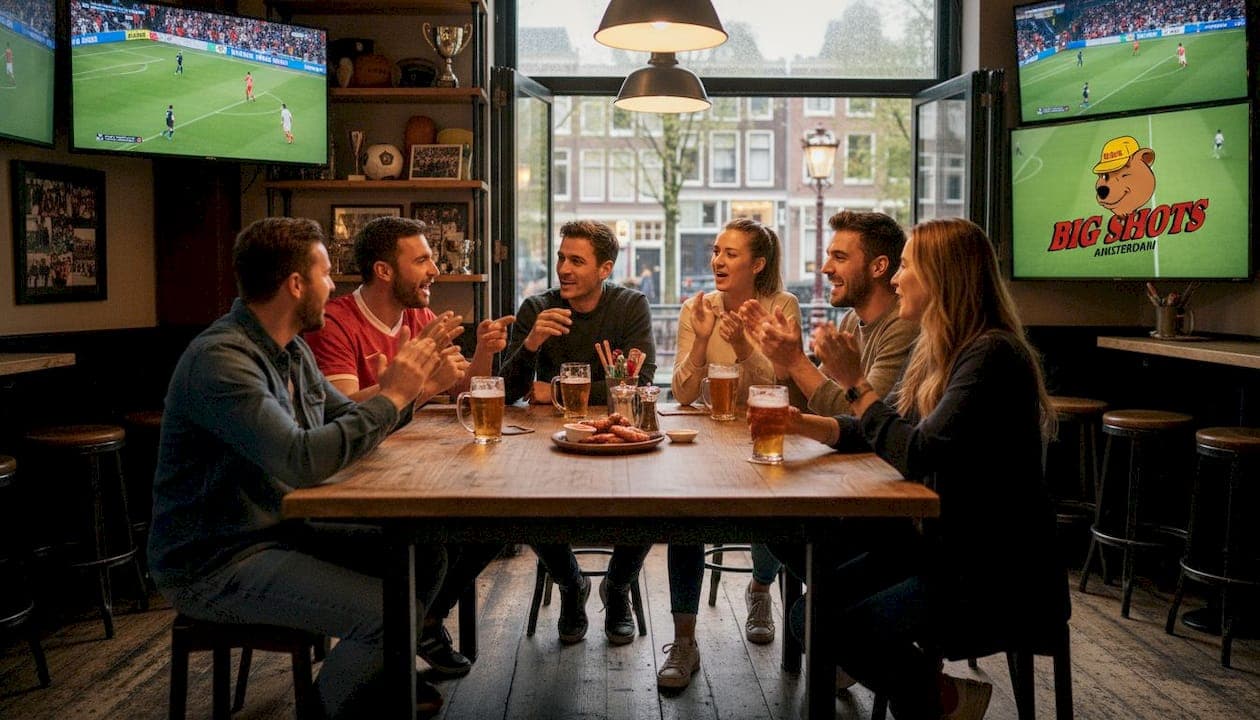
Not every bar with a flatscreen on the wall qualifies as a sports bar. That might sound obvious, but walk through Amsterdam on a Champions League night and you will find dozens of cafes, pubs, and lounges all claiming the title. A sports bar is a themed experience built around communal watching, crowd energy, and a shared love of the game. This guide cuts through the noise and explains exactly what separates a real sports bar from a regular bar that happened to mount a TV, with a close look at what makes Amsterdam's scene genuinely special.
Table of Contents
- Defining a sports bar: Beyond just TVs
- Core features every real sports bar shares
- Why sports bars thrive: The social and local angle
- How to spot (and enjoy) a great sports bar in Amsterdam-a-great-sports-bar-in-amsterdam)
- Rethinking the sports bar: It's about people, not just screens
- Discover Amsterdam's best sports bar experience
- Frequently asked questions
Key Takeaways
| Point | Details |
|---|---|
| Communal experience | A real sports bar offers lively, communal sports viewing, not just a TV in the corner. |
| Core features matter | Multiple big screens, fan-focused atmospheres, and themed menus set sports bars apart. |
| Local flavor counts | Amsterdam’s sports bars deliver global games, craft drinks, and a welcoming crowd for locals and tourists. |
| Crowd intent is key | It’s the passion of guests, not just decor or equipment, that transforms a bar into a true sports bar. |
Defining a sports bar: Beyond just TVs
Here is a fact that surprises most people: no strict universal definition of a sports bar exists in law or industry regulation. The debate always comes back to intent, layout, and the crowd. Is the room designed around watching? Are people there specifically for the game? Does the energy shift when a goal is scored?
That last question matters more than any technical checklist. A bar with forty screens and zero atmosphere is just a loud room. A bar with six screens, great sightlines, and a crowd that erupts on every play is unmistakably a sports bar. The difference is purpose.
Modern sports bars emphasize communal viewing and atmosphere over music or dancing. That is a meaningful distinction. A nightclub wants you on the floor. A sports bar wants you in your seat, leaning forward, sharing the moment with strangers who suddenly feel like teammates.
What does that actually look like in practice? A few defining traits stand out:
- Screens positioned for group visibility, not just decoration
- Seating arranged in clusters so groups can watch together
- Sound design that balances commentary with conversation
- A crowd gathered specifically to watch a sporting event
- Themed decor that signals sports culture, not just generic bar aesthetics
- A menu built for sharing, not just drinking
"The sports bar is less about the hardware and more about the collective experience of watching something that matters to everyone in the room."
Amsterdam adds its own layer to this. The city draws visitors from across Europe and beyond, which means a great sports bar here needs to cover multiple leagues, time zones, and fan cultures at once. That is a harder job than it sounds. Pulling it off is what creates a great sports bar atmosphere that works for both locals and first-time visitors.
Core features every real sports bar shares
With the definition in focus, let's look at the concrete elements that separate a genuine sports bar from a typical pub or casual café.
Key features include multiple TVs, memorabilia, games, group seating, advanced sound, and deeper menus. That combination is not accidental. Each element serves the communal watching experience in a specific way. Multiple screens mean no bad seats. Memorabilia signals that sports culture is the identity of the place, not an afterthought. Game tables like pool or foosball keep energy high between matches.
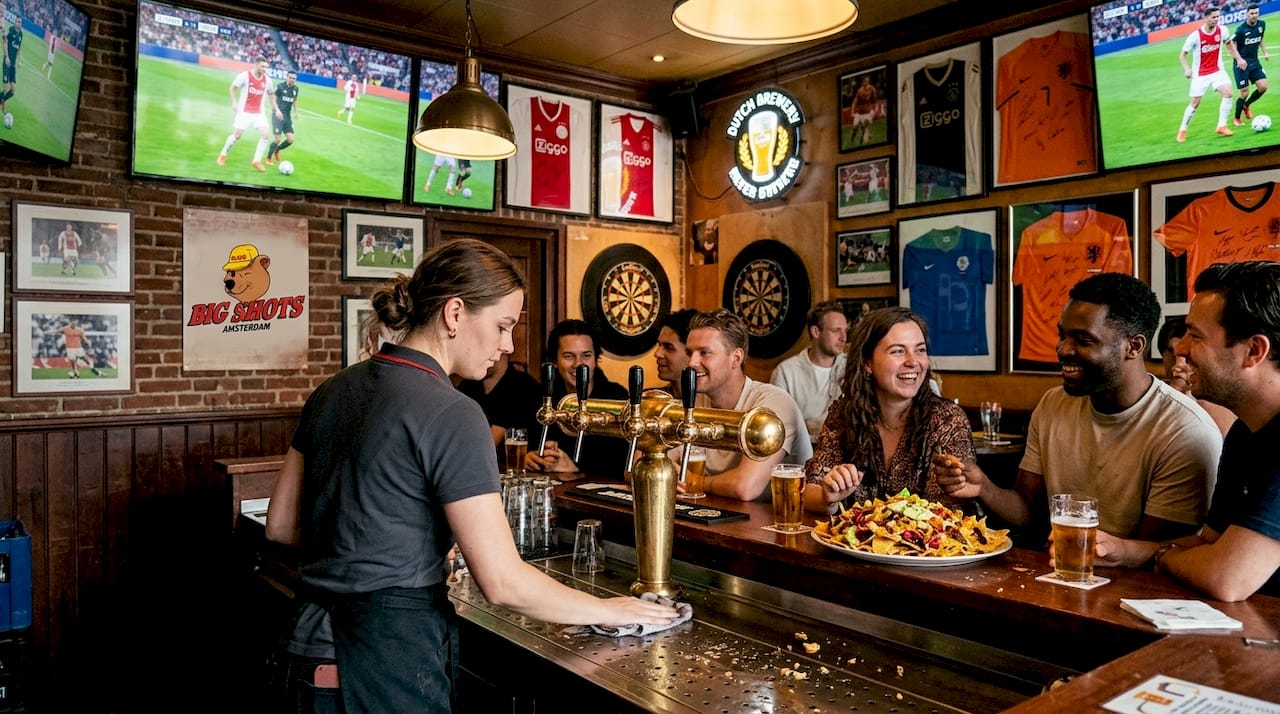
Visibility from all seats, shareable food, and efficient game-night staffing define the modern sports bar. Shareable food is worth pausing on. Wings, loaded fries, and platters are not just popular because they taste good. They are social foods. You pass them around, you argue over the last piece, you bond over the meal. That is by design.
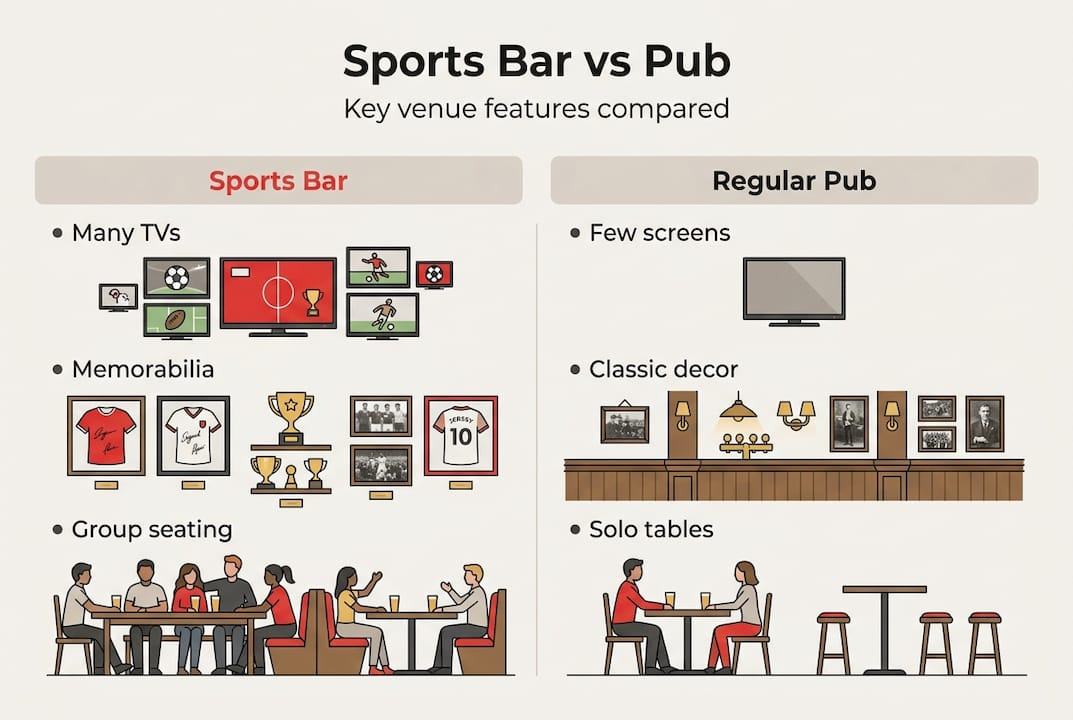
Here is how a sports bar compares to other common venue types:
| Feature | Sports bar | Regular pub | Casual bar |
|---|---|---|---|
| Multiple large TVs | Always | Sometimes | Rarely |
| Sports-themed decor | Central | Occasional | No |
| Group seating focus | Yes | Mixed | Mixed |
| Shareable food menu | Yes | Sometimes | Rarely |
| Sound tuned for commentary | Yes | No | No |
| Crowd gathers for sports | Core purpose | Incidental | Incidental |
The gap between a sports bar and a regular pub is wider than most people realize. A pub is built for general socializing. A sports bar is built for a specific shared activity.
Pro Tip: When scoping out a sports bar in Amsterdam, look up before you sit down. If the screens are mounted high and angled toward the room rather than just facing one wall, the venue was designed with the viewer in mind. That small detail tells you a lot about how seriously they take the experience.
Modern venues are also raising the bar on tech. High-definition screens, surround sound calibrated for sports commentary, and app-based ordering during live matches are now part of what fans expect. Checking an Amsterdam sports bar checklist before you visit can save you from a disappointing experience. Staying current on sports bar trends also helps you know what the best venues are doing differently.
Why sports bars thrive: The social and local angle
Now that the ingredients are clear, let's look at why locals and travelers alike flock to these lively venues.
The appeal is not just about the game. It is about watching the game with people. There is a measurable difference between seeing a match alone on your couch and experiencing it in a room full of fans who care just as much as you do. That shared tension, that collective exhale when a shot goes wide, is something no home setup can replicate.
The numbers back this up. Sports bar patrons average 2.5 hours during NFL games, and wings are the top-ordered food by a wide margin. People are not just stopping in for a quick drink. They are settling in, ordering food, and making an evening of it. That behavior tells you everything about how these venues function as social anchors.
Amsterdam's sports bar scene reflects the city's mix of cultures and energy. You will find locals watching Eredivisie matches alongside tourists catching an NBA game or a rugby final. The best venues handle this beautifully by running multiple screens on different events at the same time.
Some of the most popular spots in the city show just how diverse the offer can be:
- Coco's Outback runs 26 screens and draws a loyal crowd for international sports
- Satellite Sportscafé pairs screens with food deals that keep groups coming back
- Belushi's caters to a tourist-heavy crowd with a broad sports program
What ties these venues together is their understanding that the social experience is the product. The game on screen is the reason people show up. The food, the drinks, the seating, and the crowd are the reasons they stay. Exploring Amsterdam hospitality sports venues gives you a clearer map of what the city has to offer across different neighborhoods and styles.
How to spot (and enjoy) a great sports bar in Amsterdam
So how can you make the most of Amsterdam's sports bar scene? Here is your hands-on guide.
First, understand that the line between a regular bar and a sports bar can blur. Even a standard bar can shift into sports bar territory during a major event if the crowd is actively engaged and the screens take center stage. Context matters. A Champions League final changes a room.
Here is a step-by-step approach to finding and enjoying the real thing:
- Check the screen setup first. Multiple large screens with good angles mean the venue was designed for watching.
- Look at the seating. Group tables and booths signal that the place expects people to come in together.
- Listen to the sound. Commentary should be audible without drowning out conversation.
- Scan the menu. A full food menu with shareable options means you can stay for the whole match.
- Read the crowd. Are people there for the game or just passing through? Energy tells you everything.
Here is a quick reference for timing your visit:
| Event type | Best arrival time | Why it matters |
|---|---|---|
| Premier League match | 30 min before kickoff | Seats fill fast near game time |
| Champions League night | 45 min before kickoff | High demand, especially in tourist areas |
| NBA or NFL (late night) | At tip-off or kickoff | Smaller crowd, more relaxed atmosphere |
| Local Eredivisie game | 20 min before kickoff | Loyal local crowd, arrive early |
Pro Tip: Visit during a mid-week match rather than a weekend blockbuster if you want a better seat and more attentive service. The atmosphere is still great, and you will have more room to actually enjoy the game.
If you want to go deeper on Amsterdam's nightlife beyond sports bars, the Amsterdam bar hopping guide is a solid resource. And if you are curious about what to drink while you are there, the guide to authentic Amsterdam drinks is worth a read before your visit.
Rethinking the sports bar: It's about people, not just screens
Here is a perspective that gets lost in the conversation about TVs, tech, and menus: the best sports bar experience you will ever have probably had nothing to do with screen resolution.
It had to do with the person next to you jumping out of their seat. The stranger who bought the table a round after a last-minute winner. The collective groan that made you feel less alone in defeat. Vibe and patron intent matter as much as physical features, and that is something no amount of hardware can manufacture.
In Amsterdam, this is especially true. The city's mix of nationalities means that on any given night, a sports bar might hold fans from six different countries all watching different games. That diversity, handled well, creates something genuinely special. It is not just a bar. It is a temporary community.
The venues that understand this invest as much in their staff, their seating flow, and their crowd energy as they do in their AV setup. A welcoming, passionate crowd will always outperform a technically perfect but soulless room. That is the real standard worth holding sports bars to.
Discover Amsterdam's best sports bar experience
If you are ready to experience everything a real sports bar should be, Amsterdam has exactly what you are looking for.
Big Shots Amsterdam brings together live sports, a full restaurant menu, craft cocktails, and a shisha lounge under one roof. Whether you are catching a Champions League match, grabbing a steak dinner, or just settling in for a relaxed evening with friends, the venue is built for exactly that kind of night. It is the kind of place where the crowd, the food, and the energy all work together. Stop by and see what a real Amsterdam sports bar feels like.
Frequently asked questions
What makes a sports bar different from a regular pub?
A sports bar is built around communal sports viewing, with multiple TVs, themed decor, and a crowd that gathers specifically to watch games. Key elements include crowd intent and atmosphere, not just the presence of screens.
Can any Amsterdam bar become a sports bar during big games?
Yes, during major events some pubs temporarily adopt the feel of a sports bar when the crowd shifts its focus to communal watching. Regular pubs can become sports bars if the environment and intent align during a big match.
What are the most popular foods and drinks in sports bars?
Wings are the top food item, ordered at 82% of sports bar visits, and draft beer accounts for roughly 35% of total sales. These choices reflect the shareable, social nature of the sports bar experience.
Are sports bars in Amsterdam suitable for tourists?
Absolutely. Amsterdam's top sports bars welcome both tourists and locals, with international sports coverage, group seating, and a relaxed atmosphere. Venues like Coco's Outback and Belushi's are well known for catering to a mixed crowd.