
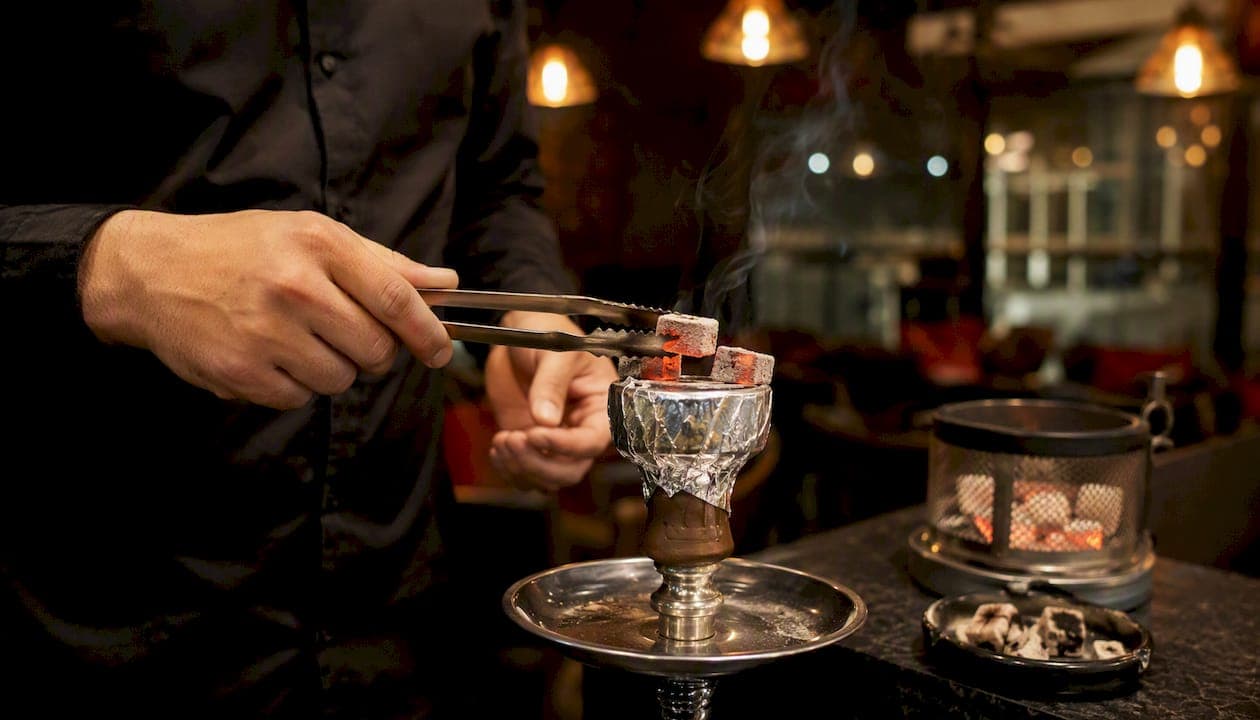
The charcoal shisha method is the lounge practice of using lit charcoal as the heat source to vaporize shisha tobacco, with trained staff managing every step from lighting to disposal. You never touch the coals. Staff do.
The core elements, in order:
- Charcoal type: natural coconut coals or quick-light coals
- Lighting device: electric coil burner, commercial starter box, or approved oven
- Heat delivery: aluminum foil or a heat-management device (HMD) placed over the bowl
- Coal placement and rotation: staff position, flip, and replace coals throughout your session
- Safety handling and disposal: metal tongs, covered metal containers, and wet-down ash disposal
Key Takeaways
The charcoal shisha method requires trained staff to light, place, rotate, and dispose of coals safely, using natural coconut coals and approved equipment throughout the session.
| Point | Details |
|---|---|
| Natural coals are the professional standard | Coconut coals burn cleaner and longer than quick-lights, with no chemical taste. |
| Full ash coverage means the coal is ready | Staff should wait until coals glow red on all sides with a thin gray ash before placing them. |
| Staff handle all coals, always | Customers should never be handed tongs or asked to manage lit coals at the table. |
| Key safety limits apply | U.S.-style codes cap lighted coals at 2.2 lb, require 5-foot clearance from combustibles, CO alarms, and outdoor-venting ventilation. |
| Bigshotsamsterdam follows these practices | The Amsterdam venue uses trained staff, proper burners, and staff-only coal handling as standard. |
Table of Contents
- What types of charcoal do lounges actually use?
- How lounges light and prepare coals before your session
- How heat gets managed during your session
- Safety rules lounges follow for charcoal handling
- What you should expect as a paying guest
- Equipment every safe lounge should have on hand
- What Bigshotsamsterdam's approach tells you about the method
- The part most lounge guides skip entirely
- Experience the charcoal shisha method at Bigshotsamsterdam
- Sources
What types of charcoal do lounges actually use?
Two types dominate the industry, and the difference shows up in your smoke before you finish your first bowl.
Quick-light coals are pre-treated with a chemical accelerant, usually potassium nitrate, so they ignite with a lighter in roughly 2–3 minutes. The upside is obvious: fast service. The downside is that the accelerant can leave a chemical edge on the first few draws, and the fumes during lighting are stronger. Most professional lounges avoid them for seated sessions, though some keep them for emergencies or private events where setup speed matters most.
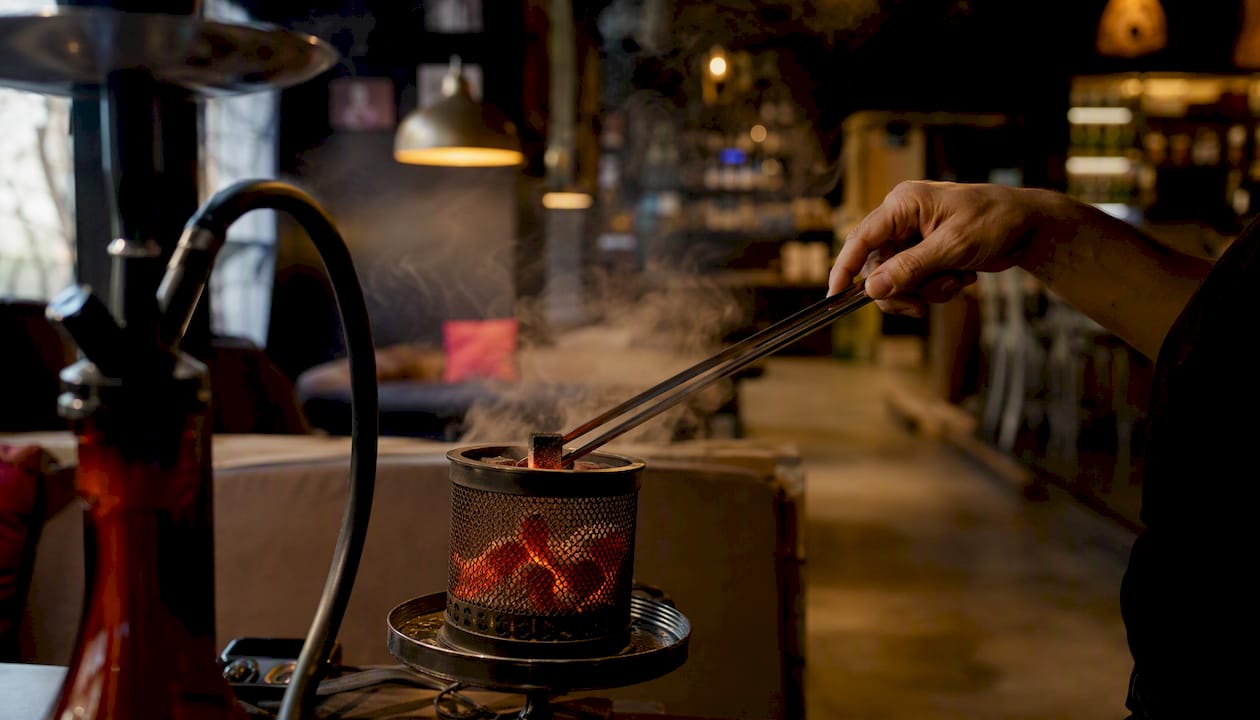
Natural coconut coals are pressed from coconut shell charcoal with no chemical binders. They take longer to light, require a burner or starter box, and need a full 8–12 minutes before they are ready. What you get in return is cleaner flavor, longer burn time, and more consistent heat across the session. According to Hookah, natural coals are the professional standard precisely because their accelerant-free composition does not interfere with the shisha's flavor profile.
| Feature | Quick-light coals | Natural coconut coals |
|---|---|---|
| Ignition method | Lighter or open flame | Electric burner or starter box |
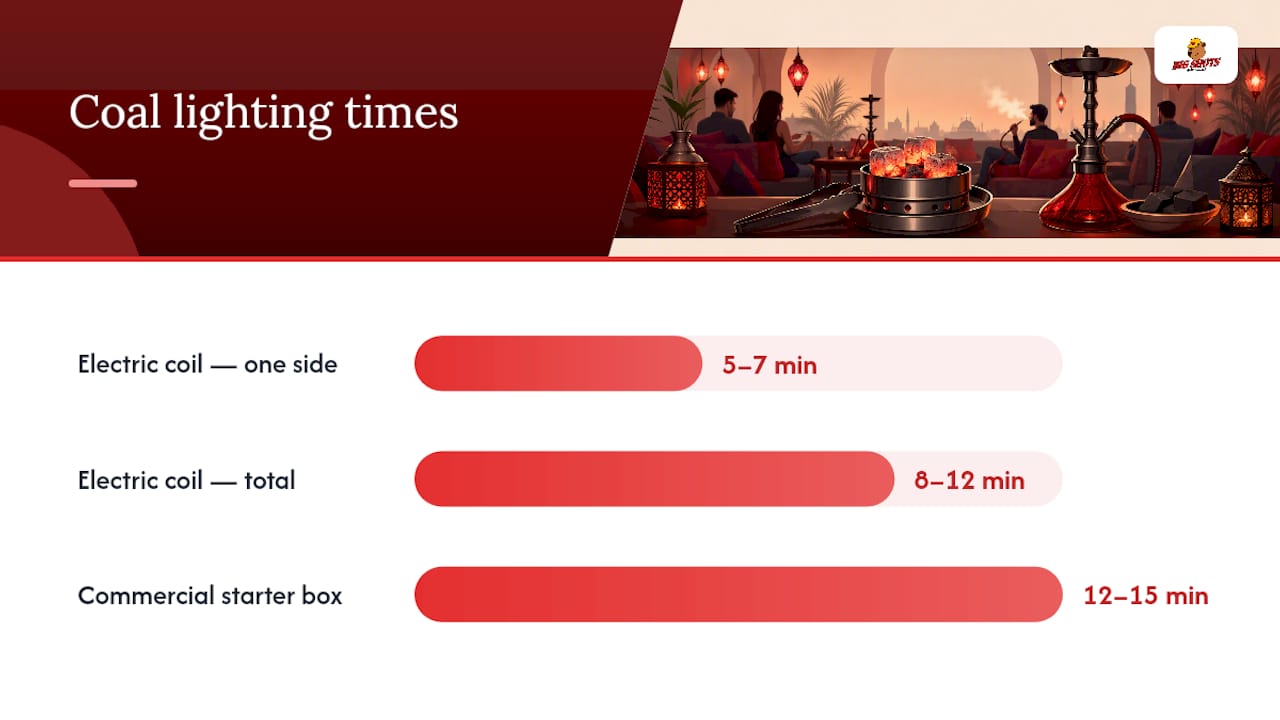
| Lighting time | 2–3 minutes | 8–12 minutes |
| Flavor impact | Chemical taste possible | Clean, neutral |
| Burn duration | Shorter | Longer, more consistent |
| Lounge preference | Backup/emergency use | Primary session coal |
Pro Tip: If your first few draws taste faintly chemical or metallic, ask staff whether quick-light coals were used. A good lounge will switch or let the coal burn off fully before placing it on your bowl.
How lounges light and prepare coals before your session
Lighting coals correctly is where safety and session quality intersect. Rushing this step is the single most common cause of uneven heat and partially lit cores.
The most common lighting methods in professional lounges:
- Electric coil burner: The standard for most lounges. Coals sit directly on the coil. Staff place them flat, heat one side for 5–7 minutes, then flip to finish the other side. Total time runs 8–12 minutes for coconut coals on a typical unit.
- Commercial starter box: A sealed or semi-enclosed electric unit that handles 20–30 cubes at once and finishes ignition in 12–15 minutes with controlled airflow. High-volume lounges invest in these because they contain sparks and speed up service during busy hours.
- Approved indoor oven or outdoor oven: Some venues use commercial kitchen ovens or dedicated outdoor units where local codes permit.
- Small LPG torch: Used in limited circumstances where local fire codes allow, typically for touching up edges rather than full ignition.
The readiness cue is specific: a coal is ready when it glows red on all sides and is covered in a thin, light-gray ash. Any dark patches mean the core is still cold. Omnico's professional lighting guide stresses that overcrowding a burner slows ignition and that flipping coals halfway through prevents partially lit cores, which look ready but underpower the session.
Once lit, staff transfer coals using long metal tongs into a covered metal carrier or back onto a noncombustible surface. They never carry loose lit coals across a room by hand.
Pro Tip: Watch whether staff flip coals during lighting. A lounge that skips the flip often serves partially lit coals, which means weak smoke for the first 10 minutes of your session.
How heat gets managed during your session
Getting the coal on the bowl is only the start. Heat management is what separates a 45-minute session from a flat, harsh one.
Foil vs. heat-management devices
Foil is the traditional method: a sheet of heavy-duty aluminum foil stretched over the bowl with small holes poked through to let heat pass. It works, it is cheap, and most lounges have it. The limitation is that heat distribution depends entirely on hole pattern and coal placement, which varies by staff.
Heat-management devices (HMDs) like Kaloud Lotus-style units sit on top of the bowl and hold coals inside a metal chamber with adjustable vents. Hookah Vault's HMD guide explains that HMDs improve even heat distribution, reduce ash falling into the bowl, and extend coal life compared to foil when used correctly.
Coal placement during a session
- Start with 2–3 coals placed at the outer edge of the foil or HMD, not the center
- Move coals inward gradually as the session progresses and the tobacco warms
- Rotate coals every 10–15 minutes to prevent hot spots on one side of the bowl
- Replace coals when they are mostly ash and heat output drops noticeably
- Staff should add a fresh coal before the session goes cold, not after
Troubleshooting cues
Harsh or burnt taste means too much heat. Wispy, thin smoke means not enough. Both are fixable mid-session if you flag staff early rather than waiting.
Pro Tip: If your lounge uses HMDs, ask staff to open the vents slightly at the start and close them halfway through. This extends coal life and keeps heat consistent without a mid-session swap.
Safety rules lounges follow for charcoal handling
Charcoal combustion produces carbon monoxide, which is odorless and accumulates fast in poorly ventilated rooms. U.S. fire-code-style guidance, modeled on rules like FDNY's COF F61 / 3RCNY-310-03, sets specific numeric limits that professional lounges follow.
| Requirement | Specification |
|---|---|
| Maximum lighted coals on premises | 2.2 lb at any one time |
| Clearance from combustibles | 5 feet minimum |
| Ventilation | Exhaust must discharge outdoors; no recirculation |
| CO alarms | Required in preparation and smoking rooms |
| Who may handle lighted coals | Trained staff or certificate holders only |
| Coal storage | One-day supply near burners; larger stock in secured, noncombustible storage |
Key disposal and handling rules:
- Spent coals go into a covered metal container, never a trash bin or cardboard box
- Ashes must be thoroughly wetted down before disposal; even small embers can smolder for hours and ignite nearby waste through radiated heat
- A 2-A:10-B:C-rated portable fire extinguisher must be accessible in the preparation area
- Lighted coals must never be stored near flammable accelerants or combustible materials
South Wales Fire & Rescue's shisha bar guidance reinforces that improper disposal of cooled or still-hot embers is one of the most common causes of shisha venue fires, and that wet-down disposal is the non-negotiable final step.
What you should expect as a paying guest
A well-run lounge makes its safety practices visible without making them feel clinical. Here is what professional charcoal service looks like from your seat.
Signs of safe, professional operation:
- Staff handle all coals with long metal tongs, never bare hands
- A coil burner, starter box, or enclosed oven is visible in the prep area
- Hookahs sit on noncombustible surfaces (metal trays, stone countertops)
- CO alarms are mounted in the smoking room
- Spent coals go into a covered metal container, not a trash can
Questions worth asking staff:
- "Do you use natural or quick-light coals?"
- "Who handles the lit coals during the session?"
- "How do you dispose of used coals?"
Red flags to take seriously:
- Customers are handed tongs and asked to manage their own coals
- Staff use a lighter or open flame directly on coals at the table
- Coals are stored next to paper napkins, cardboard, or other combustibles
- No visible ventilation, no CO alarm, or strong chemical smell in the room
For a fuller picture of what a social shisha night should feel like, the experience goes well beyond coal management.
Equipment every safe lounge should have on hand
This is a practical checklist, not a wish list. A lounge missing any of these items is cutting corners somewhere.
- Electric coil burner or commercial starter box for lighting coals away from the guest area
- Long metal tongs (minimum 12 inches) for all coal transfers
- Metal charcoal carrier for moving lit coals safely between prep and service areas
- Covered metal container for collecting spent and partially used coals
- Noncombustible mats or trays under every hookah
- CO alarms in both the preparation room and the smoking area
- 2-A:10-B:C-rated fire extinguisher mounted within reach of the prep station
The carrier and extinguisher should never be more than a few steps from the burner. Staff should transport coals in the carrier with the lid on, even for short distances.
Pro Tip: Ask to see the prep area before you sit down. A lounge confident in its setup will not hesitate. One that deflects the question is telling you something.
What Bigshotsamsterdam's approach tells you about the method
The coals we use, how we light them, and how we manage heat during a session are not afterthoughts. They are the difference between a guest who comes back and one who does not. Natural coconut coals, proper burners, and trained staff handling every transfer — that is the baseline, not a premium feature.
Trust signals worth noting for guests evaluating a lounge:
- Flavor pairing and session guidance: shisha and cocktail pairing
- Flavor selection for sessions: shisha flavor examples
Note: Leo's professional background and any available customer testimonials can be integrated here when provided.
The part most lounge guides skip entirely
Most explainers on the charcoal shisha method focus on flavor and session length. They treat safety as a footnote. That framing gets it backwards.
The fire-code limits, the CO alarm requirements, the wet-down disposal rule — these exist because charcoal in an enclosed room is genuinely hazardous when mishandled. A lounge that skips any of these steps is not offering a slightly worse experience. It is operating outside the bounds of what responsible hospitality looks like.
The other thing most guides understate: partially lit coals are the most common source of a bad session, not the shisha flavor or the hookah itself. A coal that looks ready but has a cold core will underpower the bowl for 10 minutes, then spike heat as it finishes lighting. Staff who flip coals during ignition and wait for full ash coverage prevent this entirely. It is a 90-second step that changes the whole session.
What to prioritize as a guest: watch the prep, not just the product. The coal handling tells you more about a lounge's standards than the menu does.
Experience the charcoal shisha method at Bigshotsamsterdam
Bigshotsamsterdam brings together a full shisha lounge, sports bar, restaurant, and café in Amsterdam, with charcoal preparation handled by trained staff following the hospitality best practices covered in this guide. Natural coals, proper burners, and staff-only coal handling are standard at the venue, not exceptions.
Whether you are a local looking for a regular spot or a tourist planning a night out, the lounge offers shisha sessions alongside gourmet food, craft cocktails, and live sports in a relaxed, well-ventilated space. Book your visit or check availability directly at Bigshotsamsterdam.
Sources
The following sources support the regulatory, technical, and operational claims in this article:
- FDNY — COF F61 / 3RCNY-310-03 (hookah/charcoal guidance)
- Hookah
- OxiCharcoal — How to light coconut charcoal
- Omnico — Ways to light shisha cubes