
TL;DR:
- Entertainment dining combines food with immersive performances, transforming meals into social experiences. It includes formats like multi-sensory, interactive, and performance-based venues, each engaging guests uniquely. This approach boosts loyalty, spend, and market differentiation by creating memorable, emotionally resonant events.
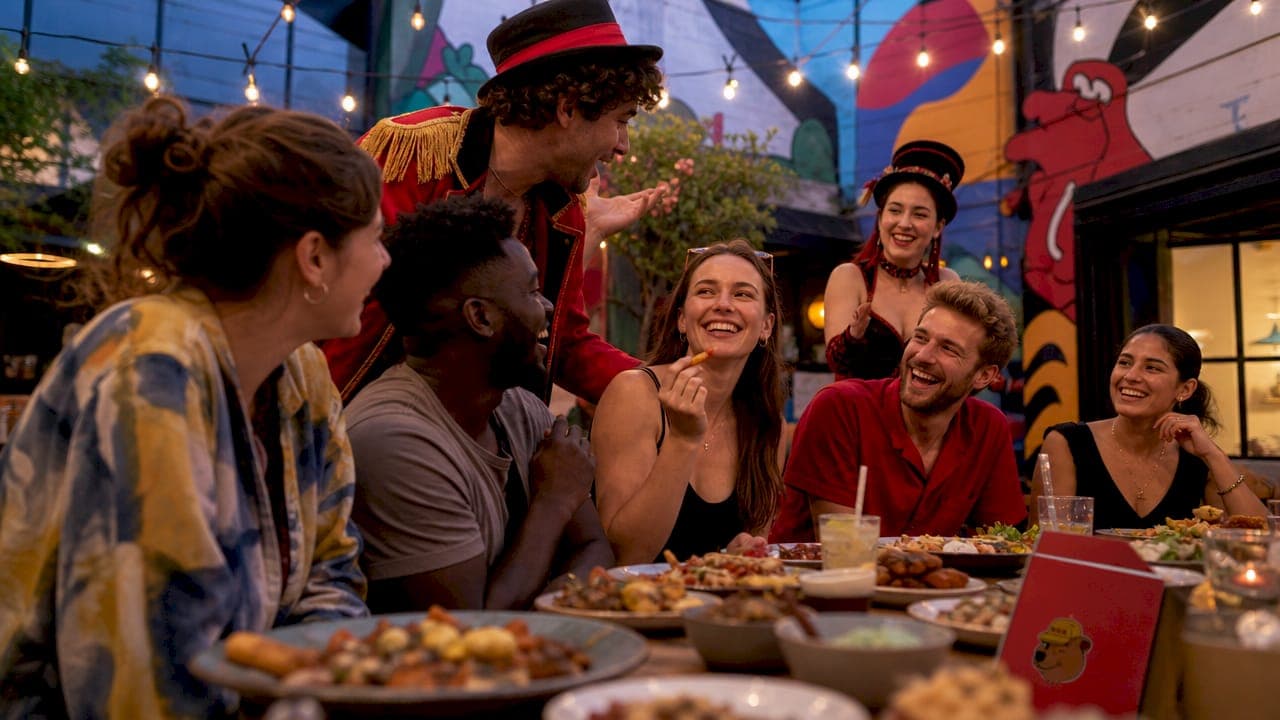
Entertainment dining is defined as a hospitality model that combines food service with immersive, interactive experiences, transforming a meal into a curated social event. Unlike traditional restaurants where food is the sole focus, entertainment dining integrates performance art, themed environments, and multi-sensory stimuli to create emotional engagement. Think murder mystery dinners, immersive theater restaurants, and multi-room themed experiences where guests become active participants rather than passive diners. The industry term for this broader category is experiential dining, and understanding both terms helps you recognize the full scope of what these venues offer.
What is entertainment dining and how does it differ from regular dining?
Entertainment dining, or experiential dining, transcends traditional meal service by weaving interactive elements, multi-sensory stimuli, and performance art directly into the dining format. A standard restaurant asks you to sit, order, eat, and leave. An entertainment dining venue asks you to participate in a story, react to live actors, or engage your senses through coordinated light, sound, and scent.
The core distinction lies in intent. Traditional dining prioritizes food quality and service efficiency. Entertainment dining prioritizes emotional experience, using food as one component of a larger production. The meal itself is still crafted with care, but it serves the narrative as much as the appetite.
Several defining characteristics set this format apart:
- All-inclusive pricing: Most entertainment dining venues bundle the meal and the show into a single ticket price, reflecting the production costs involved.
- Structured timing: Guests follow a set schedule rather than dining at their own pace, with performance and meal phases alternating throughout the event.
- Themed environments: Every design element, from table settings to wall decor, reinforces a specific narrative or sensory concept.
- Guest participation: Many formats require guests to engage directly, whether solving a mystery, interacting with performers, or contributing to the storyline.
Pro Tip: If you are attending entertainment dining for the first time, read the venue's pre-visit guide carefully. Many experiences include physical elements or audience participation that first-timers do not expect.
What are the main types of entertainment dining formats?
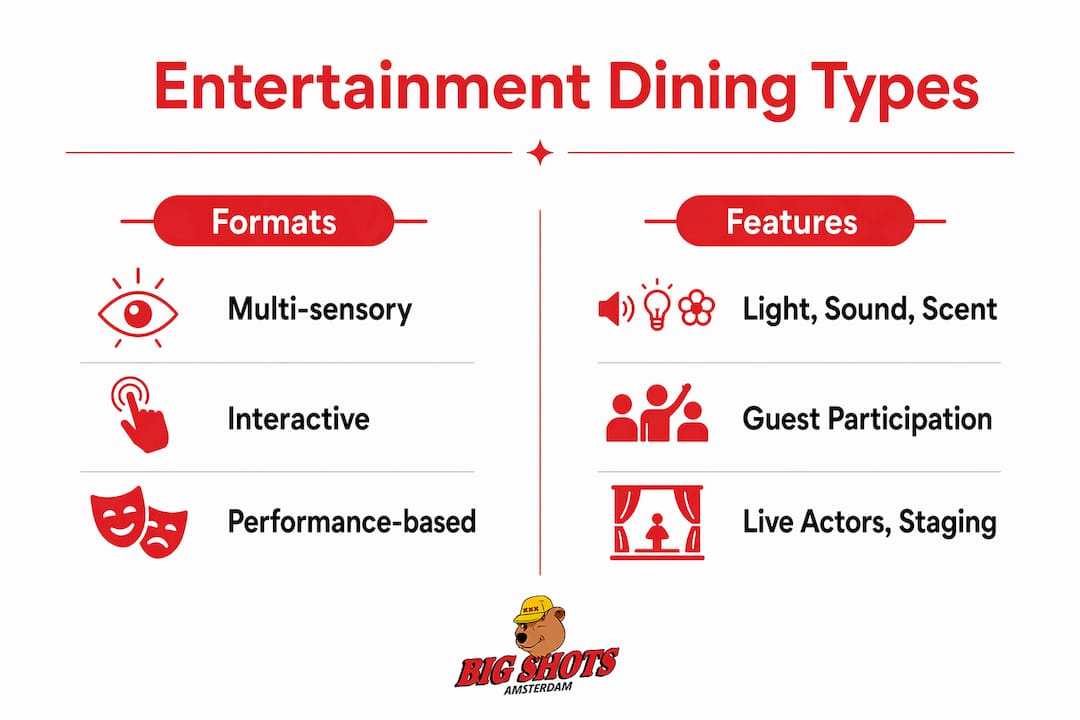
By 2026, entertainment dining had diversified into three primary categories, each designed to engage guests in distinct ways. Industry data shows these formats help venues differentiate themselves among over 660,000 US restaurants competing for attention.
Multi-sensory dining
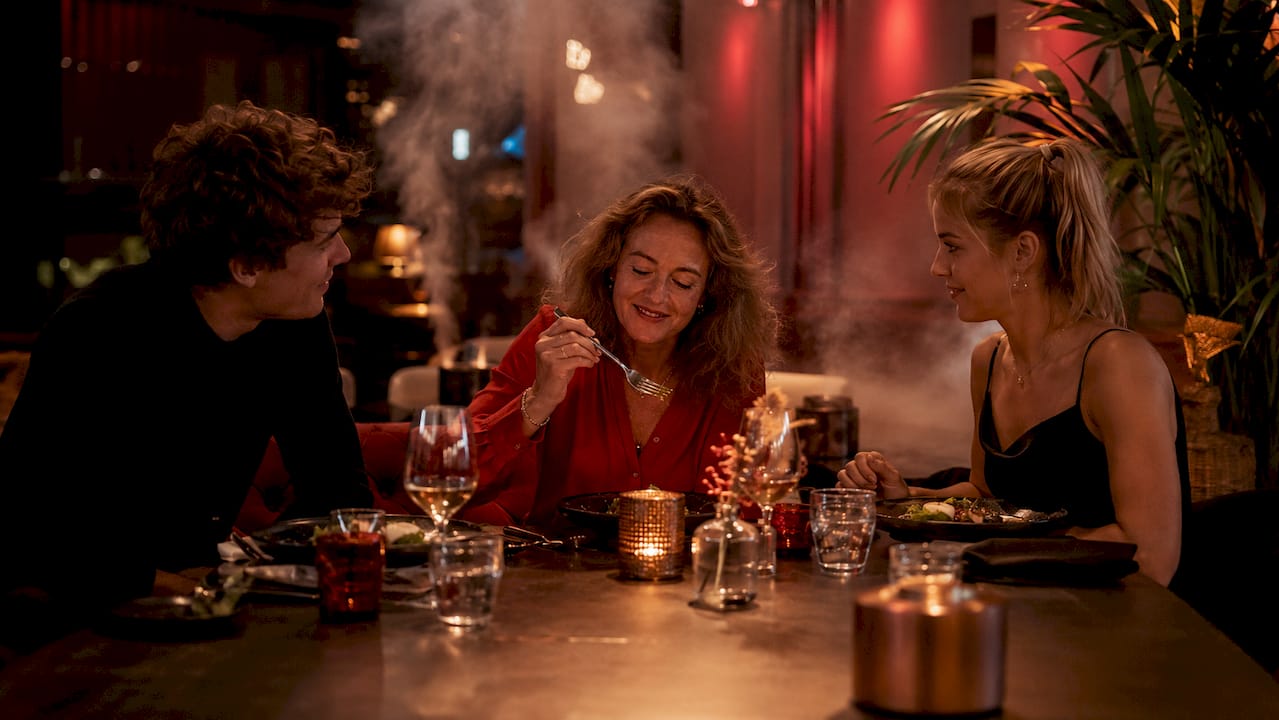
Multi-sensory dining coordinates light, sound, scent, and visual effects to shape how guests perceive and enjoy food. A dish served in near-darkness tastes different than the same dish under bright lights. Venues like Ultraviolet in Shanghai pioneered this format by synchronizing 20-course menus with projected visuals, sound design, and scent diffusion. The result is a meal that feels more like a film than a restaurant visit.
Interactive dining
Interactive dining places guests inside the experience rather than in front of it. This includes formats where guests participate in meal preparation, compete in food-related challenges, or make decisions that affect the course of the evening. The Amsterdam hospitality scene has embraced interactive elements through sports viewing, communal tables, and live entertainment that invites crowd engagement.
Performance-based dining
Performance-based dining uses live actors, scripted narratives, and theatrical staging to create a story guests experience while eating. Murder mystery dinners are the most recognized example, where guests solve a fictional crime over a multi-course meal. Immersive theater restaurants like Sleep No More-inspired dining concepts take this further by letting guests move through multiple rooms, each revealing a new chapter of the story.
| Format | Core feature | Typical setting | Example |
|---|---|---|---|
| Multi-sensory | Light, sound, scent coordination | Controlled, intimate spaces | Ultraviolet, Shanghai |
| Interactive | Guest participation in activities | Open-plan or communal venues | Sports bars, cooking theaters |
| Performance-based | Live actors and scripted narrative | Themed rooms or stage setups | Murder mystery dinners |
| Hybrid | Combines two or more formats | Large-scale event venues | Immersive theater restaurants |
Each format attracts a different type of guest. Multi-sensory dining appeals to food enthusiasts seeking novelty. Interactive formats suit social groups wanting shared activities. Performance-based dining draws guests who want narrative and spectacle alongside their meal.
How does entertainment dining influence customer experience and restaurant success?
The role of entertainment in dining goes well beyond novelty. Emotional resonance through entertainment builds guest loyalty and advocacy more effectively than food quality alone, because it transforms patrons from passive eaters into active participants. A guest who solves a mystery or dances with a performer remembers the evening differently than one who simply ate a good steak.
Environment design is the invisible engine behind this emotional impact. Restaurant music tempo and volume directly influence dining duration, spend, and guest satisfaction. Faster tempos encourage quicker turnover; slower, atmospheric sound design extends the dining experience and increases per-table spend. Entertainment dining venues use this knowledge deliberately, calibrating sound design alongside lighting and service tempo to guide the guest's emotional arc through the evening.
Four measurable outcomes drive venues toward this model:
- Higher average spend per visit: All-inclusive pricing and extended dwell time naturally increase revenue per guest compared to standard table-turn models.
- Stronger word-of-mouth marketing: Guests who experience something memorable share it. A themed murder mystery dinner generates social media content that a standard restaurant rarely does.
- Repeat visit motivation: Venues that rotate themes or update their performance programs give guests a reason to return, which a static menu cannot replicate.
- Market differentiation: In saturated urban markets, a venue offering a food and entertainment experience occupies a distinct category that reduces direct price competition.
"Venues become destinations offering escapes from routine via emotional and social engagement." — Fine Dining Lovers
This shift from transactional to meaningful dining connection is not a trend. It reflects a structural change in what consumers expect from a night out. Guests increasingly evaluate a venue on the full experience it creates, not just the quality of the food on the plate.
What should guests know before attending an entertainment dining experience?
Knowing what to expect from entertainment dining prevents disappointment and helps you get full value from the experience. Entertainment dining experiences are typically time-intensive, lasting around 2 hours, with prices ranging from $148 to $200 per person as of 2026. That price reflects the production value of theatrical elements and curated multi-course menus, not just the food.
Here is what to prepare before you go:
- Budget for the full ticket: Entertainment dining uses all-inclusive pricing, so the cost covers both the meal and the show. Do not compare it to a standard restaurant bill.
- Dress appropriately: Some venues have dress codes tied to their theme. Others, particularly those with physical navigation elements, recommend comfortable footwear.
- Arrive on time: Unlike a restaurant where a late arrival is manageable, entertainment dining follows a program. Missing the opening act means missing context for everything that follows.
- Understand participation levels: Some formats require active involvement; others let you observe. Check the venue's description in advance if you prefer a lower-participation experience.
- Prepare for pacing variation: Performance and eating phases in immersive dining can be distinct, with the first half often focused on the show and the latter on food service. Expect the rhythm to differ from a standard meal.
Some extreme experiential formats go further. Certain venues require guests to wear comfortable clothing and footwear for navigating multi-level or obstacle-style environments. This is a genuine departure from standard dining norms and catches many guests off guard.
Pro Tip: If you are sensitive to sensory stimulation, look for venues that offer quieter seating zones or reduced-intensity options. Many entertainment dining venues accommodate this on request, but you need to ask before booking.
For a broader look at how different dining formats compare, the dining experience guide from Bigshotsamsterdam covers the full spectrum from casual to immersive.
Key takeaways
Entertainment dining is defined by the integration of performance, sensory design, and guest participation into a single curated event, making it fundamentally different from any meal that prioritizes food alone.
| Point | Details |
|---|---|
| Core definition | Entertainment dining combines food service with immersive performance and sensory elements. |
| Three main formats | Multi-sensory, interactive, and performance-based dining each engage guests in distinct ways. |
| Business impact | Venues benefit from higher spend, stronger loyalty, and clear market differentiation. |
| Guest preparation | Expect 2-hour events, all-inclusive pricing, and possible physical or participation requirements. |
| Emotional value | Transforming guests into active participants builds stronger loyalty than food quality alone. |
Why entertainment dining is more than a gimmick
I have spent years watching hospitality trends come and go, and the ones that stick are always the ones that solve a real human problem. Entertainment dining solves the problem of the forgettable evening. Most meals, even excellent ones, blur together within a week. An evening where you played detective, ate in the dark, or watched actors perform three feet from your table does not blur. It stays.
What I find most interesting is how the best venues use restaurant atmosphere design to make the entertainment feel inevitable rather than bolted on. When lighting, music, and service tempo align with the narrative, guests stop noticing the production and start living inside it. That is the standard worth chasing, and most venues are not there yet.
The challenge I see most often is venues that treat entertainment as a marketing layer rather than a structural commitment. A live DJ on Friday nights does not make you an entertainment dining venue. The immersive dining shift requires genuine investment in storytelling, environment, and staff training. Venues that make that investment create something guests genuinely cannot find elsewhere. Venues that do not end up with an awkward hybrid that satisfies neither the food lover nor the experience seeker.
My honest prediction: the next evolution in this space will be personalization. Right now, most entertainment dining formats deliver the same experience to every table. The venues that figure out how to adapt the narrative or sensory environment to individual guest preferences will set the next benchmark.
— Leo
Experience entertainment dining at Bigshotsamsterdam
Bigshotsamsterdam brings the food and entertainment experience to life in the heart of Amsterdam, combining a sports bar, shisha lounge, restaurant, and café under one roof. The venue is built for guests who want more than a meal. Whether you are watching live sports with a crowd, sharing gourmet dishes with friends, or unwinding with craft cocktails in an atmosphere designed for social energy, Bigshotsamsterdam delivers the kind of evening that is worth talking about. Visit Big Shots Amsterdam to explore the menu, check upcoming events, and plan your next dining experience in Amsterdam.
FAQ
What is entertainment dining in simple terms?
Entertainment dining is a dining format that combines food service with live performance, themed environments, or interactive activities, creating a curated event rather than a standard meal.
How much does an entertainment dining experience cost?
Entertainment dining experiences typically range from $148 to $200 per person as of 2026, with all-inclusive pricing covering both the meal and the show or performance elements.
What are the different types of entertainment dining?
The three main types are multi-sensory dining, which uses light, sound, and scent; interactive dining, which involves guest participation; and performance-based dining, which features live actors and scripted narratives.
Do I need to prepare anything special before attending?
Arrive on time, check the dress code, and review the venue's participation requirements in advance. Some venues require comfortable footwear for navigating themed environments, which differs from standard dining expectations.
Is entertainment dining suitable for all occasions?
Entertainment dining works best for special occasions, group outings, date nights, and celebrations where a memorable shared experience matters more than a quick meal.