
TL;DR:
- Gourmet dining focuses on quality, creativity, and intention rather than formality or stars.
- Amsterdam offers diverse and accessible gourmet experiences, from casual to Michelin-rated venues.
- The city values communal enjoyment and innovation, making gourmet food inclusive and ever-evolving.
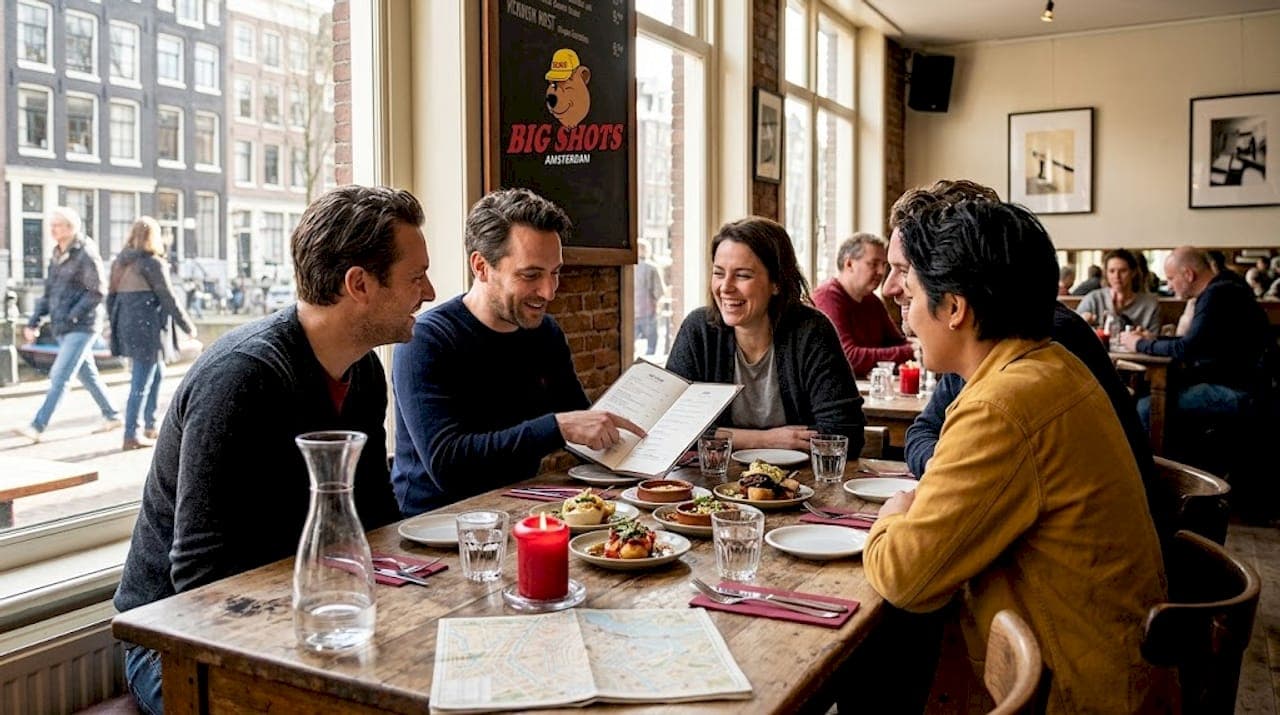
Most people picture gourmet dining as stiff waiters, white tablecloths, and a bill that makes your eyes water. That image has stuck around for decades, but it misses the point entirely. Gourmet dining prioritizes personalization, diversity, and genuinely indulgent meals, whether you're seated in a luxury hotel or at a neighborhood bistro with mismatched chairs. Amsterdam, in particular, has built a culinary identity that challenges every assumption you might carry into this conversation. From plant-based tasting menus to wood-fired kitchens and buzzing sports restaurant hybrids, this city offers gourmet experiences for every kind of food lover and traveler.
Table of Contents
- Defining gourmet dining: Beyond Michelin and fine dining
- Amsterdam's gourmet map: Where to experience creativity and indulgence
- The accessibility of gourmet: Casual, plant-based, and Bib Gourmand
- Personalizing your gourmet journey: Tips for curious diners
- Why Amsterdam's gourmet scene defies easy labeling
- Experience gourmet in Amsterdam: Start at Big Shots
- Frequently asked questions
Key Takeaways
| Point | Details |
|---|---|
| Gourmet is diverse | Gourmet dining in Amsterdam includes everything from starred restaurants to inventive neighborhood gems. |
| Not just fine dining | Gourmet focuses on personalized and creative experiences, not just formal service or ambiance. |
| Accessible options | You can enjoy gourmet flavors at casual venues, including plant-based innovators and Bib Gourmand spots. |
| Personalize your experience | Choosing style, cuisine, and interaction lets you craft your perfect gourmet journey in Amsterdam. |
| Social and vibrant | Many gourmet settings in Amsterdam offer lively atmospheres perfect for groups or solo travelers. |
Defining gourmet dining: Beyond Michelin and fine dining
To demystify the concept, let's look at what really sets gourmet apart.
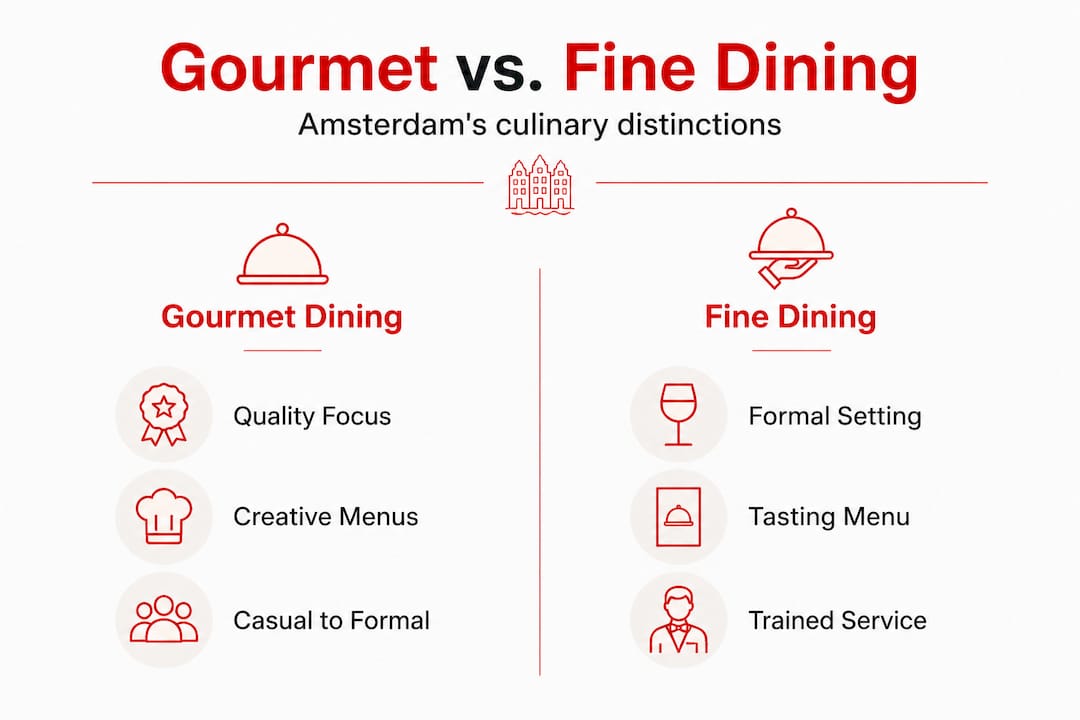
Gourmet dining is, at its core, about the quality of experience, not the formality of the setting. It means thoughtfully sourced ingredients, creative technique, and dishes built around intention rather than habit. You don't need a starred kitchen or a dress code to qualify. What matters is whether the food makes you pause, think, and reach for another bite.
Fine dining, by contrast, is a specific format. It involves trained service staff, tasting menus served in a precise sequence, carefully controlled ambiance, and cuisine that follows classical or contemporary culinary discipline. Broader than fine dining's discipline, gourmet allows accessible and inventive experiences for travelers seeking diversity. That's an important distinction because it means a brilliant bowl of ramen can qualify just as easily as a seven-course French tasting menu, provided the intention, skill, and quality are present.
Michelin stars are the most recognized benchmark in professional cooking. Michelin awards stars based on five criteria: quality of ingredients, harmony of flavor, mastery of technique, the chef's personality expressed through the food, and consistency across visits. These are demanding standards. But gourmet dining as a broader category encompasses this while extending well beyond it. A street-side vendor with extraordinary consistency and flavor mastery fits the spirit of gourmet, even without a star to its name.
Key distinctions at a glance:
| Category | Setting | Service style | Price range | Key focus |
|---|---|---|---|---|
| Fine dining | Formal restaurant | Structured, trained | High | Technique and presentation |
| Michelin-starred | Formal to creative | White glove | Very high | Rating criteria compliance |
| Gourmet (broad) | Any venue | Flexible | Wide range | Quality, creativity, intention |
| Bib Gourmand | Casual to mid-range | Relaxed | Moderate | Value and flavor excellence |
This table reveals how gourmet is not a box but a spectrum. When you're browsing your local food checklist for Amsterdam, keep that spectrum in mind. The most memorable meal you eat here might not come with a starred review, but it will absolutely be gourmet.
"Gourmet is not a category you fit into. It's a quality you either bring to the plate or you don't." This is the lens Amsterdam's best chefs work from.
Amsterdam's gourmet map: Where to experience creativity and indulgence
Having defined gourmet's flexibility, let's explore Amsterdam's unique venues.
Amsterdam is not a city that does things quietly. Its culinary scene reflects that energy, pushing into unexpected territory while honoring deeply rooted traditions. The city currently hosts over 16 Michelin-rated restaurants, making it one of Western Europe's most recognized dining destinations by any formal measure. But those starred tables represent only a fraction of what's really happening here.
At the top of the formal category, you'll find restaurants like Restaurant 212, which holds two stars and showcases creative Dutch cooking paired with classical sauce techniques. Flore focuses on conscious fine dining, leaning on seasonal Dutch produce to build menus that feel grounded and intentional. Vermeer brings French contemporary cooking into a farm-to-table framework that bridges tradition and modernity beautifully. Eeuwen, housed inside a luxury hotel, delivers French contemporary cuisine in a setting that makes the whole experience feel like an event.
Amsterdam's standout gourmet venues at a glance:
| Venue | Style | Standout feature | Vibe |
|---|---|---|---|
| Restaurant 212 | Creative Dutch | Classical sauces with modern plating | Intimate, cerebral |
| Flore | Contemporary fine dining | Seasonal Dutch produce | Elegant, conscious |
| Vermeer | French contemporary | Farm-to-table sourcing | Refined, warm |
| WILS | Fire-focused, Michelin-starred | Wood-fired cooking | Raw, dramatic |
| Morris & Bella | Plant-based, zero-waste | Vegetable-forward tasting menus | Creative, calm |
| Graham's Kitchen | Neighborhood gem | 3 to 6 courses, Asian influences | Casual, inventive |
Diverse Amsterdam offerings include fire-focused dining at WILS, where Michelin recognition meets the primal drama of wood-fired cooking. If you want to taste something that feels genuinely different, wood fire fundamentally changes how ingredients behave. Proteins caramelize differently. Vegetables take on smoky layers. The whole experience becomes about flame and timing, not just knife work.
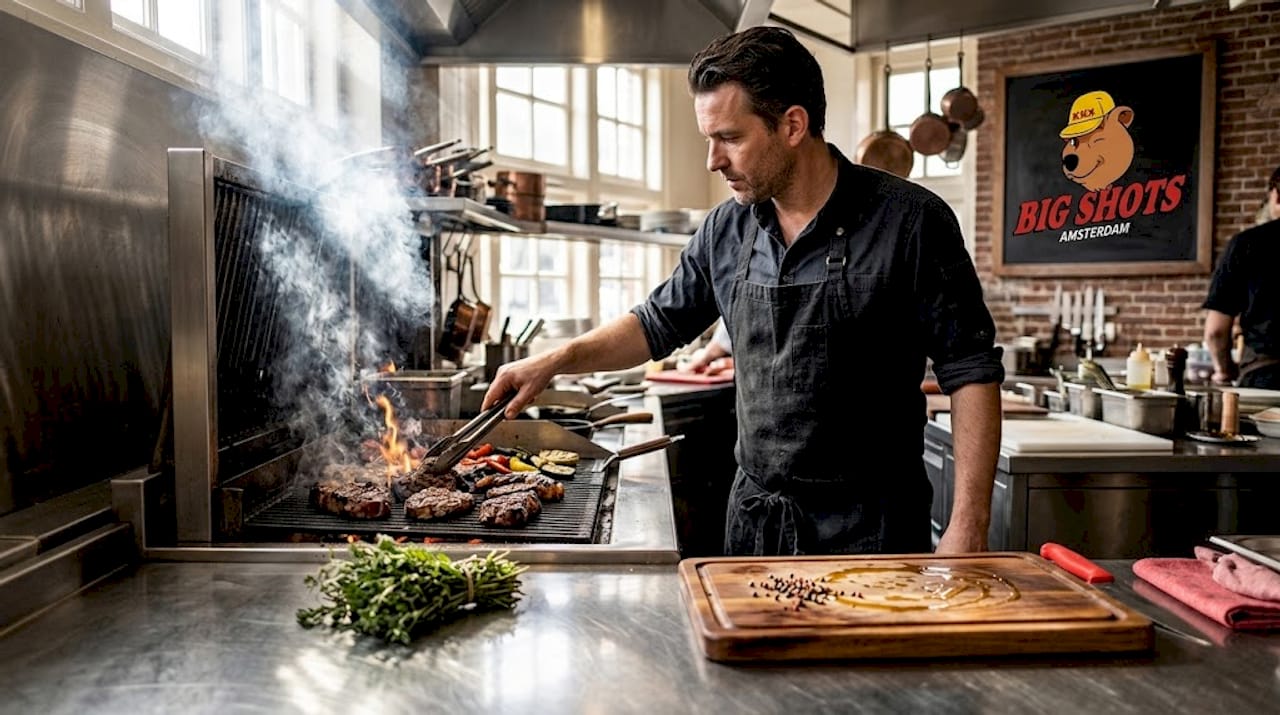
Morris & Bella represents Amsterdam's increasingly serious plant-based scene. The kitchen operates on a zero-waste philosophy, using seasonal vegetables to build dishes that are complex, rich, and genuinely satisfying. This is not food that apologizes for the absence of meat. It's food that makes you question why you ever needed it.
Graham's Kitchen is the kind of place that experienced travelers discover and never tell anyone about. Three to six courses, Asian influences woven through a Dutch sensibility, and an atmosphere that feels like someone's very well-traveled home. If you're planning romantic restaurant picks in Amsterdam, this kind of intimate, inventive venue lands at the top of the list.
For a broader orientation to Amsterdam's dining venues, it helps to approach the city by neighborhood rather than star count. The Jordaan district runs from cozy to creative. De Pijp leans bohemian and bold. And the center serves everything from traditional Dutch bitterballen bars to modern European tasting rooms within a few blocks of each other.
The accessibility of gourmet: Casual, plant-based, and Bib Gourmand
Gourmet in Amsterdam is not just for high budgets or special occasions. Here's how anyone can enjoy it.
One of the most useful things the Michelin Guide has ever done is create the Bib Gourmand designation. Bib Gourmand offers high-quality gourmet dining at moderate prices without fine dining formality, recognizing restaurants that deliver exceptional flavor and skill without the premium price tag. These venues are a genuine entry point for travelers who want to eat well without planning a special occasion or clearing their budget.
Here's how to approach accessible gourmet dining in Amsterdam:
-
Research before you arrive. Use Michelin's online guide to search for Bib Gourmand picks in Amsterdam specifically. The list changes annually, so check the most recent edition. You'll find cafes, casual bistros, and neighborhood restaurants that punch well above their weight class.
-
Book ahead even for casual spots. Amsterdam is a busy city, and even the less formal gourmet venues fill up quickly, particularly on weekends. A reservation made two or three days in advance is usually enough for most non-starred spots.
-
Order the tasting menu when it's offered. Even at casual venues, a tasting menu lets the kitchen show you what they're actually proud of. It usually delivers far more creative dishes than the à la carte options, and you'll leave with a more complete picture of what the kitchen can do.
-
Go plant-forward on at least one meal. Amsterdam's vegetable-driven restaurants are excellent regardless of your usual preferences. Zero-waste kitchens that build dishes around what's seasonal often produce the most inventive and surprising plates you'll eat here.
-
Explore Amsterdam's breakfast cafes as a low-pressure entry into the local food culture. The morning cafe scene here is thoughtful, quality-driven, and a genuine reflection of how Amsterdam eats every day.
Pro Tip: Ask your server or host for the chef's daily recommendation rather than going straight to the menu. Most gourmet kitchens rotate specials based on what arrived fresh that morning. That off-menu suggestion often reflects the highest level of creativity the kitchen is working with that day.
The venues most worth your time in Amsterdam are the ones that don't advertise how good they are. The food does all the talking.
The dining and vibrant experiences available here are genuinely diverse in price and format, which means there's an entry point at every budget. Don't let an assumption about cost keep you from exploring the city's best tables.
Personalizing your gourmet journey: Tips for curious diners
Now let's make gourmet truly your own, tailored to your taste and social plans.
Every gourmet experience starts with a question you need to answer honestly: what do you actually want from the meal? A celebratory group dinner needs a very different venue than a solo exploration of a neighborhood's character. Getting clear on your answer shapes every decision that follows.
How to define your gourmet path in Amsterdam:
- Venue style. Do you want formal and theatrical, or casual and communal? Amsterdam offers both extremes and everything in between. Match the venue to the energy you want to bring to the table.
- Cuisine focus. Dutch, French, Asian-influenced, plant-based, or fire-cooked? The city's gourmet dining landscape covers an enormous range, so narrow your focus to what genuinely excites you rather than what seems most impressive.
- Group dynamics. Solo diners often get excellent counter or bar seating that puts them close to kitchen action. Groups can negotiate shared tasting menus. Couples benefit from smaller, more intimate venues where the kitchen can pay attention to each table.
- Special dietary needs. Mention them when you book. Amsterdam's top kitchens handle dietary restrictions without compromising on quality. Don't assume your needs will limit your experience here.
- Explore steak-focused experiences if your priority is bold, satisfying flavor in a social setting. The city's approach to quality cuts and bar menus has evolved considerably, blending gourmet technique with the energy of a night out.
Pro Tip: Visit at off-peak hours, typically lunch service or early evening, for more personalized attention and a better chance of genuine interaction with kitchen staff. Some of the most interesting things you'll learn about a venue come from a two-minute conversation with the chef or sous chef when service is not at full tilt.
Once you're inside a venue, push gently at the edges of the printed menu. Ask about preparations not listed. Request alternatives to a garnish that doesn't appeal to you. The best kitchens in Amsterdam are happy to adapt, and a small request often unlocks a dish you would never have encountered otherwise. You can also discover alternative foodie spots worth visiting that operate outside the usual tourist circuit entirely.
Why Amsterdam's gourmet scene defies easy labeling
Here is the honest truth about Amsterdam's food culture: it does not care very much about categories. This is a city that has always mixed things together. Commerce and culture, tradition and experimentation, local pride and global curiosity. Its dining scene behaves the same way.
Conventional wisdom says gourmet means expensive, formal, and difficult to access. Amsterdam disproves that logic constantly. Michelin's formal standards represent one legitimate benchmark, but the city also produces world-class creativity in venues that will never pursue a star, don't need the approval, and frankly don't fit the format. Morris & Bella's vegan tasting menus are a perfect example. The food is technically sophisticated, emotionally satisfying, and philosophically coherent. By any reasonable definition, that is gourmet. No star required.
What we've noticed about Amsterdam's approach is that communal enjoyment carries more weight than prestige. A meal here is rarely just about the food. It's about who you're with, what the room feels like, and whether you leave the table feeling like you experienced something real. That's a different set of values than what drives a Michelin review, and it produces a different kind of dining culture.
The city's openness to trends also keeps things dynamic rather than stale. Plant-based menus, zero-waste kitchens, fire-cooked proteins, value-driven Bib Gourmand spots: all of these coexist without hierarchy. No single approach owns the definition of gourmet here. That's worth celebrating, because it means the city's food scene keeps regenerating itself rather than hardening into a formula.
If you want to understand Amsterdam's food culture at its most genuine, look at the lively venues mixing dining and social life that don't separate eating from the rest of a good evening. The city's best spots understand that food is the beginning of an experience, not the whole of it.
Experience gourmet in Amsterdam: Start at Big Shots
If you're ready to try Amsterdam's take on gourmet, here's an easy first step.
Amsterdam's gourmet spirit is alive and accessible, and you don't need a reservation three months out to find it. Big Shots Amsterdam brings together everything that makes this city's dining scene exciting: creative menus, craft drinks, a warm and lively atmosphere, and the kind of flexibility that fits solo travelers, groups, and couples equally well. Whether you're here for a serious steak, a relaxed breakfast, or an evening that blends food, sports, and cocktails without compromise, Big Shots delivers the full Amsterdam experience without the formal barriers.
The venue captures exactly what gourmet dining looks like when it prioritizes people over prestige. You'll find quality ingredients prepared with genuine care, a menu that reflects both local flavors and international creativity, and an environment that makes it easy to stay, linger, and enjoy. It's the kind of place Amsterdam does better than almost anywhere else.
Frequently asked questions
Is gourmet dining always expensive?
No. Bib Gourmand recognizes high-quality gourmet dining at moderate prices without the formality of fine dining, and many excellent casual venues in Amsterdam deliver outstanding meals without premium pricing.
What is the main difference between gourmet and fine dining?
Gourmet dining covers a wide spectrum of venues and styles focused on quality and creativity, while fine dining is a specific formal format with structured service and controlled ambiance. Michelin's five criteria apply to the latter but gourmet extends far beyond those boundaries.
Can I find gourmet plant-based experiences in Amsterdam?
Absolutely. Morris & Bella offers inventive plant-based tasting menus built on seasonal vegetables and a zero-waste philosophy, making it one of the city's most compelling gourmet options.
Do I need to book in advance for gourmet restaurants in Amsterdam?
Yes, reservations are strongly recommended for top gourmet and Michelin-starred venues in Amsterdam, which fill quickly, especially on weekends and during peak travel season.