
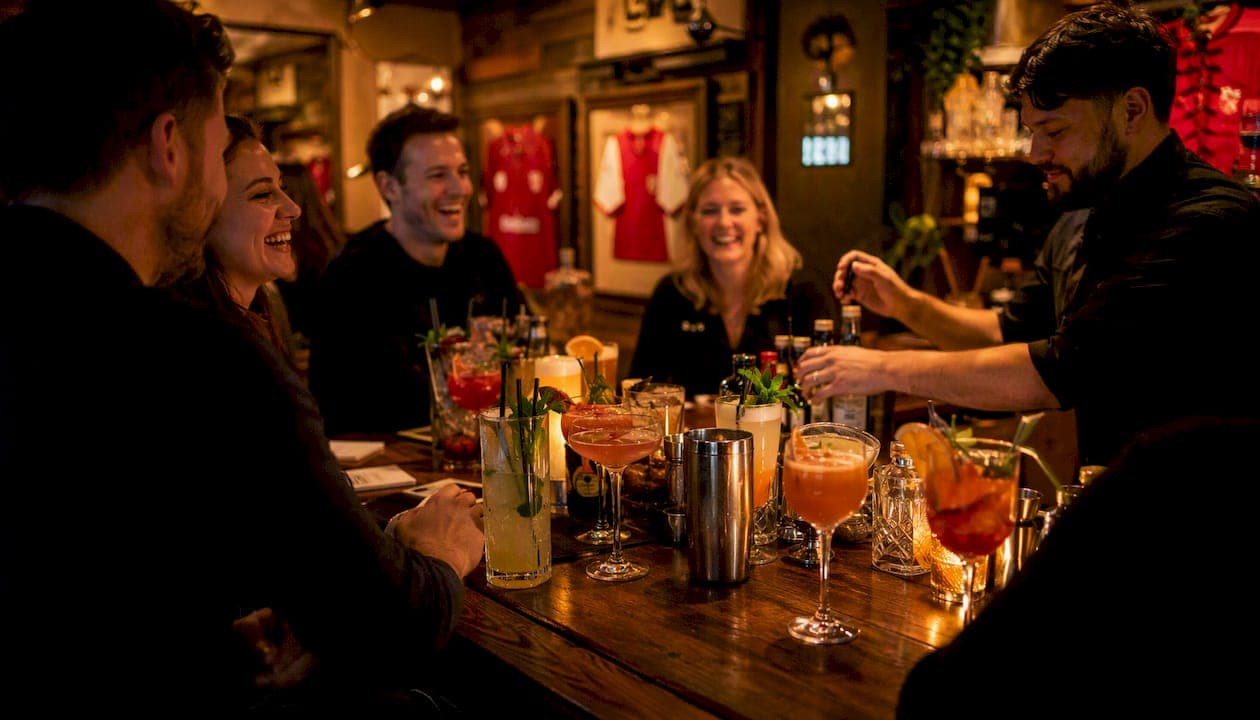
A group cocktail experience is a shared visit or private booking at a bar or restaurant where your group enjoys cocktails together, served by venue staff, at a reserved table, semi-private section, or fully private room. It is not a cocktail-making class. Before you ask for a quote, check whether the venue charges a minimum spend or a flat room fee, and confirm how much lead time they need for your group size.
Key Takeaways
A group cocktail experience is a reserved, staff-served cocktail visit at a bar or restaurant, and the pricing model you confirm in writing before booking determines whether the night stays on budget.
| Point | Details |
|---|---|
| Confirm pricing model first | Ask whether the venue charges a minimum spend or a room fee, and get the itemized list of what counts. |
| Match lead time to group size | Book 1–2 weeks out for small weeknight groups; 6–12 weeks for full buyouts or holiday dates. |
| Use the question checklist | Copy the checklist above and send it before signing; confirm split-check capability and cancellation terms in writing. |
| Control costs with preset menus | A preset menu of 4–6 drinks for groups of 10+ cuts service time and keeps spending predictable. |
| Bigshotsamsterdam for Amsterdam groups | One venue covers cocktails, food, and entertainment, removing the need to coordinate multiple bookings. |
Table of Contents
- What does a group cocktail experience actually include?
- How do pricing models work: minimum spend vs room fee?
- What should you budget? U.S. cost ranges and sample math
- When should you book, and how far in advance?
- What questions should you ask before you book?
- How do you control costs without killing the atmosphere?
- What mistakes do most hosts make?
- Your 48-hour and day-of checklist
- What are the cancellation and refund terms you should know?
- What accessibility accommodations should you confirm?
- How do current health policies affect group bookings?
- A note from the publisher
- Bigshotsamsterdam: a lively venue for your group's cocktail night
- Sources
What does a group cocktail experience actually include?
The format varies more than most people expect. At the casual end, a semi-private section gives your group a reserved cluster of tables within the main bar, with a dedicated server and a standard drinks menu. Step up to a private room and you typically get a bartender or cocktail host, a curated menu, and control over music and lighting. Full venue buyouts close the space entirely to outside guests.
The most common service styles:
- Open bar package: A fixed per-head price covers unlimited drinks for a set window, usually two to three hours. Works well when you want a predictable per-person cost.
- Per-drink tab: The group orders freely and the host pays a running tab, with or without a cap. Good for smaller, relaxed groups.
- Drink tickets: Each guest receives a set number of tickets for the first rounds. Keeps the host's budget controlled without cutting off the night.
- Preset group cocktail menu: The venue offers four to six signature drinks chosen in advance. Faster service, less decision fatigue, and often a lower per-drink cost.
Food, seating layout, AV equipment, and DJ access depend on the package and the venue. Most bars include basic snacks with private room hire; full catering is usually a separate line item.
Pro Tip: Seated arrangements favor conversation; standing or lounge-style setups favor mingling and dancing. Match the layout to what your group actually wants to do, not just what looks good in photos.
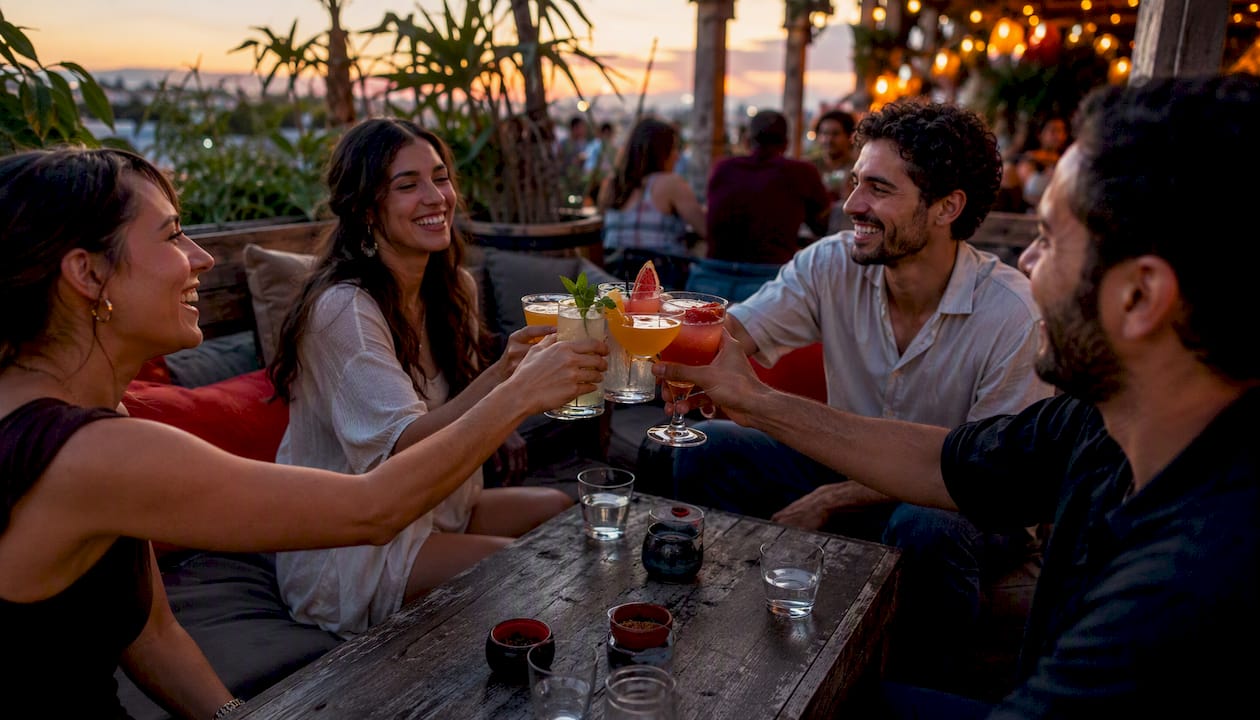
How do pricing models work: minimum spend vs room fee?
Two pricing models dominate private event bookings in the U.S. Understanding which one a venue uses changes how you budget.
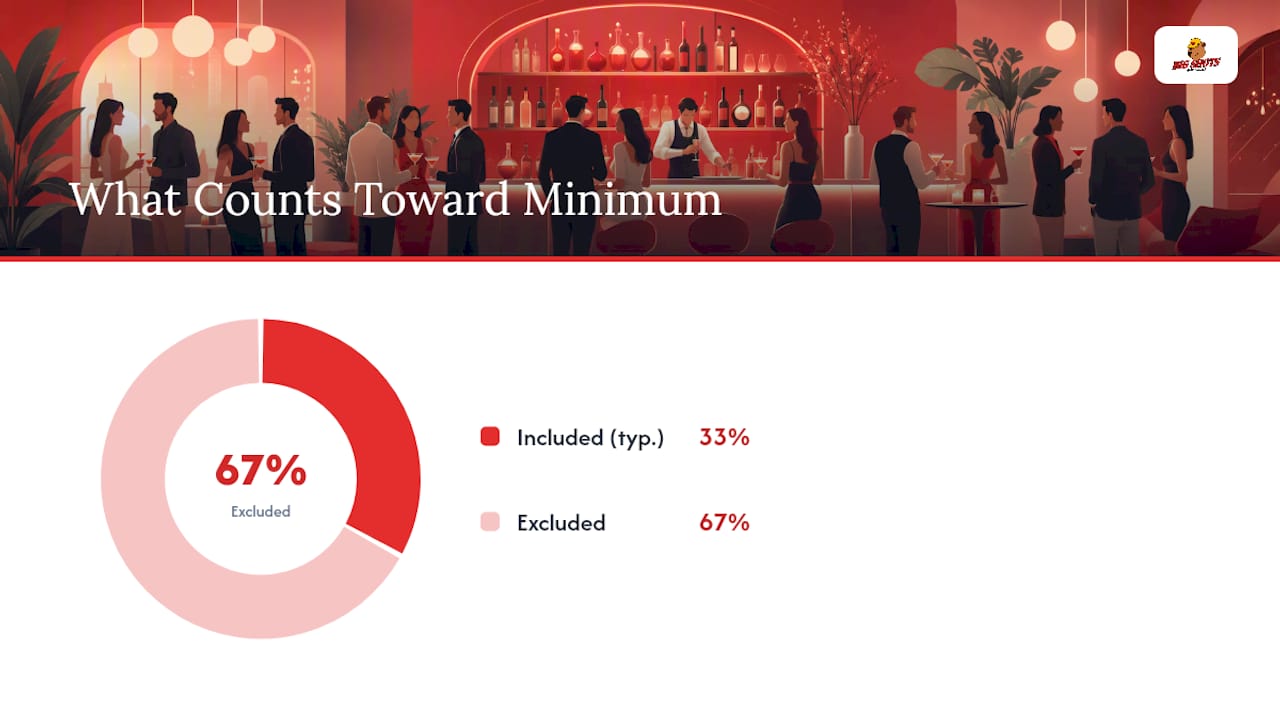
A minimum spend is a consumption commitment. You agree to spend a set dollar amount on food and beverages during your booking. If your group falls short, you pay the difference. A room fee is a flat reservation charge for the space itself, paid regardless of what your group orders.
| Item | Counts toward minimum? |
|---|---|
| Food and beverage orders | Yes, typically |
| Pre-set cocktail packages | Yes, usually |
| Tax | No |
| Gratuity / service charge | No |
| Administrative or booking fees | No |
| AV or entertainment surcharges | No |
NYC private-event minimums commonly run $1,500–$5,000+ depending on the day, group size, and venue tier.
Pro Tip: Ask the venue: "What specifically counts toward the minimum?" Then get the answer in writing before you sign anything.
What should you budget? U.S. cost ranges and sample math
Tagvenue data shows bars with private rooms in New York City average around a $2,000 minimum spend per event, with variation by capacity, location, and add-ons. Outside major metros, costs for semi-private sections tend to be moderate, depending on the city.
Three quick scenarios:
Ask whether the deposit is refundable and under what conditions. If your tab misses the minimum by $200, you owe that $200 as a shortfall, not a credit.
When should you book, and how far in advance?
Private spaces fill fast for Fridays, Saturdays, and any holiday weekend. Booking early gives you leverage on minimums and preferred time slots.
General lead-time rules:
- 8–12 guests, weeknight: 1–2 weeks minimum
- 15–30 guests, Friday or Saturday: 3–5 weeks
- 30–60 guests, semi-private section: 4–6 weeks
- Full venue buyout, any night: 6–12 weeks; holiday periods, book 3+ months out
Section hires suit groups of roughly 20–60 people; full buyouts compensate the venue for lost regular trade and cost more. The larger the group, the less negotiating room you have on price, but the more you can negotiate on add-ons like complimentary snacks or extended hours.
Sample inquiry message:
What questions should you ask before you book?
Use this list on your venue call or email. Tagvenue's booking guidance confirms these are the questions venues expect and that hosts most often skip.
Must-confirm first:
- What is the minimum spend or room fee, and what counts toward it?
- Are tax, gratuity, and admin fees included or added on top?
- What is the deposit amount, and is it refundable?
- What are the cancellation terms and the shortfall penalty?
- What is the maximum capacity for our group?
Secondary negotiables:
- Can guests pay separately, or does everything go on one tab?
- Are outside food or drinks permitted? Is there a corkage fee?
- What music or entertainment is allowed, and is there a noise curfew?
- What accessibility accommodations are available?
Extras to request later:
- Can we see photos or references from similar-sized events?
- Is there a dedicated point of contact on the night?
Pro Tip: Ask who signs the contract and confirm that person's name and title. A verbal agreement with a bartender is not binding.
How do you control costs without killing the atmosphere?
Drink tickets for the first one or two rounds are the single most effective budget tool. Guests feel taken care of; the host avoids an open-ended tab. After the tickets run out, the bar switches to a cash or card arrangement naturally.
For groups of 10 or more, a preset cocktail menu of four to six drinks cuts service time and prevents bottlenecks at the bar. Everyone orders from the same short list, the bartender moves faster, and your group spends less time waiting. Pair that with a shared food strategy — shared plates at the start slow alcohol consumption and keep energy steady through the night.
Appoint one point person to manage the tab, communicate with staff, and field any last-minute headcount changes. Fragmented communication between multiple "organizers" and venue staff is where costs and logistics go sideways.
Most venues can do this. It gives you a warning before you hit the ceiling, not after.*
What mistakes do most hosts make?
- Booking by personal taste, not group practicality. A loud DJ bar is great for dancing; it kills conversation for a reunion dinner. Match the venue to what the group needs.
- Not confirming what counts toward the minimum. Fix: get the itemized list in writing before signing.
- Skipping the split-check conversation. Fix: ask at inquiry, not on the night.
- Poor lead-time planning. Fix: use the windows above and add a week as buffer.
- Ignoring licensing and curfew rules. Fix: ask about music cutoff and last-call time upfront.
- No written cancellation terms. Fix: insist on written confirmation of deposit, cancellation, shortfall, and relocation clauses before paying anything.
Ask the venue for photos or a reference from a prior event of similar size. A venue that has hosted 30-person cocktail nights before will handle yours differently than one that is figuring it out alongside you.
Your 48-hour and day-of checklist
48 hours before:
- Confirm final headcount with the venue
- Send dietary restrictions and allergy notes
- Confirm arrival time and parking or transport plan
- Share point-of-contact phone number with venue manager
- Verify layout: seated, standing, or mixed
Day of:
- Confirm staffing level with the venue
- Set tab limit and request notification at 80%
- Verify AV, music, and any entertainment setup
- Collect any deposits or IDs from guests if needed
- Confirm table or section setup matches what was agreed
For groups using a multi-venue plan, a bar crawl structure of 4–6 stops with 30–45 minutes per venue works well. Walking suits 8–12 people; a party bus handles 15 or more.
Headcount confirmation template to send the venue:
What are the cancellation and refund terms you should know?
Cancellation policies vary widely, but most private-event bookings follow a tiered structure. Cancellations more than 30 days out typically forfeit the deposit only. Inside 14 days, many venues charge 50–100% of the minimum spend or room fee, because they have turned away other business for that slot.
Always ask for the cancellation policy in writing and check whether it includes a force-majeure clause covering venue closures or government restrictions. If the venue relocates your group to a different space without your consent, a written relocation clause gives you grounds to renegotiate or exit.
What accessibility accommodations should you confirm?
Ask directly: step-free entrance, accessible restrooms, hearing loop availability, and whether the venue can accommodate mobility aids in the reserved section. Do not assume a "private room" is accessible. Some basement or mezzanine spaces are not.
Note any dietary restrictions alongside physical access needs when you send your headcount confirmation. A venue that handles both in one conversation is better prepared than one that hears about them on the night.
How do current health policies affect group bookings?
Most U.S. venues no longer require COVID-19 vaccination proof or capacity limits as of 2026, but policies can still vary by state, local ordinance, or individual venue policy. If your group includes immunocompromised guests, ask the venue about ventilation, outdoor options, and whether they can accommodate spacing requests.
Check the venue's current health policy at the time of booking, not at the time of inquiry. Policies can change between when you first contact a venue and when your event date arrives.
A note from the publisher
Hosting groups well comes down to one thing: removing friction before the night starts. The venues that do it best have confirmed the tab structure, the staffing level, and the layout in writing before anyone walks through the door. When I advise groups booking a cocktail tasting night with friends, the single most useful question to ask any venue is whether they can run separate checks. It sounds minor. It prevents the most common end-of-night argument. Confirm it at inquiry, not at the bill.
Bigshotsamsterdam: a lively venue for your group's cocktail night
Bigshotsamsterdam combines a sports bar, shisha lounge, restaurant, and café in Amsterdam, making it one of the few venues where a group can move between a lively bar atmosphere, a relaxed lounge, and a full dinner without changing locations.
For groups coming from this article, the practical advantage is straightforward: one venue handles cocktails, food, and entertainment together, so you are not coordinating three separate bookings or managing a minimum spend across multiple stops. The guest experience is designed for groups who want a full night, not just a drink. Visit Bigshotsamsterdam to check availability and send your group inquiry directly.
Sources
- How minimum spend venues work
- Minimum Spend vs. Room Fee: NYC Private Event Pricing Explained - The Winslow
- The 16 Best Bars with Private Rooms for Rent in New York City, NY | Tagvenue USA
- How to Book a Bar for a Private Event — The Complete Guide