
TL;DR:
- Amsterdam's fusion restaurants are rooted in 400 years of colonial trade and multicultural migration, shaping the city's diverse food scene. The blending of Indonesian, Surinamese, and Chinese traditions with Dutch tastes has created layered culinary experiences that thrive through technique and cultural familiarity. Modern fusion emphasizes technical mastery, shared plates, and bold flavors, reflecting Amsterdam's rich migration history and culinary complexity.
Amsterdam's fusion restaurants are a direct culinary product of 400 years of colonial trade, mass migration, and multicultural settlement. The city's food culture reflects its history more honestly than almost any other European capital. Waves of immigrants from Indonesia, Suriname, and beyond brought their cooking traditions to Amsterdam's neighborhoods, where those traditions merged with Dutch tastes and later with global techniques. Understanding why fusion cuisine in Amsterdam thrives means tracing those human movements, not just reading a menu.
Why Amsterdam has fusion restaurants: the colonial roots
Amsterdam's food identity begins with empire. The Dutch East India Company, founded in 1602, gave the Netherlands direct access to the spice islands of Southeast Asia. Dutch colonial trade introduced nutmeg, cloves, and cinnamon into the Dutch kitchen, permanently shifting the city's flavor profile. That was the first layer of fusion, and it happened before most European cities had tasted black pepper outside of medicine.
The deeper transformation came through labor migration. Between 1873 and 1939, approximately 34,000 Indians, 33,000 Javanese, and 3,000 Chinese contract laborers were brought to Suriname to work Dutch colonial plantations. That number matters because it explains the culinary complexity that arrived in Amsterdam when Suriname gained independence in 1975 and large communities relocated to the Netherlands.
These communities did not arrive as isolated groups. They arrived carrying layered food traditions already fused on Surinamese soil. Javanese sambal, Indian roti, and Chinese noodle techniques had already been blending in Paramaribo for generations before they reached Amsterdam.
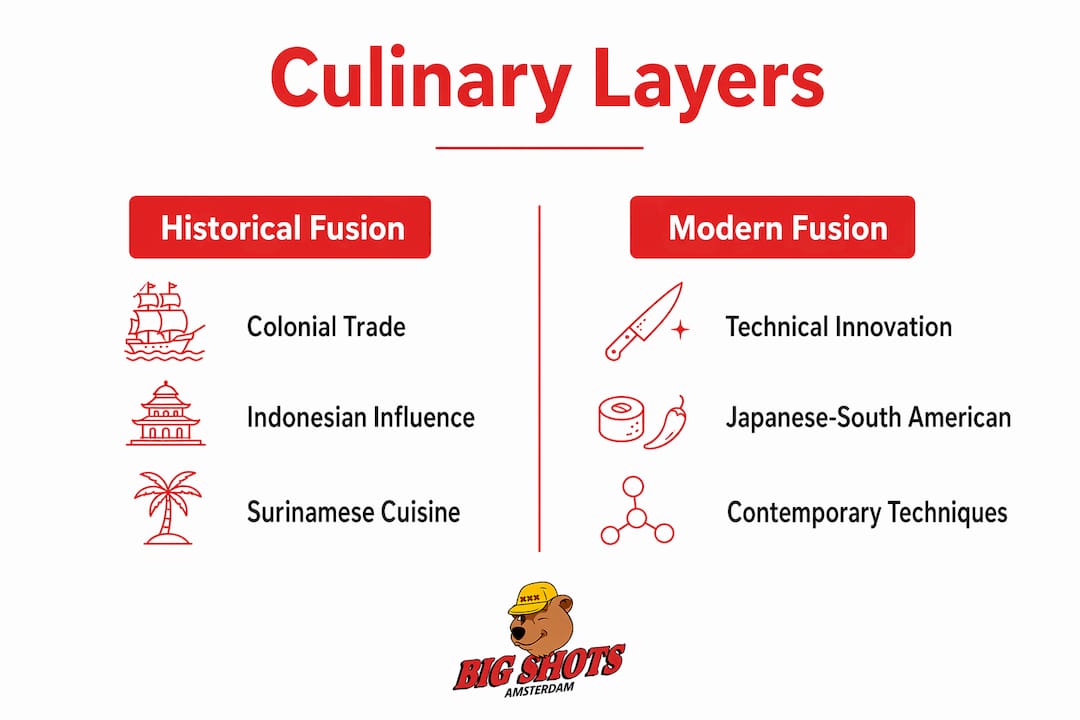
- Indonesian influence: Post-independence Indo-Dutch citizens brought the rijsttafel format, a spread of dozens of small dishes, into mainstream Amsterdam dining.
- Surinamese influence: Roti shops, saoto soep, and bara became everyday staples in neighborhoods like De Pijp from the late 1970s onward.
- Chinese-Javanese influence: Chinese-Indonesian restaurants opened across the city, adapting recipes to Dutch palates and creating a distinct Amsterdam hybrid.
Pro Tip: If you want to understand Amsterdam's culinary history in a single meal, order a Surinamese roti with Javanese-spiced filling. That one dish carries three continents of migration history on one plate.
How culinary layers coexist in Amsterdam's food scene
Amsterdam's food scene is layered across centuries, not just cuisines. Traditional Dutch brown cafes date to 1624. Post-1949 Indonesian cuisine was codified in the rijsttafel format. Post-1975 Surinamese food anchored entire neighborhoods. Each layer did not replace the one before it. They stacked, and that stacking is the structural reason why fusion restaurants thrive here more than in cities with a more linear food history.
The rijsttafel is the clearest example of this layering in action. Postcolonial Indo-Dutch citizens introduced the format into mainstream Amsterdam dining, and by the 1970s it had become a Sunday staple for Dutch families with no Indonesian heritage at all. A Dutch family eating twenty small Indonesian dishes on a Sunday afternoon is fusion dining, even if nobody called it that at the time.
Surinamese food followed a similar path. Surinamese immigrants established roti shops and anchored De Pijp's food identity from the late 1970s onward. Today, a single block in De Pijp can hold a traditional Dutch brown cafe, a Surinamese roti counter, and a modern Japanese sharing plate restaurant. That density of contrast is not accidental. It is the physical result of Amsterdam's migration history.
| Food tradition | Origin period | Current presence in Amsterdam |
|---|---|---|
| Dutch brown cafe comfort food | 1624 onward | Citywide, especially Jordaan and Centrum |
| Indonesian rijsttafel | Post-1949 | Dedicated restaurants and home cooking |
| Surinamese roti and saoto soep | Post-1975 | De Pijp, Bijlmer, Oost |
| Modern international fusion | 2010s onward | De Pijp, Oud-West, Centrum |
Pro Tip: Amsterdam's traditional cafe culture is worth experiencing before you hit the fusion spots. Understanding the baseline Dutch food identity makes the fusion layers far more interesting.
How contemporary fusion restaurants innovate with technique
Modern fusion cuisine in Amsterdam is defined by technique, not just ingredient mixing. Modern Asian fusion dining now features shared plates and methods like Robata grilling, blending traditional Asian flavors with Western dining formats. That shift from ingredient fusion to technique fusion is what separates the current generation of Amsterdam restaurants from the colonial-era hybrids.
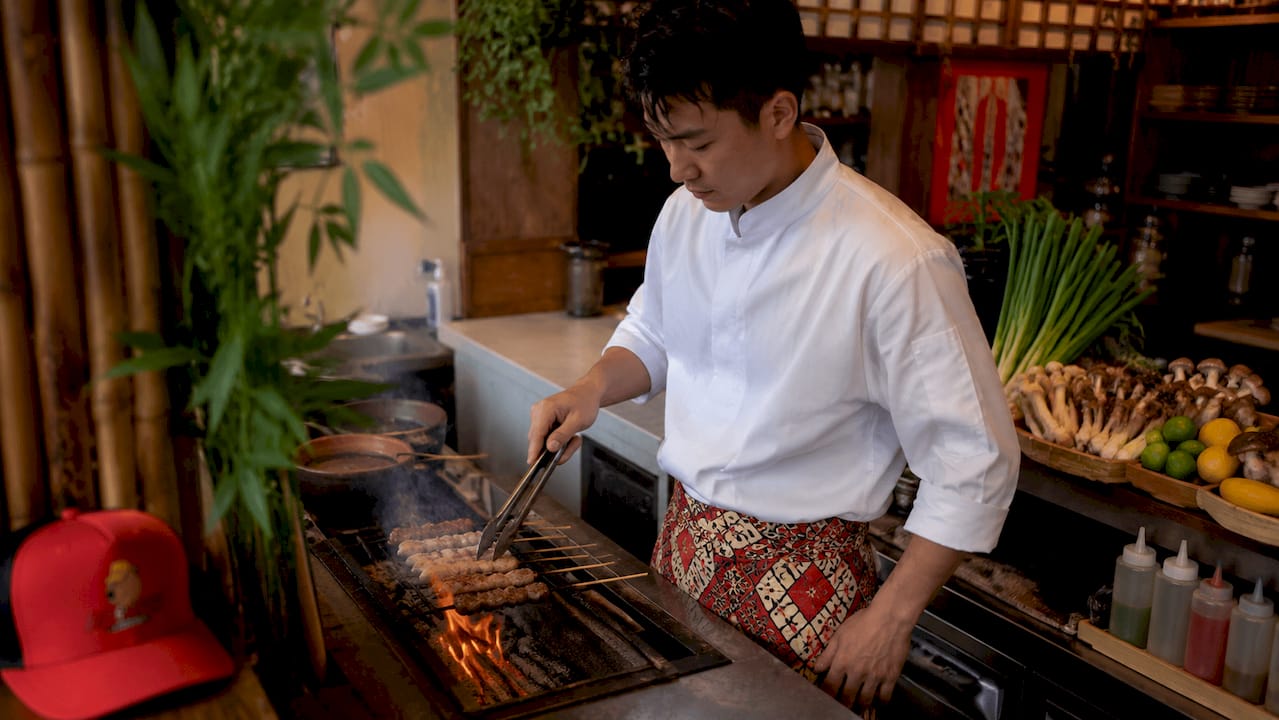
Izakaya in De Pijp is the clearest example of this technical approach. Izakaya utilizes Robata grills and Hibachi fire bowls to combine Japanese cooking methods with South American flavor profiles. The result is not a menu that simply lists Japanese and South American dishes side by side. It is a cooking philosophy where fire, smoke, and char become the common language between two distant food cultures.
The shared plate format amplifies this effect. When a table orders six or eight dishes together, the meal becomes a conversation between flavors rather than a sequence of isolated courses. That format suits fusion cooking because it lets contrasts and complements reveal themselves naturally across the table.
Here is how contemporary Amsterdam fusion restaurants build their approach:
- Anchor in a primary technique. Robata grilling, clay pot cooking, or fermentation provide a consistent identity that holds the menu together across multiple cultural influences.
- Source ingredients locally where possible. Amsterdam's proximity to Dutch farms and the North Sea gives fusion chefs access to local produce that grounds international techniques in a recognizable regional context.
- Use shared plates to create dialogue. Communal dining formats let guests experience flavor contrasts that a single-plate meal cannot deliver.
- Layer spice profiles deliberately. The Amsterdam culinary tradition of spice use, inherited from colonial trade, gives chefs a culturally literate audience for complex heat and aromatics.
Amsterdam's food scene also embraced a third-wave coffee and natural wine movement alongside fusion dining from the 2010s onward. That shift toward vegetable-forward fine dining and natural wine created a new audience willing to engage with unfamiliar flavor combinations, which gave fusion restaurants a broader and more adventurous customer base.
Pro Tip: Book a shared-plate fusion dinner for at least four people. The format rewards larger groups because more dishes on the table means more flavor combinations to discover.
Traditional fusion vs. modern fusion in Amsterdam: what's the difference?
The distinction between Amsterdam's historical fusion and its modern fusion is worth understanding clearly. They share a city but not a philosophy.
Historical Chinese-Indonesian restaurants catered to Dutch tastes by adapting authentic recipes, softening spice levels and adjusting textures to match what Dutch diners expected in the 1960s and 1970s. That adaptation was commercially smart but it moved the food away from its origins. The goal was accessibility, not culinary exploration.
Modern fusion in Amsterdam operates from the opposite direction. Chefs at venues like Izakaya start with technical mastery of a specific tradition, then deliberately introduce elements from a second or third tradition to create something that could not exist within either culture alone. The goal is complexity, not comfort.
| Dimension | Historical fusion | Modern fusion |
|---|---|---|
| Primary driver | Adapting immigrant food for Dutch tastes | Combining techniques across global traditions |
| Spice approach | Softened for local palates | Full intensity, often amplified |
| Dining format | Traditional plated courses | Shared plates, tasting menus |
| Cultural intent | Assimilation | Celebration of contrast |
- Historical fusion preserved community identity while making it commercially viable in a new country.
- Modern fusion treats cultural contrast as the main ingredient, not a challenge to manage.
- Both forms coexist in Amsterdam today, which is itself a form of culinary layering.
Fusion restaurants succeed in Amsterdam by blending authentic cultural roots with global techniques, shaped by the city's diverse immigrant communities. That formula works here because the audience has been eating across cultures for generations. Amsterdam diners are not being introduced to fusion. They grew up with it.
For travelers who want to understand this contrast firsthand, the cultural guide to international cuisine in Amsterdam covers the immigration history behind each major food tradition in the city.
Key takeaways
Amsterdam's fusion restaurants exist because 400 years of colonial trade, labor migration, and multicultural settlement created a city where culinary blending is the default, not the exception.
| Point | Details |
|---|---|
| Colonial trade as flavor foundation | Dutch East India Company spice routes introduced nutmeg, cloves, and cinnamon into Amsterdam's kitchen from the 1600s onward. |
| Labor migration built the base | Between 1873 and 1939, tens of thousands of Indian, Javanese, and Chinese workers arrived in Suriname, bringing layered food traditions that later reached Amsterdam. |
| Culinary layers stack, not replace | Dutch cafes, Indonesian rijsttafel, and Surinamese roti coexist in Amsterdam neighborhoods, creating the density that makes fusion natural. |
| Technique defines modern fusion | Contemporary venues like Izakaya use Robata grilling and Hibachi fire bowls to fuse Japanese and South American methods, not just ingredients. |
| Audience literacy drives demand | Amsterdam diners have eaten across cultures for generations, giving fusion restaurants a customer base that understands and expects complexity. |
Amsterdam's fusion scene is a history lesson you can eat
I have eaten in a lot of cities that claim a fusion food scene. Most of them mean a restaurant that puts kimchi on a burger and calls it global. Amsterdam is genuinely different, and I think most food writing undersells why.
The reason fusion works here is not creativity. It is familiarity. Amsterdam diners grew up eating rijsttafel on Sundays and grabbing Surinamese roti for lunch on a Tuesday. Fusion is not exotic to them. It is Tuesday. That baseline cultural literacy means Amsterdam chefs can push further with technique and contrast because their audience already has the reference points to appreciate what is happening on the plate.
Experiencing fusion cuisine in authentic settings like markets, neighborhood eateries, and brown cafes gives you the cultural context that a fine dining reservation alone cannot. Start in De Pijp. Walk the Albert Cuyp Market. Eat a Surinamese roti from a counter with four stools. Then go to Izakaya for dinner. That sequence tells the whole story in a single day.
The neighborhoods matter too. De Pijp, Oost, and Bijlmer each carry different migration histories, and those histories show up on the menus. A traveler who only eats in Centrum is missing the actual food culture of Amsterdam. The local cuisine and tourism connection is strongest when you eat where the communities that built the food actually live.
— Leo
Experience Amsterdam's fusion culture at Bigshotsamsterdam
Amsterdam's layered food culture is best understood by living it, not just reading about it.
Bigshotsamsterdam brings that spirit together in one venue. The bar and restaurant combines a gourmet menu with a lively, relaxed atmosphere that suits everything from a casual dinner to a full night out. The menu draws on Amsterdam's multicultural food identity, with dishes that reflect the city's appetite for bold flavors and shared experiences. Whether you are a local looking for your next regular spot or a traveler wanting to taste Amsterdam's food culture in a single evening, Bigshotsamsterdam delivers. Reserve your table and experience why Amsterdam's dining scene keeps drawing food lovers from around the world.
FAQ
Why does Amsterdam have so many fusion restaurants?
Amsterdam's fusion restaurant culture stems from 400 years of colonial trade and post-colonial migration. Communities from Indonesia, Suriname, and beyond brought layered food traditions that merged naturally with Dutch tastes over generations.
What is rijsttafel and why is it popular in Amsterdam?
Rijsttafel is an Indonesian-Dutch dining format featuring dozens of small dishes served together. Indo-Dutch immigrants introduced it to mainstream Amsterdam dining after 1949, and it became a Sunday staple for Dutch families by the 1970s.
What are the most popular fusion dishes in Amsterdam?
Surinamese roti with Javanese-spiced filling, Indonesian sambal-based dishes, and modern Japanese-South American shared plates at venues like Izakaya in De Pijp represent the range of popular fusion dishes in Amsterdam.
Which Amsterdam neighborhood has the best fusion food scene?
De Pijp is the densest concentration of fusion dining in Amsterdam. It holds Surinamese roti counters, Indonesian restaurants, and modern international fusion venues within a few blocks of each other.
How is modern fusion different from traditional fusion in Amsterdam?
Traditional fusion adapted immigrant recipes to Dutch tastes by softening spice and texture. Modern fusion uses technical methods like Robata grilling to deliberately combine two distinct culinary traditions into something new, with full flavor intensity intact.