
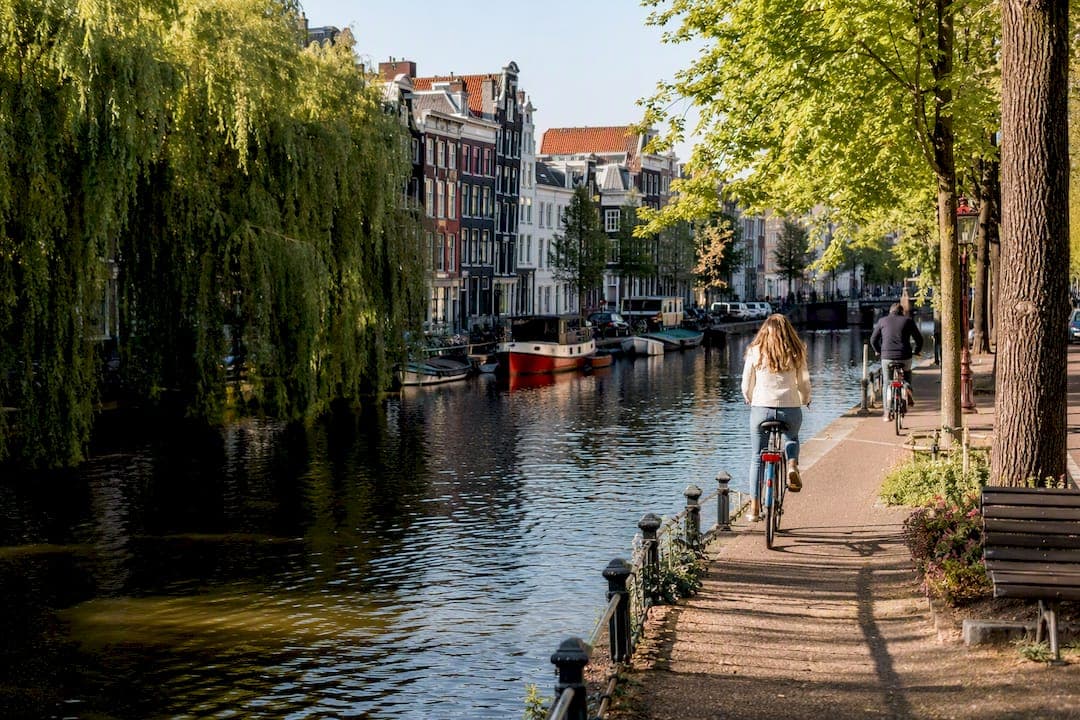
Amsterdam stands apart from other European cities because of six things working together: a UNESCO-listed canal ring built by hand in the 1600s, more bicycles than residents, a set of 17th-century financial inventions that still shape global markets, a civic culture built around tolerance and personal autonomy, museums that feel intimate rather than monumental, and narrow canal houses that give the whole city one consistent, human-scale look. No other European capital combines all six.
Consider the numbers behind that claim. The city counts roughly 90 islands connected by more than 1,200 bridges, a network that grew out of a deliberate 17th-century engineering project rather than centuries of accident, according to background on the city's canal system. And Amsterdam is widely recognized for having more bicycles than residents, a fact that shapes everything from street design to how a bar plans its outdoor seating.
The sections ahead unpack each of these traits: where they came from, how they show up in daily life, and what they mean if you're planning a visit or just trying to understand what makes Amsterdam's cultural differences so persistent.
Key Takeaways
Amsterdam's uniqueness in Europe comes from six interlocking features, a UNESCO canal ring, cycling dominance, Golden Age financial institutions, civic tolerance, intimate museums, and narrow canal-house architecture, that together create no direct European equivalent.
| Point | Details |
|---|---|
| Canal ring is functional infrastructure | The Grachtengordel manages drainage and transit, not just aesthetics, and carries UNESCO World Heritage status. |
| Cycling shapes daily life | Bicycles outnumber residents, and dedicated infrastructure gives cyclists legal and practical priority over cars. |
| Golden Age built lasting institutions | The Amsterdam Stock Exchange and Bank of Amsterdam funded the canal ring and still echo in modern finance. |
| Tolerance is civic, not just policy | A long-standing commitment to personal autonomy shapes nightlife regulation and public life today. |
| Architecture reflects engineering limits | Timber-pile foundations forced narrow, tall canal houses with distinctive gabled facades. |
| Immigration built the city's texture | Waves of migration from the 1600s onward shaped Amsterdam's food, neighborhoods, and civic identity. |
Table of Contents
- Why Is Amsterdam Unique in Europe? The Numbers Behind the Claim
- How Did the Dutch Golden Age Shape Modern Amsterdam?
- What Makes Amsterdam's Canal Ring So Distinctive?
- Why Cycling Is Amsterdam's Backbone
- How Do Tolerance and Liberal Policy Shape Amsterdam's Identity?
- What Makes Amsterdam's Museums Feel Different?
- Why Do Amsterdam's Canal Houses Look So Distinctive?
- What Gives Amsterdam's Neighborhoods Their Character?
- How Does Amsterdam's Trading Past Show Up in Its Modern Economy?
- An Amsterdam Hospitality Perspective on the City's Character
- How to Experience Amsterdam's Unique Side for Yourself
- How Have Immigration and Multiculturalism Shaped Amsterdam?
- What Festivals and Events Are Unique to Amsterdam?
- How Does Amsterdam Approach Environmental Sustainability?
- An Editorial Take on Amsterdam's Staying Power
- Frequently Asked Questions
- Sources
Why Is Amsterdam Unique in Europe? The Numbers Behind the Claim
Before the history and the culture, look at the raw facts a first-time visitor notices within an hour of arrival. Amsterdam has a large resident population within city limits, but the bicycle count exceeds that number, an imbalance almost no other European capital can claim at that scale. The historic canal network spans many islands and numerous bridges, and the Grachtengordel, the 17th-century canal ring at the city's core, carries UNESCO World Heritage status.
Here's how that stacks up against two cities people instinctively compare it to:
| City | Signature water feature | What makes it distinct |
|---|---|---|
| Amsterdam | Concentric canal ring, ~90 islands, 1,200+ bridges | Built as planned 17th-century infrastructure, still a working transit and drainage system |
| Venice | Natural lagoon canals | No cars or bikes; canals are the only through-routes |
| Paris | Seine river plus historic quays | Single river corridor, not a citywide concentric network |
Amsterdam sits several feet below sea level in places, a geography managed through polders, dikes, and pumping systems long before modern engineering existed. Cycling accounts for a majority of trips within the city center, a modal share few European capitals approach. That low-lying, water-managed geography is not incidental scenery. It is the reason the city looks and moves the way it does.
How Did the Dutch Golden Age Shape Modern Amsterdam?
The 17th-century Golden Age and the merchant-funded model of city-building are the deep reasons Amsterdam feels structurally different from cities built around a royal court or a single cathedral. Amsterdam grew rich not through conquest but through trade, insurance, and financial engineering, and the money it generated built the canal ring you see today.
The Dutch East India Company, known as the VOC, ran shipping routes across Asia and needed a way to raise capital without a single monarch footing the bill. The solution became the Amsterdam Stock Exchange, one of the world's first formal securities markets, alongside the Bank of Amsterdam, which gave merchants a reliable place to trade shares and settle payments. Cheap, available capital meant private citizens, not the state, could fund large civic projects, including the canal expansion itself.
A rough timeline shows how each phase left a physical or institutional mark:
- Founding on the Amstel river in the 13th century, a modest dam settlement with no grand ambitions.
- 17th-century canal ring expansion, adding the concentric belt of waterways that still defines the map.
- Financial innovation through the VOC, the stock exchange, and the Bank of Amsterdam, which funded civic building and attracted foreign merchants.
- Waves of immigration, including religious refugees seeking tolerance unavailable elsewhere in Europe, which diversified the merchant class and the city's trades.
Amsterdam's rise depended on a "merchant federation" model rather than centralized royal governance, where local traders funded risk and infrastructure themselves, according to analysis from Bangor University on Amsterdam's financial history. That governance style still echoes in how the city runs today: pragmatic, transaction-focused, allergic to top-down grandeur.
The Golden Age combined financial innovation, religious tolerance, and maritime trade, and that combination attracted the capital and people who built the canal ring and the civic institutions Amsterdam still runs on.
None of this is a clean success story. The same trade networks that built Amsterdam's wealth were entangled with colonial exploitation and the slave trade, a legacy the city's own museums now address directly rather than skip past. Understanding Amsterdam's uniqueness means holding both facts at once.
What Makes Amsterdam's Canal Ring So Distinctive?
The Grachtengordel is not decoration. It's an engineered drainage and transport system that also happens to be one of the most photographed urban layouts in Europe, and that dual purpose is what makes it different from canals elsewhere.
Amsterdam sits on low, waterlogged ground, so 17th-century planners combined polders, dikes, and a coordinated canal project to make the land usable at all. The result was a concentric ring of waterways, still visible on any map, connecting roughly 90 islands through more than 1,200 bridges, a scale documented in historical surveys of the city. The canals moved goods to merchant warehouses, managed water levels, and created buildable land, all in one system. Contemporary architectural analysis frames the 17th-century canal plan as practical infrastructure as much as an aesthetic statement, a blend of function and form that shaped how the city grew both socially and economically, according to urban design commentary on Amsterdam's canal planning.
The historic canal ring holds UNESCO World Heritage status, a recognition that covers the layout of the three main canals, Herengracht, Keizersgracht, and Prinsengracht, along with the connecting radial streets and the merchant houses that line them. UNESCO's listing isn't just a tourism badge. It legally restricts what can be altered on those facades, which is why the skyline has barely shifted in three centuries.
For visitors, that engineering choice has a practical payoff:
- Walking or cycling along the canals gives you a natural, self-guided route through the historic core, since the ring was designed as circulation infrastructure from the start.
- Bridges function as informal viewpoints, and locals treat certain ones as regular meeting spots.
- Neighborhood character shifts noticeably as you cross from one canal belt to the next, from grand merchant facades near the center to quieter, greener stretches further out.
Why Cycling Is Amsterdam's Backbone
Cycling is the most efficient, most common way to move through Amsterdam, and it visibly shapes how streets are built and how businesses design their entrances. This isn't a lifestyle choice locals made recently. It's infrastructure decades in the making, and it's the single fastest way to feel Amsterdam's cultural differences from almost anywhere else in Europe.
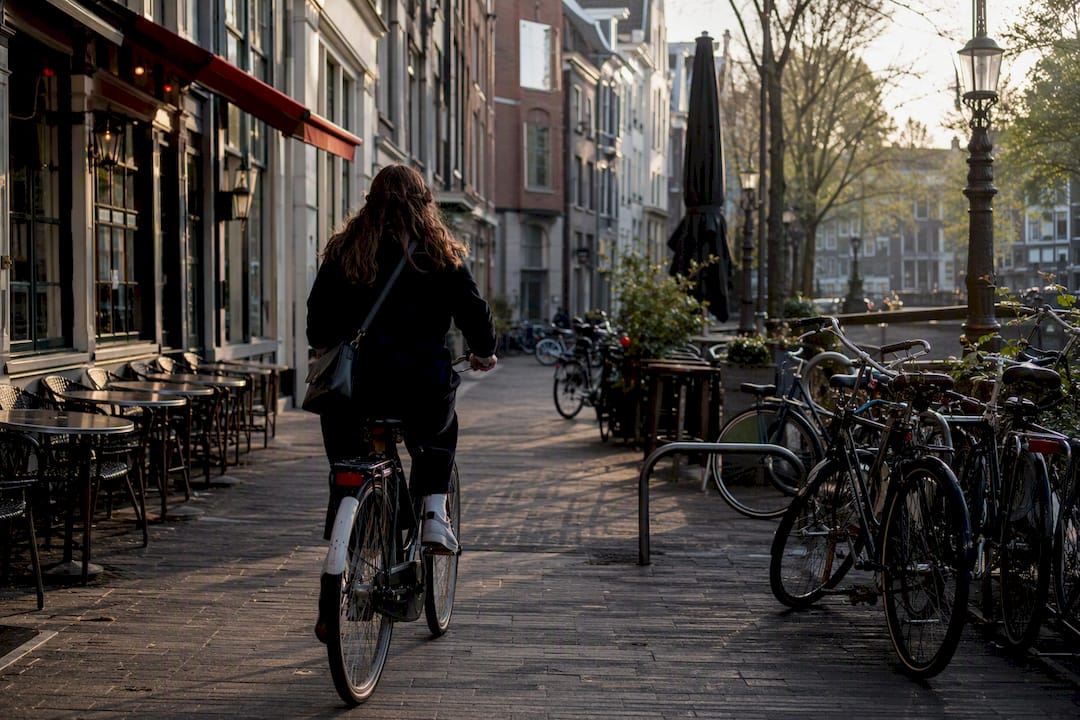
The city runs a dense network of physically separated bike lanes, dedicated bike traffic signals, and multi-story bicycle parking structures near major transit hubs. Traffic law in the Netherlands generally favors cyclists in collision liability cases involving cars, which changes driver behavior at a basic level: cars yield because the legal and cultural default assumes they should.
A few numbers make the point concrete:
- Amsterdam is widely recognized for having more bicycles than residents, a ratio almost no other European capital matches.
- Cycling accounts for the majority of short trips within the city center.
- Dedicated bike infrastructure runs alongside most major canals and arterial streets, separate from both car lanes and sidewalks.
Pro Tip: Rent a bike only if you're comfortable with dense traffic and unfamiliar right-of-way rules. If not, walk the center and use the tram network for longer hops. Cycling in Amsterdam looks casual, but locals move fast and expect you to know the signals.
How Do Tolerance and Liberal Policy Shape Amsterdam's Identity?
A long-standing culture of tolerance is one of Amsterdam's defining social traits, and it shapes everything from nightlife regulation to how neighbors treat each other's differences. This isn't a recent branding exercise. It traces back to the Golden Age itself, when religious refugees found safety here that wasn't available elsewhere in Europe, and it hardened into policy through the mid-20th century onward.
Academic work on the city identifies this as a genuine civic commitment to inclusivity and personal autonomy, not merely a set of permissive laws, one that shapes social life and public policy far beyond the tourist-facing version most visitors encounter, according to scholarly analysis from the University of Amsterdam. You can see that legacy today in the city's approach to public health policy, its LGBTQ+ visibility, and its comparatively relaxed approach to how nightlife venues operate.
Popular perception often flattens that into a caricature. A short correction:
- Myth: Amsterdam is a lawless "anything goes" city. Fact: coffeeshops, sex work, and nightlife all operate under specific licensing and zoning rules, tightly regulated rather than unregulated.
- Myth: tolerance means indifference. Fact: the policy framework aims at harm reduction and public safety, not moral neutrality.
- Myth: the city's tolerance is only for tourists. Fact: the same civic norms govern how residents treat neighbors, immigrants, and each other day to day.
A long-running civic commitment to inclusivity and personal autonomy, not a marketing slogan, is what actually shapes Amsterdam's social life and its approach to regulating public space.
That distinction matters if you're planning a night out. The city wants visitors to enjoy its entertainment district, but it expects the same respect for residential quiet and public order that it asks of locals.
What Makes Amsterdam's Museums Feel Different?
Amsterdam pairs world-class collections with a human-scale, story-driven presentation, which makes its museums feel personal rather than overwhelming, unlike the sprawling national museums in some other European capitals. You can walk the Rijksmuseum's highlights in a focused morning rather than losing a full day, and that scale is deliberate, not a limitation.
Encyclopedic overviews of the city consistently point to the same trio as central to its cultural identity: the Rijksmuseum, the Van Gogh Museum, and the Anne Frank House, clustered near or around Museumplein, the open square that functions as the city's cultural commons. The Rijksmuseum anchors Dutch Golden Age painting, including Rembrandt and Vermeer, work produced by the same merchant wealth that built the canal ring outside. The Van Gogh Museum holds the largest collection of his work anywhere, organized to trace his development rather than just display highlights. The Anne Frank House, built around the actual hiding space where the Frank family lived, delivers one of the most direct, unmediated historical experiences in European museum culture.
Several of these institutions have also begun actively addressing the colonial and slave-trade history behind the wealth that funded Amsterdam's Golden Age, adding context rather than leaving it out.
Pro Tip: Book timed tickets for the Anne Frank House weeks ahead. It sells out fastest of any Amsterdam museum, and walk-up entry is rarely available.
Why Do Amsterdam's Canal Houses Look So Distinctive?
Amsterdam's narrow, often visibly leaning canal houses give the city a visual identity no other European capital shares, and the reason is structural, not stylistic. Roughly 1,550 listed historic canal houses stand on foundations built from thousands of oak piles driven deep into soft, waterlogged soil, an engineering solution that predates modern construction methods by centuries, according to conservation research on the city's building foundations.
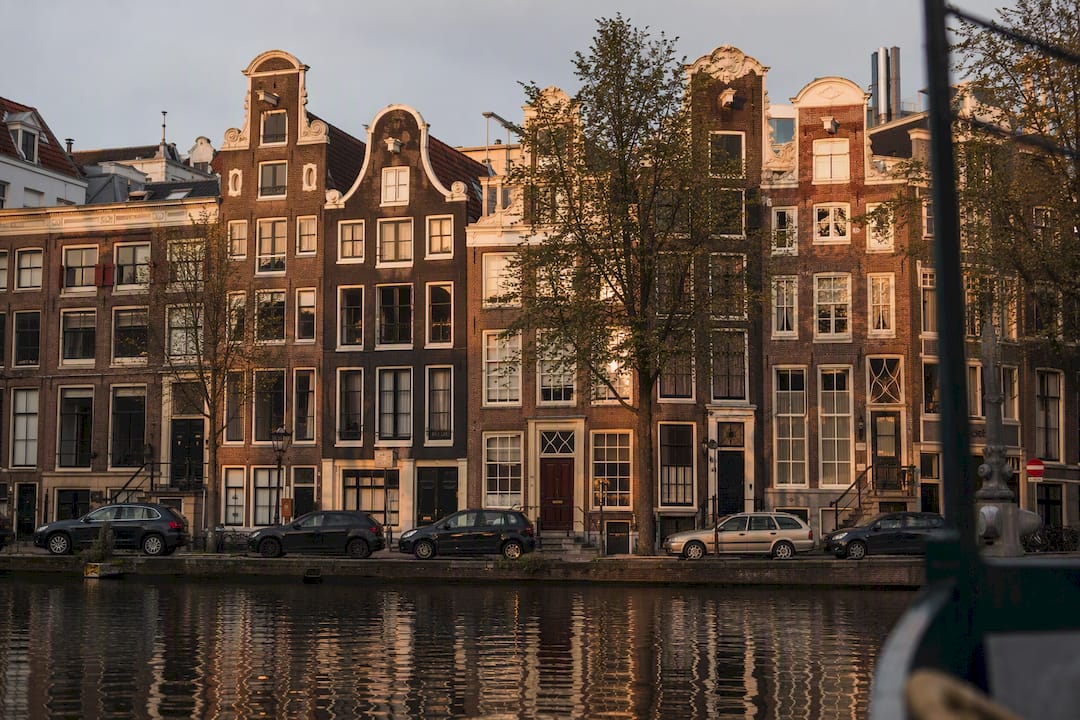
That foundation method forced narrow floorplates, since driving wider foundations into unstable soil was both expensive and structurally risky. Merchants also paid property tax based partly on canal frontage width, so narrower houses meant lower taxes, a financial incentive stacked on top of the engineering constraint. The result: tall, slim buildings with steep internal staircases, ornamental gabled facades, and the iconic hoisting hooks still bolted above many front doors, originally used to haul furniture through upper windows because the stairs were too narrow.
Analysts of the city's urban form point to this as part of a broader pattern: few tall buildings, cohesive streetscapes, and a visual consistency that separates Amsterdam from the monumental, palace-centered layouts common in cities like Paris or Vienna, according to commentary on what makes Amsterdam's urban design distinct. Conservation rules tied to the UNESCO listing keep most facades frozen in place, which is why hospitality venues operating inside these buildings often work around narrow entries, low ceilings, and irregular room shapes rather than against them.
What Gives Amsterdam's Neighborhoods Their Character?
Jordaan feels like a quiet village folded into a city center, De Pijp runs on market energy and multicultural food stalls, and Oud-West splits the difference with leafy streets and independent shops. Each neighborhood carries a distinct identity, and that variety is part of what makes exploring Amsterdam feel less like ticking off landmarks and more like discovering different small towns stitched together.
Jordaan started as a working-class district and is now known for narrow lanes, hidden courtyards, and a dense concentration of independent galleries and cafés, making it a prime example of how local cuisine shapes visitor experiences. De Pijp centers on the Albert Cuyp Market, one of Europe's largest daily street markets, and reflects the city's immigrant history through its food stalls and shops. Oud-West blends residential calm with a growing food scene near Foodhallen. Amsterdam Noord, across the IJ river by ferry, has repurposed old shipyards into creative spaces and hosts its own smaller markets.
If you want a neighborhood-first day, this order works well:
- Start at Albert Cuyp Market in De Pijp for breakfast and a sense of everyday Amsterdam life.
- Walk north into the museum quarter around Museumplein and Vondelpark for a midday break.
- Head into Jordaan in the afternoon for boutiques and canal-side cafés.
- Finish in Oud-West or take the ferry to Noord for dinner and a different pace entirely.
For a fuller breakdown of what each district offers, a neighborhood guide for visitors covers logistics in more depth, and the city's international food scene is a direct product of that neighborhood diversity.
How Does Amsterdam's Trading Past Show Up in Its Modern Economy?
The Golden Age didn't just leave behind pretty buildings. It built institutions and a business culture that still drive Amsterdam's modern economy, from finance to logistics to creative industries. The city's comfort with trade, risk, and open capital markets is a direct inheritance, not a coincidence.
The Amsterdam Stock Exchange's early modern roots as one of the first formal securities markets laid groundwork that persists in the city's current standing as a European financial and trading center. Schiphol Airport and the Port of Amsterdam continue the logistics role the VOC pioneered centuries earlier, moving goods and people at a scale disproportionate to the city's modest size. Amsterdam has also built a dense cluster of creative agencies, tech startups, and design firms, industries that thrive on the same openness and trust-based dealmaking that defined its merchant culture.
- The historical pattern of trade, tolerance, and financial trust functions today as a kind of institutional memory, an environment where new businesses assume transparency and fast dealmaking are the norm.
- Modern economic clustering around finance, logistics, and creative work mirrors the diversified merchant economy of the 1600s rather than a single dominant industry.
An Amsterdam Hospitality Perspective on the City's Character
Spend enough evenings inside Amsterdam's bars and restaurants and you start noticing how the city's civic personality shows up in small operational details. A typical night out here might move from an early dinner and sports on the big screen, into a shisha lounge session, and end at a late bar table, all under one roof rather than three separate venues across town. That layering, several experiences stacked into one relaxed space, mirrors the same intimate scale you find in the museums and the canal houses. Nobody is rushing you through a single-purpose venue.
Working inside a converted historic building means designing around narrow doorways, low beams, and oddly shaped rooms, the same timber-pile construction constraints that shaped canal houses three centuries ago. It also means planning around a clientele that mostly arrives by bike or on foot, not by car, which changes everything from entrance design to how late a kitchen stays open.
The tolerance that defines Amsterdam's civic life isn't abstract policy when you run a venue here. It shows up as a mixed crowd, locals and tourists, sports fans and couples, sharing the same room without friction.
- Diverse social spaces, sports viewing, shisha, dining, and drinks together, reflect the same mixed-use instinct that shaped Amsterdam's neighborhoods.
- Cycling culture affects staffing and opening hours, since most guests aren't driving home.
- Historic building constraints mean intimate room sizes rather than cavernous halls, which suits the city's low-key social style.
How to Experience Amsterdam's Unique Side for Yourself
Turning everything above into an actual visit comes down to a short list of priorities, roughly in order:
- Walk the canal ring early morning before the crowds, when the light on the water and the gabled facades is at its best.
- Book timed-entry tickets for the Rijksmuseum, Van Gogh Museum, and especially the Anne Frank House weeks in advance.
- Rent a bike only if you're confident reading Dutch traffic signals, otherwise stick to walking and trams.
- Visit Albert Cuyp Market in the morning, when stalls are freshest and least crowded.
- Spend an afternoon in Vondelpark, the city's largest green space and a genuine local hangout, not just a tourist stop.
- Cross to Amsterdam Noord by ferry for a neighborhood that feels entirely different from the historic center.
- Save one evening for nightlife in a mixed-use venue rather than a single-purpose bar.
Pro Tip: If you're traveling with family, front-load museum visits early in the day when energy is highest, and save canal walks or park time for the afternoon. Solo travelers get more out of wandering Jordaan without a fixed plan.
Respect residential streets after dark, cyclists genuinely won't stop for you, and never toss anything into the canals. Small courtesies go a long way in a city this compact.
How Have Immigration and Multiculturalism Shaped Amsterdam?
Amsterdam's identity was never built by one homogenous group, and that pattern started in the Golden Age itself, when religious refugees, Sephardic Jews, Huguenots, and others found safety and trading opportunity here that wasn't available elsewhere in Europe. That early wave of immigration diversified the merchant class and brought new trades, printing, diamond cutting, textile finance, into the city's economy.
Later waves reshaped the city again. Post-colonial migration from Suriname and the former Dutch East Indies, followed by labor migration from Turkey and Morocco in the mid-20th century, and more recent arrivals from across the EU and beyond, each left a mark on Amsterdam's food scene, its neighborhoods, and its public institutions. De Pijp's Albert Cuyp Market reflects this directly, stalls selling Surinamese, Moroccan, and Indonesian food sit beside traditional Dutch cheese vendors within the same few blocks.
This layered immigration history is part of why Amsterdam's international food scene feels so dense for a city its size. It also shapes public policy, schools, and civic debate, since multiculturalism here isn't a recent talking point but a lived reality going back centuries. The tolerance the city is known for developed in direct response to needing to accommodate difference, not as an abstract ideal applied afterward.
What Festivals and Events Are Unique to Amsterdam?
King's Day, held every April 27, transforms the entire city into an orange-clad street party, with canals packed with private boats and markets spilling across nearly every public square, a scale of spontaneous citywide celebration few European capitals attempt. Amsterdam Light Festival lights up the winter canals with large-scale art installations viewable by boat or on foot, running from late November into January, giving the canal ring an entirely different character in the dark months.
Pride Amsterdam stands out from other European Pride events because its central parade happens on boats moving through the canals rather than marching down a street, turning the city's core infrastructure into the stage itself. Museumnacht, held once a year, opens major museums late into the night with music and events, a format that leans into the city's human-scale museum culture rather than fighting it.
These events work precisely because they use Amsterdam's existing infrastructure, canals, compact center, cycling culture, rather than importing a format that could happen anywhere. A boat parade only makes sense in a city built around a working canal ring. A light festival only lands well in a city with as much water surface to reflect it. That's the throughline: even Amsterdam's festivals are shaped by the same geography and history covered above.
How Does Amsterdam Approach Environmental Sustainability?
Amsterdam's relationship with water was never optional, and that history now feeds directly into how the city manages climate risk. Centuries of polder engineering and dike management gave the city deep institutional experience in water control, experience it now applies to modern flood defense and stormwater planning as sea levels shift.
The city has pushed hard on green space integration within a dense urban footprint. Vondelpark remains the anchor, but newer initiatives add green roofs, rain gardens, and permeable paving throughout residential neighborhoods to manage runoff without expanding the drainage network. Amsterdam has also set ambitious targets around circular economy practices, aiming to cut virgin raw material use significantly, treating construction waste and consumer goods as resources to loop back into the economy rather than discard.
Cycling infrastructure itself functions as an environmental strategy as much as a transit one, since a population that moves primarily by bike produces a fraction of the emissions a car-dependent city generates. That's not a modern add-on. It's the same infrastructure logic that built the canal ring, work with water and geography instead of against it, applied now to carbon and waste instead of trade and drainage.
An Editorial Take on Amsterdam's Staying Power
Most guides list Amsterdam's canals, bikes, and museums as if they're separate attractions competing for your itinerary time. That misses the point entirely. These features aren't a checklist, they're one interconnected system, water management that became urban design, trade wealth that became civic tolerance, timber-pile engineering that became a design aesthetic nobody planned on purpose.
The conventional advice, hit the Rijksmuseum, walk a canal, rent a bike, treats the city like a set of boxes to tick. What actually rewards a visitor is noticing how those boxes connect: why the houses lean, why the traffic laws favor cyclists, why the museums feel small on purpose. If you only have limited time, prioritize the connections over the landmarks themselves. Walk one canal slowly instead of photographing five. Ask why a building looks the way it does instead of just snapping it. That habit of mind is what separates a tourist who saw Amsterdam from one who understood it.
Frequently Asked Questions
What makes Amsterdam different from other European capitals? Amsterdam combines a UNESCO-listed canal ring, cycling infrastructure with more bikes than residents, 17th-century financial institutions like the Amsterdam Stock Exchange, and a civic culture of tolerance, all in one compact, human-scale city.
Why is Amsterdam's canal system considered unique? The Grachtengordel was engineered in the 17th century as functional drainage and transport infrastructure, connecting about 90 islands through more than 1,200 bridges, and it carries UNESCO World Heritage status.
Is Amsterdam really more bike-friendly than other cities? Yes. Amsterdam is widely recognized for having more bicycles than residents, backed by a dense network of separated bike lanes and traffic laws that generally favor cyclists.
What role did the Dutch Golden Age play in shaping the city? The Golden Age concentrated trade, financial innovation, and immigration in Amsterdam, funding the canal ring and civic institutions through wealth generated by the VOC, the Amsterdam Stock Exchange, and the Bank of Amsterdam.
What are some hidden gems in Amsterdam beyond the main museums? Amsterdam Noord's converted shipyards, the Albert Cuyp Market in De Pijp, and the quiet courtyards tucked inside Jordaan all offer a different pace than the historic center's main tourist routes.
Sources
A few sources worth reading directly if you want to go deeper on any of the topics above:
- Holland
- Amsterdam — Wikipedia
- Amsterdamtourism
- Getty Conservation Institute — Building construction and foundations