
TL;DR:
- Outdoor seating in Amsterdam is a strategic, revenue-enhancing feature driven by cultural and economic factors. It allows restaurants to increase capacity and revenue with minimal cost while improving diners' mood and social media visibility. Permits are expensive, but weather adaptations and design quality are crucial for year-round outdoor dining success.
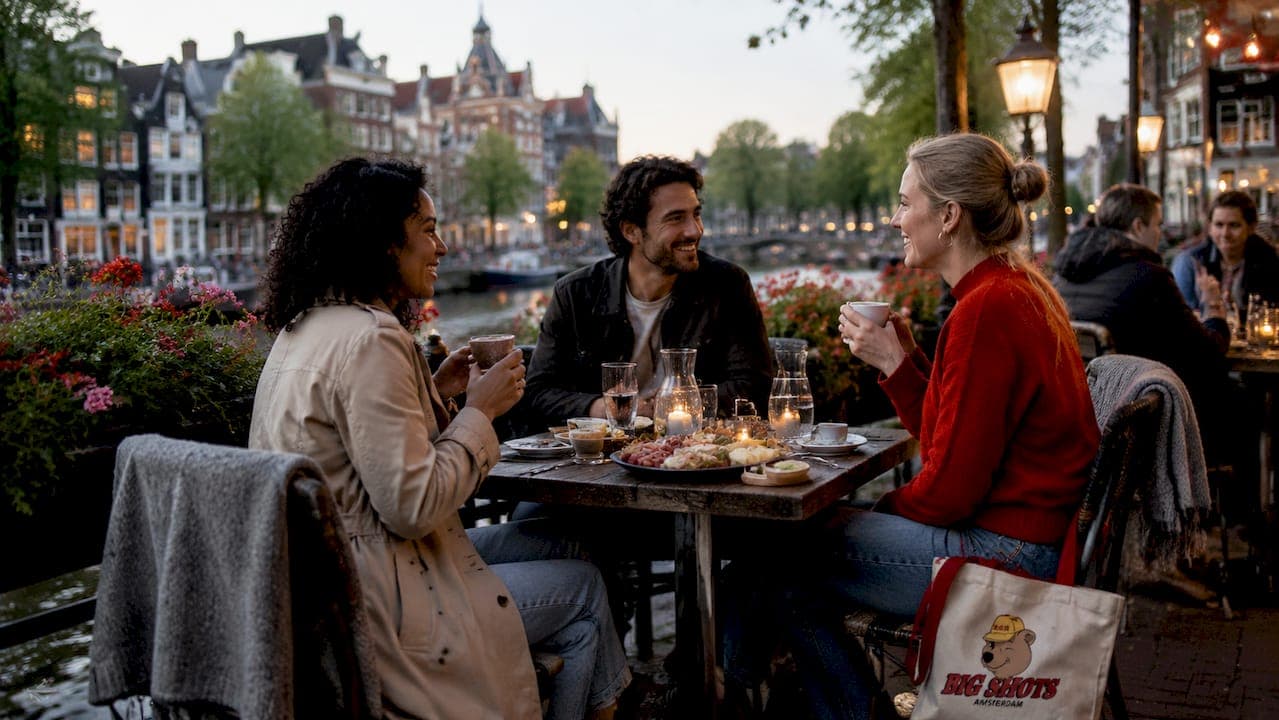
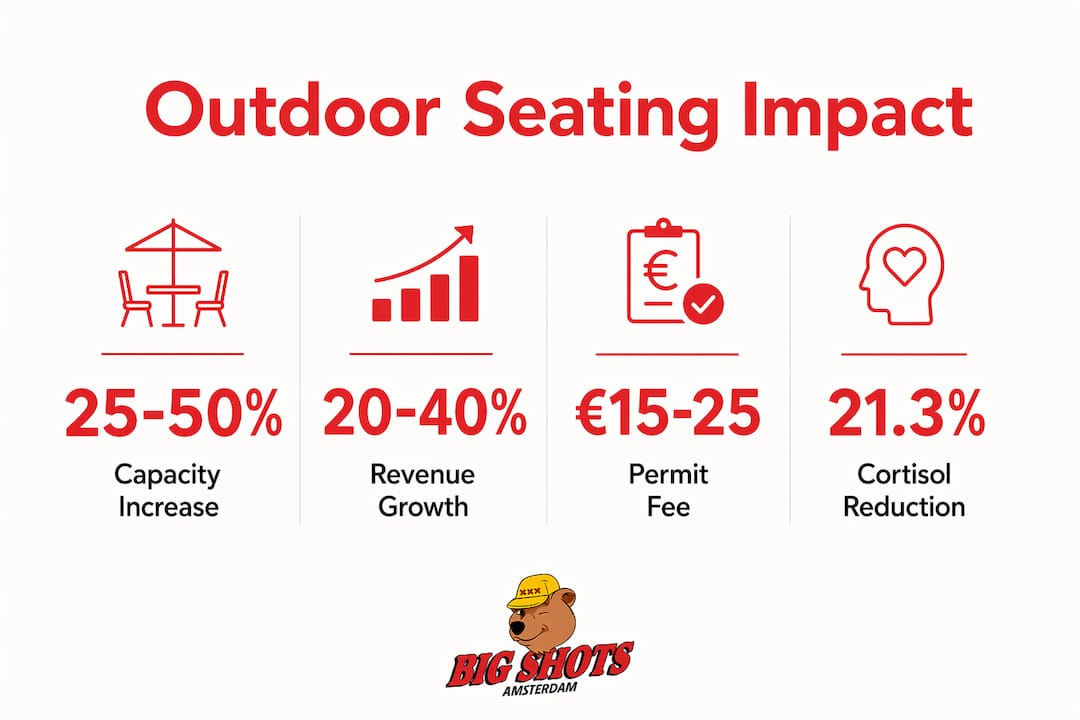
Outdoor seating in Amsterdam restaurants is a direct revenue strategy, not a seasonal decoration. The city's restaurants with outdoor dining, known locally as terraces, can increase seating capacity by 25–50% without touching their indoor footprint. That capacity gain translates to 20–40% revenue increases for venues running on net margins of just 3–6%. Add Amsterdam's canal-lined streets, a culture that prizes open-air socializing, and a post-pandemic shift in diner expectations, and the answer to why Amsterdam restaurants offer outdoor seating becomes clear: it is a financial, cultural, and competitive necessity.
Why amsterdam restaurants offer outdoor seating: the core economics
Outdoor seating is the most affordable expansion a restaurant can make. Adding a terrace requires no structural renovation, no new kitchen, and no major permits beyond the municipal terrace license. For a city where commercial real estate is among the most expensive in Europe, that matters enormously.
The numbers make the case plainly. A restaurant with 40 indoor seats that adds a 20-seat terrace grows its capacity by 50% overnight. During Amsterdam's warmer months, from april through september, that extra capacity runs at nearly full utilization during lunch and dinner peaks. The revenue impact is not marginal. Restaurants that open outdoor seating consistently report revenue gains of 20–40%, which is transformative for businesses operating on thin margins.
There are real operational costs to account for. Operators must budget for increased food waste and added staff logistics when outdoor capacity jumps by 25–50%. Outdoor service requires more running distance per server, more exposure to weather delays, and more complex coordination between kitchen and floor teams. These costs are real but manageable, and they rarely outweigh the revenue upside.
Pro Tip: Before opening a terrace, calculate your revenue per available seat per hour indoors. Then model the same metric for outdoor seats at 70% utilization. That comparison will show you whether the terrace pays for itself within a single season.
| Cost Factor | Typical Impact |
|---|---|
| Permit fees (Amsterdam) | €15–25 per square meter annually |
| Furniture and setup | One-time cost, replaced every 3–5 years |
| Additional staffing | 1–2 extra servers per 20 outdoor seats |
| Food waste increase | Estimated 5–10% higher than indoor service |
| Revenue upside | 20–40% increase for terrace-equipped venues |
What does outdoor dining do for the customer?
The psychological case for eating outside is well documented. Exposure to outdoor environments reduces cortisol by 21.3% per hour, the stress hormone that makes people feel tense and rushed. Diners who sit outside feel calmer, stay longer, and spend more. That is not a coincidence. It is biology working in the restaurant's favor.
The effect kicks in fast. Diners report improved mood after just 20–30 minutes in an outdoor dining area. For Amsterdam restaurants, this means a terrace guest is more likely to order dessert, linger over a second drink, and leave a positive review than an indoor guest eating the same meal. The role of atmosphere in dining is well understood by experienced operators, and outdoor settings deliver it naturally.
Biophilic design, the practice of incorporating natural elements like plants, water, and open air into built environments, amplifies this effect. Restaurants that add greenery, natural light, and canal views to their terraces are not just decorating. They are engineering a psychological state that makes guests feel good about being there.
The social media dimension is equally significant:
- Visibility and shareability: Outdoor settings photograph better than indoor ones. Natural light, open skies, and street energy create images that guests post without prompting.
- Platform discovery: Nearly 70% of diners choose restaurants based on aesthetics and social media appeal, and a packed terrace signals quality to passersby and online browsers alike.
- Review quality: Guests who dine outside in pleasant conditions leave higher-rated reviews on Google and TripAdvisor, which directly affects search rankings and booking volume.
- Dwell time: Longer stays mean higher average checks, which improves revenue per table turn even when turnover rate drops slightly.
How do amsterdam's permit rules shape outdoor seating?
Amsterdam's municipal government controls outdoor seating through a formal terrace permit system. Permit fees range from €15 to €25 per square meter annually, making Amsterdam the most expensive Dutch city for terrace licensing. Rotterdam and Utrecht charge meaningfully less, which reflects Amsterdam's higher density, heritage preservation requirements, and canal-side real estate pressure.
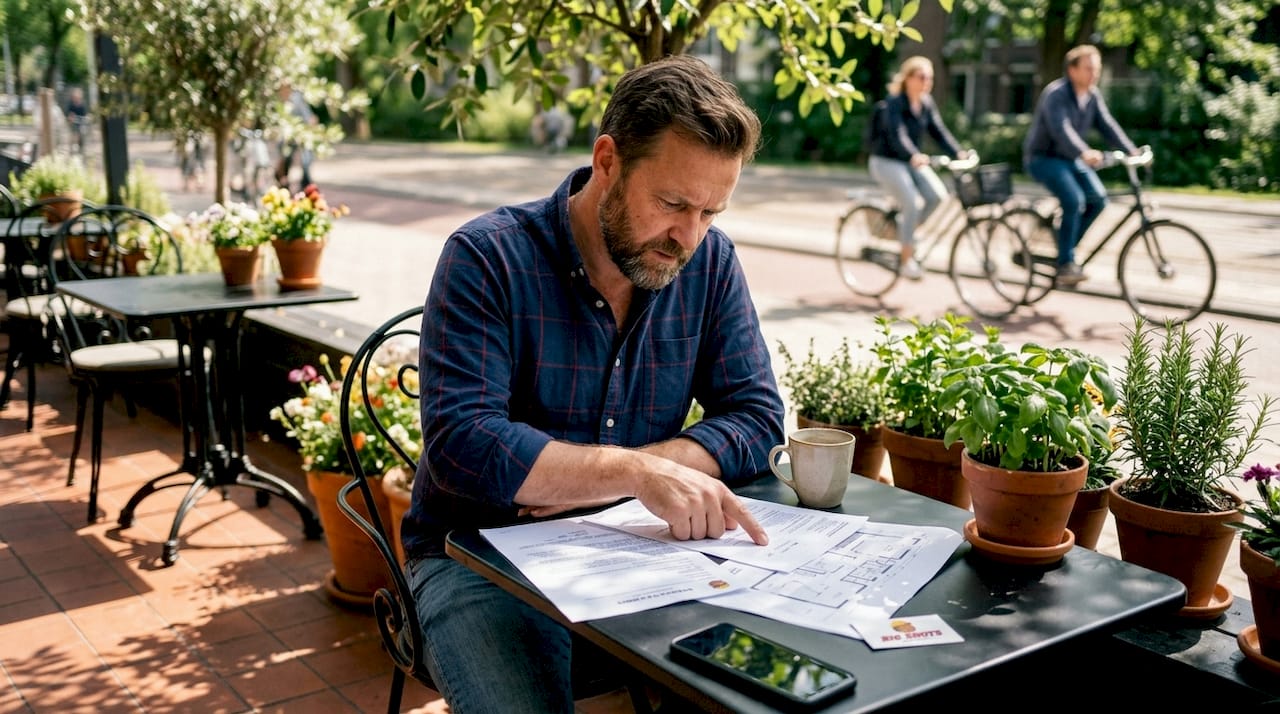
Seasonal permits cover the period from march through october and cost approximately 60–70% of the annual fee. Many restaurants choose the seasonal option to reduce fixed costs during winter months when outdoor dining is impractical. The permit requires detailed scale drawings of the proposed seating area, specifying furniture types, dimensions, and operating hours. Restaurants must comply with local zoning standards, noise ordinances, and accessibility requirements.
One detail most operators overlook: permit fees depend on surface type. Paved surfaces like sidewalks and plazas are easier and cheaper to license than grass areas or park land. Restaurants near Vondelpark or the Amstel riverbank face a more complex approval process than those on standard cobblestone streets.
| City | Annual Permit Fee (per sq meter) | Seasonal Option |
|---|---|---|
| Amsterdam | €15–25 | Yes (March–October) |
| Rotterdam | Lower than Amsterdam | Yes |
| Utrecht | Lower than Amsterdam | Yes |
| The Hague | Varies by district | Yes |
A common mistake is underestimating costs when expanding an existing terrace. Any change in size or layout requires a new permit application with updated drawings and fresh fees. Restaurants that grow their terrace mid-season without updating their permit face fines that can exceed the cost of the permit itself.
Is outdoor seating now a competitive requirement in amsterdam?
Outdoor seating crossed from seasonal bonus to competitive requirement after 2020. Industry experts confirm that restaurants without outdoor options now risk poor rankings on digital booking platforms because consumer demand for open-air dining has become a standard filter, not a preference. Platforms like Google Maps and TripAdvisor surface outdoor seating as a searchable attribute. Restaurants that lack it simply do not appear in a growing share of searches.
The consumer data supports this shift. More than 50% of diners prefer outdoor seating when weather permits. That preference directly shapes where people book, which restaurants they recommend, and how they rate their experience afterward. For Amsterdam's food scene, which depends heavily on tourist traffic from April through September, missing that preference means missing revenue.
Outdoor seating also functions as live advertising in a way that no digital campaign can replicate. A full terrace on a sunny afternoon signals success, energy, and desirability to every person walking past. That visual cue drives walk-in traffic more reliably than a promoted Instagram post. For restaurants on Amsterdam's major pedestrian routes, like the Leidseplein, Rembrandtplein, or along the Prinsengracht, a visible terrace is the most effective marketing tool they have.
Pro Tip: If you manage a restaurant without a terrace, check whether adjacent sidewalk or courtyard space qualifies for a permit. Even six to eight seats outside can shift your visibility on booking platforms and attract walk-in traffic during peak season.
The shift toward outdoor dining also reflects a permanent change in how people think about dining safety and comfort. Post-pandemic diners associate open air with health and freedom. That association has not faded. It has become part of how Amsterdam's food scene defines a quality experience. You can explore how Amsterdam's dining trends continue to evolve around this expectation.
How do amsterdam restaurants make outdoor seating work year-round?
Weather is the obvious challenge. Amsterdam averages 130 days of rain per year, and temperatures drop sharply from october onward. Restaurants that treat their terrace as a summer-only asset leave money on the table for five months. The operators who profit most from outdoor seating invest in solutions that extend usability well beyond summer.
The most effective weather adaptations include:
- Retractable awnings: These protect against rain and harsh sun without blocking the open-air feel that diners want. They can be deployed in under two minutes and retracted when skies clear.
- Infrared heating panels: Wall-mounted or overhead heaters extend comfortable outdoor dining into april and october, and sometimes november. They heat guests directly rather than warming the surrounding air, which makes them far more efficient than gas patio heaters.
- Windbreaks and glass barriers: Transparent panels block canal-side wind without creating a closed-in feeling. They are standard at popular outdoor cafes in Amsterdam along exposed waterfront locations.
- Cooling misters: Less common in Amsterdam than in southern European cities, but useful during the increasingly warm summers the city now experiences.
Durable commercial outdoor furniture is a non-negotiable investment. Cheap furniture warps, rusts, and fades within one season of Amsterdam's wet weather. Replacing it annually costs more than buying quality pieces upfront. Operators who buy teak, powder-coated aluminum, or high-density polyethylene furniture report a 3–5 year replacement cycle instead of annual replacement.
Balancing indoor and outdoor staff workflows is the operational challenge that trips up new terrace operators most often. Outdoor tables require longer service runs, different timing for food delivery, and separate side-station setups. Restaurants that treat outdoor service as an extension of indoor service, rather than a separate workflow, consistently see slower ticket times and lower guest satisfaction scores outdoors.
Key takeaways
Amsterdam restaurants offer outdoor seating because it is the most cost-effective way to grow revenue, attract diners, and compete in a market where open-air dining is now a baseline expectation.
| Point | Details |
|---|---|
| Capacity and revenue | Terraces add 25–50% capacity and drive 20–40% revenue gains without indoor renovation. |
| Psychological appeal | Outdoor exposure cuts cortisol by 21.3% hourly, keeping guests relaxed and spending longer. |
| Permit costs | Amsterdam charges €15–25 per square meter annually, the highest rate among Dutch cities. |
| Competitive necessity | Restaurants without terraces risk lower rankings on booking platforms and reduced walk-in traffic. |
| Weather solutions | Retractable awnings, infrared heaters, and durable furniture extend terrace use well beyond summer. |
Amsterdam's outdoor dining scene is only getting more competitive
I have watched Amsterdam's terrace culture shift from a nice-to-have into something closer to a defining feature of the city's hospitality identity. Ten years ago, a restaurant could fill its indoor seats and call it a good night. That calculus has changed completely.
What strikes me most is how the economics and the culture reinforce each other. The financial case for outdoor seating is strong on its own. But in Amsterdam, it is amplified by a city that genuinely loves being outside. Locals cycle everywhere, eat lunch on canal bridges, and treat any patch of sun as an invitation to gather. Restaurants that tap into that instinct are not just adding seats. They are aligning with how Amsterdam actually lives.
The challenge I see most often is operators who invest in the terrace but not in the experience. A row of plastic chairs on a sidewalk is not a terrace. It is an afterthought. The restaurants that win with outdoor seating treat it as a designed environment, with lighting, greenery, furniture that invites you to stay, and service that matches the indoor standard. That gap between a terrace that works and one that does not is almost always a design and training decision, not a location one.
For travelers visiting Amsterdam, my honest advice is to prioritize restaurants with well-designed outdoor spaces. The city looks different from a terrace seat than from inside. You get the canal sounds, the bike traffic, the light off the water. That is the Amsterdam dining experience at its best.
— Leo
Experience outdoor dining at Bigshotsamsterdam
If you want to put everything in this article into practice, Bigshotsamsterdam is the place to do it. The venue combines a restaurant, sports bar, shisha lounge, and café in one of Amsterdam's most social settings, with an outdoor area that captures exactly the energy this city is known for.
Bigshotsamsterdam delivers the full Amsterdam dining experience: quality food including steaks and gourmet dishes, craft cocktails, and an atmosphere that works for a casual afternoon or a full evening out. The terrace brings the open-air appeal that makes eating outside in Amsterdam genuinely memorable. Whether you are a local looking for your next regular spot or a traveler wanting to experience Amsterdam's food scene at its liveliest, visit Bigshotsamsterdam and see what a well-executed outdoor dining space actually feels like.
FAQ
Why do amsterdam restaurants have terraces?
Amsterdam restaurants add terraces to increase seating capacity by 25–50% and capture 20–40% more revenue during peak season. The city's canal culture and outdoor lifestyle make terrace dining a strong draw for both locals and tourists.
How much does an outdoor seating permit cost in amsterdam?
Amsterdam terrace permits cost €15–25 per square meter annually, the highest rate among Dutch cities. Seasonal permits covering march through october cost approximately 60–70% of the annual fee.
Does outdoor dining actually improve the experience?
Outdoor exposure reduces cortisol by 21.3% per hour, leaving diners more relaxed and satisfied. Guests in outdoor dining areas consistently report better mood and higher satisfaction than those eating indoors.
Are amsterdam terraces open year-round?
Most terraces operate from march through october under seasonal permits. Restaurants with retractable awnings, infrared heaters, and windbreaks can extend outdoor service into cooler months, though full year-round operation is uncommon.
How does outdoor seating affect a restaurant's online ranking?
Restaurants without outdoor seating risk lower visibility on platforms like Google Maps and TripAdvisor, where outdoor seating is a searchable filter. Nearly 70% of diners factor aesthetics and open-air appeal into their restaurant choices.