
TL;DR:
- Breakfast spots serve as vital third places that foster community trust and reduce loneliness.
- Sharing meals at these venues improves wellbeing, happiness, and social connection in daily routines.
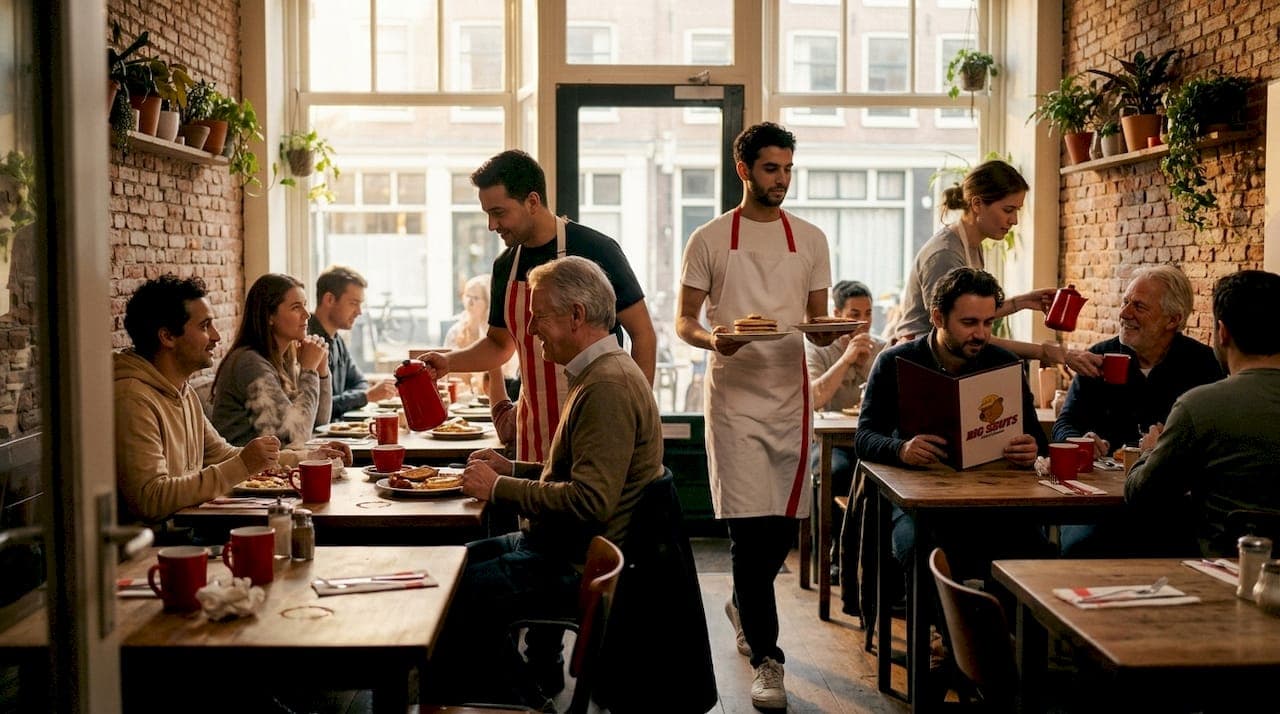
Breakfast spots are defined as social venues where morning meals become the foundation for community connection, cultural ritual, and shared wellbeing. The importance of breakfast venues goes far beyond eggs and coffee. These places function as what sociologists call "third places," the informal gathering spaces between home and work where real community life happens. As intentional morning dining grows among food enthusiasts and social seekers alike, understanding why breakfast spots matter reveals something surprising: they may be the most democratic social institution left in modern city life.
Why breakfast spots matter as social gathering places
The term "third place" was coined by sociologist Ray Oldenburg to describe spaces outside home and work where people gather freely and repeatedly. Breakfast spots and coffee venues fit this definition precisely. AEI research confirms that the decline of such places increases loneliness, reduces social trust, and weakens civic engagement. That is not a minor cultural footnote. It is a public health warning.
What makes a diner or neighborhood café so effective as a third place is the low stakes of the encounter. You do not need a reservation, a reason, or a relationship to walk in. You just need to show up. Over time, those repeated low-stakes encounters build something real: familiarity, recognition, and the kind of social trust that holds neighborhoods together.
AEI researcher Samuel J. Abrams argues that real community requires proximate, personal, familiar physical spaces. Breakfast cafés deliver exactly that. They bridge generational and economic divides in ways that digital spaces simply cannot replicate. A retired teacher and a 25-year-old freelancer rarely share a feed, but they can share a table.
"The loss of third places is not just a lifestyle inconvenience. It is a structural weakening of the social fabric that democracies depend on." — AEI, America's Third Places Are Disappearing
The benefits of breakfast places operating as third places include:
- Consistent, predictable social encounters that build familiarity over time
- Cross-generational mixing that reduces social polarization
- Low-cost access to community life without formal membership or commitment
- Physical presence that habituates people to engaging with diverse others
How shared breakfast meals improve your wellbeing
Shared meals at breakfast venues do more than satisfy hunger. A 2026 Scientific Reports study analyzing Gallup surveys and U.S. time-use data found that meal sharing has a significant positive relationship with subjective wellbeing in almost all world regions. People who eat with others report higher happiness and lower stress, pain, and sadness on the same day. That is a measurable emotional benefit embedded in a simple morning routine.
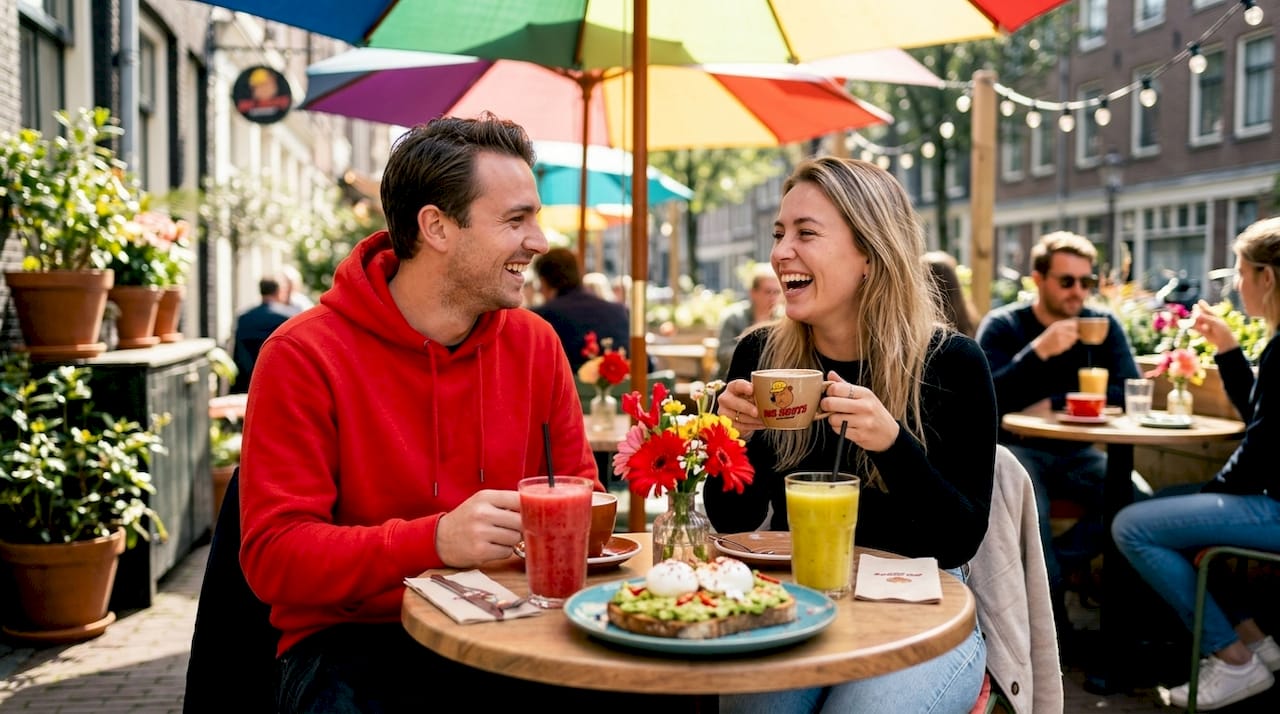
The trend running against this is stark. Americans are dining alone more frequently, and the data shows the cost. Solitary eating correlates with worse emotional outcomes on the same day, not just over time. Breakfast spots and community-centered cafés directly counter this by creating a default social context for the morning meal.
Pro Tip: If you want to maximize the wellbeing benefits of breakfast dining, go with someone you see less than once a week. Research on social connection consistently shows that weak-tie relationships, acquaintances and neighbors rather than close friends, produce the largest boosts in daily happiness.
The psychological benefits extend beyond mood. Eating breakfast with others encourages slower consumption, more mindful food choices, and longer time spent at the table. All three behaviors are associated with better digestion, lower cortisol levels, and a stronger sense of belonging. The significance of morning meals, when shared, is genuinely hard to overstate.
Why breakfast culture is becoming an intentional social ritual
Breakfast is no longer just the meal you eat before your day starts. For a growing segment of younger diners, it has become the social event itself. Harper's Bazaar reports that breakfast spots are replacing late-night clubbing as the preferred social venue for millennials, driven by sober-friendly atmospheres, artisanal coffee programs, and a preference for leisurely, intentional experiences.
This shift is not just about avoiding hangovers. It reflects a deeper realignment of values. Morning dining signals health consciousness, intentionality, and a preference for quality over quantity. Cafés in Mumbai, London, and Amsterdam are responding by designing spaces and menus specifically for this audience: slower service, photogenic plating, specialty single-origin coffees, and seating arrangements that encourage conversation rather than quick turnover.
The distinction between breakfast and brunch matters here. Brunch carries a performative, weekend-only energy. Breakfast culture in 2026 is about intentional morning dining as a regular weekday ritual, not a special occasion. That regularity is what builds the community habits that third-place theory describes.
Here is how the shift from nightlife to breakfast culture plays out in practice:
- Social plans are made around a morning café visit rather than an evening bar
- The venue is chosen for atmosphere, menu quality, and the likelihood of a long, unhurried conversation
- Alcohol is absent or optional, making the gathering accessible to a wider range of people
- The experience is documented and shared on social media, reinforcing breakfast spots as cultural signifiers
- Repeat visits to the same spot build a sense of regularity and belonging
Pro Tip: When choosing a breakfast spot for a social gathering, prioritize venues with table spacing that allows conversation. Tight seating designed for quick turnover actively works against the social benefits you are there to capture.
What makes breakfast-only venues economically sustainable
The operational model behind breakfast spots is as interesting as the sociology. Breakfast-and-lunch-only concepts posted 11.6% sales growth in 2025, compared to a 0.3% decline for all-day dining chains. That gap is not accidental. Focused menus and limited hours create staffing stability, predictable customer traffic, and tighter cost control.
The comparison below shows why the focused breakfast model outperforms broader concepts across key operational metrics:
| Factor | Breakfast-focused venues | All-day dining chains |
|---|---|---|
| Sales growth (2025) | +11.6% | -0.3% |
| Staffing complexity | Lower, defined shift windows | Higher, multiple shift overlaps |
| Menu complexity | Focused, lower waste | Broad, higher ingredient costs |
| Customer return rate | High, driven by daily routine | Variable, occasion-based |
| Community ritual potential | Strong, predictable schedule | Weaker, less habitual |
The operational advantages of breakfast concepts reinforce their social role. A venue that opens at 7 a.m. and closes at 2 p.m. becomes a neighborhood fixture with a known rhythm. Regulars build their mornings around it. That predictability is exactly what transforms a restaurant into a community institution. You can learn more about how Amsterdam's breakfast café scene has developed this kind of neighborhood anchoring.
Pro Tip: For food enthusiasts evaluating a breakfast spot's staying power, check whether it has a loyal weekday morning crowd, not just weekend lines. Weekday regulars are the sign of a true community anchor.
How breakfast spots support nutrition, energy, and daily performance
The physiological case for breakfast is well established, and breakfast venues make it easier to act on. Breakfast breaks an overnight fast of up to 12 hours, replenishing glucose and glycogen stores that fuel both physical activity and cognitive function. People who eat breakfast regularly are more likely to meet daily nutrient intake recommendations and more likely to be physically active in the morning hours.
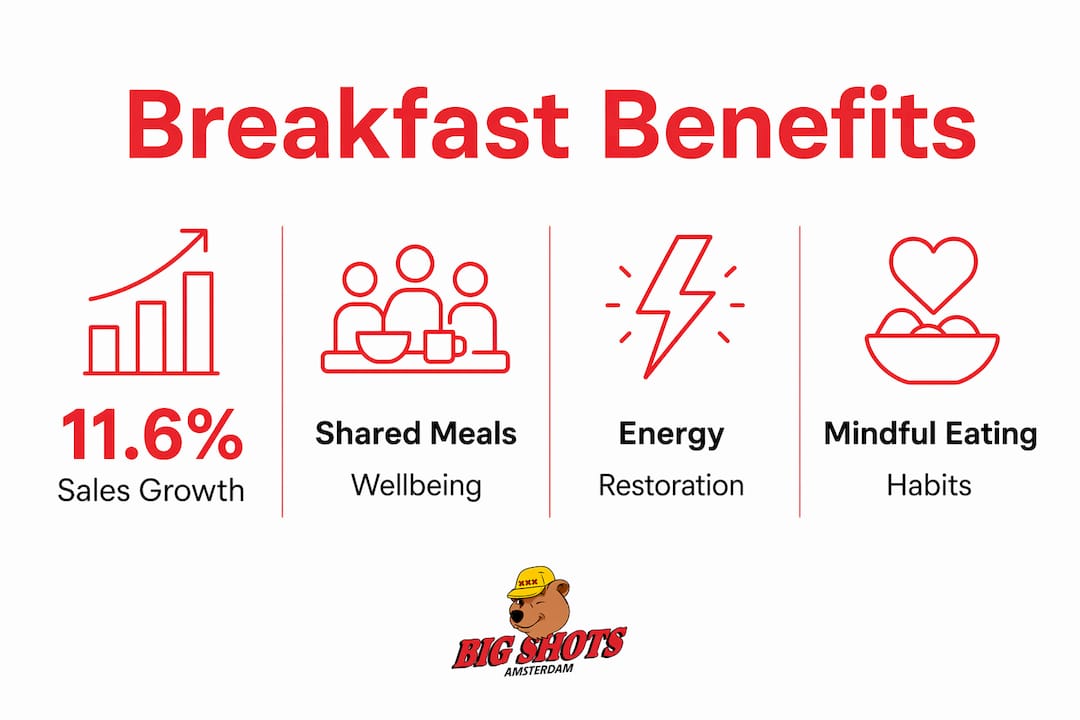
The table below summarizes the core nutritional and performance benefits that quality breakfast venues support:
| Benefit | Mechanism |
|---|---|
| Energy restoration | Replenishes glycogen depleted during overnight fasting |
| Improved alertness | Restores blood glucose to levels that support concentration |
| Better nutrient intake | Morning meals contribute key vitamins and minerals often missed later |
| Support for physical activity | Fueled muscles perform better in morning exercise |
| Metabolic activation | Eating breakfast signals the body to shift from fasting to active metabolism |
The best breakfast experiences combine nutritional quality with social context. A venue that serves whole-grain options, fresh produce, and quality protein alongside a welcoming atmosphere does double duty: it supports physical health and social wellbeing simultaneously. That combination is what separates a great breakfast dining experience from a functional pit stop.
Key takeaways
Breakfast spots matter because they combine nutritional function, social infrastructure, and cultural ritual into a single daily experience that no other venue type replicates.
| Point | Details |
|---|---|
| Third-place function | Breakfast venues provide the low-stakes, repeated social encounters that build community trust. |
| Wellbeing through shared meals | Eating breakfast with others measurably reduces stress and increases happiness on the same day. |
| Cultural shift toward intentionality | Younger diners are replacing nightlife with morning café rituals, prioritizing sober, slower social experiences. |
| Operational sustainability | Breakfast-focused concepts grew sales 11.6% in 2025, proving the focused model works economically and socially. |
| Nutritional foundation | Regular breakfast consumption supports energy, alertness, and nutrient intake that fuels the full day ahead. |
Breakfast spots as social scheduling technology
Here is what most food writing misses about the importance of breakfast venues: they solve a coordination problem that no app has fully cracked. Scheduling a dinner requires agreeing on a date weeks out, choosing a restaurant, making a reservation, and managing everyone's evening commitments. Scheduling a breakfast requires saying "same place, 8 a.m., Thursday." The friction is almost zero.
That is what I mean when I describe breakfast spots as social scheduling technology. They create a predictable, early-day slot for connection that requires almost no negotiation. The regularity of the morning routine does the coordination work for you. I have watched this play out in cities from Amsterdam to New York: the people with the strongest social networks are often the ones who have a breakfast spot they go to consistently, not the ones who plan elaborate dinners.
What concerns me about the current moment is the rate at which local, independent breakfast venues are being replaced by chains or disappearing entirely. The AEI research on third-place decline is not abstract. When a neighborhood loses its corner café, it loses a piece of its social infrastructure that is genuinely hard to rebuild. Chains can replicate the menu but rarely the familiarity.
My honest advice to food enthusiasts and social seekers is this: find your spot, go back, and bring someone new occasionally. The impact of breakfast cafés on community life is cumulative. It builds through repetition, not through one perfect brunch. Support the venues that make your neighborhood feel like a neighborhood. They are doing more civic work than most people realize.
— Leo
Experience breakfast culture at Bigshotsamsterdam
Bigshotsamsterdam in Amsterdam brings together everything that makes a breakfast spot worth returning to: a curated menu, a social atmosphere, and a space designed for genuine connection rather than quick turnover. Whether you are meeting a friend for the first time this week or making it a standing Thursday ritual, the venue delivers the kind of morning experience that the research consistently links to better days.
Bigshotsamsterdam combines the warmth of a neighborhood café with the energy of a full hospitality venue, making it one of Amsterdam's most versatile spots for morning gatherings. From specialty breakfast dishes to a relaxed, welcoming environment, it embodies the breakfast spot values this article describes. Visit Big Shots Amsterdam to explore the menu and plan your next morning out with people worth seeing.
FAQ
Why do breakfast spots matter for community life?
Breakfast spots function as third places, informal social venues outside home and work, where repeated low-stakes encounters build social trust and neighborhood connection over time. AEI research confirms that the loss of such spaces directly increases loneliness and weakens civic engagement.
Does eating breakfast with others actually improve wellbeing?
A 2026 Scientific Reports study found that shared meals have a significant positive relationship with wellbeing across nearly all world regions, with people reporting higher happiness and lower stress on days they eat with others compared to days they eat alone.
Why are younger people choosing breakfast spots over nightlife?
Harper's Bazaar reports that millennials are increasingly favoring breakfast venues for their sober-friendly atmospheres, artisanal food and coffee offerings, and the opportunity for slower, more intentional social experiences that align with health-conscious lifestyles.
Are breakfast-only restaurants a sustainable business model?
Breakfast-and-lunch-only concepts grew sales by 11.6% in 2025 while all-day chains declined 0.3%, according to Entrepreneur. The focused model supports better staffing, lower costs, and the kind of consistent customer routines that build loyal community followings.
What are the health benefits of eating breakfast at a café?
Eating breakfast replenishes glucose and glycogen stores after an overnight fast of up to 12 hours, improving energy, alertness, and the likelihood of meeting daily nutrient recommendations, according to the Better Health Channel. Doing so in a social setting adds measurable psychological benefits on top of the nutritional ones.