
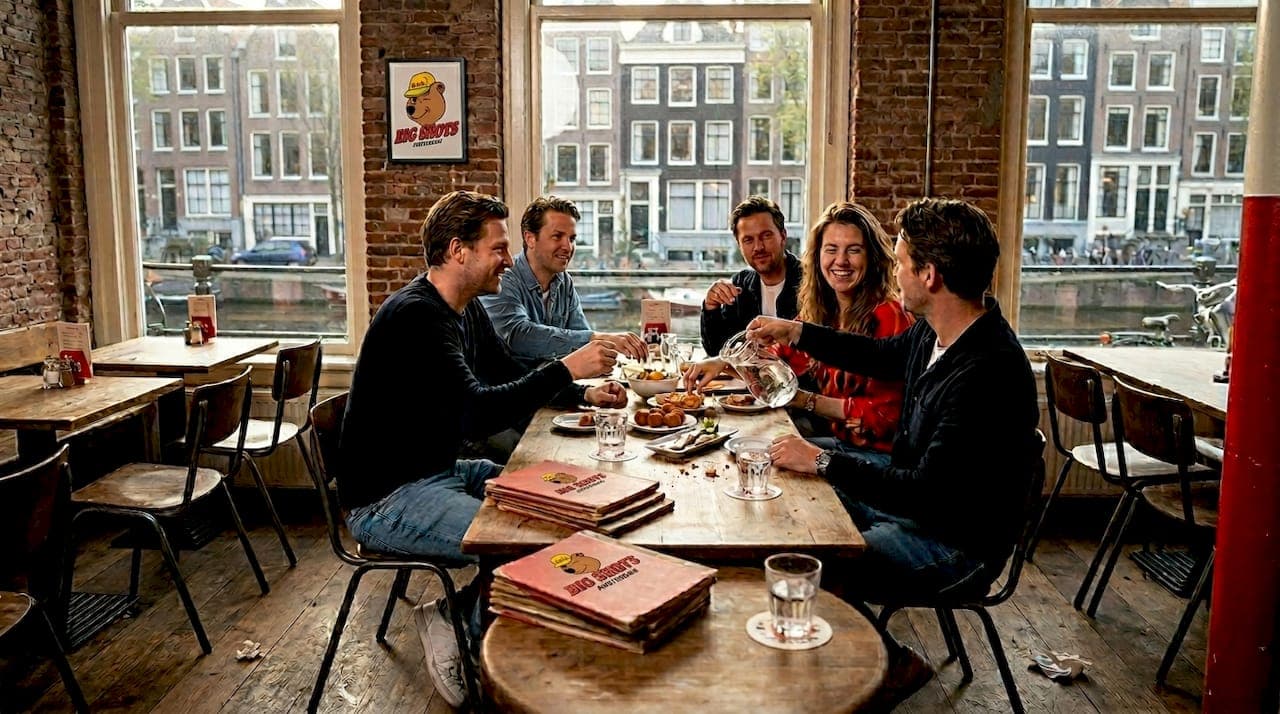
TL;DR:
- Sharing meals with friends is strongly linked to higher wellbeing and positive emotions, making it a powerful social habit. Regular group dining in Amsterdam's vibrant venues fosters connection, reduces loneliness, and enhances overall happiness, regardless of the occasion. Planning ahead with synchronized service and a lively atmosphere amplifies these emotional benefits, creating memorable social experiences.
Sharing a meal with friends sounds simple, almost obvious. But research now suggests it may be one of the most powerful wellbeing habits you can build into your social life. According to UCL's recent analysis, sharing mealtimes with others is strongly linked to higher wellbeing and positive emotions, with dining alone consistently associated with lower life satisfaction. Amsterdam's lively restaurant and bar scene gives you an almost unfair advantage here. Whether you are chasing that Friday night energy or planning a casual mid-week catch-up, this city delivers the backdrop to make group dinners genuinely memorable.
Table of Contents
- The science behind dining together: Happiness and connection
- Beyond the plate: Social dynamics and emotional rewards
- Common pitfalls: When dining out can miss the mark
- Crafting the perfect group outing: Practical tips from Amsterdam's hospitality scene
- Our take: Why vibrant group dining transforms Amsterdam evenings
- Experience Amsterdam's most vibrant bar and restaurant
- Frequently asked questions
Key Takeaways
| Point | Details |
|---|---|
| Sharing meals boosts wellbeing | Dining out with friends consistently links to higher life satisfaction and reduced loneliness. |
| Social design matters | Restaurants that synchronize meal timing create more enjoyable group experiences. |
| Plan to avoid pitfalls | Choose venues wisely and avoid negative dynamics to maximize fun and emotional rewards. |
| Amsterdam offers vibrant venues | Local restaurants and cafes provide ideal settings for lively, connected group outings. |
The science behind dining together: Happiness and connection
Now that we see dining out is about more than food, let's examine the science behind the impact.
The numbers are striking. The World Happiness Report synthesis found that meal sharing predicts wellbeing in a way that rivals classic socioeconomic factors like income and employment status. That is not a small claim. For most people, those two factors feel like the foundation of a good life, yet sitting down and eating with people you care about competes with them in terms of measurable happiness outcomes.
"Sharing meals with others is strongly associated with higher wellbeing and positive emotions, with dining alone linked to lower wellbeing across multiple measures of life satisfaction." — UCL/World Happiness Report synthesis
Let's break down what the research actually shows:
| Wellbeing factor | Strength of link to happiness |
|---|---|
| Income level | High |
| Employment status | High |
| Sharing meals with others | Comparable to income and employment |
| Dining alone | Associated with lower wellbeing |
| Physical health | High |
What makes this finding genuinely surprising is that dining together benefits are not limited to special occasions. Regular shared meals, even casual midweek dinners, carry the same association with better emotional outcomes.
That said, science always comes with caveats. As Harvard's coverage of the World Happiness Report notes, these studies are correlational and do not fully settle causality. Happier people may simply choose to share more meals. The direction of the relationship is still debated among researchers, and experts are careful to stress this limitation. It does not change the practical takeaway, though. Whether shared meals cause happiness or happiness invites more shared meals, building the habit appears to work in your favor either way.
The key benefits linked to sharing meals include:
- Higher scores on life evaluation surveys
- More frequent positive emotions throughout the week
- Lower feelings of social isolation
- Greater sense of community and belonging
- Stronger existing friendships and faster formation of new ones
For anyone already plugged into Amsterdam's social dining scene, this research validates what many already feel intuitively: a great dinner with good company just does something for you that a solo meal cannot replicate.
Beyond the plate: Social dynamics and emotional rewards
Understanding the science sets the stage. Here's how the benefits play out in real life.
Dining out with friends is one of the most low-effort, high-reward social habits available to adults in a busy city like Amsterdam. Unlike planning a trip or organizing an event that requires weeks of coordination, a dinner reservation takes ten minutes and delivers genuine connection in a few hours. That accessibility is a huge part of the value.
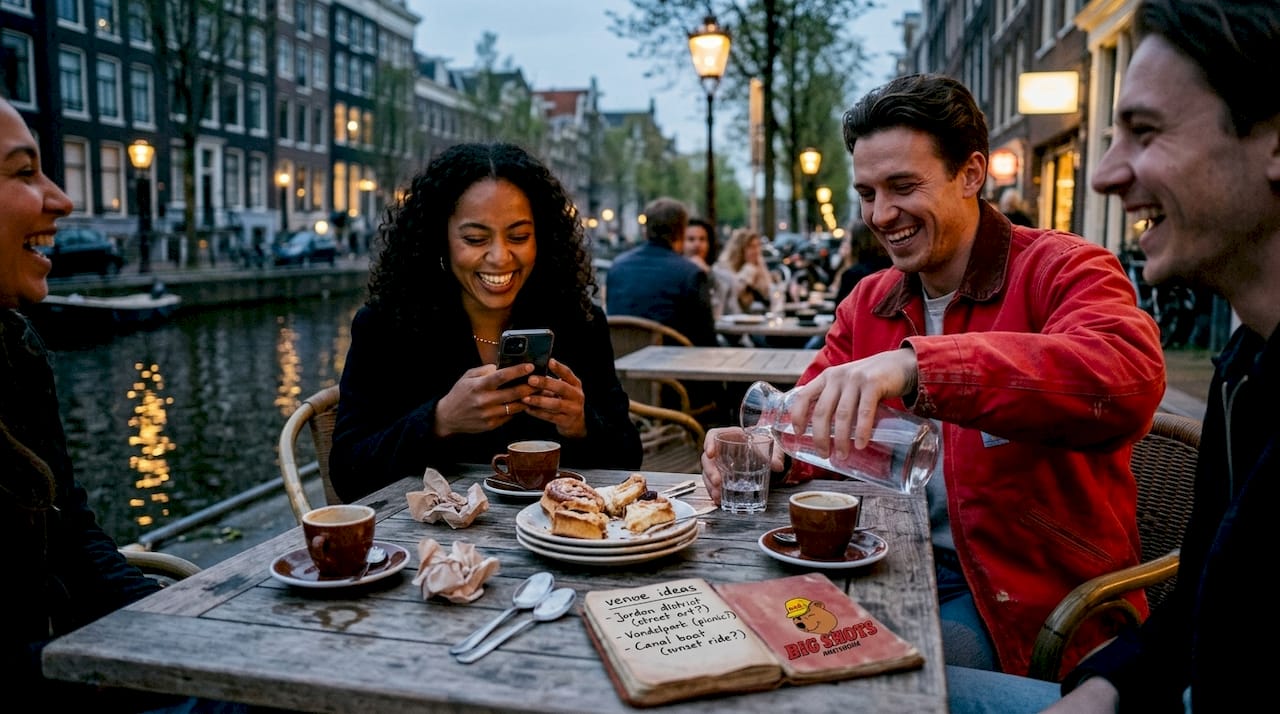
Research also supports the idea that eating together is a concrete behavior strongly linked to reduced loneliness, one of the most underreported challenges facing adults in urban environments. Cities can feel isolating despite their population density. A regular group dinner habit cuts through that isolation in a way that casual digital interaction simply does not.
Here is what actually happens emotionally during a well-executed group meal:
- Decompression: The transition from work or daily stress into a shared, relaxed environment lowers cortisol levels and shifts your mental state.
- Laughter and levity: Group conversation naturally generates humor and light moments that are harder to manufacture in one-on-one settings.
- Validation: Sharing opinions, stories, and reactions with friends reinforces your sense of identity and strengthens bonds.
- Anticipation: Choosing food, discussing the menu, and waiting together all build shared experience before the main event.
- Ritual creation: Regularity matters. Groups that dine together consistently build a ritual that itself becomes a source of anticipation and belonging.
Pro Tip: Rotate who picks the venue each time. It gives everyone a stake in the evening, keeps choices fresh, and guarantees no one feels like a passive participant in the group's social life.
When you compare dining at home versus going out to a venue, the difference is not just about food quality. It is about environment and intentionality.
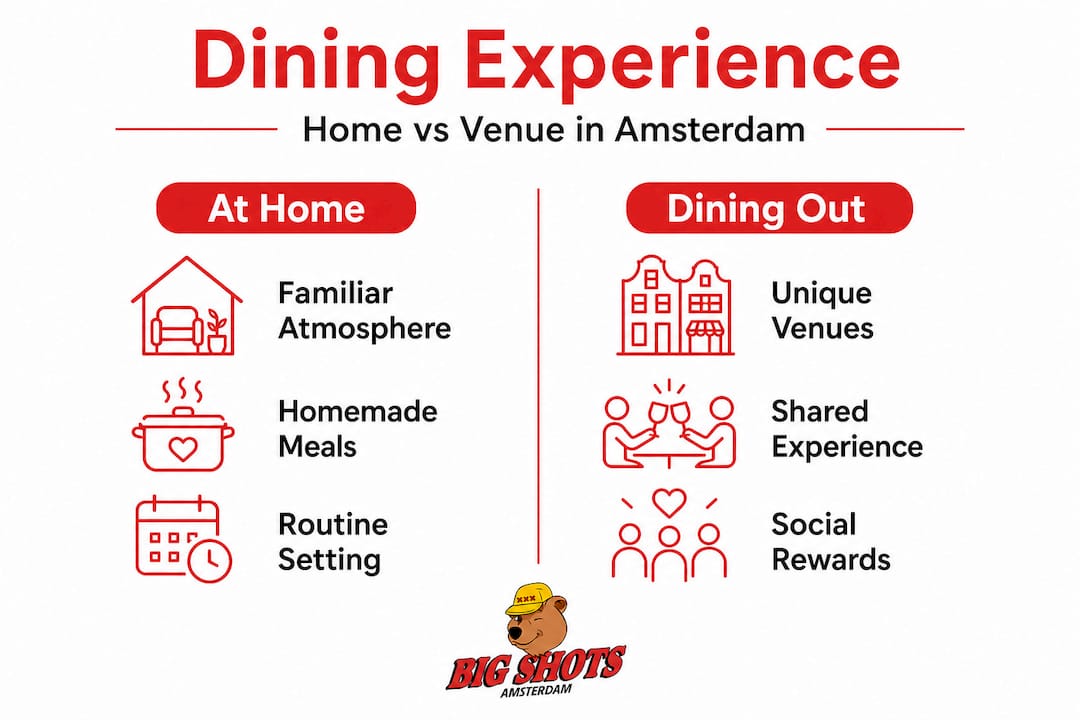
| Experience factor | Dining at home | Dining out at a venue |
|---|---|---|
| Atmosphere and setting | Familiar, comfortable | Stimulating, novel |
| Service and timing | Self-managed | Handled for you |
| Energy and vibe | Relaxed, low-key | Social, dynamic |
| Opportunity for new conversation | Moderate | High |
| Sense of occasion | Low to moderate | High |
Amsterdam's dining venues are built for this kind of elevated experience. The city's food scene ranges from cozy neighborhood restaurants to energetic sports bars with full menus and lively atmospheres that make it easy to settle in for a long evening. For groups that want energy and entertainment alongside great food, Amsterdam sports bars offer a layered experience that keeps everyone engaged throughout the night.
Common pitfalls: When dining out can miss the mark
Even rewarding evenings can be derailed. Let's explore how to avoid common pitfalls.
Not every group dinner hits the mark. Research shows that shared-meal benefits can be undermined by negative social dynamics and poor logistics. Knowing what kills the mood helps you prevent it from happening.
The most common culprits include:
- Dominant conversationalists: One person monopolizing the table shifts the dynamic from shared to spectator. The fix is a venue with enough ambient noise and entertainment to naturally redistribute attention.
- Food arriving at different times: Studies specifically identify this as a source of discomfort for social diners. When one person's steak arrives ten minutes before everyone else's, it creates pressure to wait or eat alone, both of which are awkward.
- Overly large groups without subgroups: Groups bigger than eight people often fragment into isolated pockets of conversation that never reconnect. Venues with round tables or sectioned seating help here.
- Wrong venue for the vibe: A quiet fine dining spot for a group that wants to laugh loudly and watch a game is a mismatch that no great menu can fix.
- Unresolved payment tension: Splitting the bill creates friction if expectations are not set early. Venues with flexible payment options reduce this stress significantly.
"Dining logistics can create awkwardness when norms are violated, such as one person's food arriving before others. These seemingly small moments have a measurable impact on social comfort." — City, University of London research
Pro Tip: When booking for a group, call ahead and ask whether the kitchen can synchronize courses so the whole table gets served at once. Good restaurant atmospheres support this kind of service by design, but confirming in advance eliminates the guesswork.
The cafe and social scene in Amsterdam also plays a role in pre or post-dinner social flow. Starting the evening with drinks at a casual spot before moving to a full restaurant keeps energy up and gives latecomers a forgiving window to join without disrupting a seated dinner.
Crafting the perfect group outing: Practical tips from Amsterdam's hospitality scene
Avoiding pitfalls lets you focus on fun. Here's how to craft a memorable evening.
Great group dinners do not happen by accident. They are the result of small, deliberate decisions made before anyone walks through the door. The good news is that Amsterdam's hospitality scene in 2026 is particularly well-suited to group experiences, with venues increasingly designing their service model around synchronized dining and social comfort.
Follow these steps to set your group up for a genuinely good evening:
- Book in advance, especially on weekends: Amsterdam's popular venues fill up fast. A reservation also signals to the kitchen that a group is coming, which helps with timing and preparation.
- Check the menu before you go: Sending a menu link to the group chat before you arrive reduces ordering time and lets people think about what they want without the pressure of a server hovering nearby.
- Choose a venue with a full entertainment offering: Restaurants that also offer sports screens, music, or a lounge area give the evening more flexibility. If dinner wraps early, you don't have to leave.
- Communicate dietary needs early: Letting the venue know about allergies or preferences in advance prevents last-minute substitutions that delay service and create course timing issues.
- Agree on a rough schedule: Start time, expected end time, and whether you are doing drinks before or after. Even loose coordination prevents the classic "waiting for three people" scenario that kills momentum.
| Planning action | Impact on group experience |
|---|---|
| Advance reservation | Eliminates waiting, sets table correctly |
| Menu preview shared in group chat | Faster ordering, less confusion |
| Dietary needs communicated | Smoother service, no delays |
| Synchronized course request | Everyone eats together, no awkwardness |
| Post-dinner plan in place | Evening has natural flow and energy |
Pro Tip: Look at Amsterdam's latest restaurant trends before booking. Venues that are investing in atmosphere, service quality, and group-friendly formats in 2026 tend to deliver noticeably better experiences than those coasting on an old reputation.
If you are coordinating a larger group, restaurant reservation strategies can save you real stress. Designate one person to handle all booking communication with the venue, collect dietary needs from the group via a shared message, and confirm the booking 24 hours before. For groups that enjoy starting the day together, breakfast dining in Amsterdam is also worth exploring as a low-pressure alternative to evening outings.
Our take: Why vibrant group dining transforms Amsterdam evenings
Here is where conventional wisdom gets it slightly wrong. Most people treat group dinner planning as a logistical burden rather than a creative opportunity. They pick the closest place everyone can agree on, show up without a reservation, and hope for the best. Then they wonder why the evening felt flat despite the good company.
The venues that actually transform a Tuesday into something people talk about for weeks share one thing: intentional design. They think about pacing, energy levels, menu variety, and how their physical space encourages connection rather than silos. That is not an accident. It is hospitality done thoughtfully.
Our experience in Amsterdam's dining and entertainment scene has taught us one lesson above all others: the atmosphere you choose does about half the work for you. A lively venue with the right energy carries a group through slow conversational moments, keeps the mood up, and makes people feel like they made the right call by coming out. A mismatched venue forces you to do all that emotional labor yourself.
The science backs this up, and steakhouses and social connection in Amsterdam are a great example of venues that get this right. They combine a serious food offering with the relaxed energy of a social night out. Nobody feels rushed. The food itself becomes a shared talking point. And the meal structure, starters, mains, and a possible dessert or cocktail after, gives the evening a natural rhythm that guides the group without anyone having to manage it consciously.
The uncomfortable truth is that most dinner disappointments come not from bad food but from misaligned expectations and poor venue choices. Fix those two things, and you dramatically increase the odds of a night that genuinely lifts everyone's mood.
Experience Amsterdam's most vibrant bar and restaurant
Ready for your best group outing yet? Here's where to start.
If you want an evening that checks every box without the planning headache, Big Shots Amsterdam is built for exactly this. The venue combines a full restaurant menu, sports bar, shisha lounge, and café under one roof, giving your group the flexibility to move between dining and entertainment in one place. The atmosphere is lively but never chaotic, with enough energy to keep the evening feeling like an event.
The kitchen handles group bookings with the kind of synchronized service that eliminates the awkward food-timing issues we've covered. Whether your group is coming for a casual dinner, a sports night, or just a long evening of cocktails and conversation, the menu and setting adapt to what you need. Book your table, browse the menu online, and arrive ready to enjoy one of Amsterdam's most genuinely social spaces.
Frequently asked questions
Does dining out with friends really boost happiness?
Multiple studies link meal sharing with friends to higher wellbeing and life satisfaction, nearly on par with income and employment as predictors of positive emotions and life evaluations.
Is the positive effect of dining out guaranteed for everyone?
While most people benefit, negative social dynamics or awkward logistics such as food arriving at different times or dominant conversationalists can undermine the experience for some.
How can I make group dining in Amsterdam more enjoyable?
Choose venues known for synchronized meal service and vibrant atmospheres; booking ahead and sharing the menu with your group before arrival significantly reduces stress and boosts enjoyment.
Are the happiness benefits of dining out with friends proven to be causal?
Current evidence shows strong correlation but does not fully prove causality; researchers note that happier people may simply socialize more, making the direction of the relationship difficult to confirm.