
TL;DR:
- Fans gather for match nights mainly to experience belonging, shared emotion, and collective rituals. Psychological and practical factors like atmosphere, traditions, and venue quality influence attendance and engagement. The ritual itself provides emotional release and strengthens social identity regardless of game outcomes.
Fans gather on match nights primarily for belonging, shared emotion, ritual, and live atmosphere — and a 2020 study of soccer fans in São Paulo confirmed that five concrete drivers (entertainment and socio-psychological motives, ticket pricing, marketing, perceived quality, and stadium enjoyment) together explain 73.89% of the variance in attendance behavior. Anthropologist Dimitris Xygalatas found that pre-game rituals produce physiological arousal that rivals or exceeds most in-game moments. The pull to show up is not just about the sport.
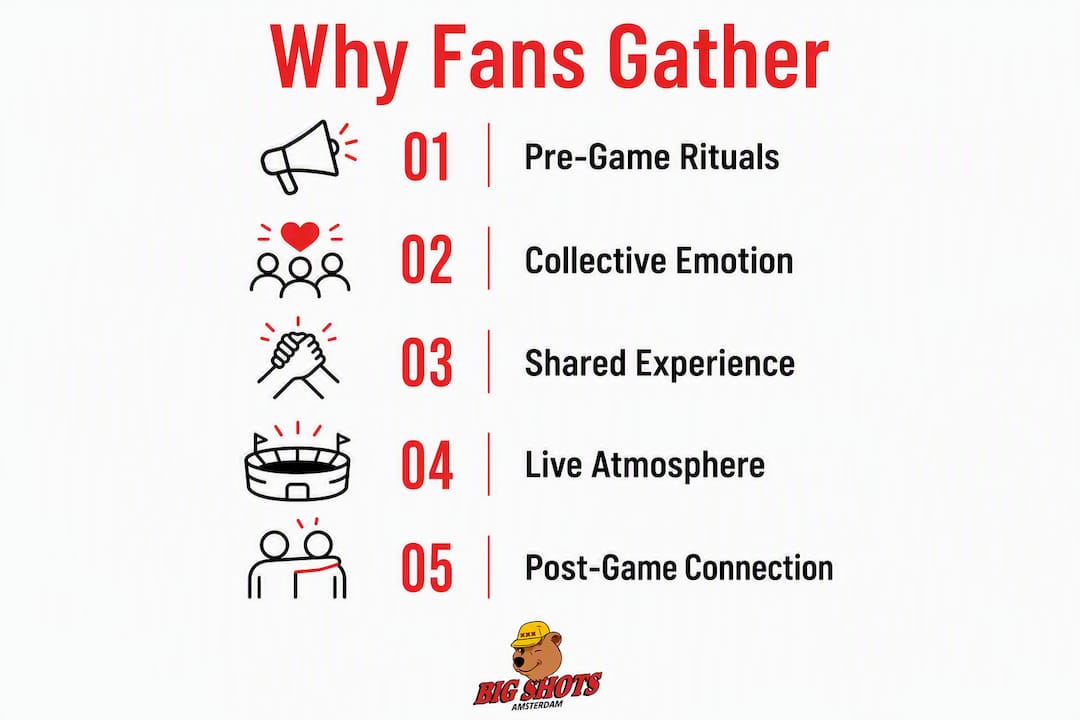
The core reasons fans gather:
- Belonging and social identity: match nights create a temporary tribe with a shared purpose
- Collective effervescence: synchronized chanting, singing, and movement generate a shared emotional high that is impossible to replicate alone
- Ritual and predictable structure: pre-match routines reduce anxiety and signal group membership
- Live atmosphere and entertainment: the sensory experience of a crowd amplifies every moment
- Practical logistics: better screens, group deals, food, and venue programming make gathering the obvious choice
TL;DR: People do not just watch the game. They come for the feeling of being part of something larger than themselves.
Table of Contents
- Why rituals and collective emotion drive fans to gather
- What actually gets fans through the door on match night
- What fans actually do on match nights
- How sport and culture shape who gathers and how
- What you actually gain from attending match-night gatherings
- How to host or join a match-night gathering that actually works
- Key Takeaways
- What match nights look like from inside the room
- Sources and further reading
Why rituals and collective emotion drive fans to gather
The deepest answer to why fans gather for match nights is psychobiological. Synchronized actions — chanting in unison, swaying together, raising scarves at the same moment — trigger what sociologist Émile Durkheim called collective effervescence: a state where individual identity temporarily dissolves into the group. Xygalatas' research, using wearable heart monitors during pre-game rituals, showed that ritual-phase arousal peaks higher than most in-game moments, with only actual goal moments competing.
A 2026 Frontiers study reconceptualized fandom as choreographed participation, identifying three core dimensions that predict both social identity and positive affect regardless of whether the team wins:
- Bodily Synchronization: — moving in time with others (jumping, swaying, coordinated gestures)
The Frontiers study found choreographic participation predicted enhanced social identity (β = .66) and positive affect (β = .59). The emotional payoff is not contingent on the scoreline.
"Group singing and shared rituals act as public signals of belonging — useful even for fans watching away from the stadium."
— Sports psychologist Andy Lane, Time
What this means for the average fan is that the ritual is doing real psychological work. It reduces the social performance pressure of modern life by giving everyone a script. You know when to sing, when to stand, when to groan. That predictable structure is part of why match-night gatherings provide emotional release that ordinary socializing rarely delivers.
Pro Tip: If you want to feel the full effect of collective emotion, arrive before kick-off. The pre-match build-up is where the ritual peaks — not the final whistle.
What actually gets fans through the door on match night
Psychology explains the pull. Practical factors explain the decision. The São Paulo study's five-driver framework is worth taking seriously because it quantifies what fans weigh when choosing whether to attend or join a watch party.
- Perceived quality of the football — influenced repeat attendance more than first-time visits
For watch-party settings, the same logic applies. A venue that runs pre-match programming, offers group deals, and has screens positioned for genuine visibility pulls fans in the same way a stadium does. The social plan matters too: most people attend because a friend invited them, not because they decided alone.
Pro Tip: When choosing a match-night venue, look for one that starts the atmosphere before kick-off — music, pre-match coverage, and a crowd already engaged. A dead room at 7:45 PM rarely comes alive by 8:00 PM.
What fans actually do on match nights
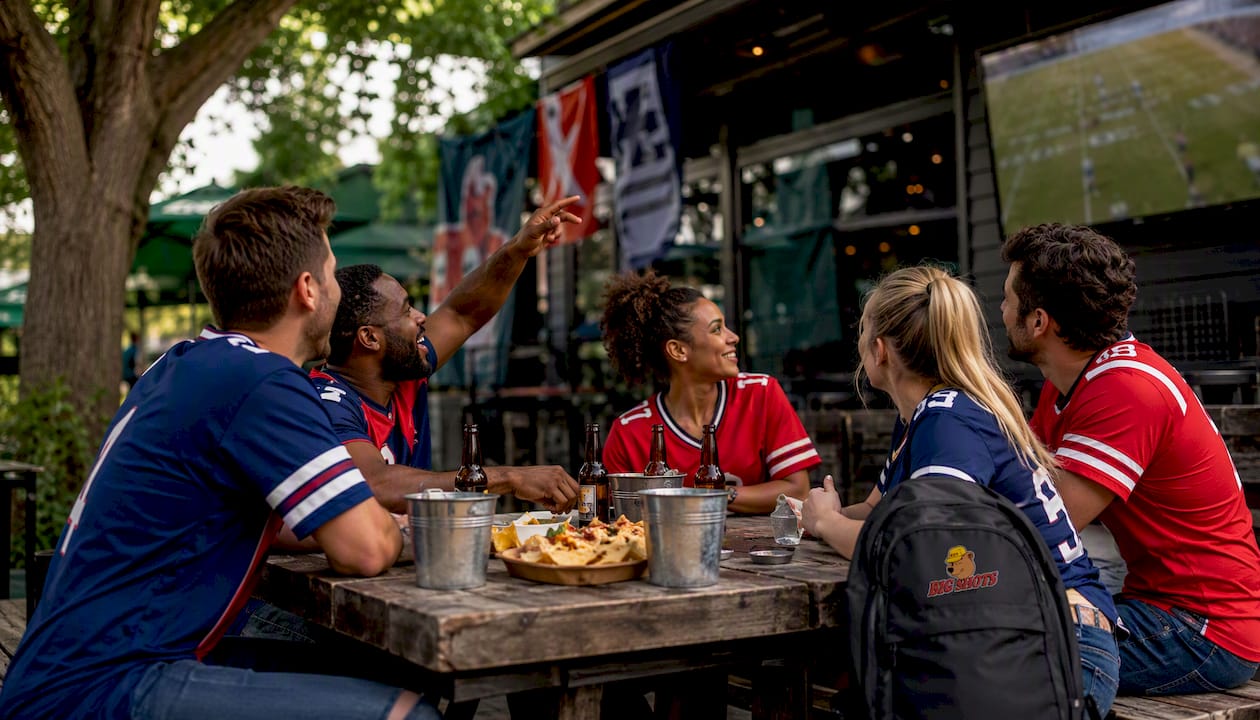
A typical watch-party evening follows a rhythm that most fans recognize without thinking about it.
- Arrival and territory-claiming (30–60 minutes before kick-off): regulars take their usual spots, orders go in, and early conversation is almost entirely about the match
- Pre-match build-up: anthems, lineup debates, and the first round of chants
- Kick-off rituals: a collective exhale, then immediate synchronized reaction to early play
- Halftime: phones come out, replays get debated, and digital behaviors — checking stats, posting reactions — have become a recognized part of the ritual
- Second half and climax: the emotional peak, whether a goal, a near-miss, or a final whistle
- Post-match reflection: the debrief, which can last as long as the match itself
Common ritual types and their functions:
| Ritual type | Examples | Primary function | Typical setting |
|---|---|---|---|
| Sonic | Chants, anthems, songs | Signals belonging, builds synchrony | Stadium, pub, watch party |
| Visual | Scarves, flags, team colors | Marks group identity, symbolic display | Stadium terraces, fan zones |
| Kinetic | Synchronized jumping, waves | Amplifies collective emotion, bodily sync | Stadium, large venue |
| Personal/superstitious | Lucky shirt, pre-match route, specific seat | Perceived control, private identity ritual | Anywhere |
At Signal Iduna Park, home of Borussia Dortmund, matchday traditions turn attending into a weekly ceremony: fans arrive hours early, the Yellow Wall choreographs displays, and the pre-match atmosphere is treated as the main event. Lazio supporters practice scaramanzia — superstitious pre-match habits including specific walking routes, lucky food, and rituals tied to the club's eagle mascot — that create shared identity through repetition and place.
How sport and culture shape who gathers and how
Match-night behavior is not universal. The sport, the city, and the venue type all shape what gathering looks like.
- European soccer/football: terrace culture emphasizes choreographed chanting, scarves, and pre-match marches; attending is often multi-generational and place-specific
- American football: tailgating culture moves the ritual outside the stadium entirely; the parking lot becomes the pre-match sacred space
- Basketball: faster-paced, urban venues tend toward louder, shorter bursts of collective noise rather than sustained choral singing
- Cricket: pavilion culture in England and South Asia centers on long, social, almost conversational attendance — the ritual is patience and shared endurance
"The most loyal fans are not necessarily those who attend every game — they are those for whom the ritual of attending has become inseparable from their identity."
Barriers that prevent attendance — cost, scheduling conflicts, safety concerns, distance — do not eliminate fan culture. They redirect it. Watch parties, sports bars, and streaming groups absorb fans who cannot make it to the stadium, and watching sports in bars replicates many of the same ritual functions. The gathering still happens; the venue shifts.
What you actually gain from attending match-night gatherings
The benefits of attending games extend well beyond the sport itself. Research consistently shows that the gains hold regardless of the final score.
- Mood improvement and stress relief: the cathartic release of collective emotion — shouting, singing, celebrating — functions as genuine stress discharge
- Social bonding: shared high-stakes experience accelerates trust and closeness faster than most ordinary social settings
- Sense of belonging: social identity theory predicts that group membership, even temporary, improves self-esteem and reduces loneliness
- Community and local economy: match nights drive foot traffic to local businesses, sustain neighborhood venues, and create recurring social infrastructure
- Player performance: crowd noise and visible fan support measurably affect home-team performance — the gathering is not passive
The Frontiers choreography study found these benefits hold even when the team loses, because the ritual itself, not the outcome, generates the positive affect. Watching sports in groups delivers a version of the same effect in a bar or living room.
Pro Tip: If your team loses badly, the post-match debrief with the group is still valuable. Shared disappointment bonds people almost as effectively as shared victory.
How to host or join a match-night gathering that actually works
Small choices determine whether a gathering hits the ritual notes that make it feel meaningful.
For hosts:
- Start the atmosphere 30 minutes before kick-off — music, pre-match coverage, and a visible screen setup signal that this is a real event
- Build in a ritual anchor: a specific song, a toast before kick-off, or a recurring tradition that becomes "yours"
- Arrange seating for sightlines first, conversation second — a bad view kills the collective experience
- Plan halftime deliberately: food, a quick debrief, and a reset before the second half
- Use real-time event planning tools to manage logistics if you are running a larger venue event
For attendees:
- Arrive early enough to claim your spot and settle in before kick-off
- Join the chants, even imperfectly — participation matters more than performance
- Bring something that marks you as a fan: a jersey, a scarf, team colors
- Respect the venue's rules around noise and space, especially in mixed-use settings
For venue staff and hosts: create ritual-friendly zones (dedicated screens, standing areas, acoustic space for singing) without forcing participation. The best match-night sports bar atmospheres make the ritual easy to join and impossible to miss.
Pro Tip: For venue operators, floor plan and seating management on high-attendance match nights is as important as the screen setup — a poorly arranged room breaks the collective sightline and fragments the crowd into isolated tables.
Key Takeaways
Fans gather on match nights because rituals, belonging, and live atmosphere create emotional experiences that no solo viewing can replicate — and practical factors like pricing, venue quality, and social plans seal the decision.
| Point | Details |
|---|---|
| Rituals peak before kick-off | Pre-game chants and synchronized actions often produce the highest collective arousal of the night. |
| Five practical drivers explain attendance | Entertainment, pricing, marketing, quality, and venue enjoyment together account for 73.89% of attendance variance. |
| Choreographic participation predicts wellbeing | Bodily synchronization and symbolic display improve social identity and positive affect regardless of match outcome. |
| Barriers redirect, not eliminate, fan culture | Cost and distance push fans to bars and watch parties, which replicate most of the same ritual functions. |
| Small hosting choices matter | Ritual anchors, early atmosphere, and good sightlines determine whether a gathering feels meaningful or forgettable. |
What match nights look like from inside the room
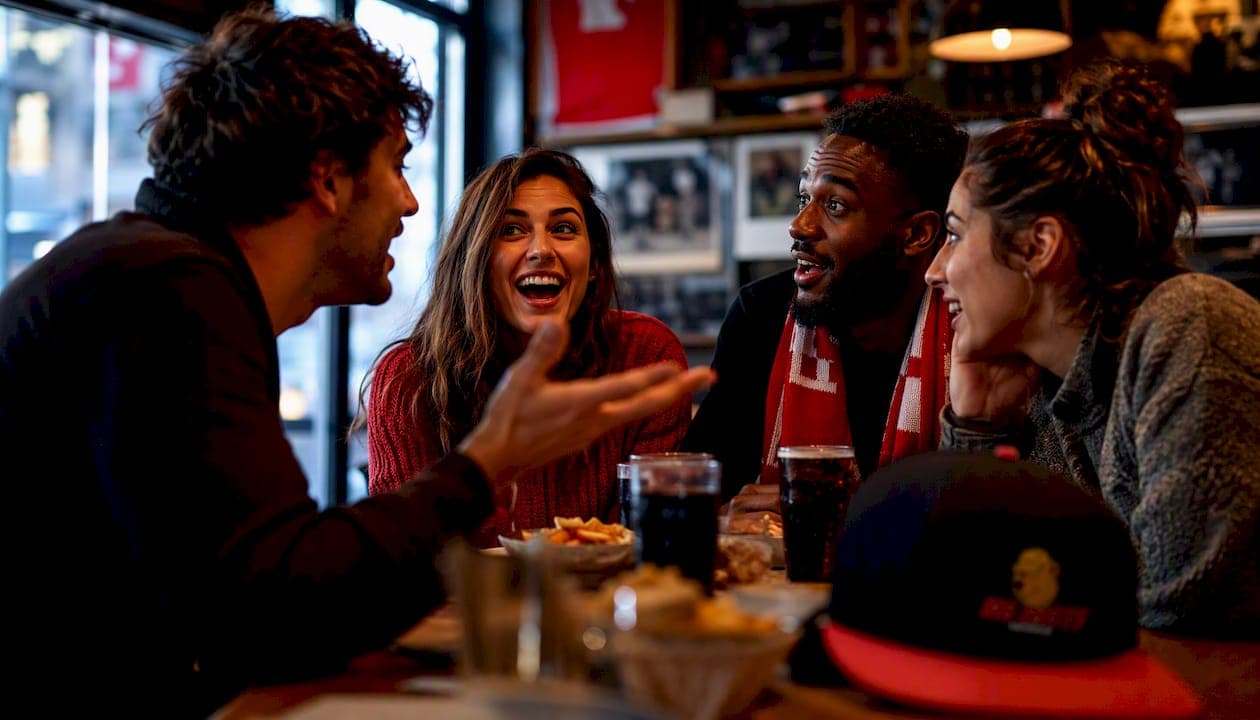
The research on collective effervescence is compelling on paper. What it describes is something most people have felt without naming it: the moment a room full of strangers becomes, briefly, a single organism reacting to the same thing at the same time.
At Bigshotsamsterdam, that moment happens regularly. The pre-match build-up — screens live, the crowd filling in, the first collective groan at a near-miss — follows the same psychobiological script Xygalatas documented in stadiums. The venue's mix of sports bar, shisha lounge, and restaurant means the ritual extends before and after the match itself, which is exactly what the research says sustains community practice.
What I find most interesting is how little the sport matters to the underlying mechanism. Soccer, basketball, American football — the ritual structure is nearly identical. Arrive, claim your space, synchronize with the group, discharge emotion collectively, debrief. The game is the occasion. The gathering is the point.
Sources and further reading
The claims in this article draw on peer-reviewed research, expert commentary, and field reporting. Key sources:
- Staging the stands: the ritual choreography of sports fandom and collective emotion regulation — Frontiers in Sports and Active Living
- It's not the game, it's the group: Sports fans connect the most over rituals — Phys.org coverage of Dimitris Xygalatas' research
- Why sports fans break out into song (Andy Lane interview) — Time
- The Traditions of Scaramanzia: Lazio's Matchday Rituals at the Stadio Olimpico — The Laziali
- More game: why soccer brings people together — UBC Alumni Magazine
- Factors impacting the decision to attend soccer games — Sport, Business and Management