
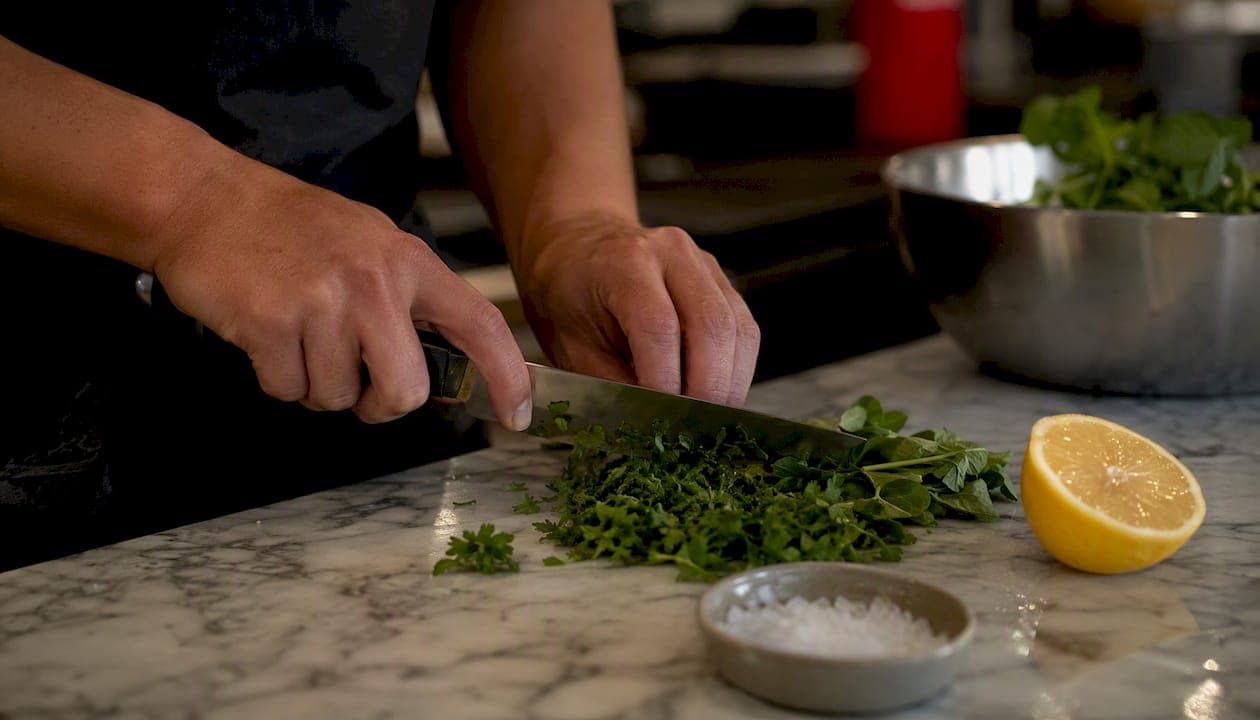
Using fresher ingredients makes meals taste brighter, deliver more nutrients, and often require less heavy seasoning to achieve depth. That's the short answer. The longer one involves three mechanisms working together:
- Volatile aromatic compounds in fresh herbs, citrus, and produce that evaporate quickly after harvest, taking flavor with them
- Texture and crispness that affect how your brain perceives flavor and mouthfeel
- Higher nutrient density at peak ripeness, before vitamins and antioxidants begin to degrade
The evidence behind each of these is solid, and the practical steps to take advantage of them are simpler than most people expect.
Key Takeaways
Fresh ingredients improve meals primarily through volatile aromatic compounds, higher nutrient density at peak ripeness, and better texture, all of which degrade quickly after harvest.
| Point | Details |
|---|---|
| Flavor degrades fast | Volatile aromatic compounds in herbs, citrus, and produce dissipate within days of harvest. |
| Nutrient density peaks at ripeness | Vitamins like C and volatile phytonutrients decline with time; buy closer to harvest when possible. |
| Seasonal produce costs less | In-season supply lowers transport and storage costs, making peak-quality produce more affordable. |
| Freshness matters most in simple dishes | Salads, raw preparations, and quick-cooked proteins show the biggest quality difference. |
| Buy less, more often | Smaller, more frequent shops preserve freshness better than a single large weekly haul. |
Table of Contents
- Why fresh ingredients improve meals: the flavor science
- How fresh food supports better nutrition and health outcomes
- Does buying seasonal and local actually make a difference?
- The environmental case for fresher, local ingredients
- How to choose and store fresh ingredients at home
- What the research actually says
- When does freshness actually matter most?
- A chef's perspective on why freshness changes everything
- Sources
Why fresh ingredients improve meals: the flavor science
Fresh ingredients taste better because they still contain the volatile aromatic compounds that make food smell and taste complex. Those compounds are the first thing to go after harvest.
Herbs like basil and cilantro carry essential oils in their leaves. Cut them, bruise them, or leave them on a shelf for three days, and those oils oxidize and dissipate. What's left smells faintly green instead of bright and peppery. The same principle applies to garlic, citrus zest, and freshly cracked spices. A lemon squeezed the moment before it hits a dish delivers a sharp, layered citrus note that bottled juice simply cannot replicate, because the volatile limonene compounds have already broken down in processing and storage.
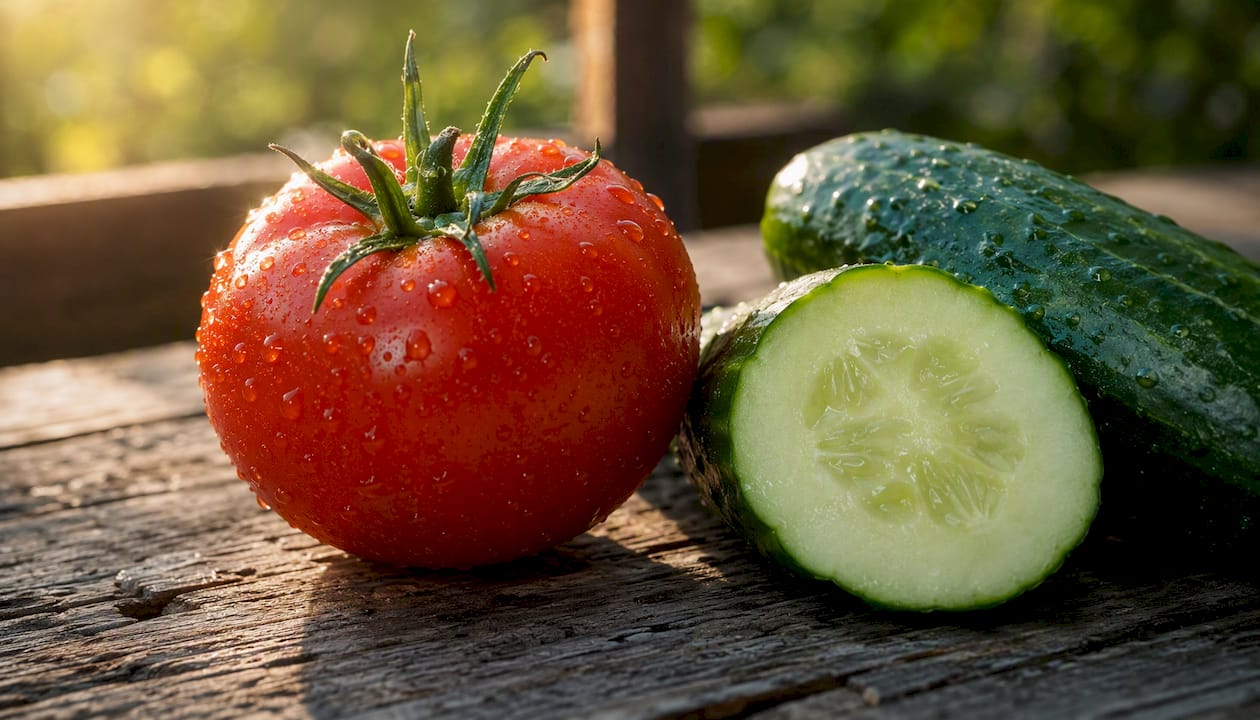
Texture matters more than most home cooks realize. A crisp cucumber or a firm tomato doesn't just feel better in the mouth; the physical resistance signals freshness to the brain and amplifies perceived flavor. Soft, waterlogged produce tends to taste flat even when the flavor compounds are technically still present, because the sensory experience is muted.
Fresh proteins benefit from a different mechanism: the Maillard reaction. When you sear a fresh chicken breast or a piece of fish, the surface moisture and protein-to-sugar balance are close to ideal for browning. Previously frozen or heavily processed proteins often release excess water, which steams the surface instead of searing it, producing a paler, blander crust.
Seasonal broccoli, as Harvard Health notes, can show meaningful variation in vitamin C content depending on when it was harvested, a concrete example of how timing affects both nutrition and flavor compounds simultaneously.
Pro Tip: Before buying produce, use three quick checks: smell the stem end of a melon or tomato (ripe fruit smells like itself), press gently near the base of leafy greens (they should spring back, not collapse), and look at cut ends on herbs for browning. These three seconds save you from buying something that will taste like nothing by Thursday.
How fresh food supports better nutrition and health outcomes
Peak-ripeness produce and minimally processed whole foods preserve more vitamins, antioxidants, and fiber than their processed or early-picked counterparts. That's not a marketing claim; it's a straightforward consequence of how nutrients behave over time.
Vitamin C is among the most fragile. It degrades with exposure to light, heat, and oxygen, which means produce sitting in a distribution warehouse for a week arrives with meaningfully less of it than produce picked and eaten within days. Some B vitamins follow a similar pattern. Volatile phytonutrients, the compounds in dark leafy greens and berries linked to antioxidant activity, also diminish with time and processing. As Medical News Today explains, minimally processed whole foods retain more vitamins, minerals, and fiber than heavily processed alternatives.
The population-level picture reinforces this. A long-term study summarized by Harvard Health tracked roughly 120,000 adults and found that higher intake of vegetables, fruits, whole grains, nuts, and yogurt was associated with less weight gain over time, while ultra-processed foods were linked to weight gain. That's observational data, not a controlled trial, but the signal is consistent across multiple large cohorts. Brown University Health adds that produce allowed to ripen naturally generally contains higher nutrient levels than produce picked early and artificially ripened.
Practical health benefits readers notice when they prioritize freshness:
- More consistent energy from meals with lower glycemic load and higher fiber content
- Better digestion from intact fiber in whole fresh vegetables and fruits
- Higher antioxidant intake from produce eaten closer to harvest
- Less need for added sodium and sugar because fresh ingredients carry their own flavor
Does buying seasonal and local actually make a difference?
Yes, and the difference shows up in both flavor and your grocery bill. Produce harvested at peak season is more likely to have been picked ripe rather than picked green to survive a long transit. It reaches your kitchen sooner, with more of its aromatic compounds and nutrients intact. Clemson's Home and Garden Information Center explains that seasonal eating typically yields fresher, more nutrient-dense produce at lower cost, driven by higher local supply and reduced transport and storage needs.
Cost follows the same logic. When a crop is in season locally, supply is high and handling costs are low. A flat of strawberries in June costs a fraction of what it does in January, and it tastes like a completely different fruit.
Shopping actions that put this into practice:
- Visit a farmers market when possible; vendors can tell you exactly when something was harvested
- Look for harvest dates on packaged salad greens and berries at grocery stores
- Join a CSA (community-supported agriculture) share for weekly boxes of whatever is genuinely in season in your region
- Ask your produce section staff which items came in most recently
One important caveat: what's in season depends entirely on where you live and what month it is. A tomato in season in Georgia in August is not the same situation as a tomato in Minnesota in November. Check a regional seasonal produce guide for your specific area. The benefits of seasonal produce extend beyond flavor to nutritional density and menu variety across the year.
The environmental case for fresher, local ingredients
Choosing fresher, locally sourced, or minimally processed ingredients generally reduces the environmental footprint of your meals. The connection is direct: shorter supply chains mean fewer transport emissions, less refrigeration energy, and less packaging.
Environmental benefits of prioritizing fresh and local:
- Lower food miles mean reduced fuel consumption and carbon emissions per meal
- Less plastic packaging compared to heavily processed shelf-stable products
- Support for local biodiversity by encouraging farms that grow a wider variety of crops rather than monoculture commodity production
- Reduced food waste because fresher produce bought in smaller quantities tends to get used before it spoils
One honest trade-off: certain out-of-season crops grown locally in heated greenhouses can carry a higher energy footprint than the same crop shipped from a warmer climate. Local doesn't automatically mean lower-impact; seasonal and local together is the stronger combination. For a deeper look at how local sourcing affects both sustainability and supply chain decisions, the trade-offs are worth understanding before assuming local always wins.
How to choose and store fresh ingredients at home
The single most important rule: buy less, more often. Freshness degrades from the moment of harvest, so a smaller, more frequent shop beats a weekly haul that sits in your refrigerator for seven days.
Hands-on tips for buying and handling:
- Smell before you buy: ripe stone fruit, melons, and tomatoes should smell like themselves at the stem end
- Press gently: avocados and peaches should yield slightly to pressure when ripe; rock-hard means days away, mushy means past peak
- Store tomatoes on the counter: refrigeration breaks down the cell walls and kills flavor compounds
- Use herbs fast or freeze them: soft herbs like basil and parsley lose potency within days; chop and freeze in olive oil for longer use
- Buy fish the day you plan to cook it whenever possible
Pro Tip: Add acid and fresh herbs at the very end of cooking, not the beginning. Heat destroys the volatile compounds in lemon juice and fresh basil within minutes. Squeeze citrus over a finished dish and tear herbs on top rather than stirring them in early. The difference in brightness is immediate.
What the research actually says
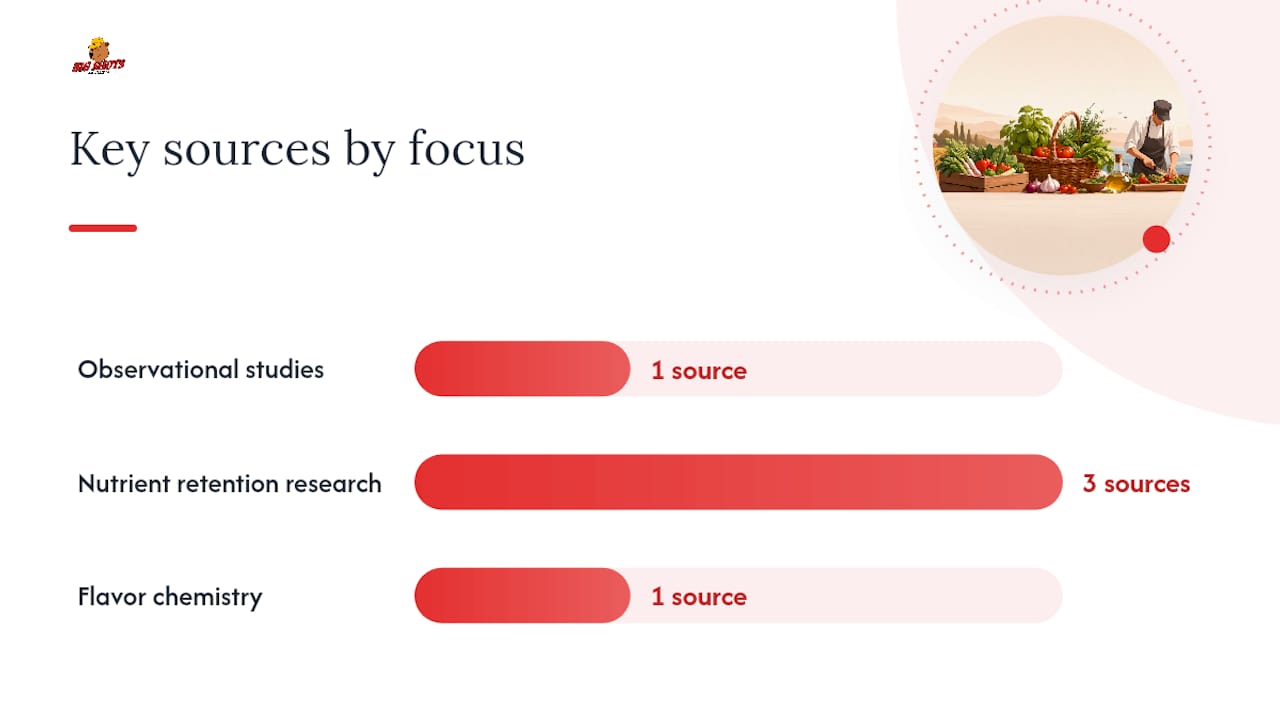
The strongest evidence for fresh-food benefits comes from large observational nutrition studies and food-science research on volatile compounds and nutrient retention. No single randomized controlled trial can ethically isolate "fresh vs. processed" across a lifetime of eating, so the evidence base is primarily epidemiological and mechanistic, which is still meaningful and consistent.
Key sources and what each supports:
- Harvard Health: summarizes observational research linking high-quality whole-food diets to lower heart-disease risk and notes seasonal nutrient variation in produce
- Clemson HGIC: practical guide explaining why seasonal produce is typically more nutrient-dense and less expensive
- Medical News Today: explains nutrient and fiber retention in minimally processed whole foods versus processed alternatives
- Brown University Health: health-education resource on how natural ripening preserves higher nutrient levels compared to early-picked, artificially ripened produce
- Premier Central Kitchen: flavor-science explainer covering volatile aromatic compounds and Maillard reaction chemistry in fresh versus processed ingredients
The Harvard Health summary of the ~120,000-adult study is the most cited population-level signal here. The finding that vegetables, fruits, whole grains, nuts, and yogurt were associated with less weight gain over time, while ultra-processed foods were linked to weight gain, is observational but drawn from a large, long-running dataset.
When does freshness actually matter most?
Fresh ingredients make the biggest difference in dishes where the ingredient is the star, not a background note. Long-simmered stews and braises are forgiving; a simple green salad or a piece of quickly seared fish is not.
Dishes where freshness has the highest impact:
- Raw preparations (salads, ceviche, carpaccio): no heat to mask off-flavors, so quality is everything
- Simple sautés and stir-fries: fast, high heat means the ingredient's own flavor carries the dish
- Lightly cooked proteins (grilled fish, pan-seared chicken): Maillard browning depends on surface quality
- Fresh herb garnishes and citrus finishes: volatile compounds are the entire point; dried or bottled versions don't substitute
When frozen or canned is genuinely fine:
- Long-cooked tomato sauces: canned San Marzano tomatoes are picked at peak ripeness and often outperform out-of-season fresh tomatoes
- Legumes and beans: canned versions retain most of their protein and fiber
- Frozen peas and corn: flash-frozen within hours of harvest, often more nutrient-dense than "fresh" peas that sat in transit for a week
Pro Tip: Prioritize fresh for the two or three items that will be most visible in a dish. In a pasta with tomatoes and basil, buy the best tomatoes you can find and use fresh basil. The pasta itself and the olive oil matter less. Spend your freshness budget where it shows.
A chef's perspective on why freshness changes everything
Fresh ingredients don't just taste better. They change how you cook. When produce is at peak, you stop trying to fix it and start letting it lead.
Three practical priorities when sourcing fresh items:
- Consistency over novelty: a reliable supplier who delivers the same quality weekly is worth more than a one-time find at a specialty store
- Seasonality as a menu guide: build dishes around what's best right now rather than forcing out-of-season ingredients to perform
- Supplier relationships: knowing your farmer or produce vendor means earlier access to peak items and honest information about what arrived that morning
In hospitality, this translates directly to guest experience. Fresher menu items raise perceived value, and guests notice even when they can't articulate why. A tomato that tastes like a tomato, herbs that smell alive, a piece of fish that flakes cleanly — these details are what separate a meal people remember from one they forget. At Bigshotsamsterdam, the commitment to quality ingredients in gourmet dishes is part of what makes the dining experience feel worth returning to. Freshness isn't a premium add-on in hospitality; it's the baseline for anything worth serving.
Sources
These are the primary resources used in this article, each worth bookmarking if you want to go deeper:
- For a healthy diet, focus on food quality – Harvard Health
- The benefits of seasonal eating: fresh, nutrient-dense, and budget friendly – HGIC (Clemson)
- What are whole foods? – Medical News Today
- The Science of Flavour: Why Fresh, Made-from-Scratch Meals Taste Better
- The Case for Fresh Produce | Brown University Health
This article is general information, not a substitute for advice from a qualified doctor. Consult a qualified healthcare professional about your own circumstances before acting on anything here.