
TL;DR:
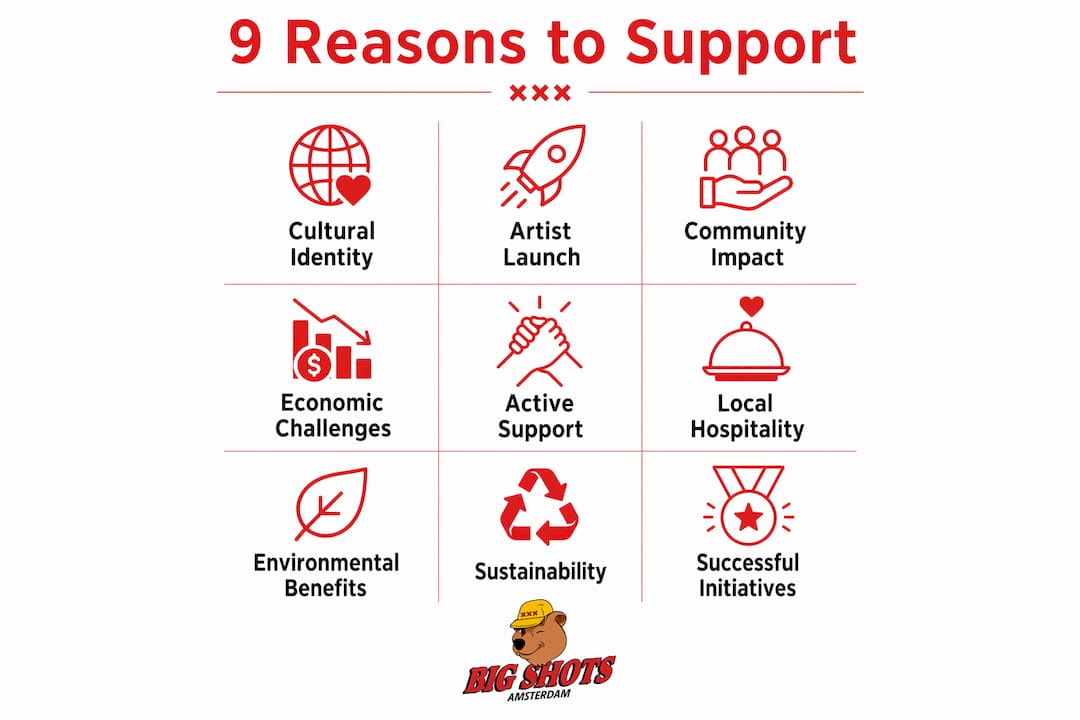
- Supporting local venues in Amsterdam helps preserve the city’s cultural identity and launch emerging artists.
- Regular attendance, direct ticket purchases, and advocating for venues can significantly contribute to their sustainability.
Amsterdam's local venues are worth supporting because they sustain the city's cultural identity, launch careers, and hold communities together in ways no streaming platform or corporate chain ever could. Over 90% of Amsterdam residents participate in nightlife culture, making it a vital part of city life, yet the venues that make that culture possible are under serious financial pressure. Many Dutch live event venues ended 2025 in financial difficulty. That gap between demand and survival is exactly why your choices as an audience member carry real weight.
- Local venues incubate emerging artists before larger promoters take notice
- They create inclusive social spaces across neighborhoods and demographics
- They generate local jobs and circulate money within Amsterdam's economy
- They face rising costs, falling attendance, and regulatory friction all at once
- Individual actions, from showing up on a Tuesday to advocating at city hall, genuinely move the needle
1. Why support local Amsterdam venues for cultural identity
Amsterdam's local venues are where the city's actual culture lives. Not in the tourist brochures, but in the rooms where a DJ tries a new set, a poet performs for 40 people, or a band from Suriname plays its first Amsterdam show. These spaces create what urban policy researchers call "third places," distinct from home and work, where social bonds form and creative risk-taking happens without a corporate filter.
The Brookings Institution found that cities benefit most when they treat independent venues as cultural infrastructure rather than mere entertainment. Amsterdam's own cultural strategy for 2025–2028 reflects this, with the city allocating €186 million to cultural programming and prioritizing diversity and inclusion across its funded institutions. Local venues are the ground floor of that ecosystem.
2. How local venues launch artists nobody else will touch
Almost every artist who eventually fills an arena started in a small room. Nightlife industry researchers are consistent on this point: small venues are the only ones willing to take financial risks on unknown or working-class artists, especially when streaming pays fractions of a cent per play. Once an artist graduates to bigger stages, it's the large promoters who collect the profits, not the small venues that absorbed the early risk.
PARLOUR Amsterdam, a grassroots music and community venue founded in 2024 by Singaporeans Lincoln Lim and Jaye Foo, illustrates how this works in practice. In its first year, the venue hosted more than 280 concerts and events, offering artists free backline, sound support, marketing help, and fair ticket splits. That kind of infrastructure for emerging talent doesn't exist at scale anywhere else in the city.
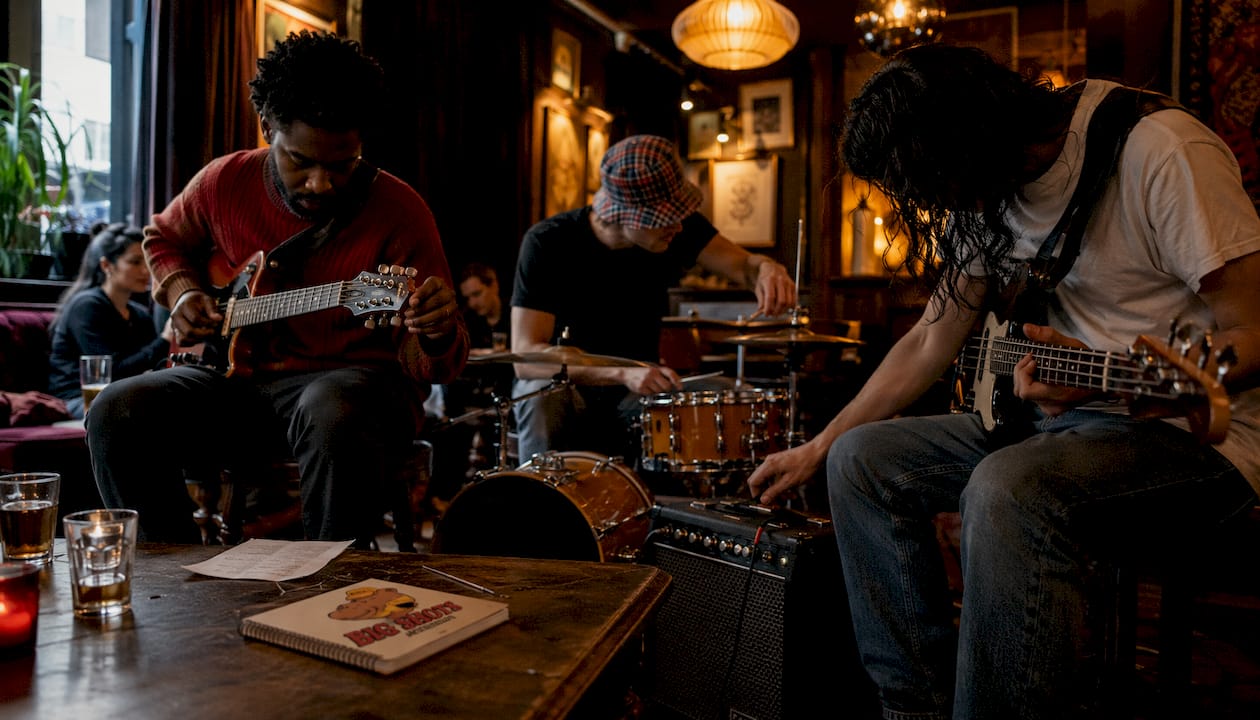
Pro Tip: When you buy a ticket at a small venue, you're funding the next round of artist development, not a corporate promoter's margin.
3. The community and social impact you can't replicate online
Local venues create the conditions for genuine human connection. A live show, a shared meal, a late-night conversation at the bar: these experiences build neighborhood identity in ways that no algorithm replicates. Research from Amsterdam's largest-ever nightlife study confirmed that over 90% of residents go out several times a month, and that demand for diverse, accessible, and inclusive spaces is growing.
Venues also serve immigrant and minority communities in ways that mainstream cultural institutions often miss. When a venue programs music from Marrakesh or hosts a sold-out Singapore National Day event, it signals to those communities that the city sees them. That kind of representation has social value that's hard to quantify but easy to feel when it's absent.
4. Economic challenges facing Amsterdam's local venues right now
The financial picture for local venues in the Netherlands is genuinely alarming. Visitor numbers at club nights declined in 2025 compared to previous years, along with a decrease in the share of sold-out club nights. Personnel costs rose. Booking artists became more expensive. The post-pandemic surge in attendance has normalized into something closer to a structural decline.
The Association of Dutch Music Venues and Festivals (VNPF) attributes part of this to shifting youth preferences and tighter personal finances. "People really, really have less to spend," said Hanneke Dijkstra, night programmer at Simplon in Groningen. Affordability is the single greatest barrier: 64.3% of Amsterdam nightlife study respondents identified affordability as a top priority for improvement, citing rising entrance fees, drink prices, and transport costs.
Venues also face non-financial threats. Landlord disputes, neighbor complaints about noise, and complex licensing processes drain operator energy and resources. PARLOUR Amsterdam's founders dealt with landlord hostility and neighbor conflicts in their first year, challenges that had nothing to do with the quality of their programming.
5. How you can actively support local Amsterdam venues
Showing up regularly matters more than showing up once. Mid-week attendance helps venues maintain cash flow and keep staff employed during slower periods, when a single good Tuesday can determine whether a venue makes payroll that week. Weekend-only patronage, while welcome, doesn't provide the financial stability venues need to plan ahead.
Beyond attendance, there are concrete ways to help:
- Buy tickets directly from the venue rather than through third-party platforms that take a cut
- Use social ticket programs when available, which help lower-income community members attend
- Share events on social media before they happen, not just after
- Engage positively with local licensing processes by writing to city authorities in support of venues facing noise complaints or permit challenges
- Support venues that offer dual-use programming, where daytime café or coworking use subsidizes evening cultural events
Pro Tip: Following a venue on social media and sharing their event posts costs nothing and directly expands their reach to people who might actually attend.
6. Bigshotsamsterdam as a model for local hospitality done right
Bigshotsamsterdam sits at the intersection of everything a local venue can be. It combines a sports bar, shisha lounge, restaurant, and café under one roof, creating a space that works for a casual Tuesday lunch, a group watching a Champions League match, or a late-night out with friends. That kind of versatility is what keeps a venue financially viable and socially relevant across different audiences and times of day.
The venue's approach to Amsterdam hospitality reflects a broader truth about what makes local businesses worth supporting: they adapt to their community rather than asking the community to adapt to them. Bigshotsamsterdam's menu spans breakfast through gourmet dinner, its atmosphere shifts from relaxed to lively depending on the night, and its online ordering and merchandise options extend its reach beyond the physical space.
Bigshotsamsterdam's model, where dining, entertainment, and social experience overlap, is precisely the kind of multi-use programming that urban policy experts point to as a path toward venue sustainability. Venues that serve multiple functions share operational costs across revenue streams and remain accessible to a wider audience.
Key takeaways
Supporting local Amsterdam venues is the most direct way to preserve the city's cultural ecosystem, protect emerging artists, and keep communities connected.
| Point | Details |
|---|---|
| Participation is high but venues struggle | Over 90% of Amsterdam residents participate in nightlife culture, making it a vital part of city life, yet many Dutch live event venues ended 2025 in financial difficulty. |
| Affordability is the core barrier | 64.3% of Amsterdam nightlife study respondents identified affordability as the top priority for improvement. |
| Attendance dropped sharply | Club night visitor numbers fell nearly 14% in 2025, with sold-out nights declining from 1 in 4 to 1 in 5. |
| Mid-week visits sustain venues | Regular weekday attendance stabilizes cash flow and staff employment more than occasional weekend visits. |
| Multi-use venues lead the way | Venues like Bigshotsamsterdam that combine dining, entertainment, and social spaces share costs and serve broader audiences. |
7. Environmental benefits of supporting local venues
Local venues have a smaller environmental footprint than the alternatives most people don't think to compare them against. When you attend a show or dinner at a neighborhood venue, you're likely walking, cycling, or taking a short transit trip rather than driving to a suburban entertainment complex. Amsterdam's cycling infrastructure makes this especially true: a local venue visit can be nearly carbon-neutral in transport terms.
Venues that source food and drink locally, as many independent Amsterdam spots do, also reduce supply chain emissions compared to chain restaurants importing standardized products. Supporting local food services and hospitality businesses keeps procurement regional and reduces packaging waste from centralized distribution. The environmental case for going local isn't dramatic, but it compounds across thousands of visits per year.
8. Long-term sustainability of local cultural spaces
The Brookings Institution's research on cities worldwide points to one consistent finding: venues that survive long-term do so because local leaders treat them as infrastructure, not amenities. Germany classifies music clubs as "facilities of cultural purpose" for governance and funding. Amsterdam's own cultural budget and the Mondriaan Fund, which invests approximately €43 million annually in Dutch visual arts and cultural heritage, reflect a similar philosophy.
But policy alone doesn't keep venues open. The Amsterdam Fonds voor de Kunst's project subsidy program for 2026–2028 supports nightlife culture explicitly, which gives independent venues a funding pathway that didn't exist a decade ago. Community engagement, consistent patronage, and public advocacy for sound management and licensing all extend a venue's runway beyond what grants alone can provide.
9. Successful local venue support initiatives in Amsterdam
Amsterdam has produced several models worth knowing. Paradiso, operating since 1968 as a non-profit foundation, runs artistic development sessions, youth programs, and cultural workshops alongside its concert schedule. Its non-profit structure lets it prioritize cultural value over commercial return, a model that has kept it relevant across six decades.
The city's DigitALL public-private partnership helps cultural institutions connect with audiences through digital tools, extending reach without requiring venues to build expensive tech infrastructure themselves. The Amsterdam nightlife research report's recommendations, including social ticket discounts, dual-use venue programming, and municipal real estate made available for nightlife functions, are now active policy conversations rather than theoretical proposals. Checking out Amsterdam's nightlife scene and spending money at independent venues is the most direct way to make those policy conversations matter.
Bigshotsamsterdam is one of Amsterdam's best examples of a local venue that earns its place in the community. Whether you're looking for a great meal, a match-day atmosphere, or a relaxed evening out, visit Bigshotsamsterdam and put your spending where the city's culture actually lives.