
TL;DR:
- Steak restaurants deliver superior meat quality through careful sourcing, aging, and precise portioning that casual diners cannot replicate.
- The atmosphere, crafted with controlled lighting, acoustics, and professional staff, fosters social connections and enhances the dining experience.
- They are ideal for any occasion, offering customizable menus, private spaces, and health benefits from nutrient-dense, high-quality beef.
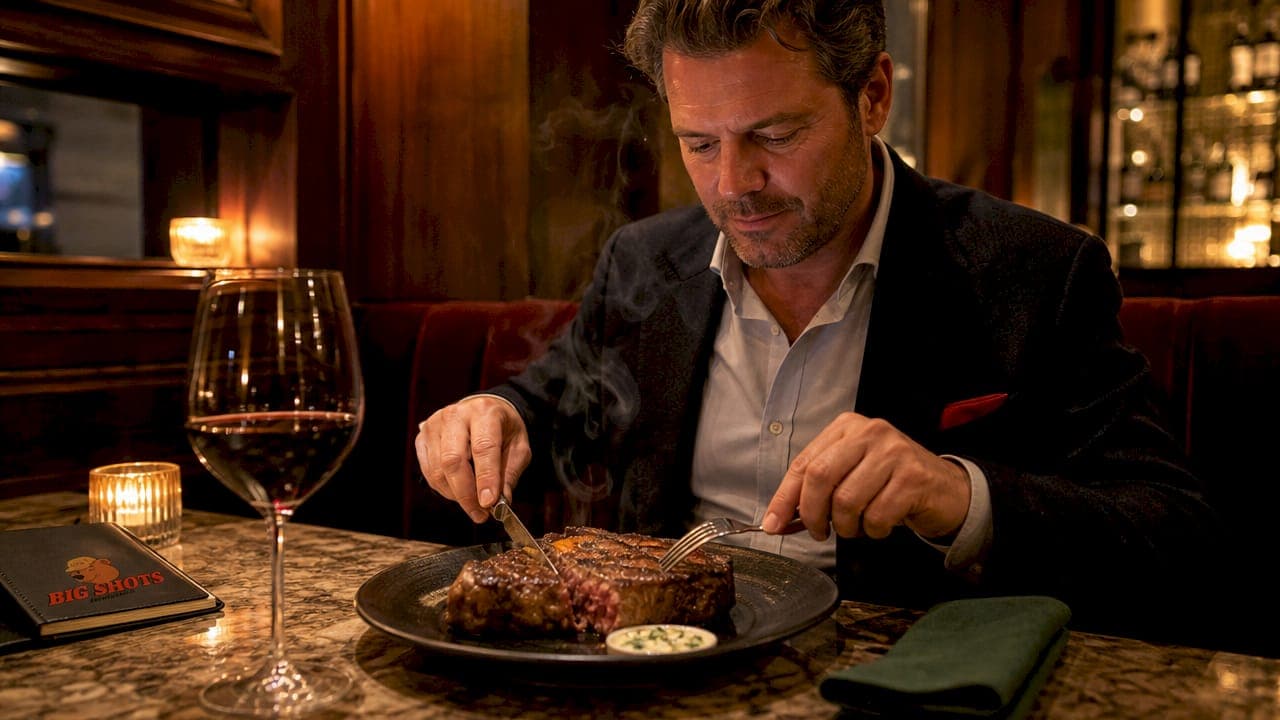
A steak restaurant is a specialized dining venue where premium beef cuts meet expert preparation techniques, creating an experience that casual dining simply cannot replicate. Whether you call it a steakhouse or a steak restaurant, the concept is the same: a place built around the craft of cooking beef at its best. From the sourcing of grass-fed cattle to the precise control of cooking temperatures, every detail serves a single purpose. If you have ever wondered why visit a steak restaurant instead of cooking at home or choosing a general menu restaurant, the answer lives in the quality, atmosphere, and social energy that these venues deliver consistently.
Why steak restaurants offer meat quality most diners never experience at home
The gap between a steak cooked at home and one served at a dedicated steakhouse is not a matter of skill alone. It starts with sourcing. Premium steakhouses work directly with suppliers who raise cattle on specific diets, often grass-fed or grain-finished, to achieve precise marbling levels. That marbling, the thin white streaks of fat running through the muscle, determines both flavor and tenderness when heat is applied.
Aging is where the real differentiation happens. Dry-aged beef loses moisture over weeks in a controlled environment, concentrating flavor and breaking down muscle fibers for a noticeably more tender result. Wet-aged beef, sealed in vacuum packaging, achieves tenderness through a different enzymatic process. Most grocery store steaks skip both methods entirely, which is why the same cut tastes fundamentally different at a quality steakhouse.
The precision applied to portioning is another factor most diners overlook. Independent steakhouses process over 700 pounds of beef weekly with triple inspections to maintain cut consistency, allowing a maximum half-ounce variance per steak. That level of control means every steak cooks evenly and arrives at the table looking exactly as expected. Compare that to the up to two-ounce variance common in chain restaurants, and the difference in cooking uniformity becomes obvious.
Pro Tip: Ask your server whether the steakhouse dry-ages or wet-ages its beef. The answer tells you a great deal about how seriously the kitchen treats its sourcing.
Here is a quick comparison of what separates steakhouse beef from typical alternatives:
| Factor | Steakhouse standard | Home cooking or casual dining |
|---|---|---|
| Sourcing | Direct supplier relationships, specific breeds | Supermarket or general wholesale |
| Aging | Dry-aged or wet-aged for tenderness | Rarely aged beyond standard processing |
| Portioning variance | Half-ounce maximum | Up to two ounces or more |
| Cooking equipment | Commercial high-heat grills or broilers | Standard home range or grill |
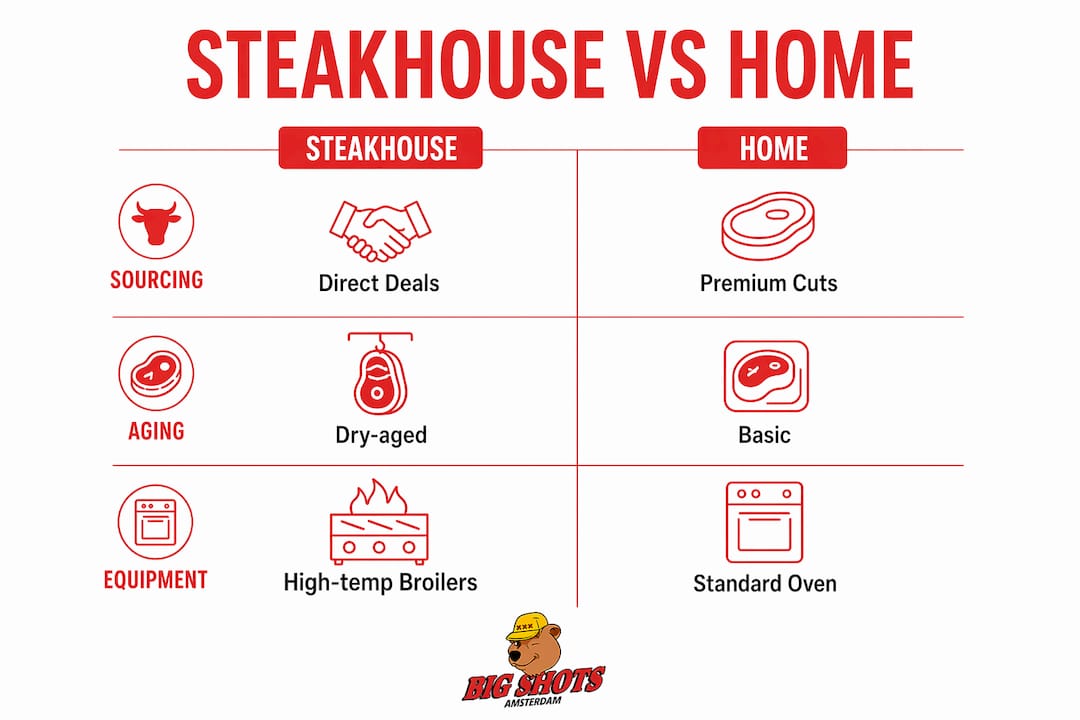
The cooking equipment itself matters too. Commercial steakhouse broilers reach temperatures above 1,800°F, creating a sear that home equipment cannot match. That crust is not just visual. It locks in juices and creates the Maillard reaction responsible for the deep, savory flavor that makes a great steak memorable.
How does the atmosphere of a steak restaurant shape your meal?
The steak dining experience is not just about what arrives on your plate. The environment around you actively shapes how you perceive the food, how long you stay, and how connected you feel to the people you are with. Steakhouse atmospheres are designed with lighting, acoustics, and ambiance to facilitate intimate, relaxed conversation unlike typical loud venues. That design choice is deliberate and measurable. Optimized lighting and sound encourage longer social interactions, which is exactly what a celebratory or romantic meal requires.
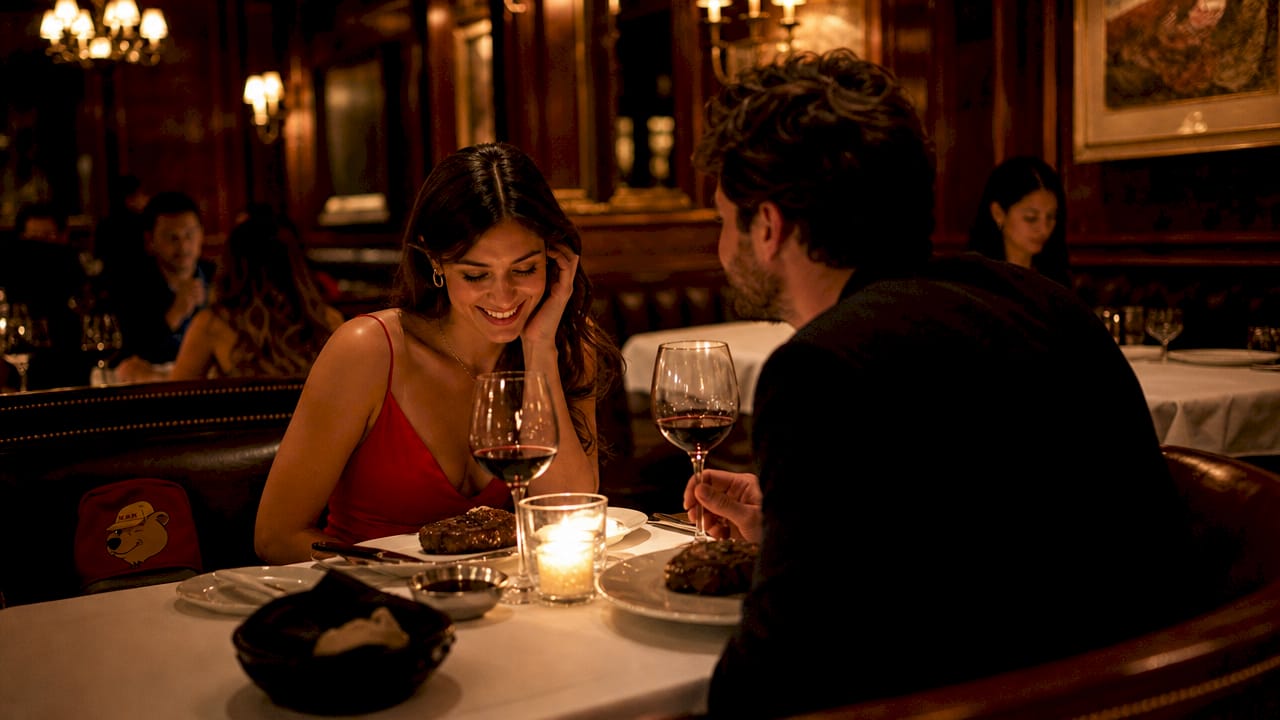
Walk into most steakhouses and you notice the same pattern. Warm, low lighting creates a sense of privacy even in a full dining room. Sound-absorbing materials keep ambient noise at a level where conversation feels effortless. The pacing of service is slower by design, giving you time to enjoy each course rather than feeling rushed toward the check.
The service model at quality steakhouses reinforces this atmosphere. Steakhouses employ higher-paid, career-driven staff whose retention supports consistent, knowledgeable interactions. A server who has worked the same floor for three years knows the menu deeply, can recommend wine pairings with confidence, and reads the table well enough to know when to approach and when to step back. That kind of service is not accidental. It is the product of sustainable wages and a professional culture.
Here is what the best steakhouse atmospheres consistently deliver:
- Warm, controlled lighting that creates intimacy without making the room feel dark or uncomfortable
- Acoustics that allow normal conversation without raising your voice
- Attentive but unobtrusive service that anticipates needs rather than reacting to them
- A pace of dining that lets each course breathe and the evening unfold naturally
- Shared side dishes that foster bonding and lower meal formality, turning dinner into a communal experience
"The best steakhouse meals feel less like a transaction and more like an event. The food is the centerpiece, but the room and the people around you are what make it worth remembering."
For a deeper look at how physical environment shapes the way you experience food, the role of atmosphere in dining is worth understanding before your next reservation.
Why steak restaurants are ideal for celebrations, dates, and group events
Steak restaurants are favored for celebrations due to quality food, customizable menus, private spaces, and attentive service without formality. That combination is harder to find than it sounds. Most fine dining venues lean too formal for relaxed group energy. Most casual venues lack the food quality to make a special occasion feel genuinely special. Steakhouses occupy the middle ground with precision.
The customization options at a steakhouse are a practical advantage for groups. Consider what a table of six people with different preferences actually needs:
- Cut selection: Ribeye, filet mignon, New York strip, T-bone, and porterhouse each offer a different balance of fat, tenderness, and size
- Cooking temperature: Rare through well-done, with each kitchen trained to hit the requested internal temperature consistently
- Sides: Typically served family-style or individually, covering everything from creamed spinach to truffle fries
- Dietary needs: Most steakhouses accommodate pescatarians, low-carb diners, and those avoiding gluten with minimal friction
- Drink pairings: A curated wine list and cocktail program that complements beef without requiring sommelier-level knowledge from the guest
Private dining rooms at steakhouses make them a natural choice for corporate dinners, milestone birthdays, and rehearsal dinners. The social setting steakhouses create for special occasions is built around the idea that the meal should feel significant without requiring guests to whisper or dress for a black-tie event.
The premium steakhouse experience integrates quality food, attentive service, and atmosphere into a guaranteed high-level dining outcome. That guarantee matters when you are choosing a venue for an occasion where the stakes are high and the expectations are higher.
What health benefits does steak actually provide?
Steak's nutritional profile is one of the most misunderstood topics in mainstream food conversation. Red meat provides about 30 grams of protein per 100 grams and contains all nine essential amino acids. That makes it a complete protein source, meaning your body gets everything it needs for muscle repair and tissue maintenance from a single food. A 100-gram serving also covers roughly 15% of your daily iron intake, which matters for energy levels and cognitive function.
The type of iron in steak is worth noting specifically. Steak contains highly absorbable heme iron along with B vitamins including B12, which is critical for nervous system function and red blood cell formation. Heme iron absorbs at a significantly higher rate than the non-heme iron found in plant sources. For people managing iron deficiency or high physical training loads, that bioavailability difference is meaningful.
| Nutrient | Benefit | Why it matters |
|---|---|---|
| Complete protein (30g per 100g) | Muscle repair and growth | Covers all nine essential amino acids in one serving |
| Heme iron (15% daily value) | Oxygen transport and energy | Absorbs more efficiently than plant-based iron |
| Vitamin B12 | Nervous system and red blood cells | Difficult to obtain in adequate amounts from plant foods |
| Zinc | Immune function and wound healing | Supports immune response and cellular repair |
Moderation and quality sourcing are the two variables that determine whether steak is a net positive in your diet. Nutritionists consistently recommend balancing steak with fiber-rich vegetables and controlling portion size rather than avoiding red meat entirely. A steakhouse that sources unprocessed, high-quality cuts and serves them alongside vegetable-forward sides makes that balance easier to achieve than most home-cooked steak meals.
Pro Tip: Order a leaner cut like sirloin or filet mignon if you want the full protein and iron benefit with less saturated fat. Pair it with a green vegetable side for a genuinely balanced plate.
Leo's take: what most diners miss about the steakhouse experience
The thing that surprises me most about steakhouses is how consistently they deliver on the social side of the meal. I have eaten at steakhouses across multiple cities, from stripped-down neighborhood spots to high-end venues with dry-aging rooms you can see through a glass wall, and the pattern holds. The food is excellent, but the reason people come back is the feeling of the room.
Most diners focus entirely on the steak itself when they are deciding whether a steakhouse is worth the price. What they underestimate is the value of a two-hour meal where no one feels rushed, the noise level allows actual conversation, and the service is knowledgeable enough to make the whole experience feel curated. That is genuinely rare in modern dining, where most venues optimize for table turnover rather than guest satisfaction.
The other thing I would push back on is the idea that steakhouses are only for special occasions. The reasons to eat steak at a dedicated venue apply just as well to a Tuesday dinner with a friend as they do to a birthday celebration. The quality is the same. The atmosphere is the same. The only thing that changes is your reason for being there. Once you stop treating steakhouses as a once-a-year indulgence and start treating them as a reliable option for a genuinely good meal, you get a lot more out of them.
— Leo
Experience steak dining at Bigshotsamsterdam in Amsterdam
If you are looking for a venue that combines quality steak with a genuinely social atmosphere, Bigshotsamsterdam in Amsterdam delivers both without requiring you to choose between a great meal and a lively night out.

Bigshotsamsterdam operates as a restaurant, sports bar, shisha lounge, and café under one roof, which means your steak arrives in a room that actually has energy. The menu features premium cuts paired with a curated cocktail and drinks program, and the atmosphere suits everything from a casual dinner to a group celebration. Whether you are a local looking for a reliable steak spot or a visitor wanting to experience Amsterdam's dining scene at its most dynamic, Bigshotsamsterdam is worth your time. Visit Big Shots Amsterdam to explore the menu and plan your visit.
Key takeaways
A steak restaurant delivers superior food quality, a purpose-built social atmosphere, and nutritional value that generic dining venues cannot match consistently.
| Point | Details |
|---|---|
| Meat quality is the foundation | Steakhouses source, age, and portion beef to standards home cooking cannot replicate. |
| Atmosphere drives the experience | Lighting, acoustics, and career-trained staff create a social environment designed for connection. |
| Ideal for any occasion | Customizable menus, private spaces, and consistent quality make steakhouses reliable for celebrations and casual dinners alike. |
| Steak is nutritionally dense | Complete protein, heme iron, B12, and zinc make quality steak a genuinely beneficial meal when consumed in balance. |
| Local steakhouses add community value | Spending at independent steakhouses supports local economies more directly than chain dining. |
FAQ
What should I expect at a steakhouse for the first time?
Expect a menu centered on beef cuts with options for cooking temperature, sides, and drink pairings. Service is typically attentive and paced to allow a relaxed, full-length meal rather than a quick turnaround.
Are steak restaurants worth the higher price compared to casual dining?
The price difference reflects sourcing quality, aging processes, portion control, and service standards that casual venues do not offer. For a meal where the food and experience both matter, the value is consistent.
What are the best cuts to order at a steakhouse?
Ribeye delivers the most flavor due to high marbling, filet mignon offers the most tenderness with lower fat, and New York strip balances both. Your server can guide you based on your preference for richness versus leanness.
Is steak a healthy meal option?
Steak provides complete protein and heme iron along with B12 and zinc, making it nutritionally dense when consumed in appropriate portions alongside vegetables. Quality sourcing and moderation are the key factors.
Why do steakhouses feel better for special occasions than other restaurants?
Steakhouses combine customizable menus, private seating options, and attentive service in an atmosphere designed for relaxed, extended dining. That combination makes guests feel the occasion is being taken seriously without the rigidity of formal fine dining.