
TL;DR:
- Hosting a restaurant party involves careful planning of venue, menu, and event flow. Private rooms offer control over noise, timing, and guest experience, while costs include minimum spends, service charges, and deposits. Early planning and clear communication help ensure a smooth, memorable celebration.
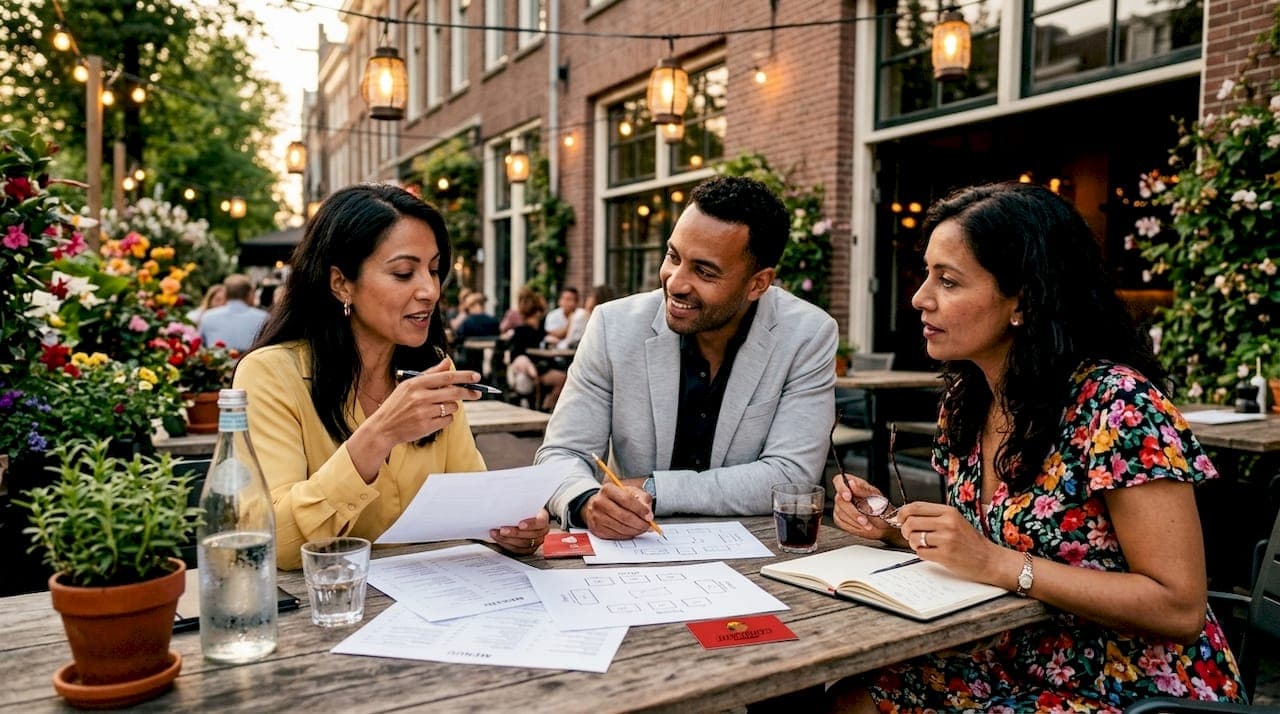
Hosting a party in a restaurant is defined as coordinating a structured private or group dining event within a live service environment, requiring deliberate planning across venue selection, menu design, and event flow. This guide to hosting parties in restaurants walks you through every step: choosing the right space, reading contracts, planning menus, and managing the day itself. Whether you are organizing a milestone birthday, a corporate dinner, or a casual celebration with friends, the difference between a forgettable night and a memorable one comes down to preparation. Private dining rooms, food and beverage minimums, and place cards are not minor details. They are the building blocks of a well-run event.
How do you choose the right restaurant and space for a party?
The space you book determines everything else about your event. Private dining rooms give you a controlled environment with dedicated service, structured timing, and noise separation from the main floor. Semi-private areas offer partial separation, usually through partitions or elevated sections, and work well for groups of 10–20 who want some privacy without full exclusivity. Regular group reservations at a standard table are the least controlled option and the hardest to manage for any event with a program.
Before committing to a venue, ask these questions directly:
- Capacity: What is the minimum and maximum guest count for the private room?
- AV capabilities: Does the space have a microphone, screen, or speaker system for speeches or presentations?
- Decor policies: Can you bring your own flowers, balloons, or signage? Are open flames permitted?
- Accessibility: Is the room wheelchair accessible? Where are the restrooms relative to the event space?
- Exclusivity: Will other guests be seated adjacent to your party during the event?
Noise control and timing are the two factors most planners underestimate. A private room lets you start speeches at 7:30 p.m. without competing with a crowded bar. A semi-private area does not. Match the space to the formality and size of your event before you fall in love with the menu.
Pro Tip: Visit the venue on the same day of the week and at the same time as your planned event. A quiet Tuesday lunch and a packed Friday dinner are completely different environments.
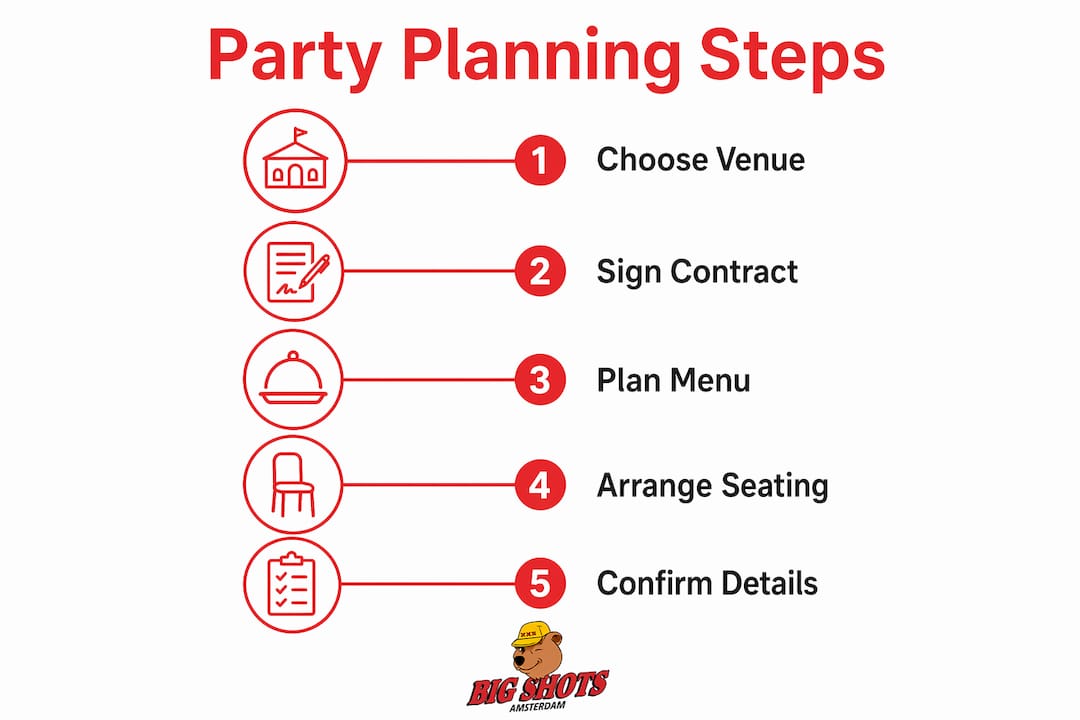
Deposit and contract basics apply from the moment you hold a date. Most venues require a signed agreement and a deposit to confirm your booking. Cancellation policies vary widely, so read them before you sign anything.
What are the costs and contract factors for restaurant parties?
Food and beverage minimums are the most impactful financial factor in private dining, often more significant than any room rental fee. A minimum is the amount your group must spend on food and drinks combined. If your guests spend less, you pay the difference. Room rental fees are separate charges for the physical space, and not every venue charges both.
| Cost Factor | What It Means |
|---|---|
| Food and beverage minimum | The total your group must spend on food and drinks or pay the shortfall |
| Room rental fee | A flat charge for exclusive use of the private space |
| Service charge | Typically 20–22% added on top of food and beverage totals for private events |
| Guest count guarantee | The minimum number of guests you commit to paying for, regardless of attendance |
| Cancellation penalty | A fee or forfeited deposit if you cancel within a specified window |
Service charges for private events typically run 20–22% on top of your food and beverage total. That figure does not include tax. Budget for both before you compare venues. A venue with a lower minimum but a higher service charge can cost more in the end.
Deposit structures at many venues require roughly 50% of the combined food and beverage minimum and room fee upfront. Cancellation fees are often tied to deadlines, meaning the closer you cancel to the event date, the more you forfeit. Get a complete written quote that itemizes every charge before you sign.
Certificates of Insurance (COIs) are required by many venues as part of the event approval process. A COI is a document from your insurance provider confirming you carry event liability coverage. Missing or mismatched details on a COI can delay or block venue approval entirely.
Pro Tip: Copy the venue's exact legal name and contract wording directly into your COI request to your insurer. Even minor differences in naming can cause rejections.
COI friction most often results from subtle mismatches: a missing endorsement, wrong coverage dates, or an abbreviated venue name. Submit your COI at least two weeks before the event to leave time for corrections.
How should you plan the menu and sequence the event?
Prix fixe menus are the standard format for private dining events. A prix fixe menu offers a set number of courses at a fixed price per person, which simplifies kitchen coordination and keeps your budget predictable. You typically choose two or three options per course, giving guests enough variety without overwhelming the kitchen.
Sequence your event with the same care you give the menu. A well-paced evening follows this structure:
- Arrival and welcome drinks (15–20 minutes): Guests settle, introductions happen, and the bar opens.
- First course (30 minutes): Salads or appetizers, light conversation, no speeches yet.
- Main course (45–60 minutes): The centerpiece of the meal. Speeches and toasts fit naturally here or just after.
- Speeches and toasts (10–15 minutes): Keep them brief. Guests are still at the table and engaged.
- Dessert and coffee (30 minutes): A relaxed close. Cake cutting or gift opening works here.
- Departure (15 minutes): Coordinate with staff on timing so the kitchen and service team can close out cleanly.
Effective event flow planning means mapping each moment so the kitchen and service staff can pace their work. Share this sequence with your venue coordinator at least two weeks before the event.
Dietary restrictions require early attention. Ask guests about allergies and preferences when you send invitations, not the week before. Most restaurants need final dietary details at least one week out to adjust the menu properly.
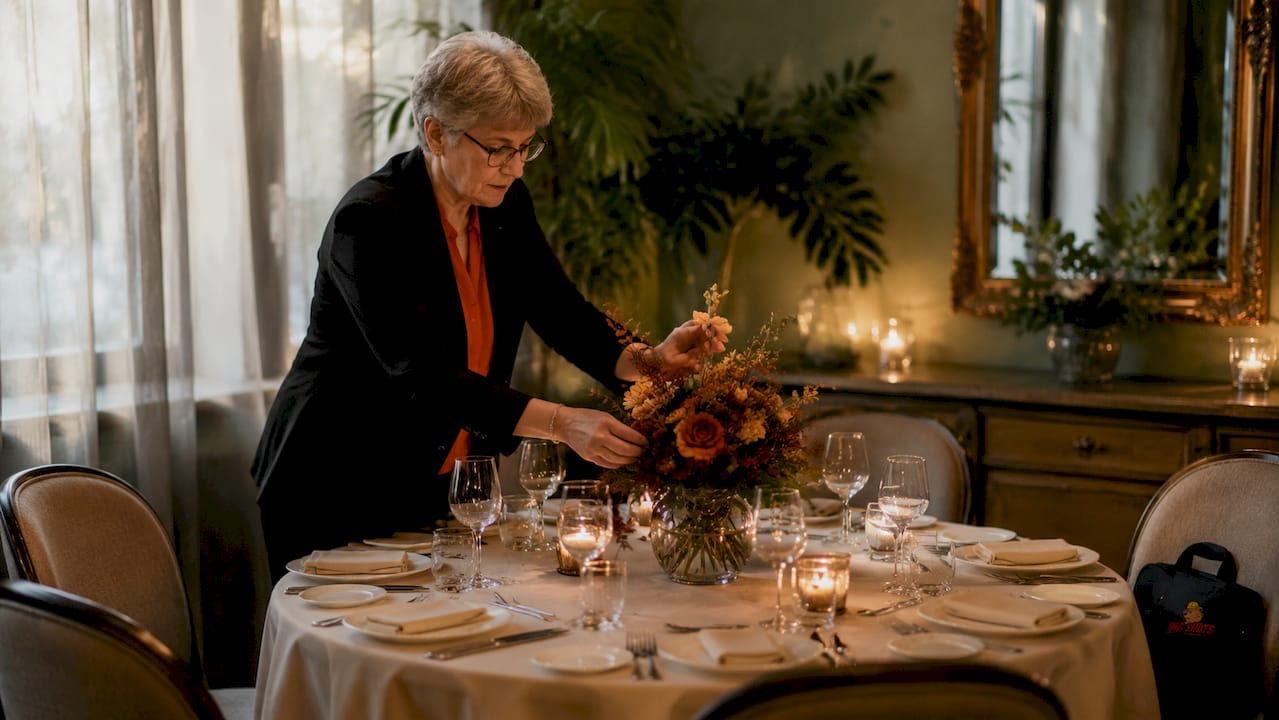
Decorations like flowers, place cards, and flameless votives are the most restaurant-appropriate upgrades for ambiance. They elevate the atmosphere without violating fire safety rules or requiring venue approval for open flames. For groups larger than six, place cards prevent the awkward seating shuffle that delays the first course by 10 minutes. Check out vibrant dining experiences for more ideas on atmosphere upgrades that work within a restaurant setting.
Pro Tip: Restaurants eliminate cooking and cleaning from your responsibilities entirely. Use that freed-up mental energy to focus on guest experience: greetings, seating flow, and the personal touches that make people feel genuinely welcomed.
What is the recommended timeline for a smooth restaurant party?
A practical planning timeline for a private dining event spans 8–12 weeks from first contact to event day. Compressing that window increases the risk of losing your preferred venue, missing contract deadlines, and scrambling on menu details.
Follow this week-by-week structure:
- 8–12 weeks out: Research venues, request proposals, and compare spaces. Confirm capacity, AV options, and pricing models.
- 6–8 weeks out: Sign the contract, pay the deposit, and submit your COI if required.
- 4–6 weeks out: Finalize the menu, confirm dietary restrictions with guests, and lock in your event sequence with the venue coordinator.
- 2–3 weeks out: Confirm all vendor details, send final invitations or reminders, and review the contract for any outstanding items.
- 1 week out: Submit the final headcount. Most venues require this to prepare the kitchen and service team accurately.
"Structured pre-planning, including timeline adherence and clear communication with restaurant staff, is the single most reliable way to prevent last-minute problems." — Indeed Career Advice
On the day of the event, arrive at least 30 minutes early. Walk the room, confirm the table layout matches your plan, and brief the service staff on your sequence. Identify the point of contact for the evening and exchange phone numbers. Small logistical gaps, like a missing place card or a delayed first course, are easy to fix when you catch them before guests arrive.
Early vendor coordination and a detailed run-of-show plan are the two habits that separate smooth events from stressful ones. Write your run-of-show as a simple time-stamped list and share it with the venue the week before. For more on managing group logistics, planning group dining covers course sequencing and guest experience in detail.
Key takeaways
Successful restaurant party hosting requires locking in venue type, contract terms, and event sequence well before the event date.
| Point | Details |
|---|---|
| Choose the right space type | Private rooms give you the most control over noise, timing, and guest flow. |
| Understand all costs upfront | Budget for food and beverage minimums, service charges of 20–22%, and taxes before comparing venues. |
| Get everything in writing | A complete written quote and signed contract protect you from surprise fees and cancellation penalties. |
| Plan your event sequence | Share a time-stamped run-of-show with venue staff at least one week before the event. |
| Start planning 8–12 weeks out | Early booking secures your preferred space and leaves time to handle contracts, COIs, and menu details. |
What I have learned from hosting restaurant parties
The most common mistake I see is treating the restaurant as a passive backdrop. The kitchen has its own rhythm. The service team has its own priorities. The best hosts I have worked with treat the venue coordinator as a co-planner, not a vendor. That shift in mindset changes everything.
Small touches matter more than most people expect. Flowers and place cards do more for a room's atmosphere than an expensive centerpiece. A handwritten place card tells a guest they were expected and thought about. That is a feeling no catering upgrade can replicate.
Seating arrangements are underrated. For groups of 12 or more, seat people intentionally. Put the talkers near the quieter guests. Keep the guest of honor visible from most of the table. Avoid seating anyone with their back to a high-traffic area like a kitchen door or a server station.
The one thing I would tell every first-time restaurant party host: read the cancellation policy twice before you sign. Not because things go wrong, but because knowing your exposure gives you confidence. You make better decisions when you are not anxious about the fine print.
— Leo
Bigshotsamsterdam: a venue built for memorable parties
Planning a party in Amsterdam? Bigshotsamsterdam combines a restaurant, sports bar, shisha lounge, and café under one roof, giving you genuine flexibility for any type of celebration.
Whether you are planning a birthday dinner, a casual group night out, or a lively event with friends, Bigshotsamsterdam offers the atmosphere and menu variety to match. From gourmet steaks to craft cocktails, the venue is built for groups who want quality food and a lively setting without the rigidity of a formal dining room. Visit Bigshotsamsterdam to check availability and start planning your event in Amsterdam.
FAQ
What is a food and beverage minimum?
A food and beverage minimum is the total amount your group must spend on food and drinks combined. If your guests spend less than the minimum, you pay the difference.
How far in advance should you book a private dining room?
Book 8–12 weeks before your event date. This timeline gives you time to compare venues, sign contracts, and finalize menus without pressure.
Do you need event insurance for a restaurant party?
Many venues require a Certificate of Insurance (COI) before approving your event. You typically need your own event liability policy, not the restaurant's coverage.
What is the best menu format for a private dining party?
Prix fixe menus are the standard choice for private dining. They offer a fixed price per person with two or three options per course, which keeps budgeting simple and kitchen coordination smooth.
How do you handle dietary restrictions for a restaurant party?
Collect dietary information from guests when you send invitations. Submit final dietary details to the venue at least one week before the event so the kitchen can adjust the menu accurately.