
TL;DR:
- Knowing how to read drink menus by categories and serving styles makes ordering easier and more enjoyable. Planning a balanced, inclusive drink selection for groups reduces waste, speeds service, and accommodates everyone's preferences. Focusing on sensations rather than cocktail names fosters confident ordering and enhances social drinking experiences.
Standing in front of a drink menu with 40 options while your friends stare at you is not anyone's idea of a good time. A solid drinks menu selection guide helps you cut through that pressure fast. Whether you are hosting a sports night, planning a group dinner, or just trying to order something you will actually enjoy, knowing how menus work and how to read them transforms the whole experience. This guide covers everything from decoding drink categories to ordering confidently, so you spend less time second-guessing and more time enjoying.
Table of Contents
- Key takeaways
- Understanding drink categories and menu structures
- Planning a balanced drinks selection for groups
- How to decode and order from any drinks menu
- Common mistakes when selecting drinks for a night out
- Serving styles, glassware, and what they tell you
- What I have learned from years of ordering drinks
- Experience the difference at Bigshotsamsterdam
- FAQ
Key takeaways
| Point | Details |
|---|---|
| Learn the core categories | Recognizing beer, wine, spirits, and cocktail groupings lets you narrow choices without reading every item. |
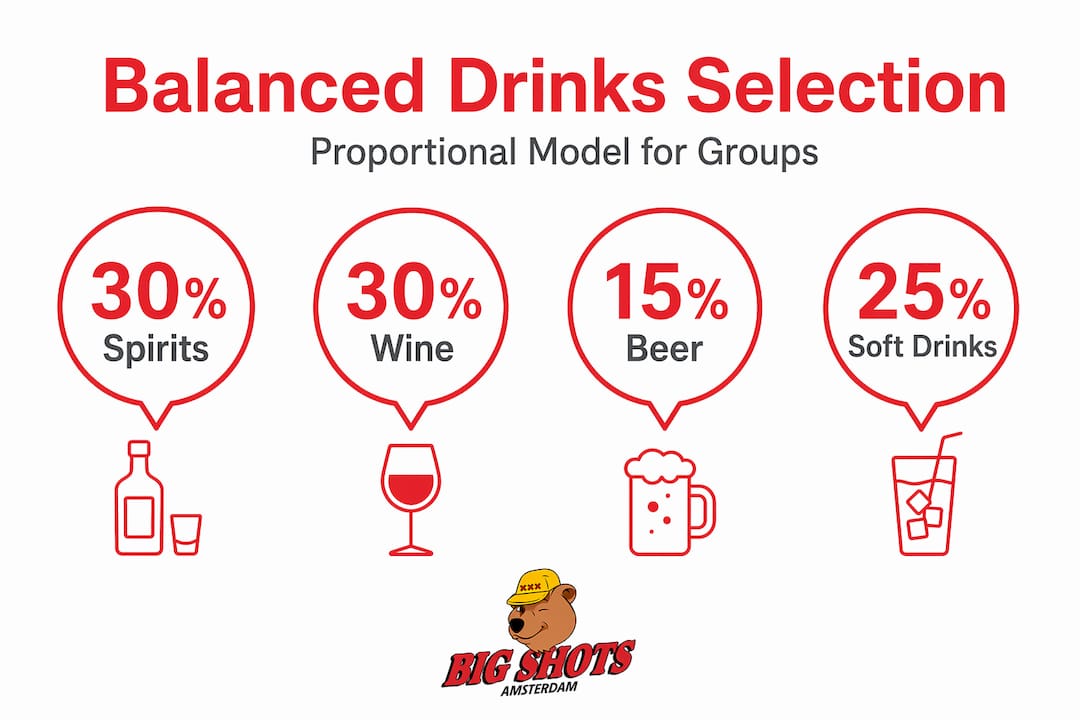
| Plan proportionally for groups | Use the 30/30/15/25 rule for spirits, wine, beer, and soft drinks to satisfy diverse guests. |
| Order by sensation, not name | Describing how you want a drink to feel (light, refreshing, boozy) gets better results than guessing from cocktail names. |
| Presentation reveals flavor | Serving style and glassware tell you what to expect before the first sip. |
| Ask bartenders directly | Bartenders work from sensations and preferences, so telling them what you want is always the fastest path. |
Understanding drink categories and menu structures
Most drink menus look overwhelming until you realize they follow a predictable structure. The core categories are beer, wine, spirits, cocktails, and non-alcoholic options. Once you spot which section you are in, half the decision is already made.
Cocktail menus in particular are often grouped by intention, meaning stirred drinks, shaken drinks, highballs, and sours each appear in their own cluster. This matters because those groupings tell you more about what the drink will taste and feel like than the name ever could. A stirred section typically means spirit-forward, smooth, and rich. A shaken section usually delivers something brighter, more citrus-driven, and lighter.
Spirits menus divide by base: whiskey, rum, gin, vodka, tequila, and brandy. Beer menus split into lagers, ales, stouts, and sours. Wine lists move from sparkling to white, rosé, and red, sometimes organized by region or by body weight. Non-alcoholic options often appear as their own category now, ranging from mocktails and botanical sodas to fresh juices.
Serving styles add another layer. Neat means a spirit served at room temperature with no additives, giving you direct access to the full flavor profile. On the rocks means served over ice, which chills the drink and gradually dilutes it. "Up" means chilled and strained into a glass with no ice at all, so it arrives cold but stays undiluted. Knowing these three terms alone will change how you order.
| Serving Style | What It Means | Best For |
|---|---|---|
| Neat | Room temperature, no ice | Whiskey tasting, savoring spirit character |
| On the rocks | Over ice, gradual dilution | Longer drinking sessions, softer flavors |
| Up | Chilled, strained, no ice | Martinis, Manhattans, precise balance |
| Highball | Spirit plus mixer in a tall glass | Light, refreshing, casual drinking |
Pro Tip: When you spot an unfamiliar cocktail, look at which section it sits in and what spirit leads the description. That combination tells you the experience before you commit to ordering it.
Planning a balanced drinks selection for groups
Ordering for a group without a plan leads to three people ordering the same rum and Coke while everyone else waits too long. The fix is to treat group ordering as coordination rather than individual choice.
A practical starting framework is the proportional drink model: roughly 30% spirits, 30% wine, 15% beer, and 25% soft drinks or non-alcoholic options. These numbers reflect what statistically satisfies a mixed crowd across different preferences and tolerance levels. To estimate quantities, multiply your guest count by the number of hours by approximately two drinks per hour, then apply those percentages.
The real skill is picking anchors for the group rather than leaving everyone to choose independently. Pick one spirit-forward option, one sour or citrus-based cocktail, one beer or wine option, and one strong non-alcoholic choice. Those four anchors cover almost every preference in the room. This strategy speeds up serving and removes the paralysis of scanning a full menu while the bartender waits.
Including non-alcoholic and low-alcohol options is not an afterthought. It is part of a genuinely thoughtful selection. Designated drivers, pregnant guests, sober friends, and people simply pacing themselves all benefit, and having strong non-alcoholic choices on the table makes the atmosphere more inclusive without drawing attention to who is drinking what.
Here are the best practices when stocking or ordering for a group:
- Identify one signature cocktail or headliner spirit to anchor the whole selection and reduce decision fatigue.
- Always include at least two non-alcoholic options that are as appealing as the alcoholic ones.
- Ask the venue or bartender about low-alcohol versions of popular cocktails.
- Avoid ordering too many niche or obscure bottles. They sit untouched and drive up cost.
- Pre-ordering a round before the event starts keeps early arrivals from feeling stranded.
Pro Tip: If you are hosting a sports night, build around two anchor drinks that are easy to top up quickly. Games move fast and complicated orders slow everything down.
How to decode and order from any drinks menu
Most people feel awkward ordering cocktails because they do not know the names. The real solution is to stop thinking in names entirely. Describing the sensation you want works far better. Tell the bartender if you want something refreshing, light, not too sweet, quite boozy, or citrus-forward. That gives them everything they need.
Bartenders think in sensations, not recipes. They will follow up with calibration questions: sweet or dry, stirred or shaken, strong or sessionable. This is not a test. It is the process. Letting that conversation happen rather than forcing a specific name gets you a drink you will actually enjoy.
Classic cocktails grouped by spirit are your strongest reference points when you do want to use names. An Old Fashioned signals whiskey and richness. A Mojito signals rum and freshness. A Negroni signals bitter and complex. These familiar references communicate your preferences without you needing to memorize an entire cocktail catalog.
Some menus now use digital filters by flavor and strength, which cuts decision time dramatically. If the venue you are at has that feature, use it. Filter by "light and refreshing" or "spirit-forward" before narrowing by spirit type.
These phrases work well when ordering:
- "Something refreshing, not too sweet, maybe gin or vodka-based."
- "I like whiskey. What would you recommend that is not too heavy?"
- "Can you make me something similar to a Mojito but with less sugar?"
- "What is the most popular cocktail you make here?"
- "I want something sessionable for watching the game."
Common mistakes when selecting drinks for a night out
The most expensive mistake when ordering for a group is over-ordering niche options. A bottle of expensive mezcal sounds exciting until you realize only one person at the table actually drinks mezcal. Using a percentage-based approach to drink purchasing reduces that waste and keeps the selection aligned with what people will actually consume.
Ignoring allergies and dietary restrictions causes more disruption than most hosts expect. Sulfites in wine, gluten in certain beers, and dairy in some cream cocktails are real concerns. A quick text to guests before ordering prevents the kind of mid-evening scramble that kills the mood.
Pacing is another underrated factor. Ordering everything at once for a long night rarely works. Start with lighter, more approachable drinks. Move to richer or stronger options as the evening settles in. Reading the room matters too. A group deep in conversation does not need elaborate new drinks every 20 minutes. A group watching a tense match wants quick, easy refills.
Troubleshooting tips for hosts and guests:
- If the crowd shifts or grows, add a new anchor drink rather than trying to expand the full menu.
- Keep one non-alcoholic option on permanent rotation so it never runs out.
- If a round arrives wrong, address it immediately and calmly. Good venues correct mistakes fast.
- Avoid over-complicating orders during peak hours. Simple, well-made drinks beat elaborate ones that take too long.
- Track what is getting reordered. That tells you what is actually working for the group.
Serving styles, glassware, and what they tell you
Presentation is not decoration. It is information. The glass a drink arrives in and how it is served both signal what the experience will be before you take a single sip.
A coupe glass signals something elegant and spirit-forward, often served "up." A tall highball glass means something light and long-drinking, often carbonated. A rocks glass with a large ice cube means a spirit is meant to be sipped slowly. A stemmed wine glass versus a tumbler tells you whether the drink rewards swirling and temperature sensitivity.
Understanding neat, on the rocks, and up also sets your expectations for dilution and temperature change over time. A drink served up will warm slightly as you hold the glass. A drink on the rocks will soften and open up as the ice melts. Neither is better. They serve different moments and moods.
| Glass Type | Typical Use | Serving Style |
|---|---|---|
| Coupe | Elegant cocktails, Champagne | Up |
| Highball | Gin and tonic, whiskey soda | With ice and mixer |
| Rocks glass | Whiskey, Negroni, Old Fashioned | Neat or on the rocks |
| Wine glass | Red, white, rosé wines | As poured |
| Martini glass | Classic martini, cosmopolitan | Up |
Pro Tip: If a menu lists a cocktail with no serving style description, look at the glass in the photo or ask. The glass alone tells you whether you are getting something quick and refreshing or something to nurse through the first half.
What I have learned from years of ordering drinks
I spent too long in my early nights out trying to sound like I knew what I was ordering. The honest truth is that using the right cocktail name never once got me a better drink. What got me better drinks was telling the bartender how I felt and what I was in the mood for.
The other shift that changed everything for me was focusing on the guest experience rather than impressing people with the selection. When I started hosting events, I would pick obscure spirits or unusual combinations because they seemed exciting. Guests appreciated the thought, but they kept gravitating back to the things they recognized and felt comfortable with. That taught me that variety matters less than coverage. You want something for every type of drinker, not every type of drink.
I have also learned to trust bartenders far more than menus. The menu is a starting point. The bartender is the actual resource. A good bartender at a venue that takes its drinks seriously will always steer you toward something better than what you would have picked on your own if you just tell them what you want. That is not giving up control. That is using the right tool for the job.
The biggest relief for most people I have talked to about this is realizing there is no wrong answer. A night out is not a test. Order what sounds good, adjust as you go, and let the social experience be the actual point.
— Leo
Experience the difference at Bigshotsamsterdam
Bigshotsamsterdam takes the stress out of drink selection entirely. The venue combines a sports bar, shisha lounge, restaurant, and café under one roof in Amsterdam, which means the drinks menu is built to serve every kind of night, from a pre-game beer to a post-dinner craft cocktail. The menu covers spirits, wines, beers, and signature cocktail ideas executed by a team that genuinely wants you to enjoy what you order. Whether you are watching a match with friends, on a date, or just looking for a relaxed evening in Amsterdam, the bar atmosphere in Amsterdam at Bigshotsamsterdam makes the whole selection process feel effortless. Come in, tell the team what you are in the mood for, and let the night do the rest.
FAQ
What is the best way to use a drinks menu selection guide?
Start by identifying the main drink categories on the menu, then narrow by serving style and flavor preference before committing to a specific choice. Using a guide helps you read menu groupings and order with confidence rather than guessing from names.
How do you balance drink choices for a group?
Apply the proportional model of roughly 30% spirits, 30% wine, 15% beer, and 25% soft drinks, then pick one anchor option per category. This covers most preferences without over-ordering or leaving anyone without a good choice.
What should you tell a bartender when you do not know what to order?
Describe the sensation you want: light or boozy, sweet or dry, refreshing or rich. Bartenders calibrate recommendations from those descriptions far more effectively than from cocktail names.
What does "up" mean on a drinks menu?
"Up" means the drink was chilled and strained into a glass with no ice, so it arrives cold but does not dilute over time. Classic examples include a dry martini or a Manhattan served up.
How do you avoid common drink ordering mistakes at social events?
Avoid over-ordering niche spirits, check for dietary restrictions early, and pace orders based on the mood of the group rather than ordering everything at once. Starting lighter and building to richer drinks across the evening keeps energy and satisfaction consistent.