
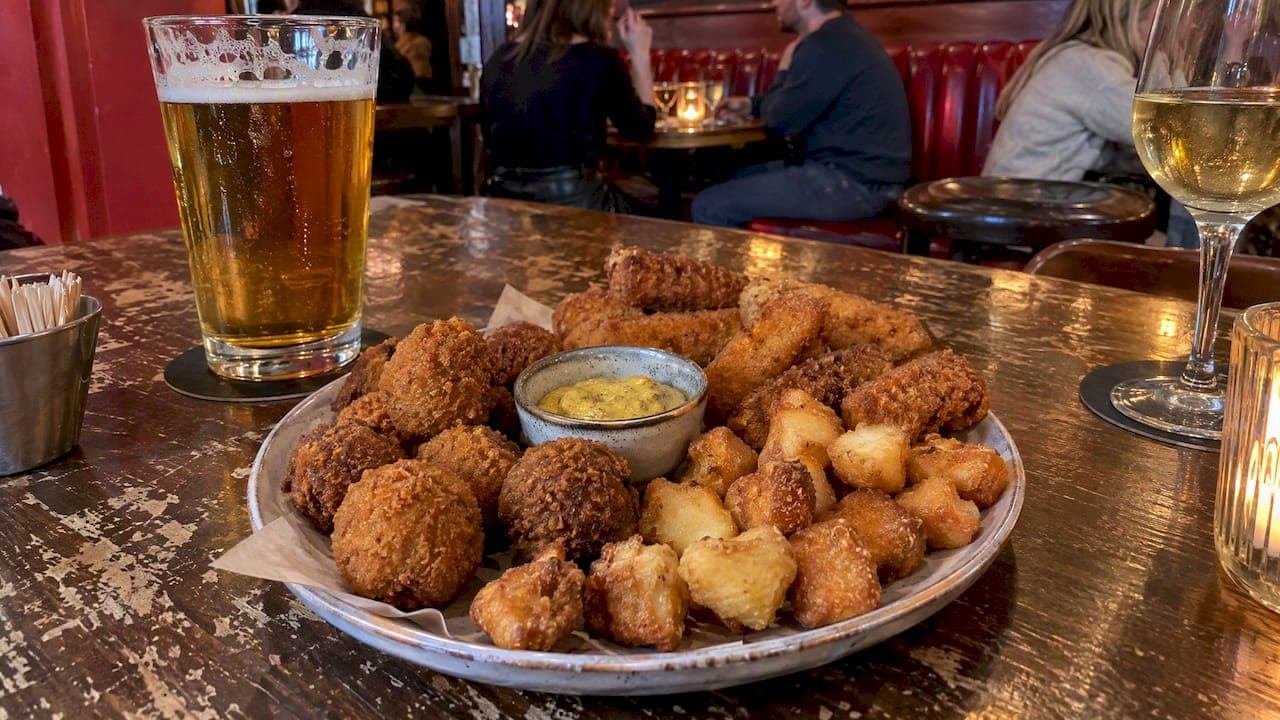
Dutch bar snacks are warm, fried, bite-sized things you eat with a drink, and the one you will see everywhere is the bitterbal: a crisp, breadcrumbed ball filled with thick meat ragout, served with mustard. Around it sits a small family of fried favorites, from cheese soufflés to mini frikandellen. This guide explains what each one is, how to eat it without burning your mouth, and how to build a round of snacks for a group. It also covers how to keep fries crispy when they arrive by delivery.
TL;DR
- The classic order is bitterballen with mustard and a cold beer. A mixed plate of fried snacks is called a bittergarnituur.
- Bitterballen are scorching inside. Bite the crust first and let the center cool.
- Coffee shops are not bars: they cannot serve alcohol, so the snack-and-drink ritual happens in cafés and bars.
- Vegetarian versions exist (mushroom, cheese), so a mixed group can still share one plate.
- Delivered fries recover best with dry, open, hot heat, never a microwave lid.
Table of Contents
- What counts as a Dutch bar snack
- What are bitterballen?
- Bitterballen are a ritual, not just a snack
- The snack lineup, one by one
- Building a round of snacks for a group
- Pubs, cafés and coffee shops: where to look
- Our perspective: snacks are about the table
- Order tapas and drinks at Big Shots
- How to reheat fries and delivered food so they stay crisp
- Where Dutch bar snacks sit in a night out
- A short first-timer plan
- FAQ
- Sources
What counts as a Dutch bar snack
In Dutch drinking culture the snack is not a meal. It is the thing that arrives in the middle of the table while you talk. The occasion is called borrel: drinks, conversation and something warm to pick at. The snack is small, fried, easy to eat with your fingers or a toothpick, and usually comes with mustard.
The core group is simple. A bittergarnituur is a classic selection of warm, bite-sized snacks served in bars and at receptions. It always includes bitterballen, usually alongside kaassoufflé (a fried cheese snack) and mini frikandellen. Around that core you will meet kaasstengels (cheese sticks), spring rolls and bamischijf (a crumbed fried noodle disc), plus larger snack-bar fare like kroketten.

What ties them together is context. A frikandel from a late-night snack bar and a frikandel on a bar table are the same food in different social settings. The bar version is shared, arrives in a batch and is ordered with the next round.
What are bitterballen?
Bitterballen are the headline act. A bitterbal is a small deep-fried ball of meat ragout, roughly 3 to 5 cm across and about 20 grams. The filling is made by cooking a very thick stew with a roux and beef stock, loaded with meat, then chilling it until firm. Once firm, it is rolled, breaded and fried. That is why the inside is molten and the outside crunchy.
The name does not mean they taste bitter. It comes from the tradition of serving them with bitters, strong herbal spirits such as genever, which were popular in the 17th century. If you want the longer story of the name, the Dutch-language history of the bitterbal goes deep.
How to eat one without regret
The thick ragout holds heat for a long time. Locals advise starting with the crispy shell so the center can cool, and a burned mouth is a rite of passage for visitors. Our practical routine:
- Wait a minute after the plate lands.
- Dip lightly in mustard, which is sharp and meant to cut the richness.
- Bite a small corner off, let steam escape, then eat the rest.
- Follow with a sip of something cold.
Beef, chicken or vegetarian?
Beef is the traditional filling, but modern menus often add chicken, pork, or vegetarian fillings such as mushroom or cheese. Traditionalists still treat beef as the standard. If anyone in your group avoids meat, ask the staff which version is on the menu before you order a mixed plate. Do not assume.
Bitterballen are a ritual, not just a snack
In 2020, eating bitterballen with drinks was recognized as Dutch intangible cultural heritage. The recognition covers the shared habit of eating them with a drink, which is exactly what you do when you order a plate for the table. The same source notes that the ritual is rare in neighboring Belgian cafés, where the snack is more tied to chip shops.
If you are curious about how neighbors treat food and drink with a local twist, our look at signature drinks in Bruges makes a fun contrast: local gin and historic beer, in a different drinking culture just south of the border.
The snack lineup, one by one
| Snack | What it is | Good with | Notes |
|---|---|---|---|
| Bitterbal | Breaded ball of meat ragout | Beer, genever, mustard | The classic. Very hot inside. |
| Kaassoufflé | Fried cheese snack | Beer, white wine | Usually the vegetarian-friendly pick. Check the menu. |
| Mini frikandel | Small fried minced-meat sausage | Beer | Often part of a mixed plate. |
| Kaasstengels | Cheese sticks | Wine, beer | Easy to share. |
| Loempia | Deep-fried spring roll | Beer | Common on borrel plates. |
| Bamischijf | Crumbed fried noodle disc | Beer | Soft and savory inside. |
| Kroket | Larger ragout croquette | Mustard, bread | More snack bar than bar table. |
For snack-bar classics beyond the bar table, DutchNews has a rundown of delicacies sold in snack bars. It explains the Dutch idea of treating yourself to fried food.
Building a round of snacks for a group
A good rule: order for the table, not the person. For four people, a mixed plate plus one extra portion of bitterballen is a sensible start. Then reorder when the first plate is gone, which is how borrel naturally works.
- Two people: one mixed plate, one drink each, mustard on the side.
- Four to six: two plates, one with bitterballen only, one mixed.
- Match-night crowd: order in waves. Fried food loses its edge sitting under a screen for forty minutes.
- Mixed diets: ask for a vegetarian plate on its own so no one picks through it.
Mustard matters more than you expect. It is the acid that makes the third bitterbal as good as the first.
Pubs, cafés and coffee shops: where to look
A tourist mistake worth avoiding: Dutch coffee shops are not bars. They sell cannabis but are not allowed to sell or permit alcohol, so the beer-and-bitterballen experience belongs to cafés, bars and restaurants.
For a feel of the setting, our guides to Amsterdam café culture and the different bar atmospheres in the city help you choose between a brown café, a lively sports bar and a late-night lounge. If you want classic sports-bar plates alongside Dutch snacks, see our list of top sports bar foods in Amsterdam.
Our perspective: snacks are about the table
We run a sports bar, shisha lounge, restaurant and café under one name, across three central venues in Amsterdam. That mix teaches you quickly what people want from a shared plate. Here is how we see Dutch bar snacks.
First, the best snack is the one that suits the moment. During a match, people want food they can eat with one hand and without looking down. At a quiet evening in the lounge, they want to linger, so shared small plates make more sense. Our menu reflects that range, from tapas and burgers to steaks, pizza and pasta, so one group can mix a light bite with a proper plate.

Second, visitors should treat the first bitterbal as an initiation, not a trap. Let it cool, use mustard, and ask the staff what is on offer that day. We would rather you ask than guess about fillings.
Third, a snack should never be the reason the evening ends early. Order in rounds, keep the drinks flowing at your pace, and share. The whole point of borrel is that nobody is in a hurry.
— Leo
Order tapas and drinks at Big Shots
When the group is hungry but not ready for a full dinner, start with the tapas and a round of drinks from our menu. It also covers breakfast, soups, salads, steaks, burgers, pizza, pasta and shared plates. Ask the team what is available on the day, especially if you want to know about fillings or vegetarian options. If you would rather stay in, we offer delivery, and the lounge experiences page explains our shisha lounge for a longer evening.
How to reheat fries and delivered food so they stay crisp
People searching for bar snacks often end up wanting to rescue fried food that has been sitting in a delivery bag. The basics are simple, and they apply to fries, burgers and fried snacks alike.
Why fries go soft
Steam. In a closed box, moisture from the hot potato condenses and softens the coating. The fix is to let steam out as soon as the bag arrives and to reheat with dry heat.
A method that works
- Open the container straight away to release steam.
- Spread the fries in a single layer. Piles stay soft.
- Reheat in an air fryer or a hot oven, not a microwave. Air fryer models vary, so start with a few minutes and check often.
- Shake or turn once so they color evenly.
- Salt again at the end, since the first salt has usually dissolved.
For burger and fries, separate them. Warm the patty in a pan or oven and toast the bun lightly, and keep the lettuce and sauce cold. Reheat the fries on their own. Keep everything piping hot before eating and do not reheat food repeatedly.
For fried bar snacks like bitterballen, remember the filling stays hot much longer than the shell. Reheat gently, let it rest, and apply the same bite-the-corner rule.
Ordering so there is less to reheat
The easiest trick is to eat soon after delivery. Order when everyone is ready, open the boxes right away, and keep fries out of sealed containers. If you order from us through our delivery page, tell the household to be ready when the order is due.
Where Dutch bar snacks sit in a night out
The snack is the opening move. In a typical evening, a round of drinks and a plate of bitterballen come first. The plate gets emptied, a second goes out, and then people either move to dinner or keep drinking with more snacks. For a longer night, our Amsterdam food checklist lists local eats worth fitting in, and the guide to bar entertainment in Amsterdam shows what else is on.
If you want the traditional touch, pair snacks with a Dutch drink. Beer is the default. Genever, the spirit that gave the bitterbal its name, is the old-school match. Order one small glass and sip it alongside.
A short first-timer plan
- Pick a café or bar where you can sit, not a take-away counter.
- Order drinks first, then a mixed plate.
- Ask which fillings are used and whether there is a vegetarian option.
- Add mustard to the order if it does not come automatically.
- Reorder in a second wave rather than all at once.
FAQ
What are traditional bar snacks in the Netherlands?
The traditional set is bitterballen, kaassoufflé and mini frikandellen, often served together as a bittergarnituur. Kaasstengels, spring rolls and crumbed noodle discs also appear. They are eaten with mustard and a drink.
Why is it called a bitterbal if it is not bitter?
The name comes from the herbal spirits known as bitters, which were served alongside the snack. It says nothing about the taste. The filling is savory and rich.
Are there vegetarian Dutch bar snacks?
Yes. Cheese snacks such as kaassoufflé and kaasstengels are common, and some venues offer mushroom or cheese bitterballen. Always confirm with the staff, since fryers and fillings differ from place to place.
How do I keep delivered fries crispy?
Open the container right away to let steam out. If they have gone soft, spread them in one layer and reheat with dry heat in an air fryer or hot oven, then salt them again. Avoid the microwave, which steams them further.
Sources
- Bitterbal (Dutch Wikipedia)
- Bitterballen (Wikipedia)
- Borrel & Fried Snacks, Dutch Cookbook
- Bitterballen recipe, Dutch Cookbook
- What's really inside Dutch bitterballen?, DutchReview
- Bitterballen with drinks recognized as intangible cultural heritage, FavorFlav
- Geschiedenis van de bitterbal
- 10 Dutch delicacies to buy in snack bars, DutchNews.nl
- Why are coffee shops allowed to sell soft drugs?, Government of the Netherlands